• Skip to primary navigation
  • Skip to main content
  • Skip to footer

Fundamentally Feline

  • Home
  • About
    • About Cat Behaviorist Ingrid Johnson
    • Ingrid in the Media
    • Muses
  • Education
    • Client Handouts & Articles
    • Feline Fundamentals
  • Videos
    • About Our Videos
    • How-To Videos
    • Foraging Videos
    • Training Videos
    • Behavior & Enrichment Videos
  • Services
    • What We Offer
    • Behavior Consulting
    • Medicating Consults
    • Vertical Space
    • Litter Box Cutting Service
    • Testimonials
  • Shop
    • Shop All Products
    • Foraging Toys
    • Scratching
    • Vertical Space DIY Components
    • Swag for Humans
  • Contact

cats and dogs

How to Introduce a Cat to a Dog

If the cat is the newcomer, they will need to start in a safe room. Find something that motivates the cat as a reward so that you can begin positive reinforcement exercises on either side of a visual barrier such as a baby gate, screen door, French doors, etc.

If the dog is the new family member, he or she should be contained for house-breaking and training purposes. They may have the kitchen and their crate in the beginning, but they should not be allowed to barge in and take over the house, making the cat feel like a prisoner in their once safe home. We only recommend confining the cat to their favorite, safest room of the house if they are incredibly shy and intimidated, and it is in their best interest to have their world made smaller. Otherwise, the cat should have free run and the dog must be contained.

Your cat may feel too intimidated to get to their food bowls, water, and especially litter box. Do not move their litter box! Instead, add resources in places where your cat feels safe. Abrupt change is stressful to cats, and a new dog is stressful enough. Give them more choices and options, not fewer.

Here are a few key tips:

Do not allow your dog to chase, bark at, or pursue your cats in any way. Cats who run get chased because running evokes the prey drive in dogs. This can be a deadly scenario. Dogs pick up their prey and shake it. And while the owners may notice no evidence but saliva on the cat, the cat may be suffering serious internal organ damage that can be fatal. Cuddling and grooming is fine, but dogs and cats should not be allowed to wrestle or rough-house together.

  • Create vertical space so that your cats can get up and away from the dogs. This is key for the cat’s sanity and sense of security, as well as for their safety should an unsupervised chase ever ensue. Cats take great comfort in being up high. Make sure the dog respects the cat condo; paws off for dogs! This is usually only an issue with toy and agile breeds.
  • Create feeding stations up high so that the dogs do not scarf down all of the cats’ food. Remember that cats are the most three-dimensionally oriented species we share our homes with, so there are no hard, fast rules about the food dish being on the floor. Bathroom vanities, armoires, and cat condos are all great locations for cat food.
  • Always offer a separate water dish for cats. They may drink from the dog bowl too, but cats are very finicky about the taste of their water, and dog slobber could taint it enough to prevent them from drinking.
  • Put a baby gate up to keep the dog out of the litter box. Lift the gate a few inches so that cats can go under or over it. If you have a very small dog, you may have to get more creative, but know that hooded litter boxes are not the solution. Elimination is a vulnerable time for a cat, and hooded boxes can make them feel threatened because they cannot see the dog approaching. Most dogs can also fit their head inside the opening; imagine how scary that would be if you were a cat using the box!
  • Training your dog to understand the “leave it” and “drop it” commands will allow cats to have toys, food puzzles, and free access to the litter box. Many homes with dogs are void of cat toys because the dog eats or destroys all of the cats’ things. This is extremely unfair. Do not allow this to happen to your once happy cat.
  • Monitor your cat when your dog is eating. Cats should NOT eat dog food. It is not balanced or made for them and can cause urinary problems.
  • Contact between a dog and a cat should always be initiated by the cat. Even if the cat gives the dog a warning swat with a paw, the dog should not retaliate. The goal is not for the dog to be injured, but for them to realize that the cat comes equipped with sharp pointy things that should be avoided!

It cannot be stressed enough that supervision is imperative when introducing dogs and cats. Do not leave the dog and cat alone unsupervised until you are 100% sure the dog will not attack the cat under any circumstances. Since this is a very high expectation, and there are many cases of dogs attacking and killing the family cat after years of living together, you are wiser to keep them separated or keep the dog crated while you are not home.

Dominance training, shock collars, pinch collars etc. are outdated methods that are not nearly as effective as positive techniques. Animals learn best using positive reinforcement. Reward behaviors you like, ignore behaviors you don’t. This works best for all species (humans too)! Please contact your veterinarian to get a recommendation for a positive reinforcement dog trainer in your area.

Congratulations on your new addition! With the techniques described here, you can successfully introduce cats to dogs. With time and patience in the beginning, your household will have long-term harmony, and your pets will have a positive and long-lasting relationship.

With a patient and careful introduction, your pets will enjoy a positive and long-lasting relationship.

Can cats and dogs really get along? Of course they can! They can even be best friends! The first step is having a well-trained dog. Well-trained dogs are happier dogs who better understand their place in the home, and this gives you some control when it comes to introducing a new family member — a new cat, dog, or even a baby or roommate.

When introducing a cat and a dog, the steps described in the “How to Introduce Cats to Each Other” and “How to Introduce a Cat to a New Environment” handouts should still be followed. Take it slow, end on a positive note, and use high-value rewards when they are in the presence of one another.


Elsa and Hitch. Best friends.
Grant and Shadow spooning.
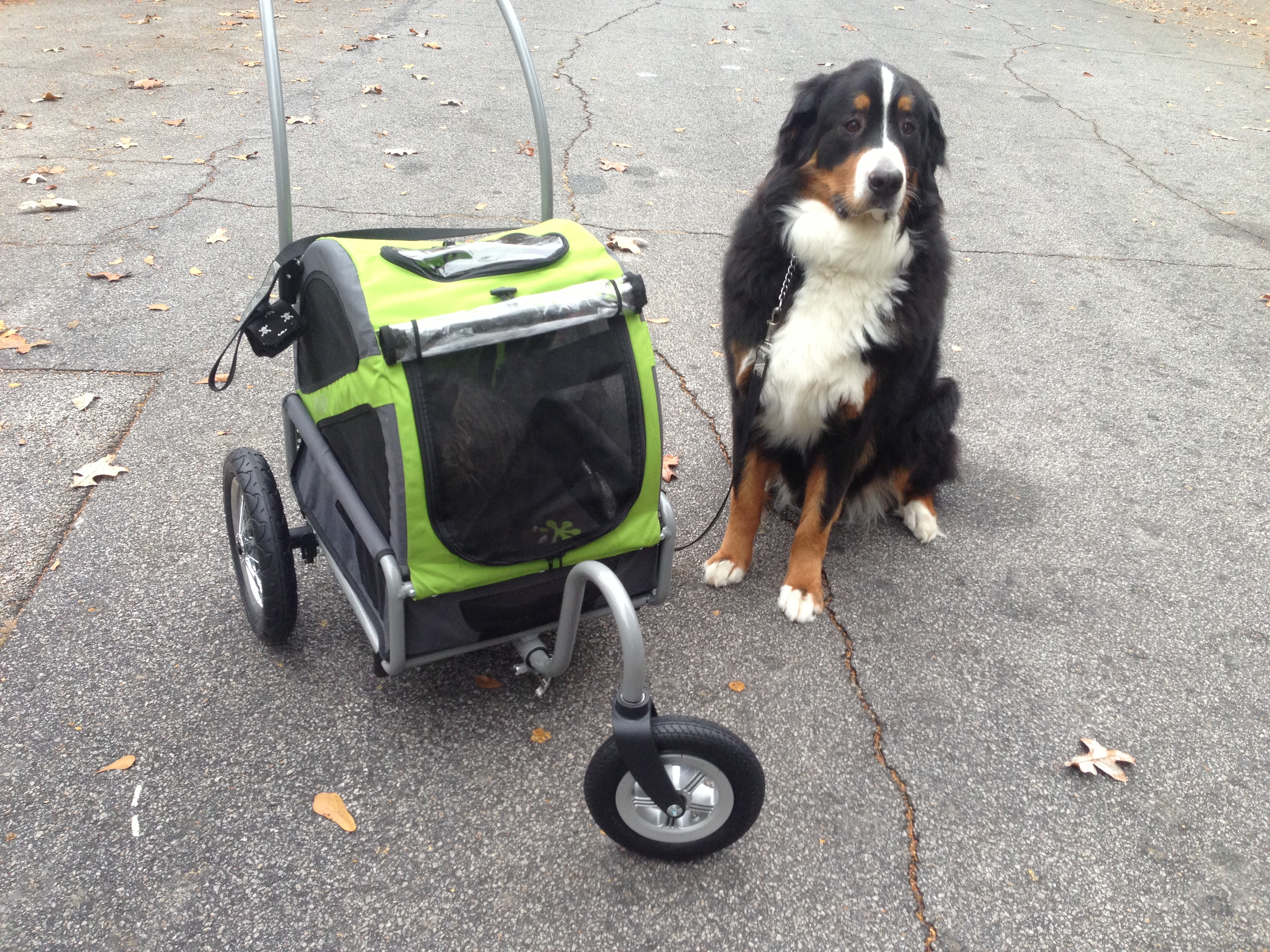
Of course bring the dog along on your stroller rides!
Hitch and his puppy.
Download Handout PDF

Filed Under: Hand Out Tagged With: cats and dogs, How to introduce cats and dogs, Introducing a cat to a dog

Introducing A New Cat To Your Household

In spite of their reputation for being solitary animals, cats are actually very social creatures and enjoy the company of other cats and even dogs. Many times, behavior problems exhibited in a single-cat household can be resolved by bringing home a friend for the existing cat. When you feel it is time to add another cat to your household, or if a stray decides to adopt you, here are some tips that may make the introductions go more smoothly.


Bringing kitty home

Whether or not there are existing pets in the household, when you bring home a new cat or cats you should not give them the run of the house right away. Instead, set up a comfortable, quiet room with food, water, litter box, and a bed or blanket. This “safe room” provides several advantages. It’s a place where your new kitty can get used to you and other members of the household without feeling overwhelmed by the entire house or apartment. The other pets in the household are also not in the room to further intimidate your new kitty while he’s exploring this strange new place. Also, as you begin to let him out of the room and into the rest of the house, he will have a familiar place to return to if he starts feeling insecure or out of his comfort zone.

Make sure the room, as well as the rest of the house, is “cat-proof”. Even if you already have cats that don’t chew on things like electrical cords, your new cat may find them fascinating and can get seriously injured or worse while playing. Also check for strings, ribbons, and small objects that cats can swallow, possibly leading to emergency surgery or even death.

When you bring your kitty home, put him in the introductory room with the door closed, then open his carrier and let him come out on his own. Initially he may be shy or frightened and may find a place where he can gather himself and feel safe before checking things out. Cats feel safe either under things (bed, couch) or up high (cat condos, dressers, cabinets). Eventually he will begin exploring his new digs. Over the next few days make sure he’s eating well and using the litter box. Any kind of change can be stressful to a cat, and moving to a new home is probably one of the most stressful events your cat will encounter. Because of this, it is not uncommon for cats to break with a cold or other illness after moving to a new home. Call your veterinarian immediately if you notice any signs of illness.


Introducing cats to cats

The key to introducing your cats is to TAKE IT SLOWLY. Do little steps at a time and evaluate how your cats react. There is no magic formula that will tell you when your cats are ready to be fully integrated in the household; you must be able to observe them and judge their progress on an individual basis. We’ve heard stories from clients whose cats got along beautifully from day one, and others who took six months or more to finally live peacefully under the same roof. Above all, know that cats will get along together most of the time, even if they’re not the best of friends. Adoption rooms at most shelters, as well as the many clients and employees with multiple-cat households, are perfect examples of that. All cats have different personalities, so be careful not to have unrealistic expectations about their behavior until you get to know them.

During the introductory stage, you will probably notice that the original cats in your household will be very curious about the other cat behind the door. They will probably start sniffing under the door and maybe even start hissing. Don’t be alarmed; it’s normal for cats to hiss at something new or something they don’t understand. Make sure the new cat and the old cat associate good things with that door and what’s behind it. To do so, feed them canned food or treats on either side of the door; use catnip, play with their favorite toys, groom them, pet them, and talk to them, all things to make them feel happy and comfortable in the vicinity of the other cat.

To get both the new and the old cats used to each other’s scent, you can rub a towel or sweatshirt on the original cat and put it in the room with the new cat and vice versa. You can also groom one of the cats with a cat brush and then groom the other, thereby swapping scents. After a few days, you can let the new cat out to explore the house for short periods of time while putting the old cat in the safe room to explore the new cat’s scent.

Eventually, they will probably start playing footsy under the door; now you’re ready to let them see each other face to face! Again, take it slowly. Some people have had success by opening the door and putting up a baby-gate in the doorway. This does not prevent the cats from jumping over the gate, but does give a buffer area so they are not completely exposed. They can now see each other, so expect some more hissing and growling. This is normal, and they will eventually get used to the sight of each other. We have heard from clients who installed a full screen door in the doorway, so the cats did not have access to each other but could still see, hear, and smell each other. This can be effective during the transition period, but it can also be a lot of work! A baby-gate is less labor-intensive, but you must provide closer supervision.

You can now begin letting the new kitty out for supervised visits with the rest of the household. You can probably expect some more hissing and growling from either the new cat, the old cat, or both, but it’s usually just a warning to the other cat and will probably not result in an all-out fight. The most important thing you can do is to be there for reassurance for all your kitties. Talk to them in a soothing voice, pet them, and see how it goes. Use interactive toys for ice-breakers. Examples are the Feline Flyer (feather on the end of a string attached to a plastic rod) and the laser pointer. These toys allow all cats to play at the same time, resulting in more positive associations with each other. Treats and canned food are also helpful; put their bowls slightly closer together at each mealtime to help your cats accept each other. And catnip is the great equalizer! They will romp and play and eventually fall asleep after a catnip break.

Use your best judgment and gradually increase the amount of time spent together. They will get used to each other at their own pace, and their different personalities will dictate how they interact with each other and how they’ll eventually sort out their relationship. Also, as they begin to warm up and start playing with each other, keep in mind that normal cat play can look rough. We’ve talked with clients who have been working on what they perceived as aggression problems; the cats will roll around on the floor growling and biting until finally one jumps up and runs away, only to return and resume the “fight”. In talking further, the owner will reveal that the cats eat together, sleep together, and groom each other. What the owner perceives as aggressive behavior has turned out to be cats that are actually close friends, playing a game of rough and tumble!

Reminders for multiple-cat households

When you adopt a new furry friend, a cat is not all that you will be adding to the household. You’ll need more litter boxes; the rule of thumb is one box location per cat plus an additional box (ask us for our Litter box Fact Sheet with more litter box tips). You also need more feeding stations and water bowls. Always leave dry food out and never let the bowls get empty, as this can create unnecessary food competition among cats. Finally, your cats will need more scratching posts, beds and cat condos. Even in small apartments you can make enough room for your cats by creating vertical space with cat condos.

Introducing cats and dogs
When introducing dogs and cats, always keep in mind that a dog can seriously harm a cat, even in play. In the case of an actual fight, cats often do not survive. Dogs and cats can and do get along very well, but there are many rules that you need to institute when integrating them. Most importantly, dogs must understand that they are always beneath the cats in the social status of the household. In human terms that may not seem “fair”, but dogs are pack animals and will always respect the hierarchy that exists in the pack. You must make it clear to the dogs that the cats are above them in that hierarchy, and they will respect the cats. And even though your dog is subordinate to your cats, he will also be very protective of the cats and the rest of the household; dogs protect the entire pack.

When your cat and dog first meet, no matter which animal is the new member of the household, always have the dog on a short leash and keep hold of it the entire time. Better yet, put your dog in his crate and let the cat walk around and sniff the dog on his own terms. Either way, the point is to keep control of the dog and not let him lunge at the cat or scare him in any way. As with introducing cats to cats, you can end the first meeting with cat treats or canned food to help your cat associate the dog with something good, as well as a dog biscuit to reward your dog for being a gentleman or lady around your cats!

If the new household member is the cat, you must still provide him with a quiet room of his own at the beginning, as described above. After a few days, the baby-gate in the doorway is a great way for him to get used to the resident dog. You can even raise it a few inches off the floor to allow the cat a quick retreat into his safe room without the dog following. It cannot be stressed enough that supervision is imperative when introducing dogs and cats. Never, ever allow a dog to chase a cat. Even if only in play, it can lead to aggressive attacks later on. The same holds true for growling or any other menacing behavior, even when it comes to food. Any contact between a dog and a cat should always be initiated by the cat. Even if the cat gives the dog a warning swat with his paw, the dog should not retaliate. The dog must respect the cats as higher members in the social order.

It is very important that the cat has several safe areas to get away from the dog if necessary. Cat condos are wonderful for this purpose, as cats feel safe in high places. Make sure the dog respects the cat condo as kitty’s personal hideaway; paws-off for dogs! Do not leave the dog and cat alone unsupervised until you are 100% sure the dog will not attack the cat under any circumstances. Since this is a very high expectation, and we have seen cases of dogs attacking and killing the family cat after a year of living together, you are wiser to keep them separated or keep the dog crated while you are not home.

Regarding food and litter boxes

Instead of using a hooded litter box to keep the dog of the box, use a baby-gate in the doorway of each room where there are litter boxes. If you raise the gate a little off the floor, the cats can still crawl under but there won’t be enough room for most dogs to fit through or jump over. Put the cat food where the dog cannot reach it so the cat always has food. Also, monitor your cat when the dog is eating, as cats should not eat dog food.

Obedience training for dogs is very important; unfortunately, most dog trainers are simply ineffective and can even cause more harm than good. If you have any questions on dog behavior or dog training, please contact our clinic, as we can refer to you to a recommended dog trainer in the Atlanta area.

Congratulations on your new addition! With a little time and patience and a lot of love, the introductory period should be smooth and lead to positive and lasting relationships among your pets.

Download Handout PDF

Filed Under: Hand Out Tagged With: cats and dogs, feline introductions, How to introduce a new cat to your home

Footer

Insured and Bonded via Business Insurers of the Carolinas

Copyright © 2026 Fundamentally Feline

0
Your Cart (0)
Your Cart is Empty!

It looks like you haven't added any items to your cart yet.

Browse Products
Apply a promo code
Subtotal
Shipping & taxes calculated at checkout.
$0.00
Checkout Now
Powered by Caddy