• Skip to primary navigation
  • Skip to main content
  • Skip to footer

Fundamentally Feline

  • Home
  • About
    • About Cat Behaviorist Ingrid Johnson
    • Ingrid in the Media
    • Muses
  • Education
    • Client Handouts & Articles
    • Feline Fundamentals
  • Videos
    • About Our Videos
    • How-To Videos
    • Foraging Videos
    • Training Videos
    • Behavior & Enrichment Videos
  • Services
    • What We Offer
    • Behavior Consulting
    • Medicating Consults
    • Vertical Space
    • Litter Box Cutting Service
    • Testimonials
  • Shop
    • Shop All Products
    • Foraging Toys
    • Scratching
    • Vertical Space DIY Components
    • Swag for Humans
  • Contact

Hand Out

Feline Scratching Behaviors

Scratching is a normal feline behavior; even declawed cats need to scratch! To avoid accidents and to keep your furniture safe, you need to understand why your cat scratches and what she needs to fill her scratching requirements.

Why do cats scratch?

There are many reasons why a cat scratches, including:

  • Marking: cats have scent glands in the pads of their feet and they scratch to leave scent marks. They often do this to mark the belongings you share, such as the sofa.
  • Shedding the outer sheaths of the nail: a cat’s nails grow in layers (like an onion) and they need to scratch to shed the outer nail sheath, or the nail could continue to grow into the foot pad.
  • Relieving stress or frustration: some cats may increase their marking (such as scratching and urine marking) when they are anxious.
  • Stretching: watch how your cat s-t-r-e-t-c-h-e-s as she scratches to flex her spine.
  • Exuberance: sometimes your cat scratches just because it feels good!

Cats may also play or threaten with a swipe of their paws. Play swatting with other cats seldom leads to injuries; usually their claws are retracted during play, and cats are well protected by their thick skin and coat. When play does get a little rough, cats will usually sort out their differences, though sometimes it may escalate to inter-cat aggression that can lead to injuries that require veterinary attention.

With a basic understanding of cat behavior and a little bit of effort, it is possible to prevent or avoid scratching problems.

How can I stop my cat from scratching?

The short answer is: you can’t. It is impractical and unfair to expect cats to stop scratching entirely. Cats that go outside may to do much of their scratching outdoors, but they will still need to scratch while indoors. Indoor cats require outlets for their scratching and marking behaviors.

Your goal should not be stopping the scratching behavior, but to focus it to appropriate items and areas. Building, designing or buying a scratching post or cat condos, providing appropriate play toys, and keeping the cat away from potential problem areas will usually deal with most scratching problems.

Think about why the cat is doing what she’s doing. For example, owners may feel frustrated when their kittens begin to climb furniture. Remember that kittens can’t leap the way adult cats do, so they use their needle-sharp claws to climb. This is not intentionally destructive, and you can prevent it by providing an option. For example, if your kitten climbs the bedding to get up on your bed, place a scratching post beside the bed or low stool so she can take two short leaps instead of climbing. The same is true as your cat gets older and her stiff joints keep her from jumping as she used to. A post placed immediately beside the sofa or armchair that is being climbed serves the same purpose.

How can I design scratching areas for my cat?

You have to address

1) where your cat needs to scratch

2) what your cat needs to scratch

Where?

Your cat wants to mark your belongings (and in effect, mark you) as part of her territory, so place scratching pads and posts in areas where you spend a lot of your time. *Cats scratch mark in high traffic areas where you and they pass through each day* Cats mark with urine and feces around the perimeter of their space. Scratching posts should be placed in prominent areas.

Cats also like to scratch and stretch after waking from a nap, so place a post or cat tree close to the cat’s favorite napping spots. Don’t expect the cat to walk across the house or down the stairs to use a scratching post when there’s a perfectly good chair right across the room!

What?

Most pet store scratching posts are simply inadequate: too short, too unsteady, covered with the wrong material… You will save money in the long run by investing in a quality scratching post rather than buying two or three (or more) posts that aren’t suitable.

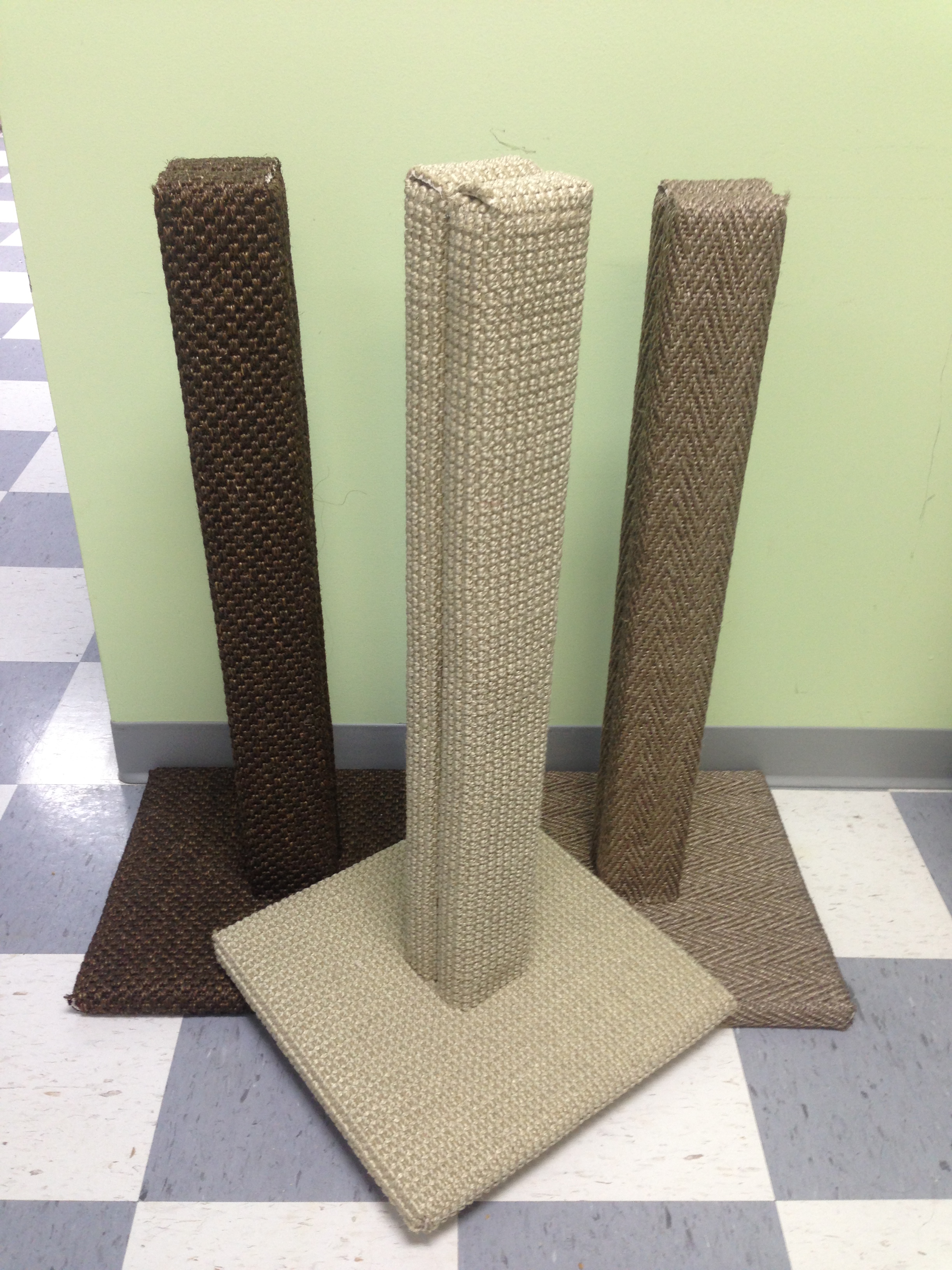
A vertical post should be at least 30 inches high: tall enough for the cat to scratch while standing on her hind legs with the forelegs extended. It must be sturdy, with a wide base, so that it does not wobble or topple over easily.

Stability plays a big role in determining whether a cat will use a particular scratcher. For example, the scratchers made to hang over a doorknob are unstable; consequently many cats won’t use them. You can instead take that scratcher, cut off the hanging loop, and lay it on the floor for use as a horizontal scratcher (more about those below). After all trees, deck railings, sofas do not sway or move, this is one reason they are so appealing.

The post covering is important! Store-bought scratching posts are usually covered with carpet pieces which won’t help your cat remove the outer nail sheaths. You can’t expect the cat to know the difference between the carpet on the post (OK to scratch) and the carpet on the floor (off-limits). The best covering is sisal fabric; the next-best option is tightly wound sisal rope. Carpet-covered perches can be an acceptable option as a cozy bed, but not for scratching.

Remember that scratching is also a marking behavior and cats want to leave a visual mark. Her tattered scratching post may not look good to you, but to your cat, it’s perfect. Don’t rush to replace or re-cover it!

Some cats prefer a horizontal or slanted surface rather than a post. If you don’t provide an appealing scratching option, then the back of your sofa may look awfully inviting! Consider getting a sisal-covered scratching pad or corrugated cardboard scratcher, which can lie flat on the floor. For a slanted option try a sisal scratch ramp or corrugated cardboard ramp.

Some cats prefer to scratch on a piece of bare wood. Many cat trees offer wood or sisal-covered surfaces for scratching.

How can I get my cat to use the post?  

First, remember what we said about location! Your cat wants to mark in areas of the home that you both use often, not in the spare bedroom or the dark dusty basement. You may need to start by placing the post in a prominent area (such as the corner of the sofa) until she begins using the post. Then you can slowly (very slowly, over days or weeks!) inch the post toward a less obtrusive location.

Make the post and the surrounding area a fun and interesting place for your cat. Provide things that appeal to cats, such as perches to climb on, hideaways to snuggle in to, and toys dangling from ropes or attached to springs. Place a few play toys, treats, or even the food bowl in the area to help to keep the cat occupied. Place a toy or treat on top of the post; she’ll find that reward when she climbs the post. Entice her to chase a toy or laser light that you run up the post.

You can rub catnip on the post, or spray it with catnip tea. (Place some catnip in a small container with water and heat it in the microwave for a minute; then rub the catnip infused water all over the post.)

Give your cat a food reward when you see her use the post. You can rake your fingernails along the post to make scratching noises. You may try to show the cat what you want by taking her to the post and gently rubbing her paws on it in a scratching manner, but do not try this with a fearful or anxious cat.

Unless you live in a very small space, you probably need to provide multiple scratching posts in various areas of your home. If you have multiple cats, you definitely need multiple posts!

What can I do if the cat continues to scratch my furniture?

Remember that your cat is clearly showing you where she needs to mark! It’s your job to find a way to meet her needs and your own. This may take a little time, effort, and strategy!

If the cat continues to use one or two pieces of furniture, consider placing a scratching post directly in front of the furniture that is being scratched, or placing a cat condo near the area. Take a good look at the surfaces of the scratched furniture; since the cat clearly likes that material, make sure that her scratching post is covered with an even more preferred texture. Simultaneously, make the piece of furniture unappealing using Sticky Paws (double sided sticky tape made for this very purpose), double sided carpet tape from a home improvement store, or even a citrus scented spray (cats do not like citrus scents). See below for more details on deterring undesirable scratching.

It may help to place additional scratching posts or cat condos in appropriate areas. Be sure to keep the cat’s claws trimmed!

Feliway is a synthetic product that mimics feline facial pheromones and aids in curbing destructive scratching. (It’s also used to treat aggression and inappropriate elimination.) It is available in a spray or as an electric diffuser; to deter destructive scratching, we find the spray to be more effective for scratching purposes. Apply it daily to the area that you do not want the cat to scratch. The spray dissipates over a 24-hour period, just as natural scent marking does, which is why you need to reapply daily. We’d be happy to discuss use of this product with you.

How do I punish my cat for inappropriate scratching?

Don’t punish your cat for doing what is most natural to her! Punishment will just make her fearful of you, and can lead the cat to scratch when you aren’t around to see her.

The idea is to train the cat not to scratch certain surfaces and areas, even in your absence. Help the cat learn to use the post by making other surfaces less desirable. For example, if your cat likes to scratch on the end of the sofa, cover it with a material that she doesn’t like to scratch, such as plastic, aluminum foil, or double-sided tape.

Cayenne pepper can be an effective deterrent; it’s harmless, but can cause sneezing. It is easy to apply and clean up. Citrus-based scents or ginger can deter some cats.

You may consider indirect, non-physical punishment if you can remain out of sight. That allows your cat to learn that inappropriate scratching brings unpleasant results, even when you aren’t there. You can booby-trap problem areas so that scratching (or even approaching) the area is unpleasant for the cat. For example, use a motion detector with an audible alarm, or stack a few plastic cups that will topple if your cat scratches in the wrong place.

Clicker training can be a very effective tool for training your cat to scratch in the right places. In fact, scratching on a post is one of the easiest behaviors to train! Reward use of the post and ignore any interest in the furniture. Soon your cat will be scratching the post just to receive praise and treats from you!

Of course, no deterrent will work unless you provide the cat with an alternative scratching area that is appealing and well placed.

Resources

  • The sisal-weave posts, scratching pads and ramps available through this website work better than any other post that we have seen. They are designed to meet your cat’s needs for a tall, sturdy scratching post, and are meticulously hand-crafted.
  • Keeping your cat’s nails trimmed will minimize damage done if your cat occasionally strays from the post.
  • As a last resort, there is a product called Soft Paws. They are plastic caps you put on the tips of a cat’s nails using a non-toxic adhesive. Most clients find it unnecessary. Soft Paws are a temporary fix because they will not change the cat’s behavior; they just temporarily curb the destruction.

Here is a helpful video illustrating all of the above points!

How Does Your Scratching Post Measure Up?

The bottom line

There are many reasons why cats scratch. By being considerate of her needs and conscious of your decisions, you can provide her with appealing and appropriate places that meet her need to scratch, and she’ll leave your furniture alone.

There is never a need to declaw a cat to eliminate undesirable scratching behavior!

Please visit www.pawproject.org to learn more.
Download Handout PDF

Filed Under: Hand Out Tagged With: detering unwanted scratching, Feline scratching behavior, how to get a cat to use a scratching post, scratching post basics, Sisal scratching posts, why do cats scratch?

Declawing

Declawing is a controversial procedure, and many myths surround declawing. It is important that you understand why cats scratch, what declawing does, and what a cat experiences as a result.

What is declawing?

Declawing is the amputation of the first digit of each toe, comparable to taking off your fingers at the first knuckle. It is not a simple “nail” removal as the popular myth states.

It is an extremely painful procedure, and causes your cat great stress, not just right after surgery but also during the recuperation period and often for weeks and even months afterward.

If the procedure is not done correctly, the cat can lose part of her pads or, more commonly, there may be painful deformed re-growths that require additional surgery.

What is the effect of declawing on a cat?

Declawing can result in medical, emotional, and behavioral problems. The effects may appear immediately, or may occur even years after the surgery.

Medical issues: Declawing is an unnecessary amputation that is illegal in many countries and is being outlawed in areas of the United States. Re-growths (explained above) can cause the cat so much pain that she is unable to walk or even stand. A cat bears about to 60% of her body weight on her front limbs. After declawing, she is forced to bear that weight on parts of her feet that are not intended to support her weight, so there can be bruising or lameness even years after surgery. We have seen cases where cats have had to undergo multiple “re-declaw” surgeries after experiencing re-growths on different toes at different times. Surgery is the only way to relieve their pain, which is similar to what you’d feel walking barefoot on broken glass.

Emotional issues: Your cat may withdraw and go into hiding after this surgery. She will feel helpless because you have taken away her primary defense. A declawed cat may resort to biting because you’ve left her no other way to ward off an unwanted advance.

Behavioral issues: Declawing a cat can lead to numerous behavioral problems including litter aversion, aggression issues, and biting.

  • Litter box aversion occurs because the cat must stand in litter and bear weight on her mutilated toes, so she may associate pain with the litter box. Although many veterinarians recommend using soft litters or shredded newspaper after surgery, this does not necessarily prevent infection or pain associated with use of the litter box. Many of the cats we see with behavioral litter box aversion problems are declawed.
  • Another serious consequence of declawing is aggression. Declawed cats tend to be more aggressive during vet visits, most likely because they associate their painful feet with a visit to the vet. These cats are often highly fractious and difficult to manage. You may incur additional expenses related to this behavior, such as sedation before your cat can be examined or treated. These cats are so terrified that they will use every defense mechanism they have remaining. Unfortunately, many owners and even some vets mistake a cat’s fear for being “mean”, and their subsequent handling of the cat merely reinforces their fear.
  • Often expectant parents are concerned about their cat possibly scratching a child. A cat will only scratch a human if provoked by fear or pain. If you teach the child how to touch the cat appropriately, and provide safe areas where the cat can escape the grasping hands of the child, the cat will not injure your child.
  • A cat’s first line of defense is her claws. When that option is taken away, she must resort to biting. Anyone who works with cats will tell you that a scratch is preferable to a bite wound any day! A bite is more dangerous due to the risk of serious infection.

Even if you keep a declawed cat indoors, accidents happen: windows get left open, or a visitor leaves a door open… A declawed cat is in grave danger if she ever gets outside alone! Not only is she defenseless, but she is seriously hampered if she tries to catch something to eat. She’ll be unable to flee from dogs and other dangers by climbing.

Why do cats scratch?

Scratching is a normal feline behavior. There are many reasons why a cat may scratch, which include:

  • Marking: cats have scent glands in the pads of their feet and they scratch to leave scent marks. They often do this to mark the belongings you share, such as the sofa.
  • Shedding the outer sheaths of the nail: a cat’s nails grow in layers (like an onion) and they need to scratch to shed the outer nail sheath, or the nail could continue to grow into the foot pad.
  • Relieving stress or frustration: some cats may increase their marking (such as scratching and urine marking) when they are anxious.
  • Stretching: watch how your cat s-t-r-e-t-c-h-e-s as she scratches to flex her spine.
  • Exuberance: sometimes your cat scratches just because it feels good!

How can I stop my cat from scratching?

You can’t. It is impractical and unfair to expect cats to stop scratching entirely. You can try to understand and meet their scratching needs so that they won’t damage your belongings.

Read the Feline Scratching Behavior handout for more information on how to focus your cat’s instinctive need to scratch in appropriate ways.

Myths about Declawing

I have to declaw my cat because she’s damaging the furniture.

Cats will scratch; it’s part of their nature. The key is to provide alternative scratching areas. Good scratching posts, made with the right material, placed in the right locations, are more attractive to your cat than scratching the furniture. Cats prefer to scratch in pathways, high traffic areas where you and they pass through each day. This is where your scratching posts should be placed.

My other cat is declawed.

Indoor cats rarely use their claws on each other, so your declawed cat should not have problems with another cat that still has claws. For example, look at the dozens of cats that live together at cage-free shelters. Most of those cats have claws, but some do not, and they all get along just fine.

I don’t want my cat to scratch the children.

Cats are no more likely to scratch a child than they are to scratch another cat: it won’t happen unless the cat is provoked. Teach your children how to gently pet and play with the cat, and how to watch for signs that the cat is getting over-stimulated or stressed. Keep the cat’s nails trimmed!  It’s easy, it’s painless, and it can help to avoid accidental scratches and hurt feelings. Remember that a scratch wound is far less serious than a bite wound, but a declawed cat has only one choice for defense!

What about a tendonectomy?

Tendonectomy involves severing the tendons to the cat’s toes so she can’t control her claws. There is a high rate of complications, you still need to trim the cat’s claws, and the cat can still claw to some extent. This is not an acceptable option.

My family doctor said that getting scratched could be dangerous.

Doctors often raise the issue of cats scratching when a person has a blood clotting disorder or certain other diseases. Often the doctor is uninformed about the reasons why a cat might scratch and unaware that a more-dangerous bite is more likely to occur if the cat is declawed. Most cat scratches are not deep enough to pose a problem even to a person who is taking blood thinners. In fact, the CDC, Center for Disease Control, does not recommend declawing for immune compromised individuals. With reasonable care, you can safely co-exist with your cat and her claws.

Resources

  • The 100% sisal-weave scratching posts, ramps, and pads available through www.FundamentallyFeline.com work better than any other post that we have seen. They are designed to meet your cat’s needs for a tall, sturdy scratching post, and are meticulously hand-crafted.
  • Keeping your cat’s nails trimmed will minimize damage done if your cat occasionally strays from the post.
  • Read the Feline Scratching Behavior handout or watch the How-To video on this website entitled “How Does Your Scratching Post Measure Up?” to learn about selecting and placing scratching posts, and other related information.
  • As a last resort, there is a product called Soft Paws. They are plastic caps you put on the tips of a cat’s nails using a non-toxic adhesive. Most clients find this alternative to be tedious and unnecessary. The caps can pop off, and they need to be reattached periodically as the cat’s claws grow. Cats sometimes find it frustrating to have the nail caps glued on, because their nature tells them to remove the outer nail sheath. Soft Paws are a temporary fix because they will not change the cat’s behavior, they just curb the destruction.

The bottom line

There are many reasons why cats scratch. We’ve explained some of the many reasons why declawing is not the answer to undesirable scratching behavior.

The non-surgical alternatives are less expensive and less painful than declawing. It’s never necessary to amputate her toes to stop your cat from unwanted scratching!

If you feel that you must have a declawed cat, adopt a cat that has already been declawed.

If you still feel the need to declaw your cat, even after learning exactly what declawing is and how it can affect your cat for years to come, we strongly recommend that you consider finding another home for the cat. That way, she will not have her toes amputated, and won’t risk developing one of the many medical or behavioral problems that frequently result!

Visit http://www.pawproject.org/ to learn more!

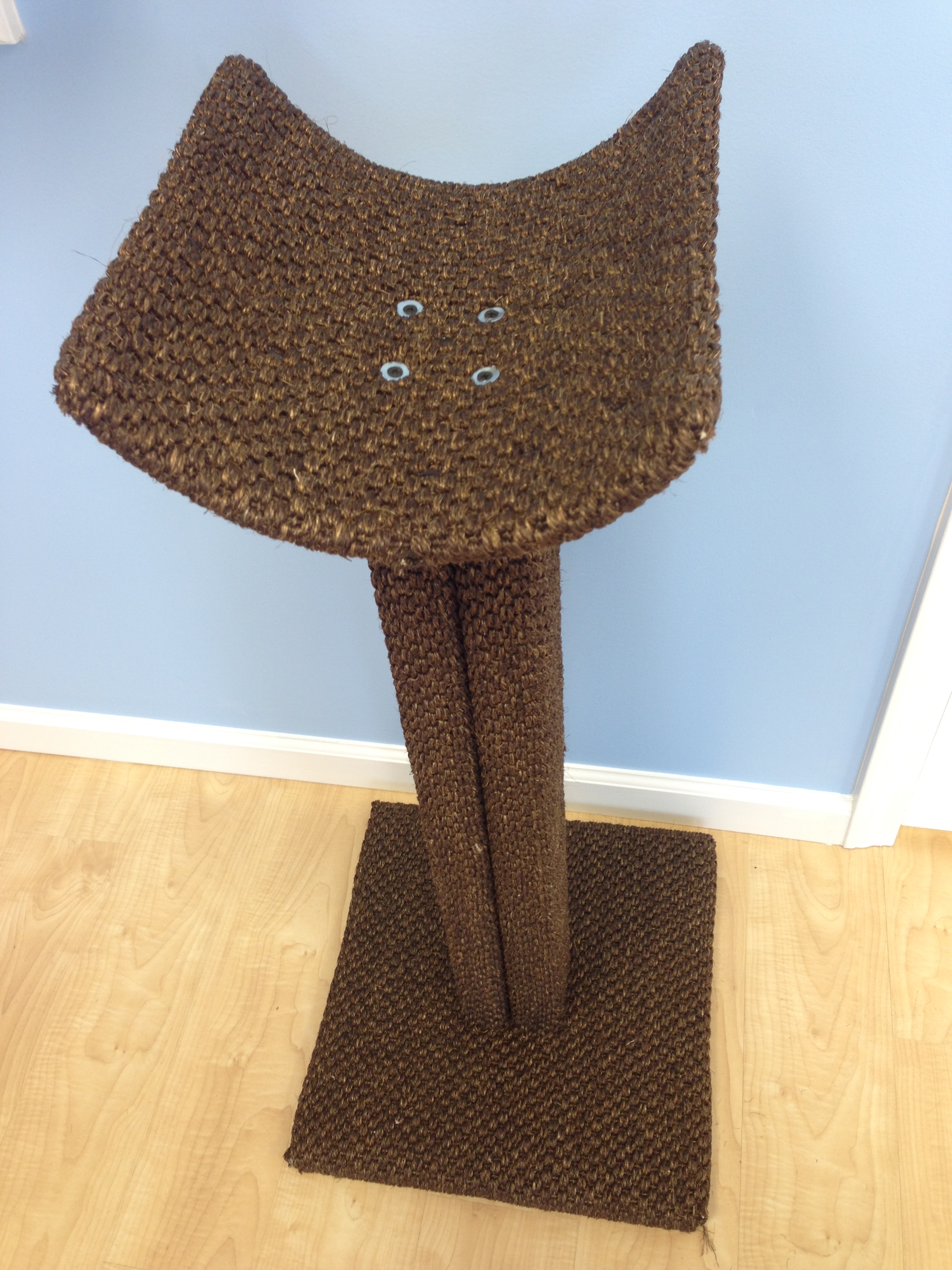
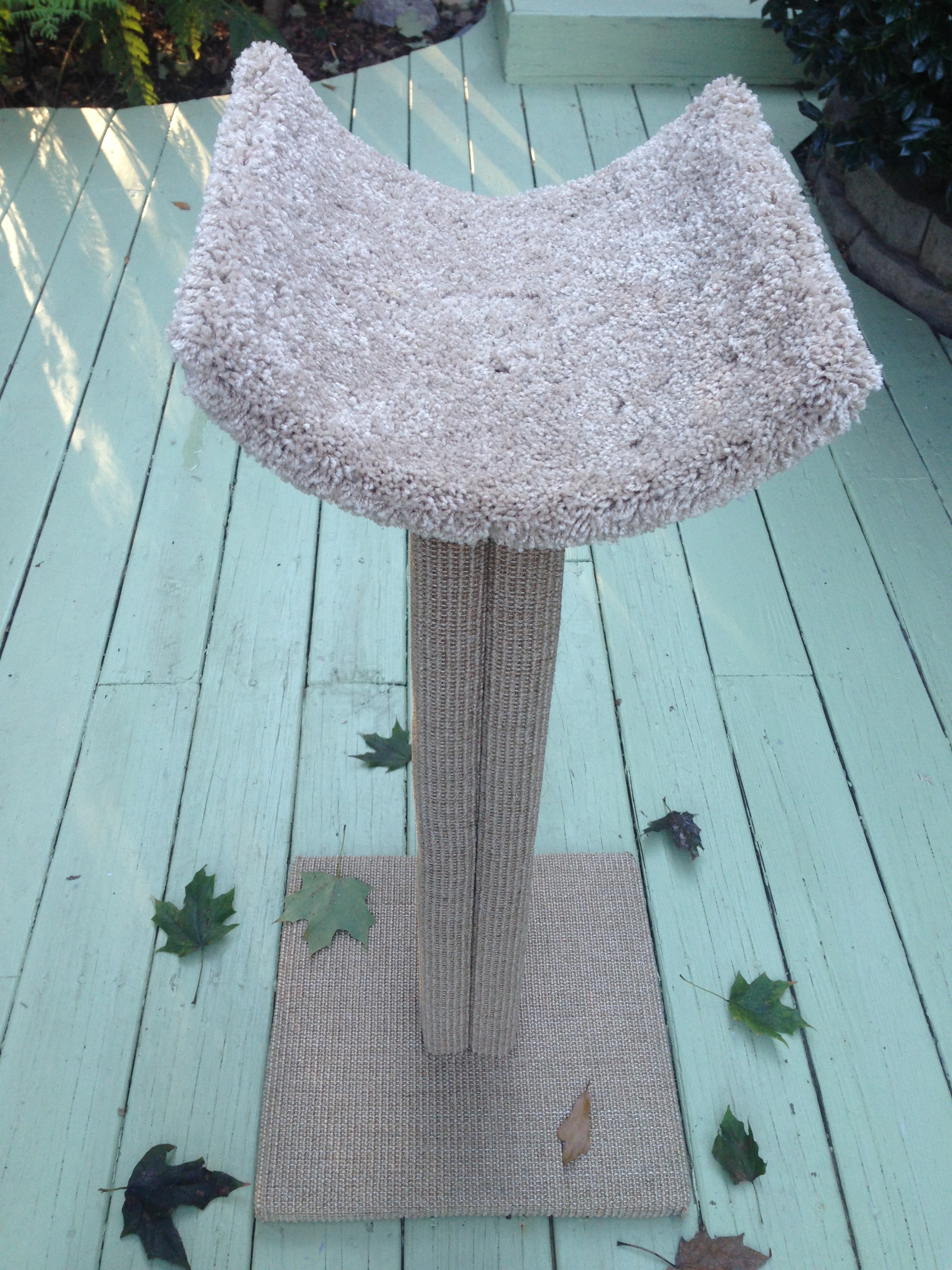
Post with bed on top in attractive home decor colors.
Ensure posts match home decor to maximize placement.
Attractive posts will be placed in more prominent areas.

Download Handout PDF

Filed Under: Hand Out Tagged With: amputation, declawing, inappropriate scratching, onychectomy, scratching problems in cats, the Paw Project

Introducing A New Cat To Your Household

In spite of their reputation for being solitary animals, cats are actually very social creatures and enjoy the company of other cats and even dogs. Many times, behavior problems exhibited in a single-cat household can be resolved by bringing home a friend for the existing cat. When you feel it is time to add another cat to your household, or if a stray decides to adopt you, here are some tips that may make the introductions go more smoothly.


Bringing kitty home

Whether or not there are existing pets in the household, when you bring home a new cat or cats you should not give them the run of the house right away. Instead, set up a comfortable, quiet room with food, water, litter box, and a bed or blanket. This “safe room” provides several advantages. It’s a place where your new kitty can get used to you and other members of the household without feeling overwhelmed by the entire house or apartment. The other pets in the household are also not in the room to further intimidate your new kitty while he’s exploring this strange new place. Also, as you begin to let him out of the room and into the rest of the house, he will have a familiar place to return to if he starts feeling insecure or out of his comfort zone.

Make sure the room, as well as the rest of the house, is “cat-proof”. Even if you already have cats that don’t chew on things like electrical cords, your new cat may find them fascinating and can get seriously injured or worse while playing. Also check for strings, ribbons, and small objects that cats can swallow, possibly leading to emergency surgery or even death.

When you bring your kitty home, put him in the introductory room with the door closed, then open his carrier and let him come out on his own. Initially he may be shy or frightened and may find a place where he can gather himself and feel safe before checking things out. Cats feel safe either under things (bed, couch) or up high (cat condos, dressers, cabinets). Eventually he will begin exploring his new digs. Over the next few days make sure he’s eating well and using the litter box. Any kind of change can be stressful to a cat, and moving to a new home is probably one of the most stressful events your cat will encounter. Because of this, it is not uncommon for cats to break with a cold or other illness after moving to a new home. Call your veterinarian immediately if you notice any signs of illness.


Introducing cats to cats

The key to introducing your cats is to TAKE IT SLOWLY. Do little steps at a time and evaluate how your cats react. There is no magic formula that will tell you when your cats are ready to be fully integrated in the household; you must be able to observe them and judge their progress on an individual basis. We’ve heard stories from clients whose cats got along beautifully from day one, and others who took six months or more to finally live peacefully under the same roof. Above all, know that cats will get along together most of the time, even if they’re not the best of friends. Adoption rooms at most shelters, as well as the many clients and employees with multiple-cat households, are perfect examples of that. All cats have different personalities, so be careful not to have unrealistic expectations about their behavior until you get to know them.

During the introductory stage, you will probably notice that the original cats in your household will be very curious about the other cat behind the door. They will probably start sniffing under the door and maybe even start hissing. Don’t be alarmed; it’s normal for cats to hiss at something new or something they don’t understand. Make sure the new cat and the old cat associate good things with that door and what’s behind it. To do so, feed them canned food or treats on either side of the door; use catnip, play with their favorite toys, groom them, pet them, and talk to them, all things to make them feel happy and comfortable in the vicinity of the other cat.

To get both the new and the old cats used to each other’s scent, you can rub a towel or sweatshirt on the original cat and put it in the room with the new cat and vice versa. You can also groom one of the cats with a cat brush and then groom the other, thereby swapping scents. After a few days, you can let the new cat out to explore the house for short periods of time while putting the old cat in the safe room to explore the new cat’s scent.

Eventually, they will probably start playing footsy under the door; now you’re ready to let them see each other face to face! Again, take it slowly. Some people have had success by opening the door and putting up a baby-gate in the doorway. This does not prevent the cats from jumping over the gate, but does give a buffer area so they are not completely exposed. They can now see each other, so expect some more hissing and growling. This is normal, and they will eventually get used to the sight of each other. We have heard from clients who installed a full screen door in the doorway, so the cats did not have access to each other but could still see, hear, and smell each other. This can be effective during the transition period, but it can also be a lot of work! A baby-gate is less labor-intensive, but you must provide closer supervision.

You can now begin letting the new kitty out for supervised visits with the rest of the household. You can probably expect some more hissing and growling from either the new cat, the old cat, or both, but it’s usually just a warning to the other cat and will probably not result in an all-out fight. The most important thing you can do is to be there for reassurance for all your kitties. Talk to them in a soothing voice, pet them, and see how it goes. Use interactive toys for ice-breakers. Examples are the Feline Flyer (feather on the end of a string attached to a plastic rod) and the laser pointer. These toys allow all cats to play at the same time, resulting in more positive associations with each other. Treats and canned food are also helpful; put their bowls slightly closer together at each mealtime to help your cats accept each other. And catnip is the great equalizer! They will romp and play and eventually fall asleep after a catnip break.

Use your best judgment and gradually increase the amount of time spent together. They will get used to each other at their own pace, and their different personalities will dictate how they interact with each other and how they’ll eventually sort out their relationship. Also, as they begin to warm up and start playing with each other, keep in mind that normal cat play can look rough. We’ve talked with clients who have been working on what they perceived as aggression problems; the cats will roll around on the floor growling and biting until finally one jumps up and runs away, only to return and resume the “fight”. In talking further, the owner will reveal that the cats eat together, sleep together, and groom each other. What the owner perceives as aggressive behavior has turned out to be cats that are actually close friends, playing a game of rough and tumble!

Reminders for multiple-cat households

When you adopt a new furry friend, a cat is not all that you will be adding to the household. You’ll need more litter boxes; the rule of thumb is one box location per cat plus an additional box (ask us for our Litter box Fact Sheet with more litter box tips). You also need more feeding stations and water bowls. Always leave dry food out and never let the bowls get empty, as this can create unnecessary food competition among cats. Finally, your cats will need more scratching posts, beds and cat condos. Even in small apartments you can make enough room for your cats by creating vertical space with cat condos.

Introducing cats and dogs
When introducing dogs and cats, always keep in mind that a dog can seriously harm a cat, even in play. In the case of an actual fight, cats often do not survive. Dogs and cats can and do get along very well, but there are many rules that you need to institute when integrating them. Most importantly, dogs must understand that they are always beneath the cats in the social status of the household. In human terms that may not seem “fair”, but dogs are pack animals and will always respect the hierarchy that exists in the pack. You must make it clear to the dogs that the cats are above them in that hierarchy, and they will respect the cats. And even though your dog is subordinate to your cats, he will also be very protective of the cats and the rest of the household; dogs protect the entire pack.

When your cat and dog first meet, no matter which animal is the new member of the household, always have the dog on a short leash and keep hold of it the entire time. Better yet, put your dog in his crate and let the cat walk around and sniff the dog on his own terms. Either way, the point is to keep control of the dog and not let him lunge at the cat or scare him in any way. As with introducing cats to cats, you can end the first meeting with cat treats or canned food to help your cat associate the dog with something good, as well as a dog biscuit to reward your dog for being a gentleman or lady around your cats!

If the new household member is the cat, you must still provide him with a quiet room of his own at the beginning, as described above. After a few days, the baby-gate in the doorway is a great way for him to get used to the resident dog. You can even raise it a few inches off the floor to allow the cat a quick retreat into his safe room without the dog following. It cannot be stressed enough that supervision is imperative when introducing dogs and cats. Never, ever allow a dog to chase a cat. Even if only in play, it can lead to aggressive attacks later on. The same holds true for growling or any other menacing behavior, even when it comes to food. Any contact between a dog and a cat should always be initiated by the cat. Even if the cat gives the dog a warning swat with his paw, the dog should not retaliate. The dog must respect the cats as higher members in the social order.

It is very important that the cat has several safe areas to get away from the dog if necessary. Cat condos are wonderful for this purpose, as cats feel safe in high places. Make sure the dog respects the cat condo as kitty’s personal hideaway; paws-off for dogs! Do not leave the dog and cat alone unsupervised until you are 100% sure the dog will not attack the cat under any circumstances. Since this is a very high expectation, and we have seen cases of dogs attacking and killing the family cat after a year of living together, you are wiser to keep them separated or keep the dog crated while you are not home.

Regarding food and litter boxes

Instead of using a hooded litter box to keep the dog of the box, use a baby-gate in the doorway of each room where there are litter boxes. If you raise the gate a little off the floor, the cats can still crawl under but there won’t be enough room for most dogs to fit through or jump over. Put the cat food where the dog cannot reach it so the cat always has food. Also, monitor your cat when the dog is eating, as cats should not eat dog food.

Obedience training for dogs is very important; unfortunately, most dog trainers are simply ineffective and can even cause more harm than good. If you have any questions on dog behavior or dog training, please contact our clinic, as we can refer to you to a recommended dog trainer in the Atlanta area.

Congratulations on your new addition! With a little time and patience and a lot of love, the introductory period should be smooth and lead to positive and lasting relationships among your pets.

Download Handout PDF

Filed Under: Hand Out Tagged With: cats and dogs, feline introductions, How to introduce a new cat to your home

Flea Fundamentals

I have fleas!  What should I do?

DO – Treat all pets in the household with a topical flea treatment such as Revolution or Frontline.

DO – Flea comb your pets to remove flea “dirt” as well as live fleas while monitoring progress of treatment.

DO – Vacuum! All carpeted or upholstered areas, furniture, mattresses, cracks and crevices around base boards and cat furniture/scratching posts.  Discard your vacuum bag or contents of your vacuum canister immediately outside the home so fleas do not crawl back out.

DO – Laundry!  Launder all throw rugs, bath mats, pet bedding and your bedding.  Fleas drown in hot, soapy water.  Fleas drown in soapy water.

DO – Treat your home.  95% of flea stages are in your environment.  Your pets act as a “salt shaker” dispersing eggs everywhere your pet goes in the home.  These eggs can survive up to a full year in your carpet, resulting in constant re-infestation if left untreated.  We recommend Flea Busters of Atlanta (404-844-0126) which is guaranteed for a full year, environmentally friendly and non toxic.  They can treat your home as well as your yard.  If you prefer to do it yourself, try Flea Stoppers powder.

DO – Deworm your cat for tapeworms.  Cats groom and ingest fleas, eggs and larvae causing tapeworms in the intestinal tract.  Deworming should be given when fleas are discovered and again once fleas have been eliminated.

DO – Be aware that fleas may cause illness in your pet such as infectious anemia, bartonella (cat scratch disease) or flea allergy dermatitis (FAD).

DO – Make sure that any pet visiting your home, even for a few minutes, has been properly treated for fleas.  Many infestations occur after family or friends have visited your home with their unprotected pet.

DO – Treat your car, especially if your pets travel with you.

I have fleas! What should I not do?

DON’T – Treat your pet with grocery store brand topical treatments.  These products can be toxic to cats, causing kidney failure, allergic reactions, seizures, coma or even death.

DON’T – Use flea collars, sprays, or flea powders.  In addition to not being very effective, these products can be toxic to cats, causing kidney failure, allergic reactions, seizures, coma or even death.  The best place for a flea collar is inside your vacuum bag or canister!

DON’T – Use flea shampoos, remember fleas drown in any soapy water and the insecticides used in flea shampoos may not be safe for your cat.  Additionally, the insecticide is immediately washed off and the now clean cat is re-infested with fleas from the environment.

DON’T – Treat your home with products that may not be safe for you or your pet.  Flea “bombs” and most pest control companies are not recommended.

DON’T – Use over the counter deworming medication.  In addition to potential safety risks, these products usually are not effective.

DON’T – Assume your cat does not have fleas because you can not see them.  Many cats are excellent groomers and often ingest all of the evidence of flea infestation.  Weight loss, hair loss, scratching, scabby patches of skin, soft stools, blood in the stool, black comma shaped debris on pet bedding that turns red when moistened are all other indicators of a potential flea problem.

Flabbergasting Flea Facts!

  • One female flea can produce 2,000 eggs in it’s lifetime – up to 50 per day!
  • Fleas can reproduce year round, especially in Southern climates.
  • The adults you see on your pet are only 5% of the problem; 95% of flea infestations are the tiny eggs, larvae and pupae!
  • Flea infestations can thrive in an area as small as the welcome mat outside your door!
  • Your pet does not have to go outside to acquire fleas; you can bring them in on your socks and shoes!
  • Remember flea control products do not create an invisible shield around your pet.  Fleas must come into contact with skin or fur to be affected by topical flea treatments. So you may see an occasional flea from time to time.

Flea-sources

Revolution® (selamectin) Revolution is the first-ever FDA-approved, topically applied medication for cats that kills adult fleas (Ctenocephalides felis) and prevents flea eggs from hatching, prevents heartworm disease caused by Dirofilaria immitis, treats and controls ear mites (Otodectes cynotis), treats and controls roundworms (Toxocara cati) and hookworms (Ancylostoma tubaeforme).  Revolution enters the bloodstream through the skin. Concentrations of Revolution in the blood and tissues prevent heartworm disease and prevent and treat roundworm and hookworm infections. Revolution selectively redistributes from the blood to the skin and other tissues, where it provides protection against fleas, flea eggs, and ear mites for one month. It is safe to use on cats that are at least 6 weeks old.

Frontline® (fipronil) Frontline is another topically applied medication. One spot-on application kills fleas on cats for 4 weeks.  After Frontline has been applied, it spreads to cover the entire body surface, and kills fleas by contact, which means they don't have to bite the animal to die. It is safe to use on cats that are over 8 weeks old.

Capstar® (nitenpyram) Capstar is an oral insecticide. It is very fast acting - fleas start to die within 30 minutes of administration, and most are dead within 2-3 hours. Capstar is inexpensive, but unfortunately very short acting. After 24 hours, any fleas arriving on the animal may be unaffected. We use Capstar mainly as an adjunct to topical flea treatments.  It is safe to use on cats that are both over 4 weeks old, and more than 2 pounds in weight.

Owner compliance is the best way to eradicate flea infestations.  Be diligent with the treatment of all pets in the household, be fastidious about cleanliness and be persistent knowing that there is not a quick fix to a flea infestation.  Prevention is the best medicine!

Download Handout PDF

Filed Under: Hand Out Tagged With: ectopic parasites, flea control, Fleas, parasite control

Constipation in Cats

What is constipation?

Constipation can be defined as an abnormal accumulation of feces resulting in difficult bowel movements. This may result in reduced frequency or absence of defecation. The feces are retained in the large intestine or colon. Since one of the functions of the colon is water absorption, the retained feces become hard and dry, which makes fecal passage even more difficult.

Constipated cats strain in an attempt to defecate resulting in abdominal pain. Some constipated cats may pass small amounts of liquid feces or blood. They will often vomit during and/or after straining to defecate, whether or not feces are produced. They will also often lose their appetite and/or become lethargic when they are constipated.

Many constipated cats will defecate outside the box and often it is unintentional. They may start out in the litter box trying to defecate but little or nothing comes out until they start to walk away. The physical activity of walking helps some feces fall out to the ground. Alternatively, they may defecate wherever they are if they get the urge, which can be very frequently since their colon is so full and a litter box may be too far away. Finally, they may start to associate the pain of straining and difficult defecation with the litter box and develop an aversion to using it because of that.

Painful cats, just like people, may act in ways we would refer to as cranky, easily agitated, or aggressive towards people, especially children, and/or other animals. Pain or discomfort from any source often causes cats to act out of their ordinary routine. They may hide, be less social, have different eating habits, and/or different elimination habits as described above. Sick or painful cats are not being spiteful or acting out of anger, just out of distress. It is their natural instinct to behave this way. In the wild, a painful or sick cat is a weak cat and a weak cat is a potential victim. Changing their normal routine and/or demeanor may ward off a potential predator. So you see, what seems abnormal to the untrained human eye is actually normal to the feline survival instinct.

What causes constipation?

Factors associated with causing constipation include:
1. Hairballs, especially in long-haired cats.
2. Ingestion of foreign bodies.
3. Obstruction caused by tumors, strictures or masses compressing or blocking the large intestine.
4. Pelvic injuries resulting in a narrowed pelvic canal.
5. Damage of the nerves, which cause the colon to contract. This may develop after trauma or may be part of a more generalized neurological disease.
6. Dehydration from other metabolic disease conditions.
7. In some cases, there is no underlying cause.

Constipation is a condition seen most commonly in middle-aged and older cats. In the vast majority of cats, there is no underlying cause.

Anal Glands

In addition to constipation, some cats may develop enlarged or impacted anal glands that can also make it difficult for feces to pass through the anus. Anal glands are sacs that are located under the skin, at about 4 and 8 o’clock on either side of the anus. They empty with normal defecation. These anal sacs are filled with a foul smelling liquid and a few drops are usually excreted to mark their stool during the process of defecating. For some cats, the liquid within these sacs can become dry and cakey, making it difficult to be excreted. Sometimes anal glands can become infected and even rupture. For cats that are straining to defecate, the anal sacs should be evaluated and emptied to ensure that feces can comfortably pass. Full anal sacs can cause discomfort, be itchy, and contribute to defecation outside of the litter box (and the commonly seen “scooting” behavior).

What is Megacolon?

This term refers to a dilated and weak colon that has lost the ability to contract and push feces out the anus. Megacolon may be seen as a primary problem or following long-term constipation. When the colon becomes distended with fecal material over a prolonged period of time, its ability to contract may be reduced or lost resulting in Megacolon.

How are constipation and Megacolon diagnosed?

In most cases, a diagnosis of constipation can be made on the basis of the cat’s clinical signs. Affected cats usually strain unsuccessfully to defecate and may cry in pain. Any feces passed are hard and dry. Often cats will leave small amounts of hard, dry feces outside the litter box as they may continue to strain and pass feces as they walk around your home. Or they make think they are finished in the litter box and the physical activity of walking helps remove any fecal balls left near the anus. The cat may also show signs of lethargy, reluctance to eat and vomiting.

X-rays are also the primary test for the diagnosis of Megacolon. Bloodwork is also helpful in diagnosing any underlying causes of dehydration, such as kidney disease, which can predispose the body to constipation.

How can constipation and Megacolon be treated?

Initial treatment of a cat with constipation may involve administration of enemas and manual extraction of feces by a veterinarian. The latter may necessitate anesthesia. Treatment of dehydration with subcutaneous fluids may also be needed in cats that have become dehydrated. If the constipation recurs or becomes a long-term problem, continuous therapy may be needed to prevent recurrence.

Most cats need a stool softener twice a day. A wide variety of treatments are available to soften the feces and promote regular bowel movements:

Increasing the amount of canned food intake helps to soften feces. Your veterinarian can help you decide which variety of food would be best for your cat’s overall health.

Increasing water intake by adding water bowls, drinking fountains, or flavoring the water with chicken broth or tuna water to encourage drinking may be recommended. Always provide a traditional water bowl in case your cat does not prefer the flavored water.

Subcutaneous fluid therapy at home may also be recommended on a regular basis to maintain hydration.

Lubricating laxatives or stool softeners for example, hairball remedies such as Laxatone*, Laxaire*, Petromalt*, or even plain Vaseline* (petroleum jelly is the main ingredient in the previously listed products) may also be used in mildly affected cats.

*It is important to note that these products should not be given with anyy medications as their job is to bind and escort out which lessens the absorption of pill and liquid medications!*

Small amounts of dairy products every day can help soften stool since most cats are lactose intolerant. Examples of dairy that many cats enjoy: cream, half and half, sour cream, ice cream, whipped cream cheese, yogurt, and milk. Many people consume non dairy or lactose free milk. These will not help your cat, so be sure you are offering true dairy products.

A prescription stool softener, Lactulose, may be recommended.

Miralax is an over the counter, flavorless powder that can be easily mixed into some canned food. Always consult with your veterinarian regarding what dosing range is safe and appropriate for your cat!

Those more severely affected may need motility drugs that stimulate contraction of the colon. The doses of all of these drugs and/or supplements may need to be altered to produce the desired effect.

*IMPORTANT* If your cat is already constipated and exhibiting symptoms of straining, yowling, and vomiting, the above listed products WILL NOT soften the hardened stool already impacting your cat’s GI tract. You should see your veterinarian immediately!

Ideally, cats should defecate at least once every other day. Over a period of time, resistance to treatment can occur, necessitating an increase in the drug dosage or a change in therapy. No changes to the treatment protocol should be made without consulting your veterinarian. Even with chronic medical treatment, every once in a while cats may need to see the veterinarian for enemas and/or manual evacuation (This is when the veterinarian manually removes feces from the rectum).

In long-haired cats, regular grooming such as combing, sanitary and stomach shaves and lioncuts are helpful at reducing the potential for high volumes of fur being ingested. Hairball removal agents listed above and hairball diets may also help reduce the likelihood of hairballs causing constipation or GI obstruction.

It is important to ensure that there is always access to enough large, clean litter boxes dispersed throughout the home so that frequent defecation is encouraged.

If Megacolon develops or if the constipation is severe and medical treatment is unsuccessful, surgery may be recommended but this is uncommon. Surgical treatment involves removal of most of the colon called a partial or sub-total Colectomy.

What is the long-term outlook for a cat with this problem?

As long as a constipated cat receives its daily medications as prescribed by the veterinarian, cats do well. The long-term outlook varies according to the cause of the constipation; however, the vast majority of cats can be adequately managed without surgery and resume normal, healthy lives. It is imperative that you stay in close communication with your veterinarian about what treatments are successful and which are failing so that you can continue to be guided on further steps to ensure the best possible management of the problem.

Download Handout PDF

Filed Under: Hand Out Tagged With: Constipated cats, defecating outside the litter box, hard feces, megacolon, middening, stool softeners, strainging in the litter box, urination outside the litter box

Finding a Home for a Stray Cat

It’s a familiar dilemma for many cat-lovers: we want to rescue homeless and abandoned cats, but we can’t always keep them! Here are some tips to help you find a good home for a stray cat.

If you want a new home for your own pet…

The sad fact is that almost 80% of cats do not stay with their first owner beyond two years. Shelters usually have fewer strays than animals that have been turned-in by former owners. The reasons for giving up a pet vary, but often include allergies, moving, childbirth, and behavior problems. The good news is that you don’t have to give up the cat in order to address these (and other) issues! If your cat has a medical or behavioral problem, call us for behavioral advice or to set up an appointment.

If you or a family member has an allergy problem, consult a pet-friendly allergy specialist, who will work with you to manage the allergies and allow you to keep your cat.

Are you sure the stray is homeless?

Don’t assume that a wandering animal is homeless, or that she has an uncaring owner. Even careful and loving owners sometimes lose a pet. If the stray comes to you willingly and seems friendly, it may be someone’s missing pet. Most cats don’t stray far, so ask neighbors whether they recognize the cat. Call local shelters and ask whether they have reports of a missing pet. Check the Lost and Found ads. Have the stray checked for a microchip ID.

If the cat’s owner cannot be found, your next task is to find her a new home.

First things first

The first priority is to keep both the stray cat and your pets safe until you can find a new home for the stray. If you have other pets, keep the stray separate from them to avoid spreading disease or parasites. Maybe you can keep the stray in a small room or a bathroom. Do not allow your pets to share the stray’s dishes or litter box. If you cannot keep the cat for a few days, ask a friend to foster the cat for you, or board the cat at an appropriate facility. (Be sure to ask whether there’s a discount for rescued strays!)

Make the stray more adoptable

It will be easier to place the stray if you can have a vet examine and vaccinate her, and test for FIV and FeLV. If the cat hasn’t been spayed or neutered, consider having that done; there are low-cost spay/neuter programs that can help with the cost. Socialize the stray as much as possible; visit and play with her, and get her used to being petted and brushed.

Spread the word!

Print a flyer

Print a flyer with a picture of the cat and your contact information. Tell a little about the cat (she’s playful, she’s quiet, she likes children, she doesn’t like dogs, etc.) and provide any medical information you have (whether she’s been spayed, vaccinated, etc.), and why you need to place her. See the sample on page 4.

Advertise

Place an ad in local newspapers, including the small weekly news sheets; many offer free “found” ads. Post signs in your neighborhood. Put a notice in your neighborhood newsletter. Ask to place a flyer in veterinarians’ offices and pet supply stores. Post a notice on the bulletin board at your office, your gym, your church, and anywhere else you can think of. Use the Internet! You can place notices on community lists and chat rooms. Many people prefer to adopt cats from private homes rather than from shelters, but you need to reach them!

Word of mouth

Talk to friends, neighbors, family members, co-workers, the clerk at the grocery store, and so on. The more people you talk to, the better the chances that you’ll find someone who will provide a great home for the cat. Keep a couple of flyers with you at all times so you can give one to anybody who expresses interest.

Wanting the stray is not enough!

You may be tempted to give the stray to the first person who calls – but please don’t! Carefully screen the callers until you’re sure that you’ve found a good home. Remember that the cat’s life depends on your decision. It is better to mistakenly turn down a good home than to put the cat into a bad home. You need to make sure that the person is willing and able to take on the expense and responsibility of owning a cat.

Ask to see where the cat will be living. Check the condition of other animals in the home to verify that they are well cared-for. Ask what happened to the person’s previous pets. Does the potential adopter have a vet? Does the person understand the necessity of vaccines and annual exams? Will the cat be fed a high-quality diet? Will she be kept safely indoors? Does the prospective owner understand the dangers of declawing or the harmful results of not spaying and neutering?

Do not give the cat away for free. People who are willing to pay something for a pet are more likely to be serious about caring for it. Sad to say, there are also people out there who gather free animals for medical experiments, or worse.

No-kill shelters and rescue organizations

Contact the no-kill shelters and rescue organizations in your area and ask whether they can accept the stray. It is important to verify that it is a no-kill shelter, meaning that they will keep the stray until she is adopted. (Other shelters will often euthanize an animal within a few days.) No-kill shelters are usually full, and you may have to place your stray on a waiting list.

You can find the names and phone numbers of local shelters in the phone book, often under the name of the county where you live.

There’s lots of information on the Internet about shelters and rescue organizations. Also refer to the Resources section below. Remember that Web site addresses may change, so try using a search engine to locate groups and shelters in your area.

Keep in mind that there are far too many homeless pets and too few people willing to help place them. If you don’t immediately get a return call from a rescue organization, try again. These hard-working animal-lovers are doing their best, but there are only so many hours in a day!

Weekend adoption events

Many organizations run weekend adoption events at stores such as Petsmart.  There may be a waiting list to get your stray into one of these adoption events. Many of these organizations need volunteers; perhaps you can offer to help staff an adoption event in exchange for bringing your stray cat for adoption. These organizations may also have names of possible foster parents.

Don’t give up!

It often takes time to place a stray cat into a new home. There are just too many homeless animals and too few homes. Keep at it until your stray cat has a suitable forever-home.

And if you decide you can squeeze one more stray into your home and your heart, so much the better! That leaves a potential home for another stray kitty! Contact us for free advice on how to integrate the new cat into your household, or download information from our Web site.

Resources

www.spotsociety.org

www.petfinder.com


Good Mews, a no-kill shelter in Marietta <www.goodmews.org/home.htm> or phone 770-499-2287

Furkids, a no-kill shelter in northeast Atlanta <www.furkids.org> or phone 770-613-0009


Spay/neuter assistance


Spay Georgia (770-662-4479)

Friends of Animals (770-662-6033)


[Sample flyer]

Seeking a great home for a special cat!

This handsome five-year-old gray tabby was found wandering along a busy road. We would love to keep him, but our lease limits us to the two cats we already have, so we need to find him a new home quickly.

He has been examined by a vet, vaccinated, and tested for FIV and FeLV (both negative). Other than being a little thin, he’s in good health. He has been neutered and treated for flea and heartworm prevention.

He is friendly and likes to play and cuddle. He seems a bit scared of children, so he’d probably be happier in a home with adults. He gets along with dogs and other cats, and enjoys watching our Video Catnip DVD!

[001294]

If you’re interested in adopting this kitty, please call 770-555-1234 or send an e-mail message to <[email protected]>. Adoption fee and interview required.


Download Handout PDF

Filed Under: Hand Out Tagged With: How to place a stray cat, low cost spay and neuter resources

  • « Go to Previous Page
  • Page 1
  • Page 2
  • Page 3
  • Page 4
  • Go to Next Page »

Footer

Insured and Bonded via Business Insurers of the Carolinas

Copyright © 2026 Fundamentally Feline

0
Your Cart (0)
Your Cart is Empty!

It looks like you haven't added any items to your cart yet.

Browse Products
Apply a promo code
Subtotal
Shipping & taxes calculated at checkout.
$0.00
Checkout Now
Powered by Caddy