• Skip to primary navigation
  • Skip to main content
  • Skip to footer

Fundamentally Feline

  • Home
  • About
    • About Cat Behaviorist Ingrid Johnson
    • Ingrid in the Media
    • Muses
  • Education
    • Client Handouts & Articles
    • Feline Fundamentals
  • Videos
    • About Our Videos
    • How-To Videos
    • Foraging Videos
    • Training Videos
    • Behavior & Enrichment Videos
  • Services
    • What We Offer
    • Behavior Consulting
    • Medicating Consults
    • Vertical Space
    • Litter Box Cutting Service
    • Testimonials
  • Shop
    • Shop All Products
    • Foraging Toys
    • Scratching
    • Vertical Space DIY Components
    • Swag for Humans
  • Contact

litter box avoidance

Litter boxes: get the scoop part 3! Special needs cats and handicapables!

Many senior and geriatric cats have a difficult time navigating the deep sinking, sandy material we know as cat litter. When little hips and knees do not work so well one can only imagine how challenging it can be to navigate quicksand every time you eliminate. Think about that for a minute. How many 80 year old humans go for strolls on the beach? It can be equally as tough for your 16 year old cat! This is why so many senior kitties start eliminating on carpet or hard flooring. They are seeking ground that does not move out from under their feet and is easier to navigate! Carpet is also nice and absorbent and often always clean.

It is easy to get frustrated, even mad at our cats who may be missing the litter box in their senior years but these cats simply need our help succeeding. We make accommodations for humans such as rails to grasp near toilets and we downsize to efficiency apartments or a ranch-style home with no stairs. I am suggesting that we use some creativity to better help meet the needs of our feline friends in their golden years.

Handicapped, or handicapable cats as I prefer to call them, those recovering from injury or surgery and special needs kitties also often require special accommodations. Cats that have been hit by a car and now do not have full use of their limbs can lead a full life, but they need some extra help.

In the info that follows I explain the challenges of a few special needs kitties in my life, how we accommodated them to allow them independence and dignity and I hope to illustrate to you how they thrived despite it all!

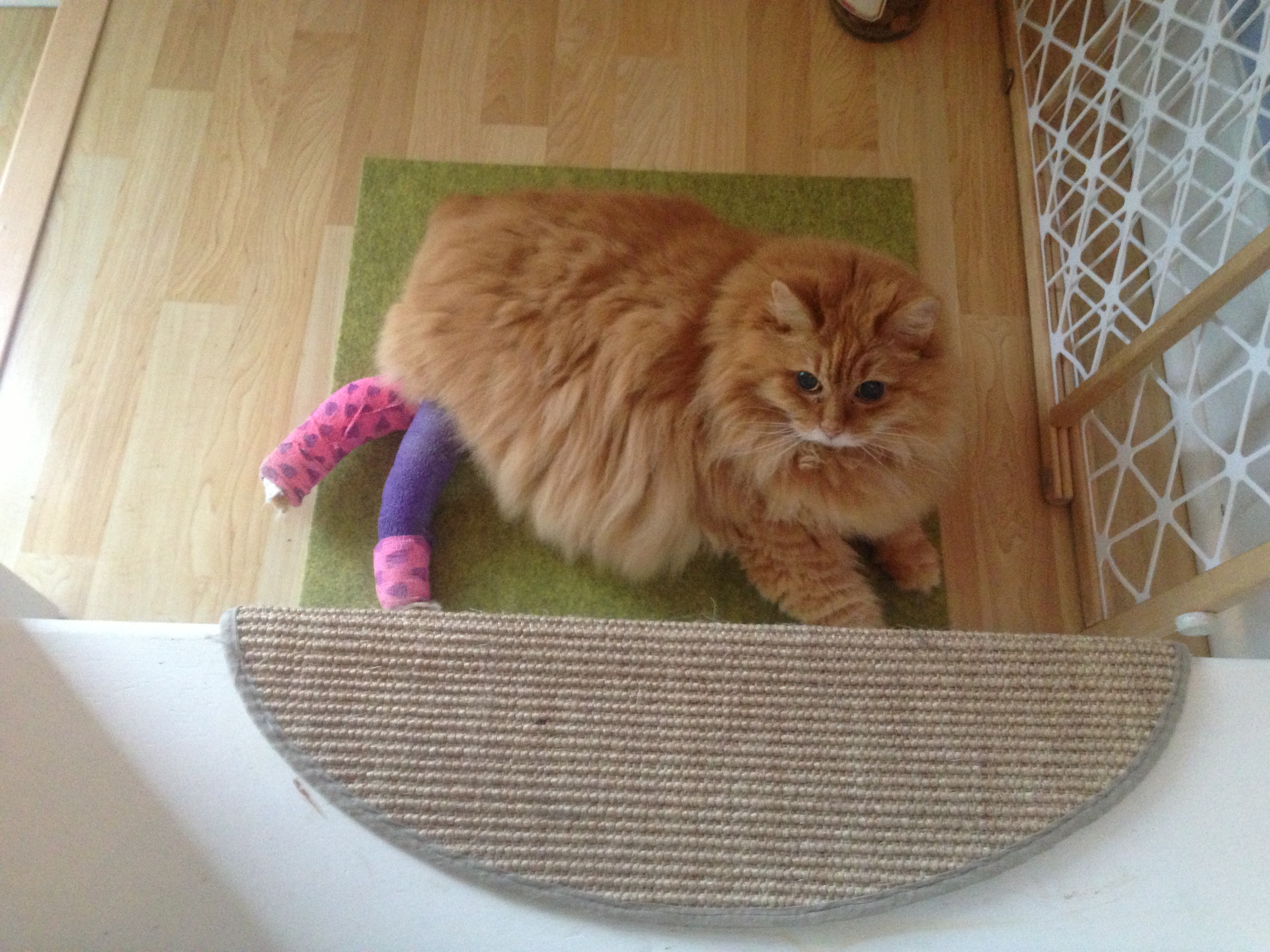
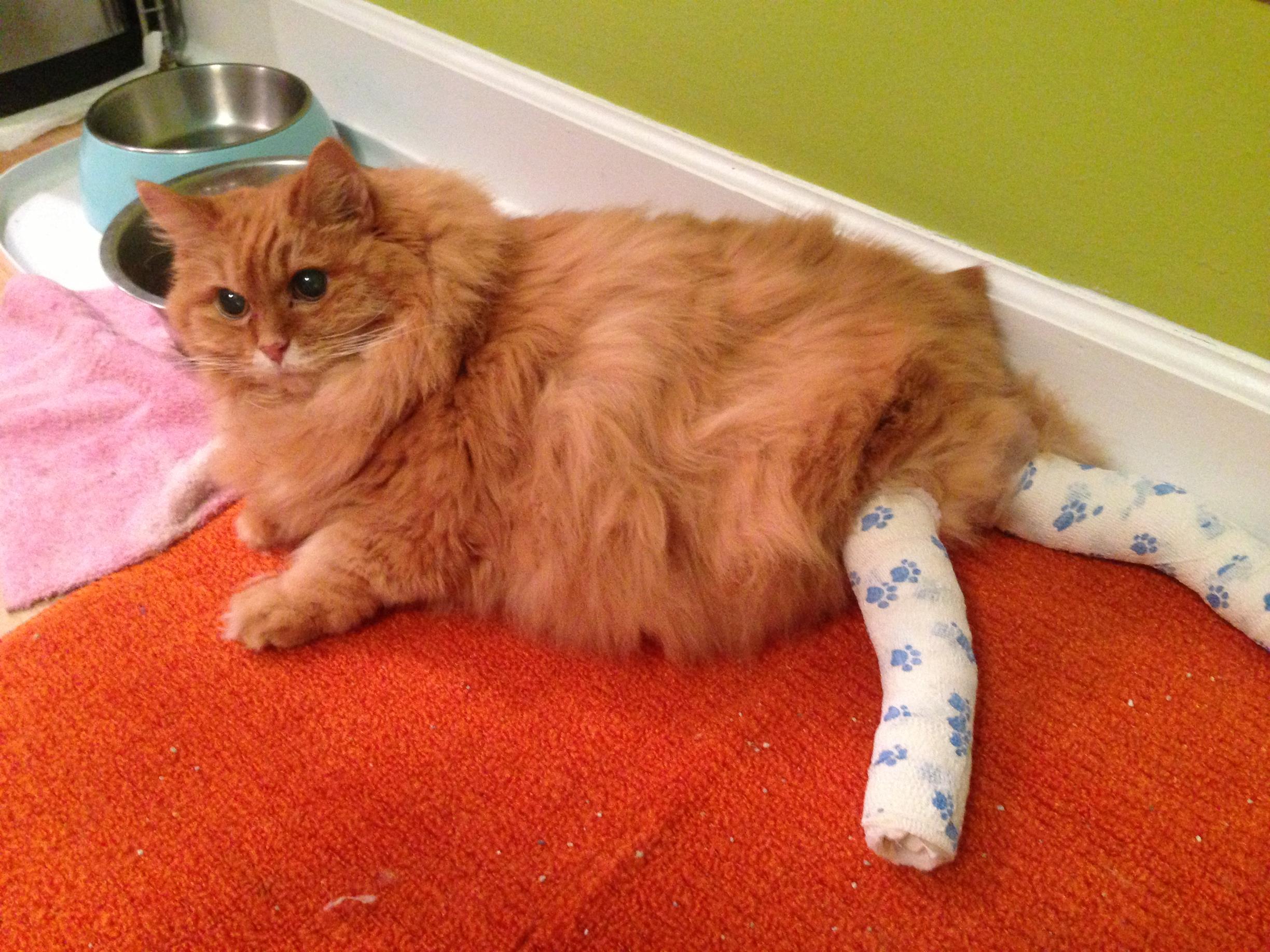
Meet Peaches!
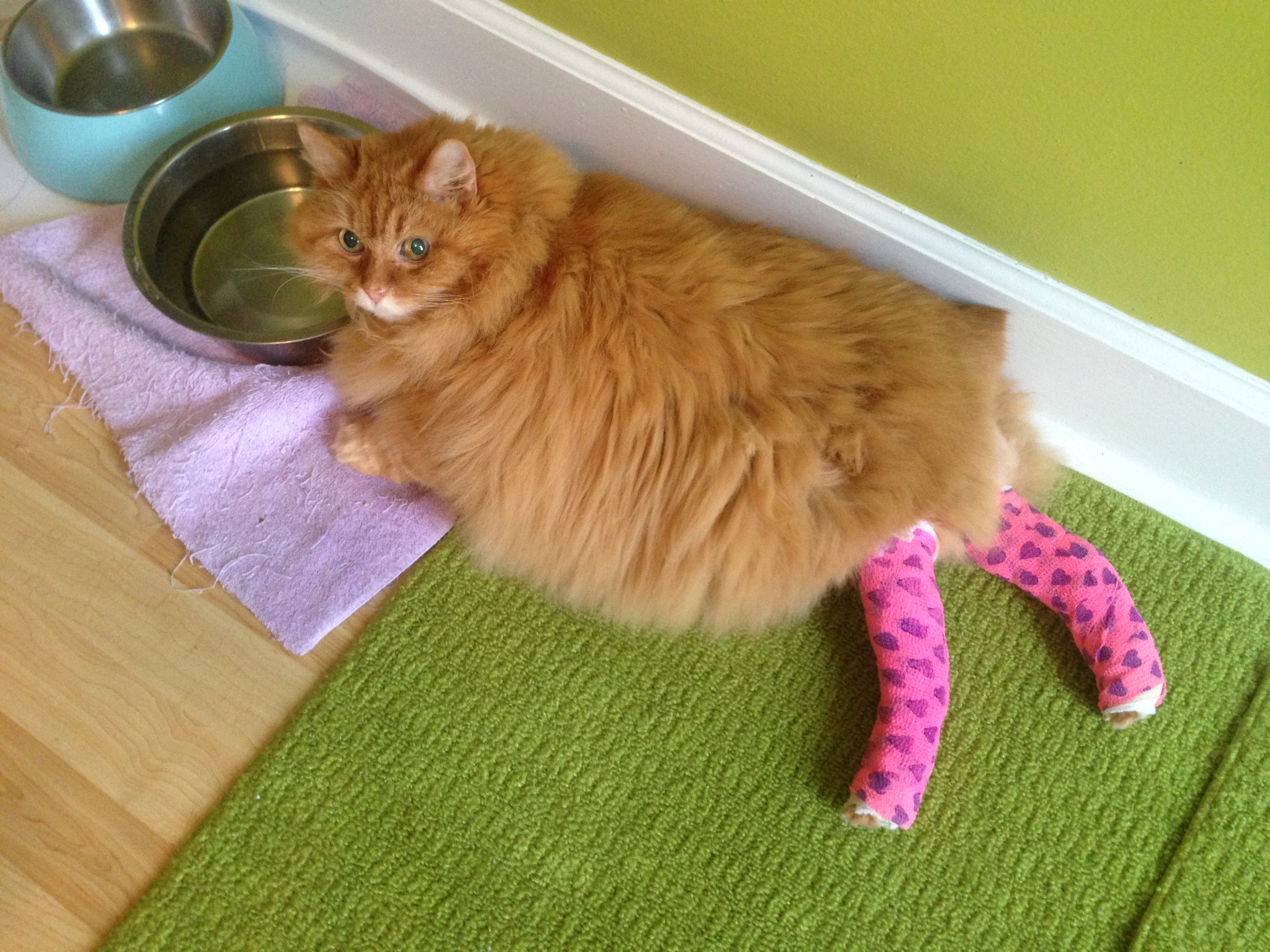
We call these her Barbie fashion splints!
Contemplating ascending stairs -quickly thwarted!
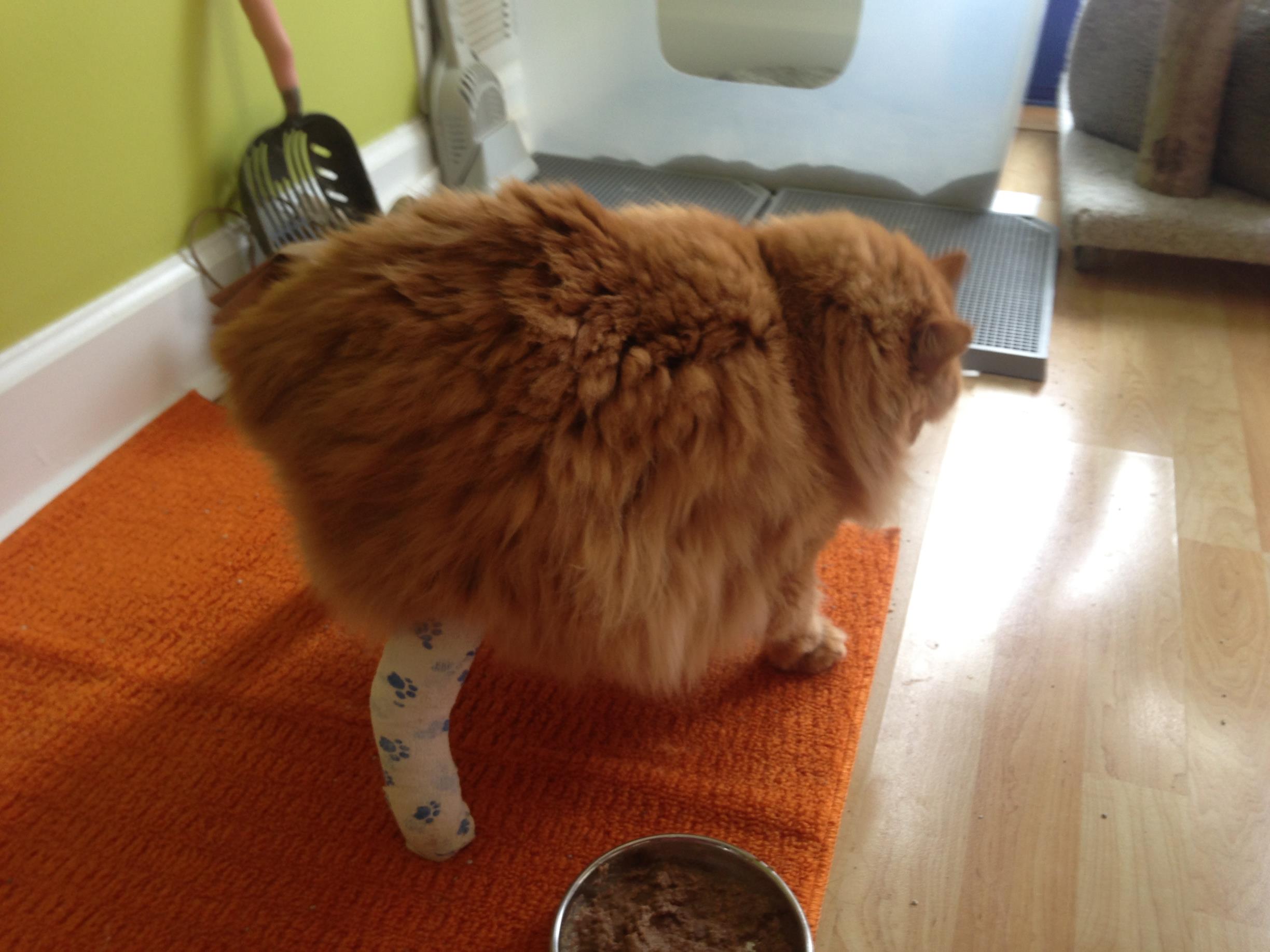
Non-slip mat beside  water bowl for easy access.
Non-slip mat beside water bowl for easy access.

Peaches is 15 years old in these photos. She had been having some soft stool and as you can imagine due to her roundness she could not easily reach to clean herself up. I gave her a bath as I had done about 2-4 times a year her entire life. This bath was different. She hopped and jumped quite a bit to exit the tub. When we were done  I set her down and realized she was unable to walk. The veterinary orthopedic surgeon said she had, "blown out her hocks" a.k.a. her ankles. She was unable to stand at all. It was awful.

So for the next 8 weeks this little lady wore double hind leg splints! Believe it or not as long as she was on texture she could walk. Towards the end as she improved she was even able to get in and out of the large storage tub litter boxes!

Right: Machine washable non slip mats for traction.

Two shallow litter pans to ease her ability to enter and exit: one with only a 1/2 inch of non-clumping clay litter and one with a puppy pad.

Puppy pads are also spread around to catch any overshoot of urine and feces (and boy was there!)

Regular litter box should she choose to use it and of course food, water and litter all close together to make it easier for her to access. These are the times where separating food and water and making them work for every bit they get goes out the window!

Plush bedding and catnip toys as well of course!

This second picture illustrates how we created a superhighway for Peaches so she could get to all of her favorite spots in the house all on her own. We made a sidewalk out of non-slip mats from Ikea!
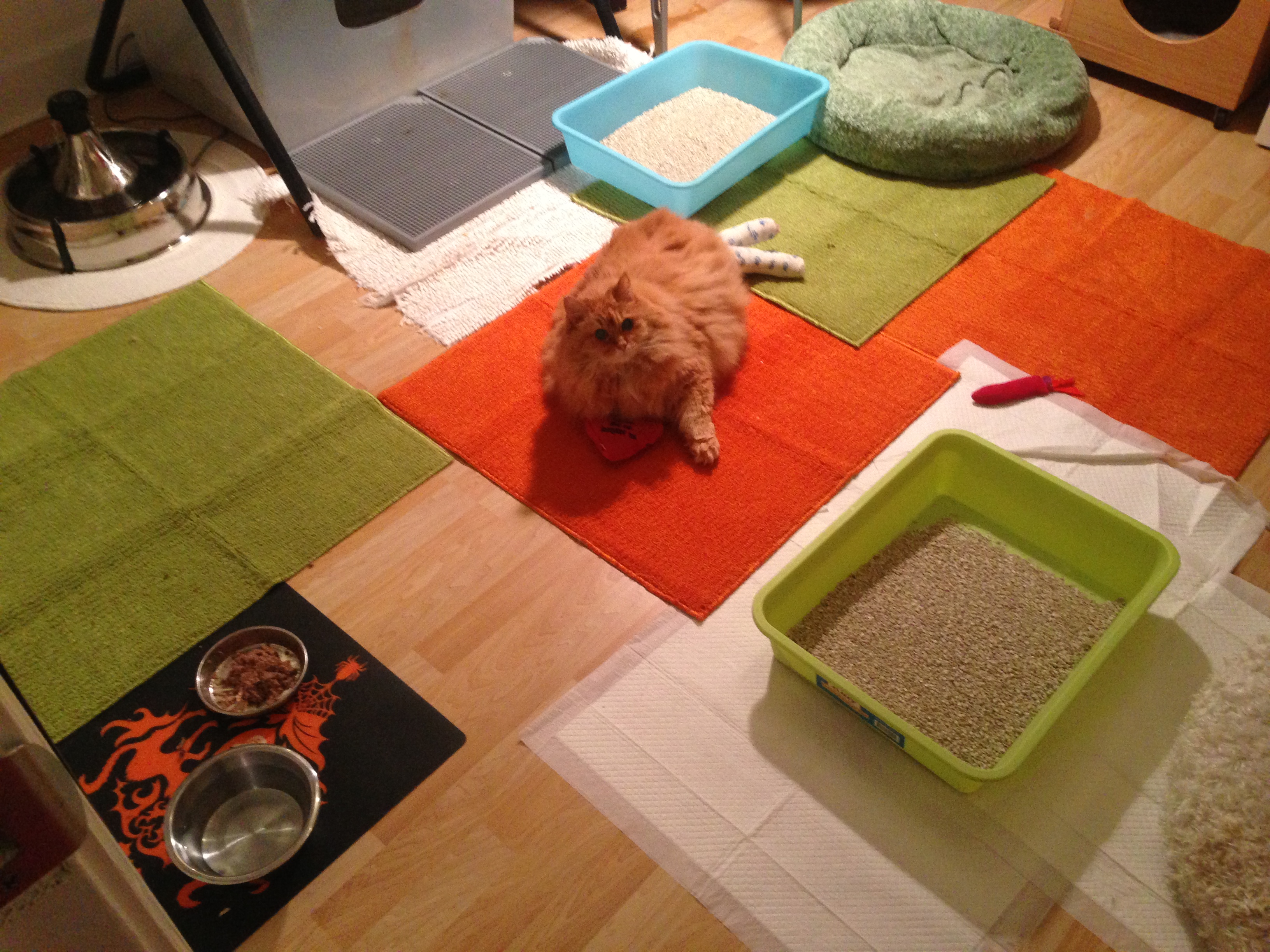
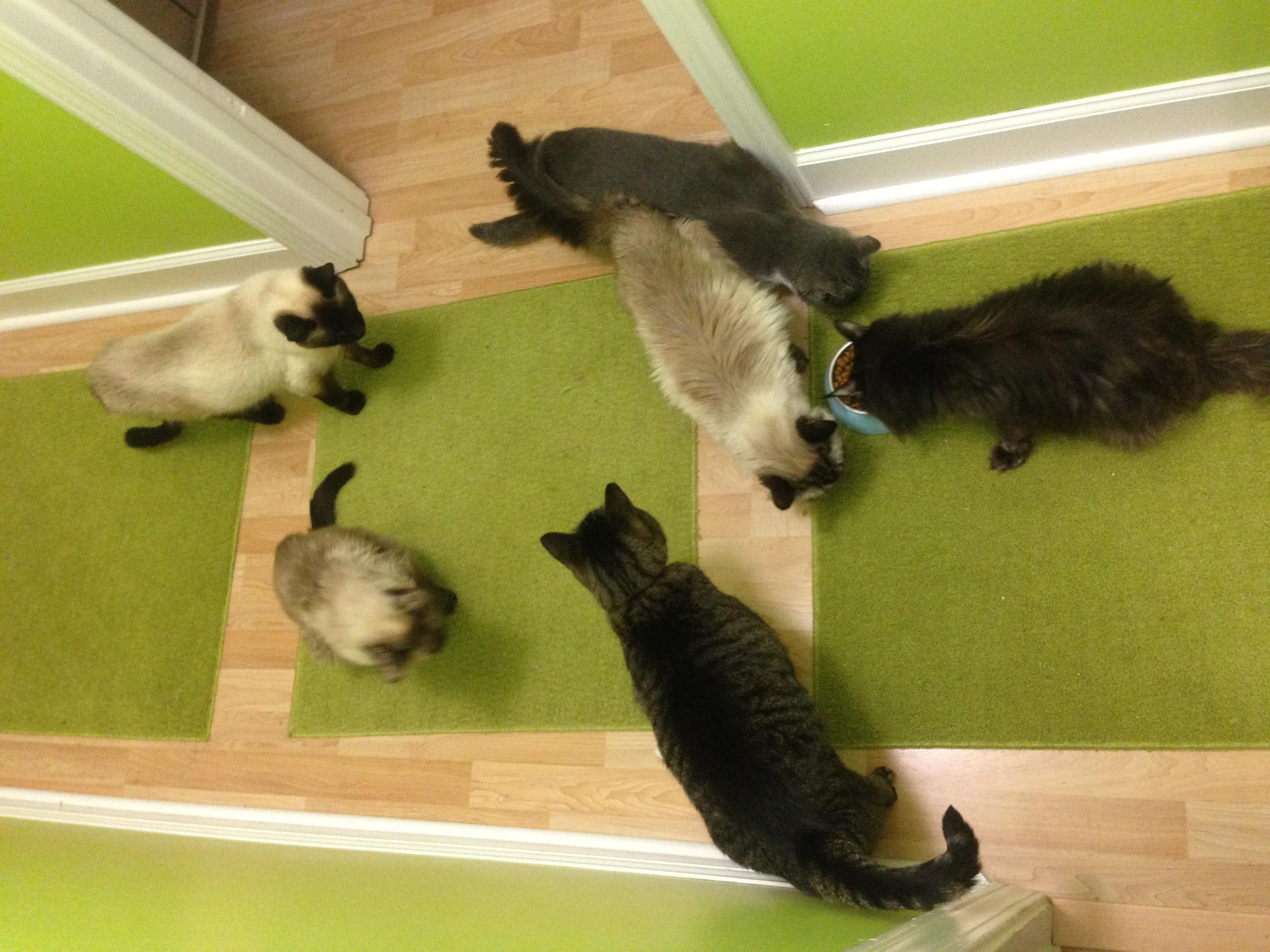
A view of her many accommodations.
Turning hard floors into traction highways!
Up and cruisin' in her splints!
In-between splint changes - still foraging!
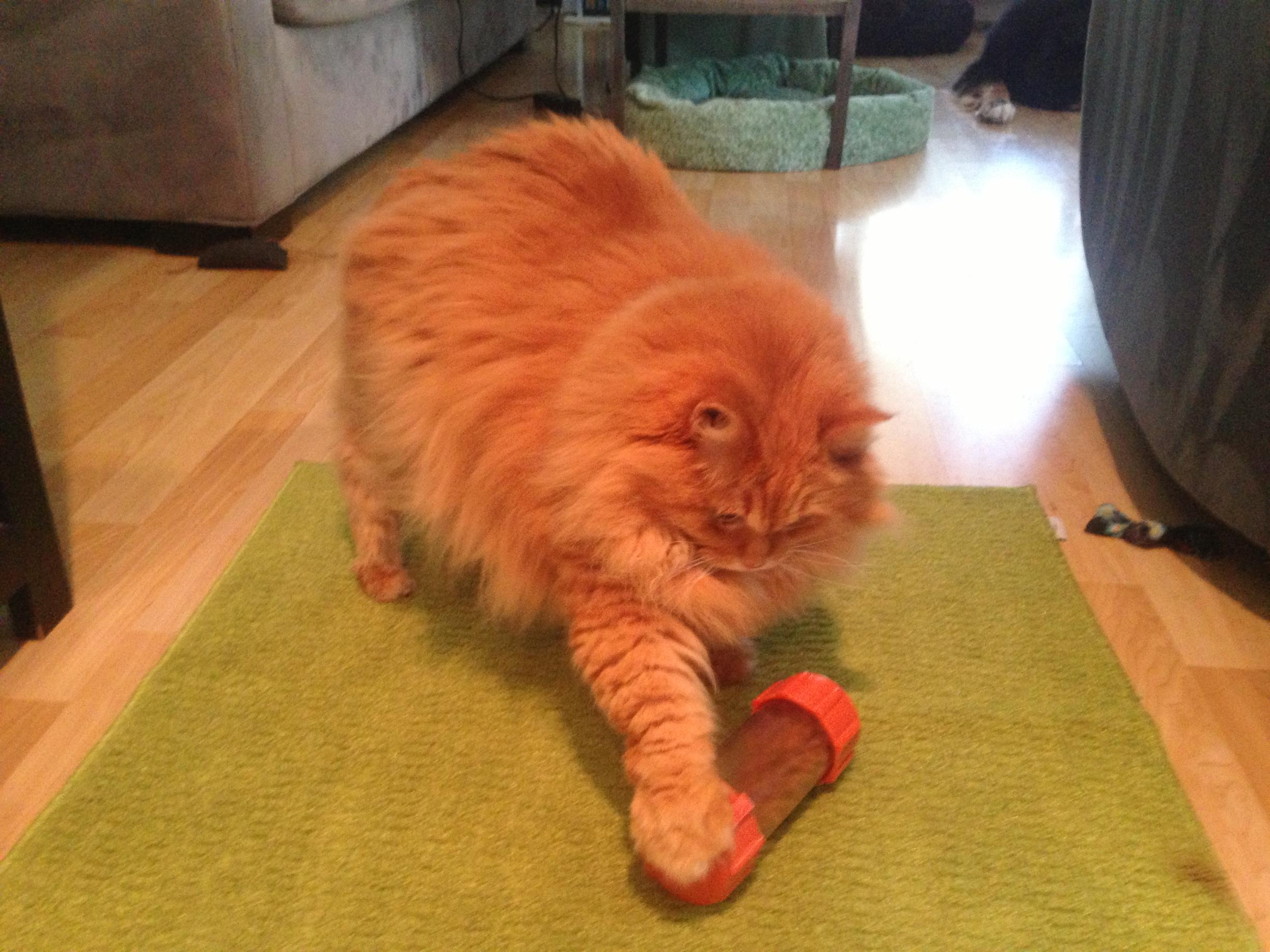
Peachy Cobblers made a full recovery.
IMG_0914 (Copy)

The goal is to be able to provide and meet your cats needs while containing mess to make things easier for you, the human. It is also imperative that the cats are able to maintain quality of life, have independence and go about their normal routines as best as they are able.

While sometimes confinement is necessary, especially during surgical recovery, it should be avoided for chronic conditions such as arthritic older kitties or what are they living for? Spending their last few months locked up alone in a bathroom is not quality of life for anyone. Which bring us to our next example of broken felines!
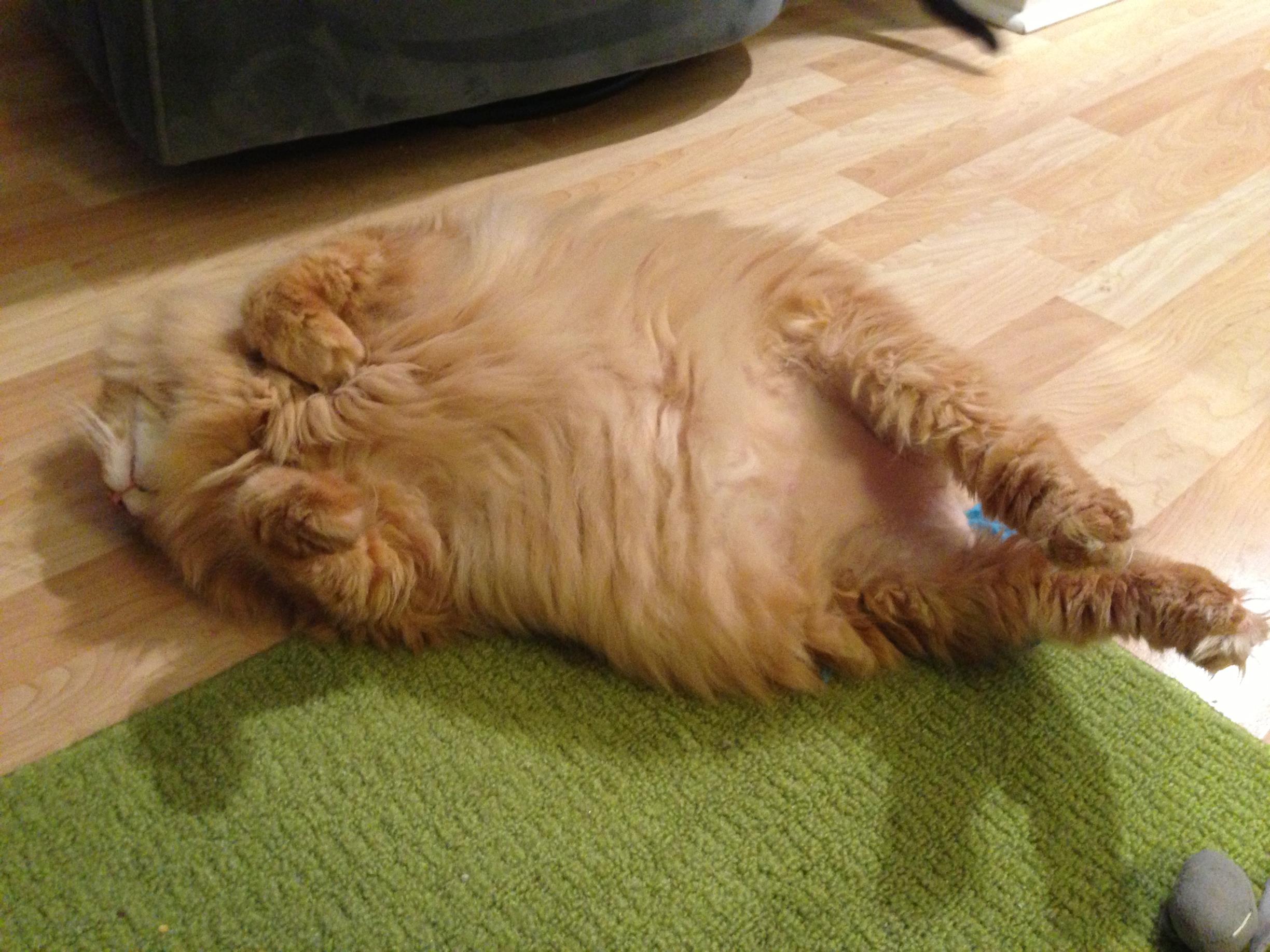
 

IMG_0960 (Copy)

Right: normal scratching behavior after splint removal. Remember that scratching is a "feel good" behavior, so when you see cats scratching that were sick, you know they are feeling better! This was a proud day!
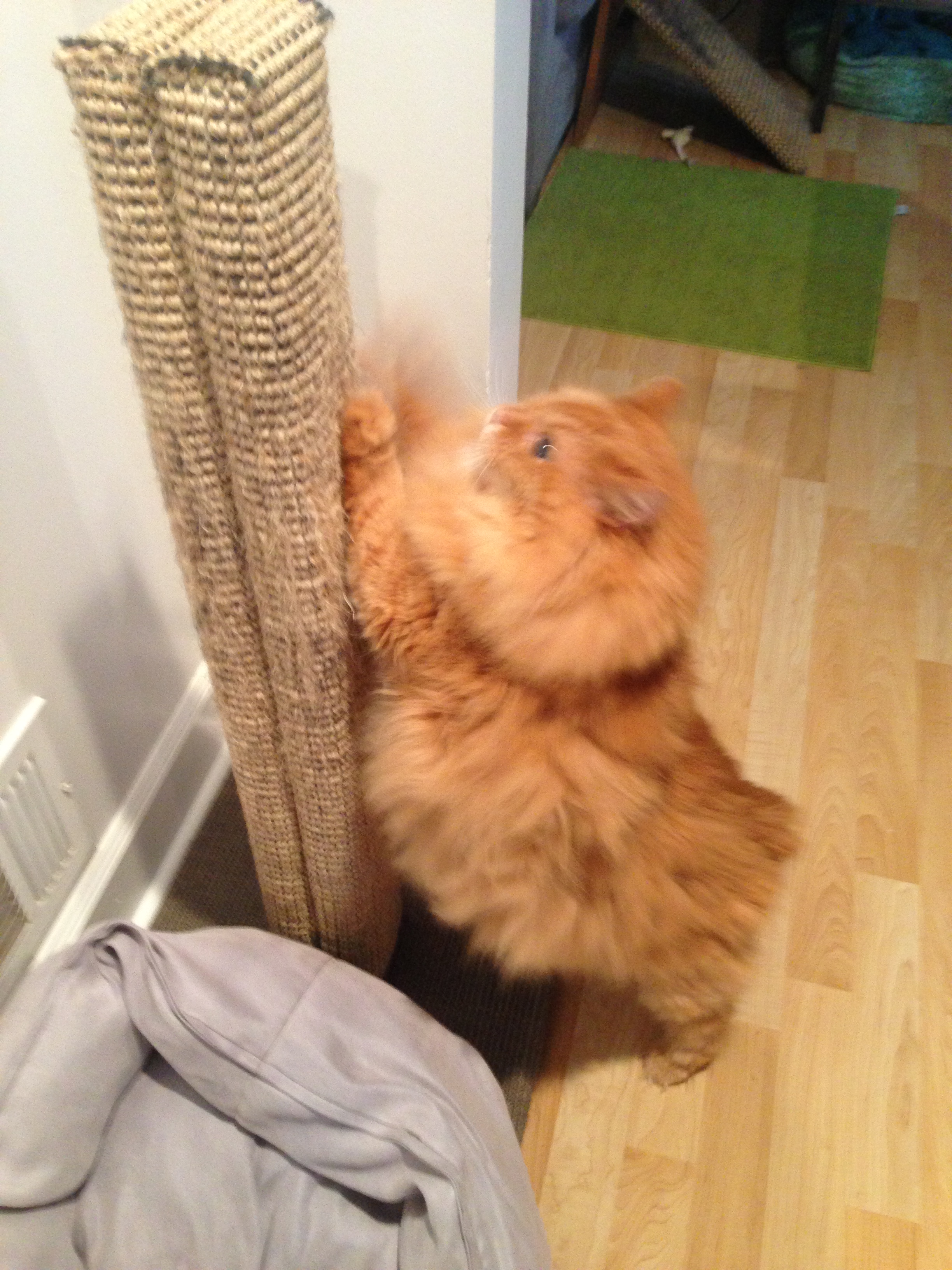
The goal is always quality of life.

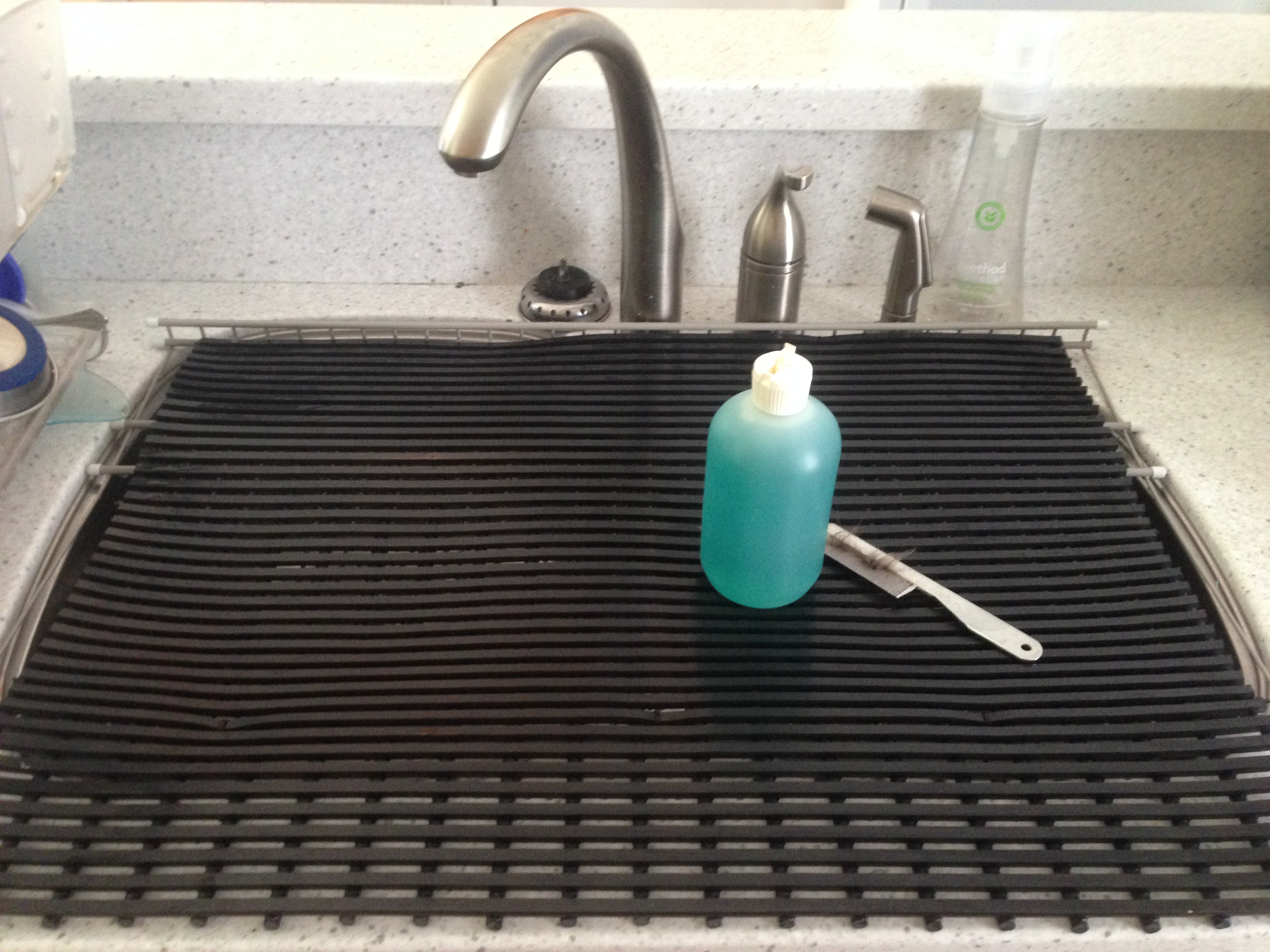
The special needs washing station

Here you can see we created a safe bathing station so that no one had to be submerged in the bathtub ever again!

Using vinyl coated closet shelving zip-tied to a rubber slatted mat we fashioned this to cover our kitchen sink. This way the cats can get cleaned up using the sprayer and the water and soap can easy drain through. They can choose to stand or lay down.

This made it so much easier to help keep the old guys clean after accidents.
IMG_2882

Meet Lefty and Vader!

Lefty in all of his hit by a car tripod awesomeness.
They were our matching set for 15 years.
Vader lost his right front leg to cancer at age six.

I have been known to say that 4 legs are "extra." Cats are amazing at going through life as tripods and their resilience and ability to overcome is second to none. However, when they become geriatric you realize just how much they do need all four legs, much more so than they did as youngsters.

My best advice, start joint support early and keep them thin so they do not have all of that extra weight to carry around.

Lefty and Vader were both front leg amputees. Cats bear more body weight on their front limbs so this is a more challenging amputation than if they were missing a back leg. These guys were no strangers to face-planting in the litter box, stumbling entering and exiting the box and from time to time needed some help getting cleaned up if they could not get out of the way of their own mess. (See above washing station)

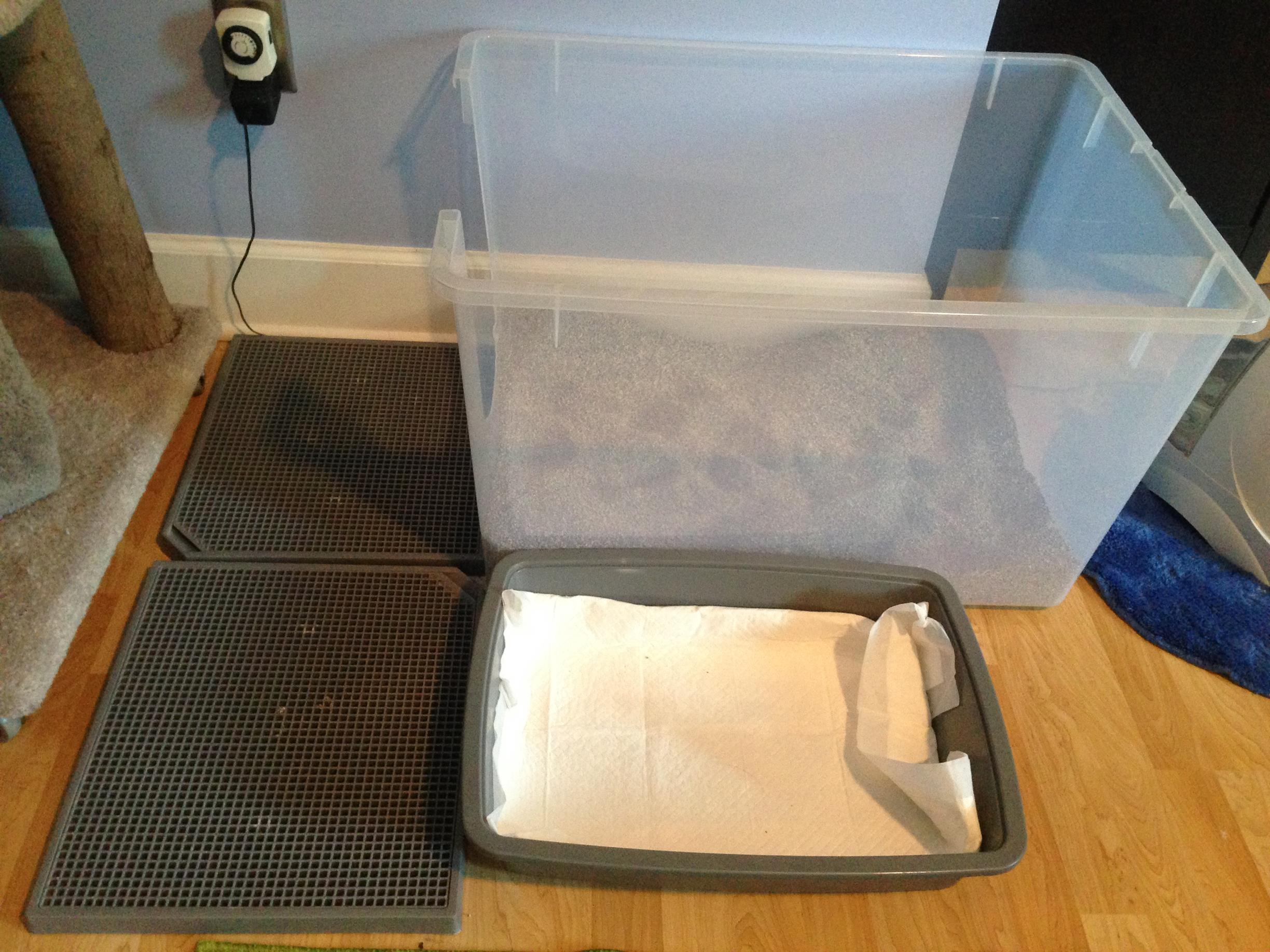
As the years progressed we had to modify more and more. Initially, simply cutting the large storage tote litter boxes down extra low was enough to ease their ability to access the litter. This of course meant more litter scatter and tracking mess but that was a small price to pay to allow them dignity and independence.
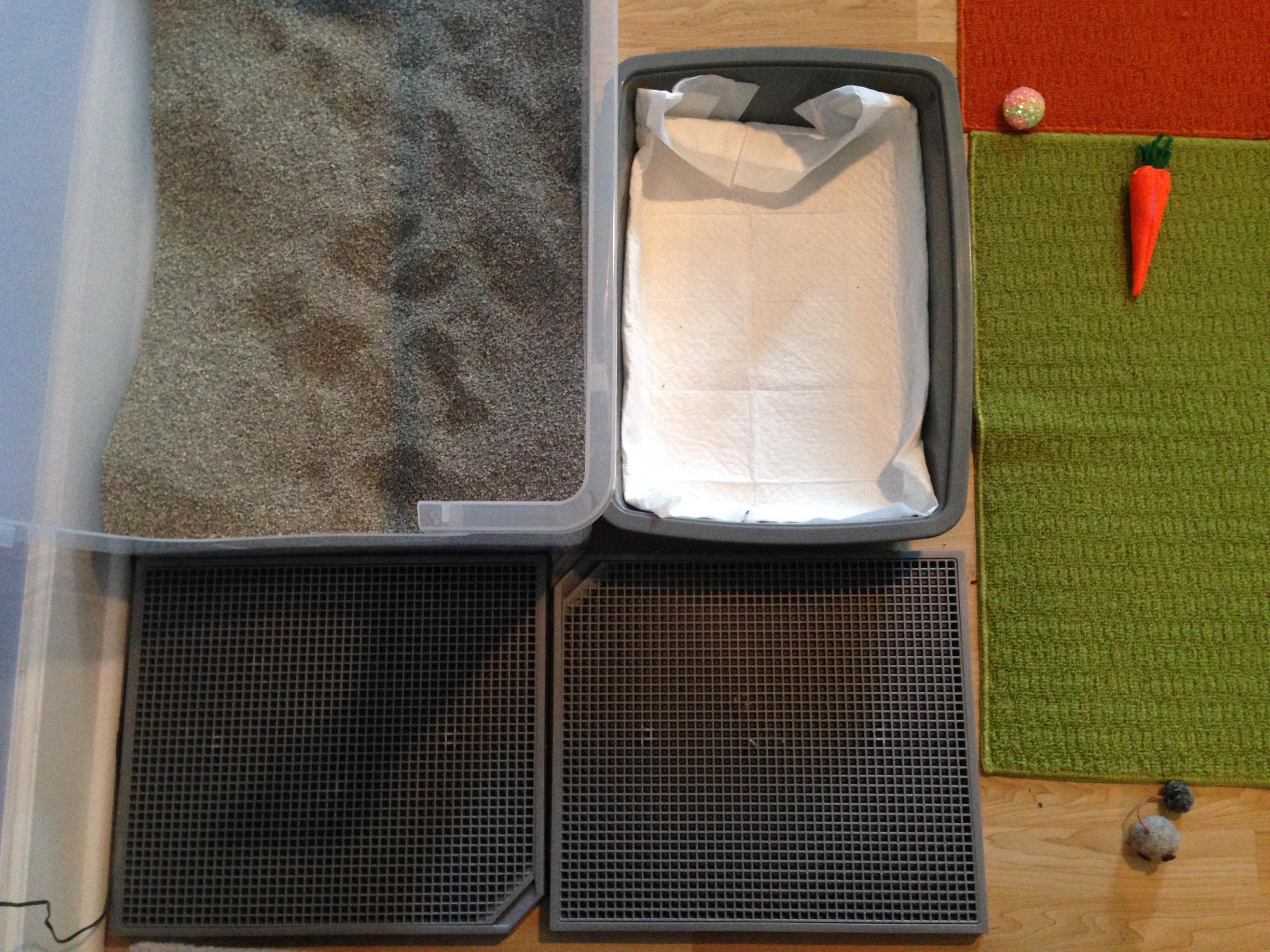
IMG_2187 (Copy)
IMG_2186 (Copy)

Explanation of the photos above:

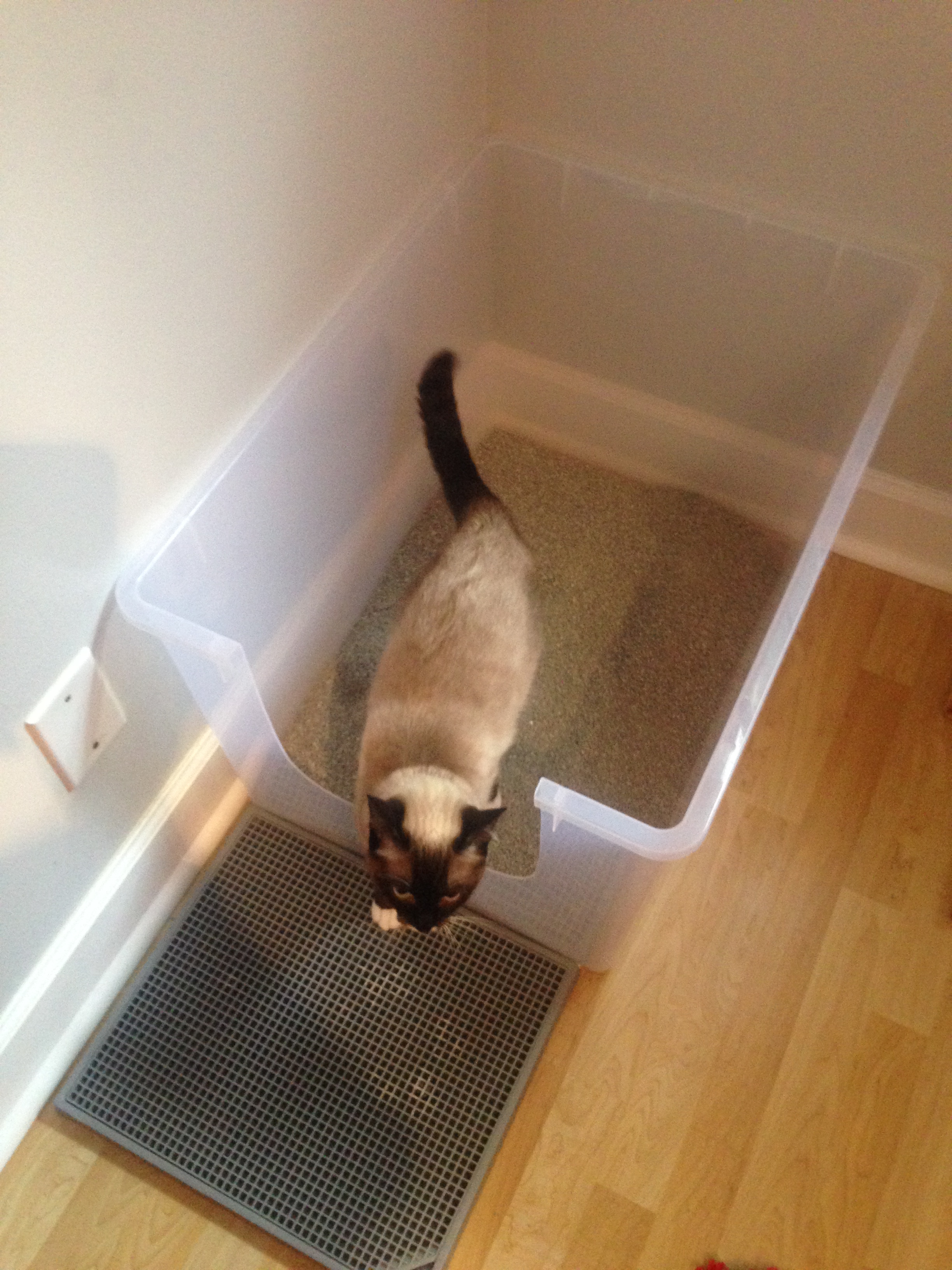
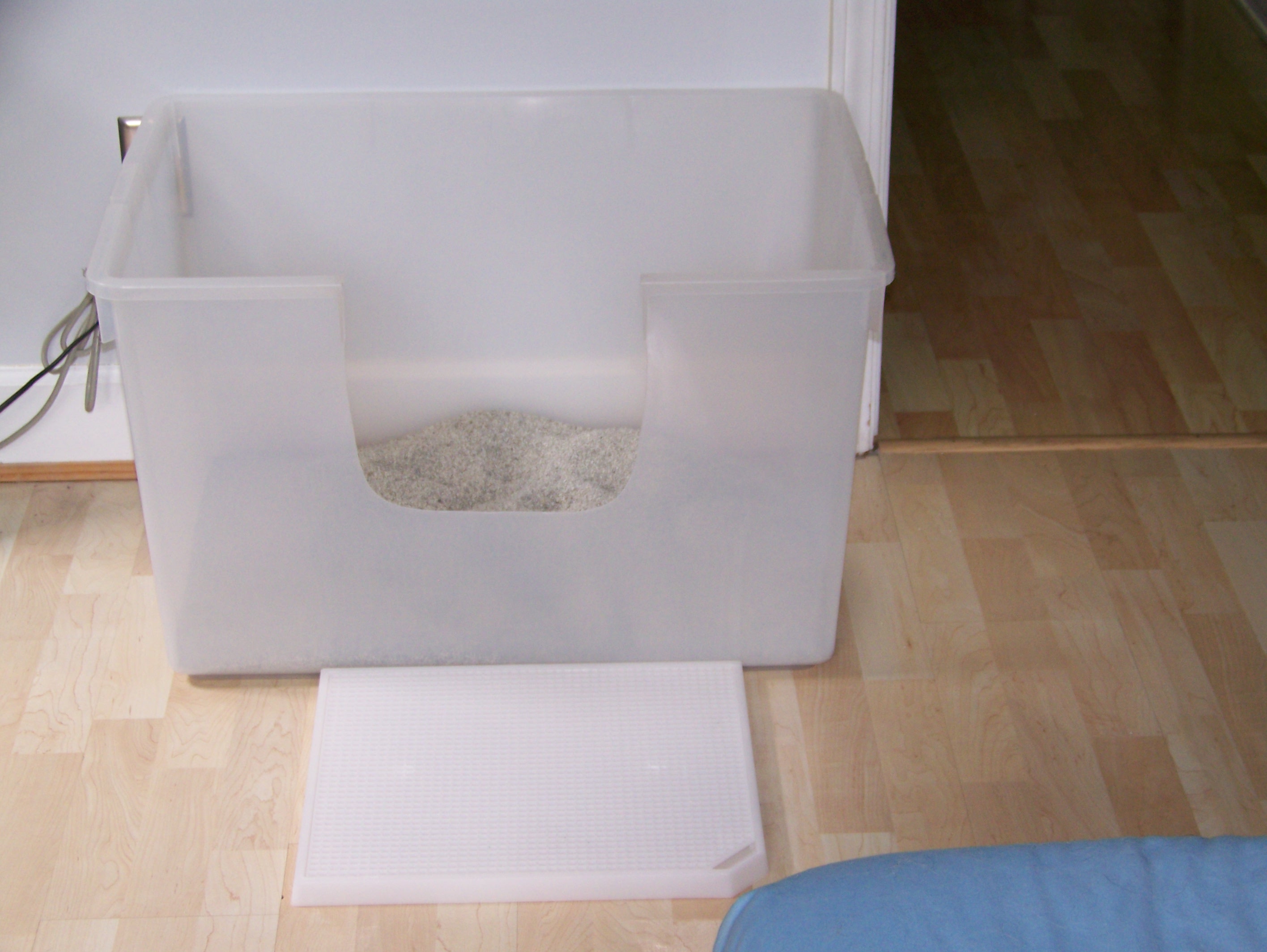
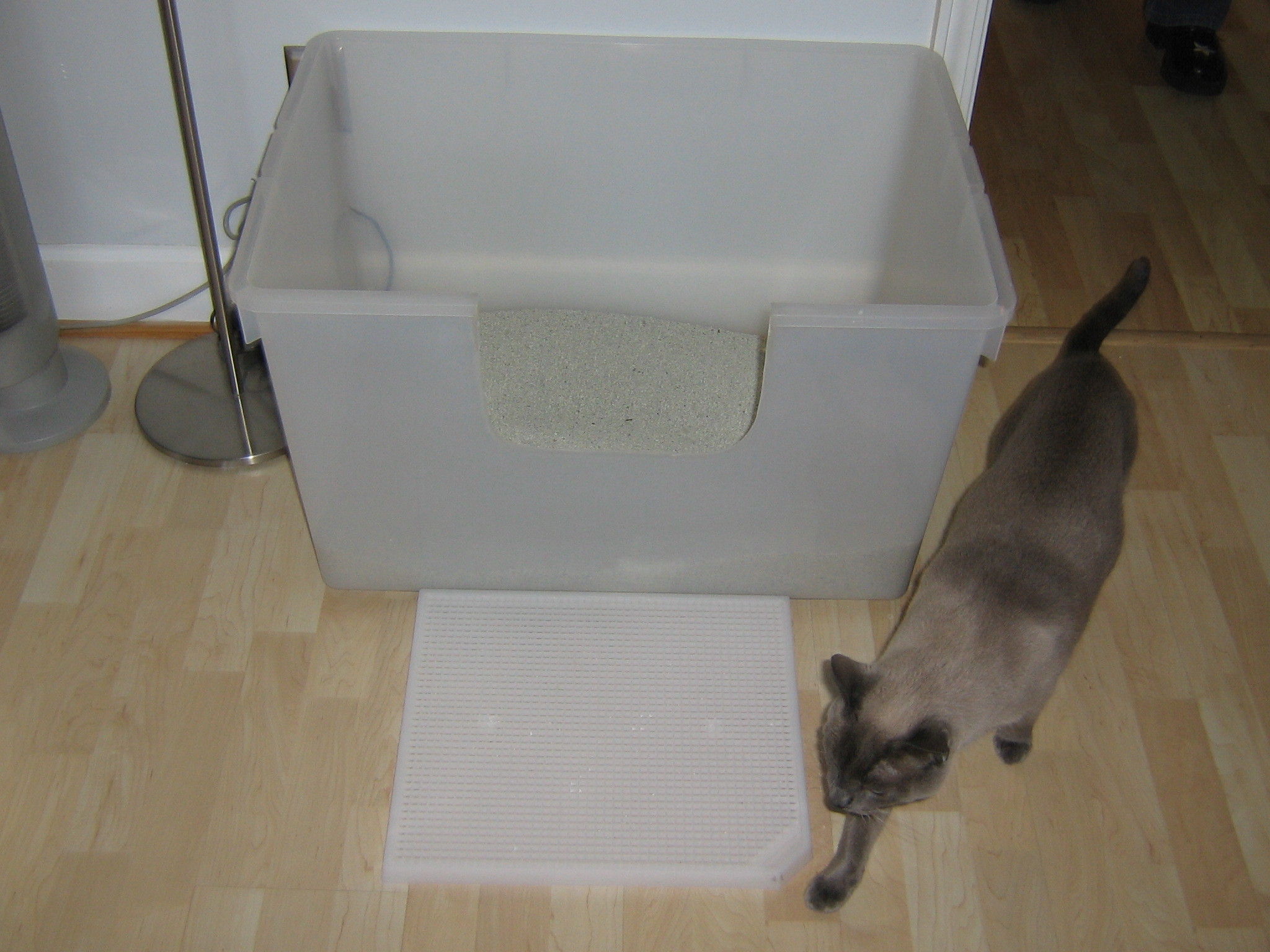
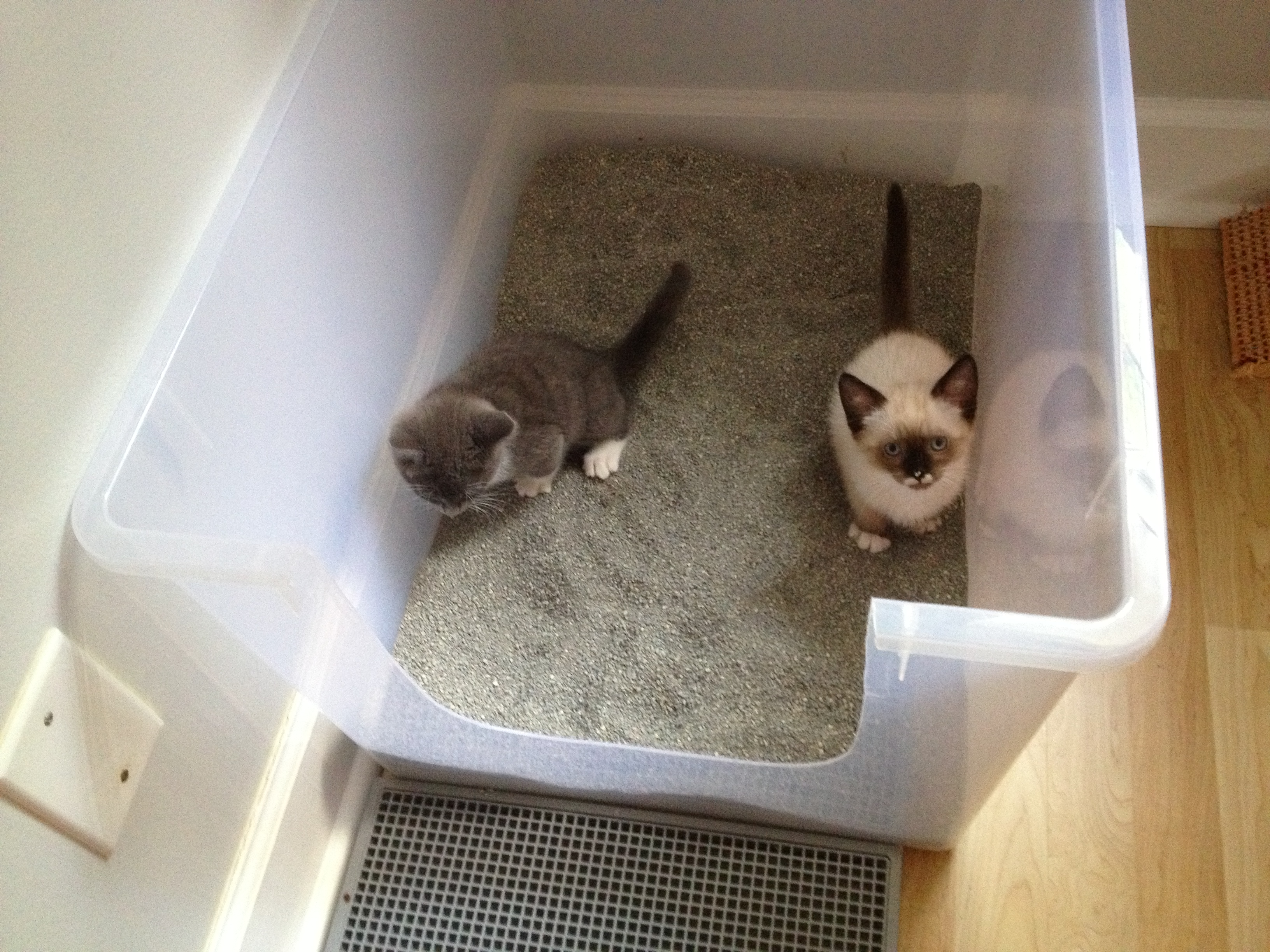
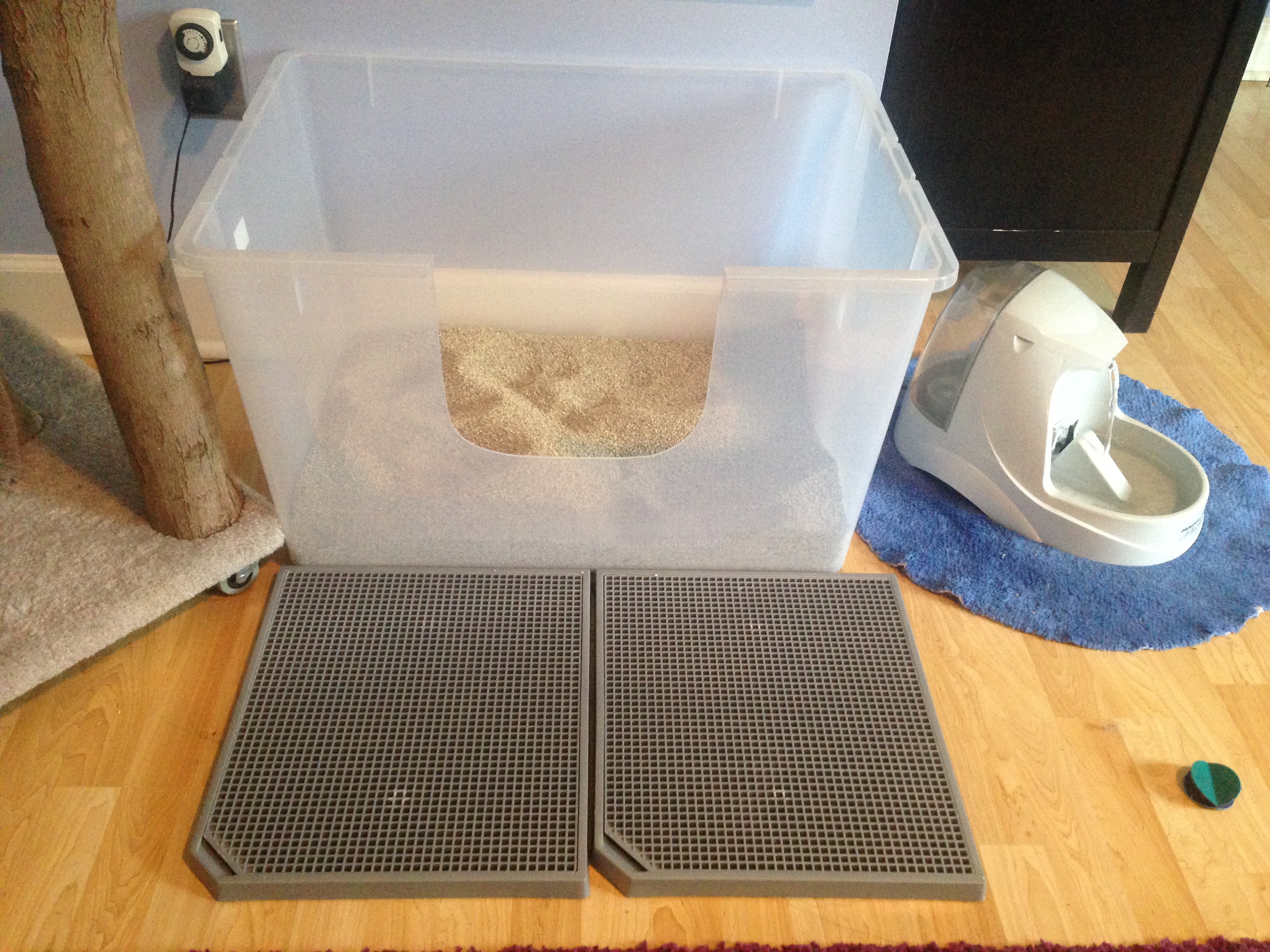
Large storage tote litter box cut extra low to ease entering and exiting the box.

Shallow amount (~ 1-1/2") of litter so the cats do not sink as low and do not have to work as hard to move around.

Step out mats with puppy pads underneath to catch any overshooting from the box. It is important to place the pad partially under the litter box and partially under the step out mats for maximum urine collection. Arthritic cats cannot squat as low so they often eliminate over the sides of the boxes by accident. These step out mats were also perfectly acceptable elimination locations in my opinion. If they chose to pee on the step out mats I saw this as compliance. You must have realistic expectations!

Shallow puppy pad box offered beside litter box as a soft and absorbent option. Puppy pad use, whether in a pan, on the floor, etc. is also compliance. Whatever is easier for the cat to use and still easy for the human to clean up can be an acceptable alternative.
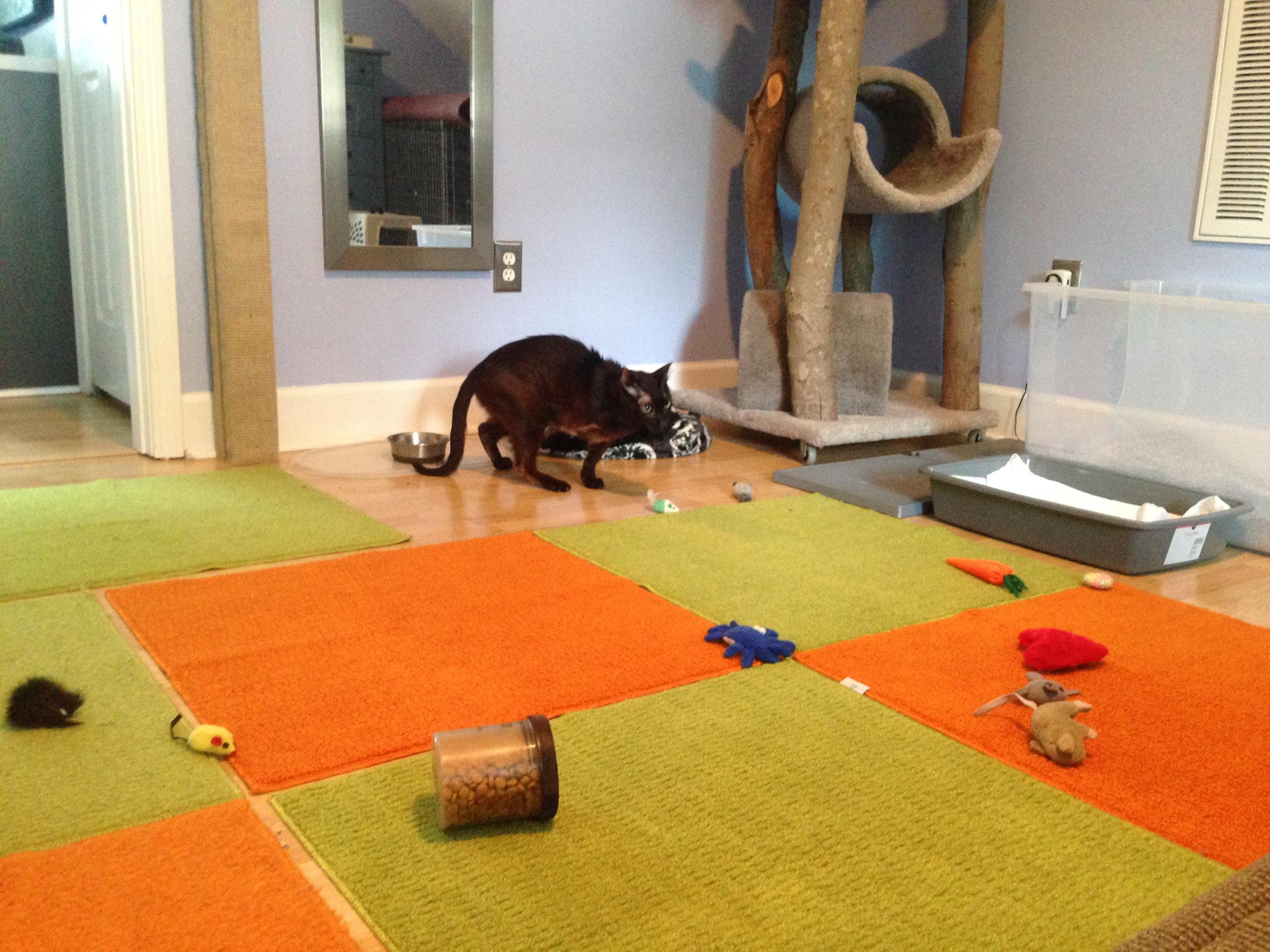
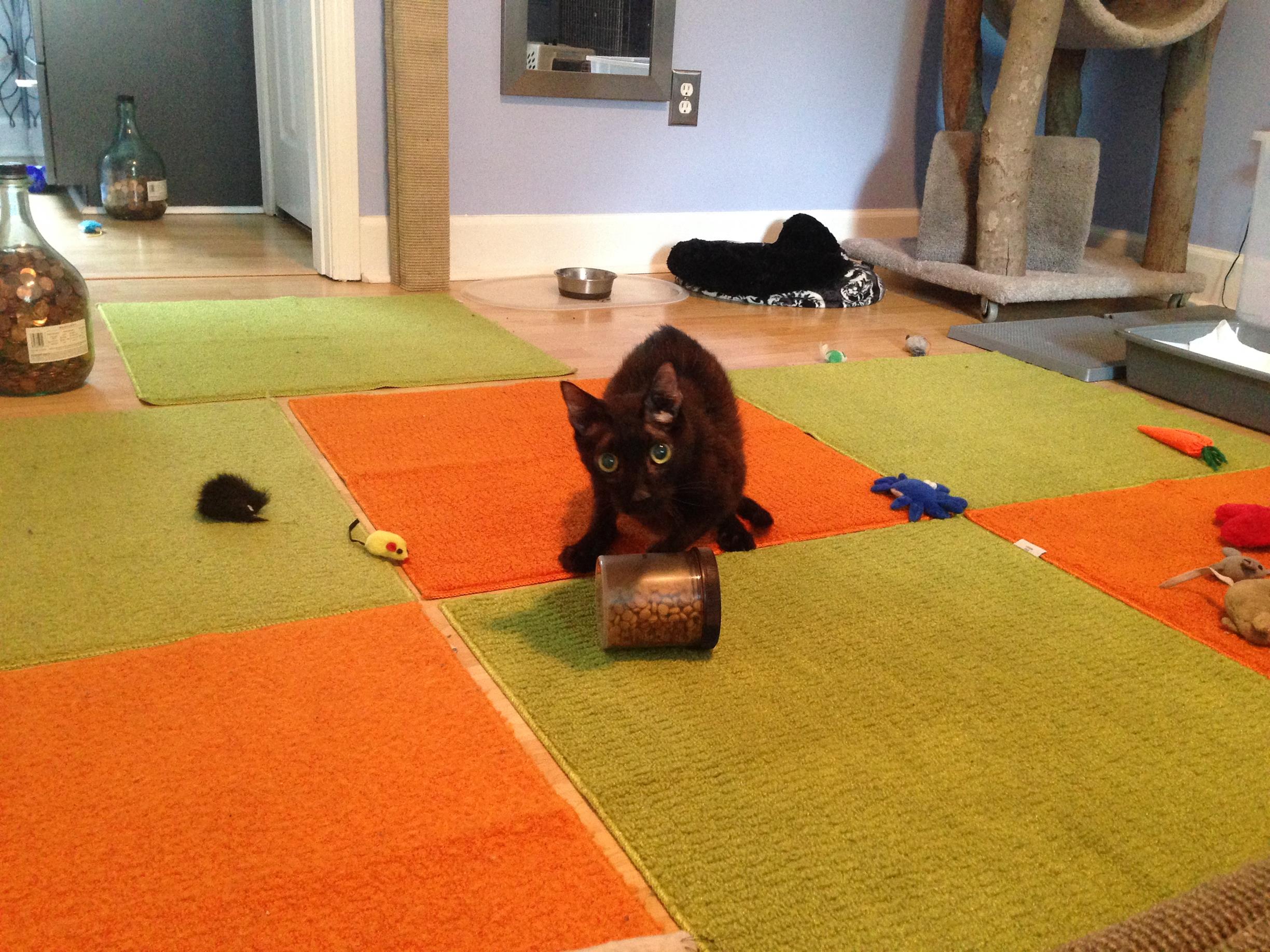
A view of the whole set up & the washable mats for traction & easy clean up!
Still foraging at 15 with only 3 legs!

Vader had another special need. He had asthma. For those of you that have been following along regularly for years you may recall that Vader is the cat that saved our home from burning to the ground when it caught fire. You can read Vader's heroic tale here.

In his later years he would, quite sadly, cough so hard sometimes he would "pee his pants." He couldn't help it and he did have bladder control, he would just have coughing fits and urinate. And yes, of course he was on medicine for his asthma!

You can imagine the dilemma in that Vader's favorite place to be was on our master bed! The photos below show how we managed the problem. Each morning we would make the bed, cover it with an inexpensive shower curtain liner and then a washable, soft, fleece throw. Vader could still have his favorite spot, he was still comfortable, but our bed was protected. How could we possibly confine him away from the bedroom after all he had done for our family?

Similarly we would cover cat beds with a puppy pad and then lay machine washable towels, blanket etc. on top for maximized coziness. This did wonders for salvaging our pet beds. This is also a great trick for many old cats for a myriad of reasons. You can allow your seniors to enjoy their favorite napping spots by placing puppy pads on chairs or sofas with an attractive throw over top to protect furnishings from vomit and other accidents.
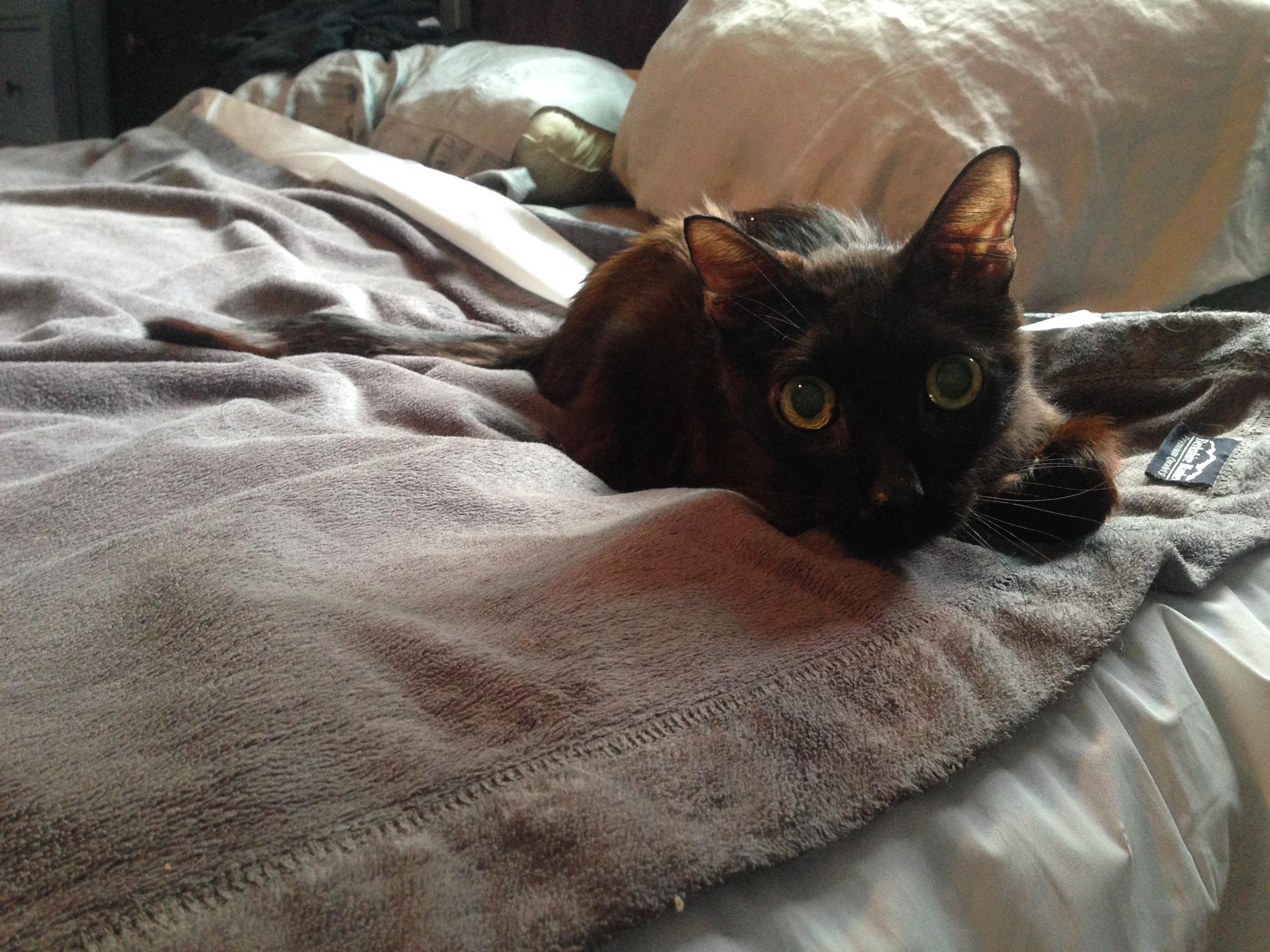
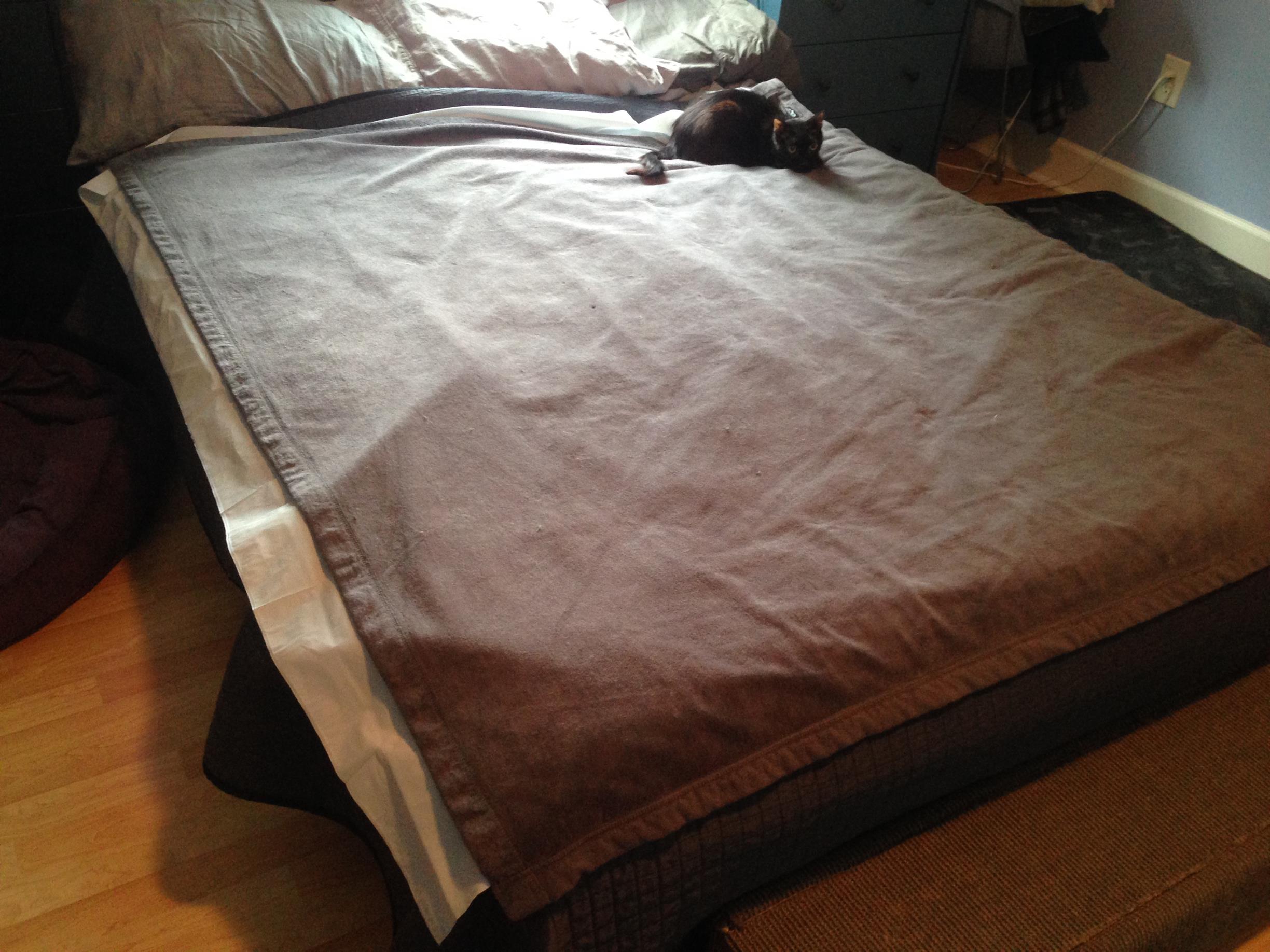
An appreciative boy still sleeping in his favorite spot.
The bed covered with shower curtain liner as described above.
Vader with littermate Simon on a puppy pad covered bed with towel over top.

Meet Wheels!

jake 263

Wheels was hit by a car when she was only a few months old. She was permanently paralyzed and we expressed her urine and feces multiple times a day. Some people might say, "why would you keep a cat like that alive?" Wheels didn't care that she couldn't use her legs, she didn't worry about what she looked like or if anyone was going to make fun of her. She had amazing quality of life, played with toys, loved catnip and was a master forager. That cat could get food out of anything. But she needed help with the litter box...
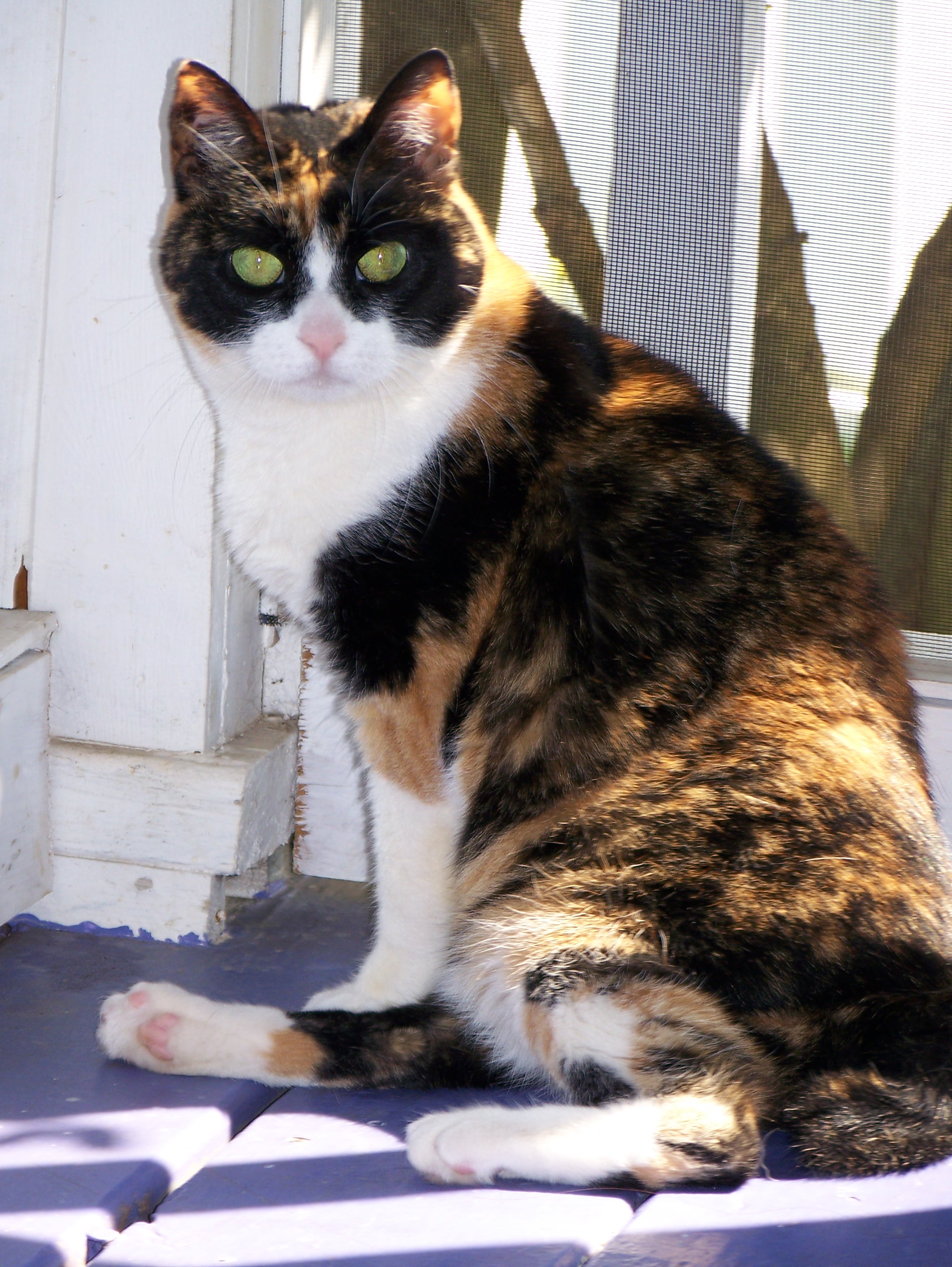
Wheels
Wheels
IMG_3695 (Copy)

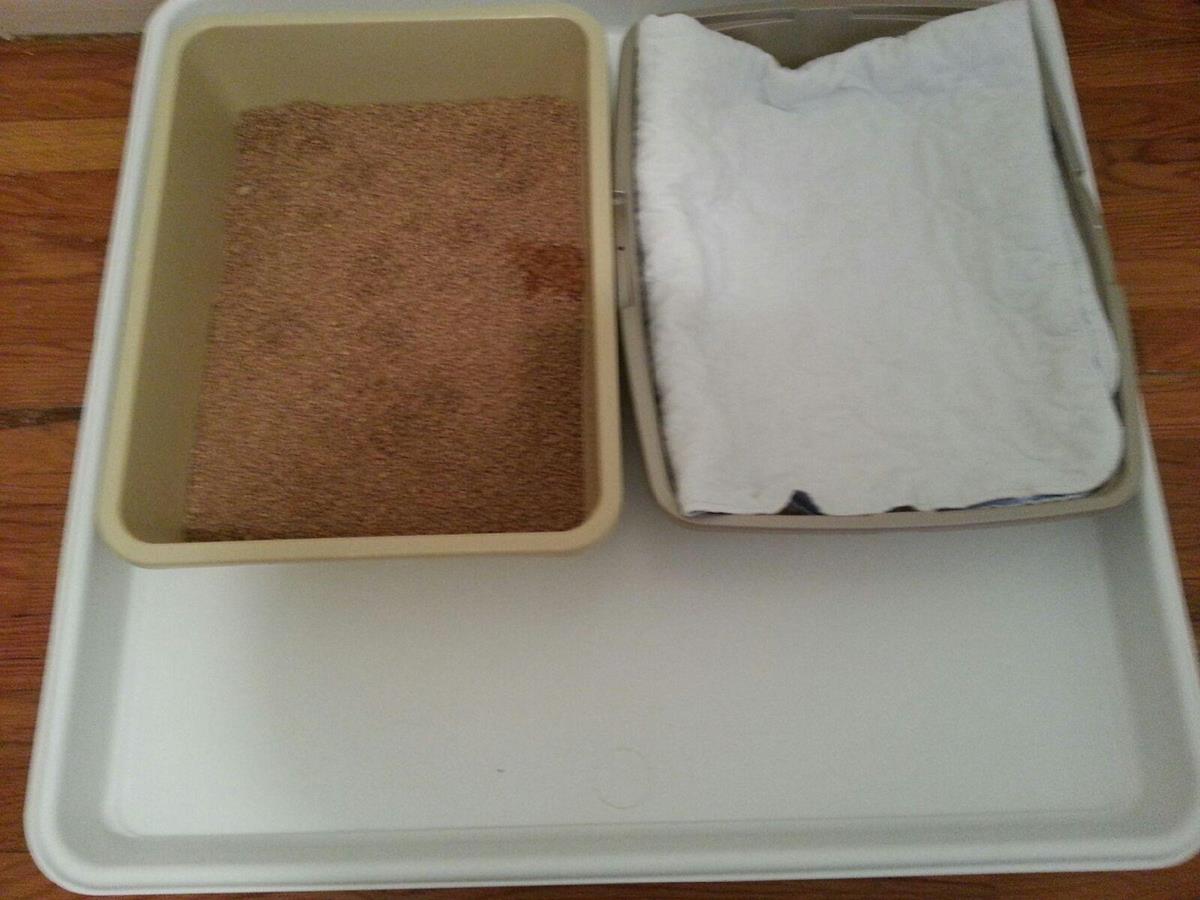
One of my all time favorite litter pan alternatives is featured here, an under the washer/dryer drip pan available at your local Home Depot or Lowe's. These are shallow, huge and easy to navigate. They can be used on their own or combined to create options as shown here. They can be offered with litter, shredded newspaper, shredded paper towels or just plain. Great for arthritic old seniors too!

Cats like Wheels can often scoot themselves into a box to eliminate, but what they will prefer to eliminate on will be different for each individual. Also, some handicapable cats can get around better than others. Litter may be too messy for some so a puppy pad option as shown here can used instead. It is soft and absorbent and will help keep the kitties clean.
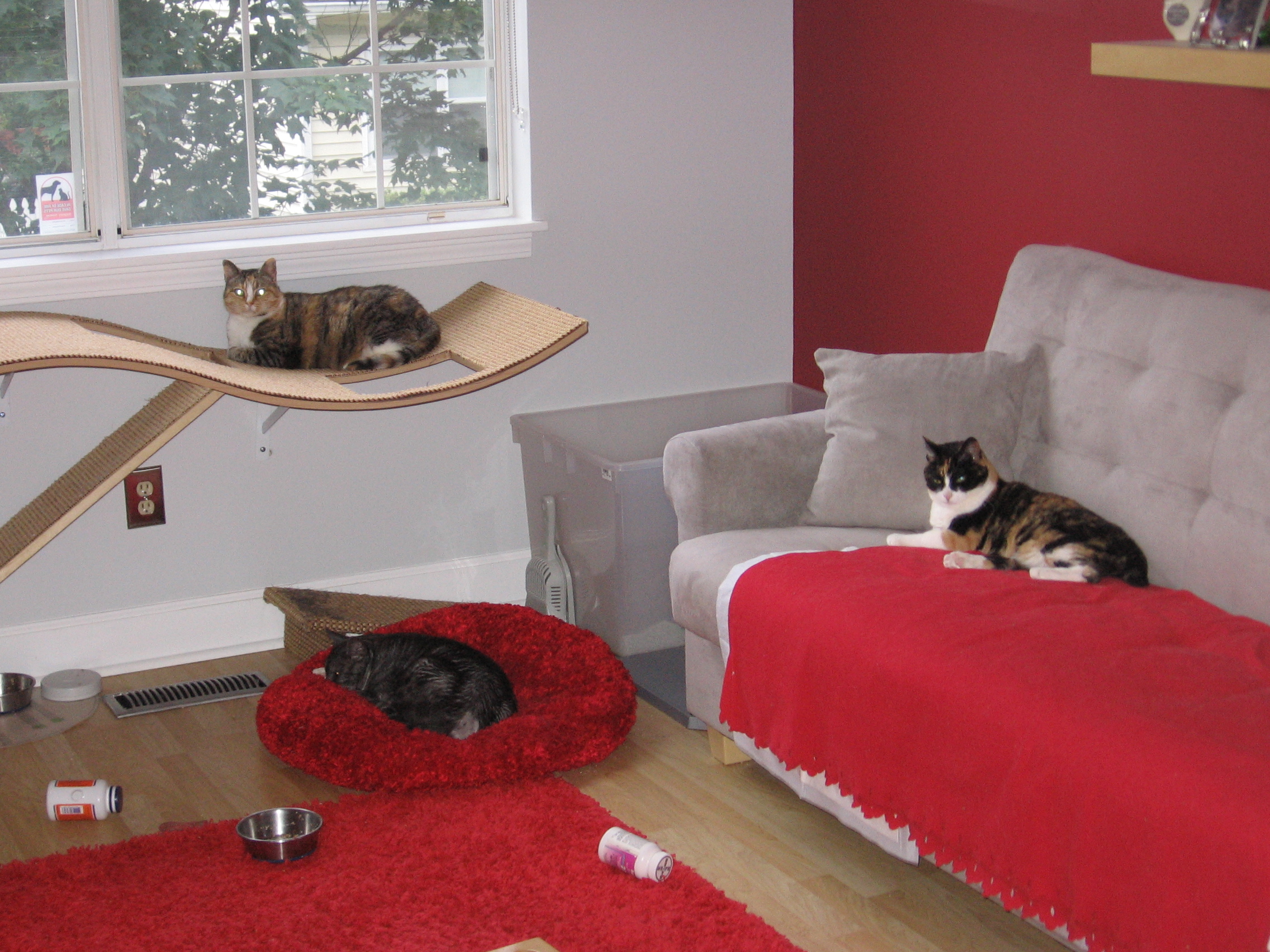
Able to get up and down off of sofa all by herself!

Euthanize? I think not! As you can see here Wheels could get around. She could climb stairs, get up on furniture, even jump out the window onto the screen porch.

If you are willing to give a special needs kitty a chance, just know that they will need some unique accommodations. With a little ingenuity and creativity you can give them a chance at an amazing life.
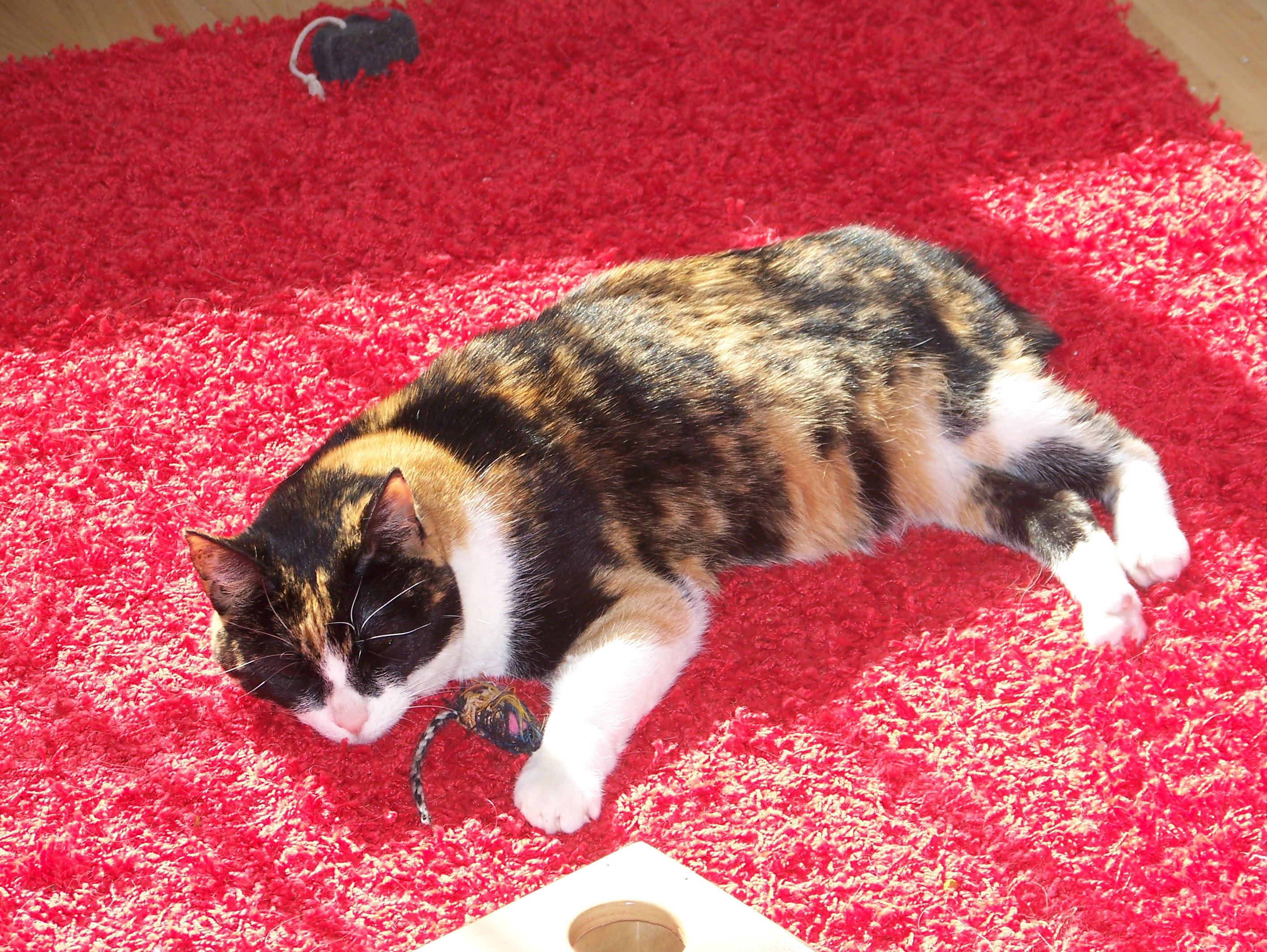
Napping in the sun with her fave mouse toy.

Filed Under: Blog Tagged With: arthritic seniors missing the litter box, elimination outside the box, handicapped cats, Inappropriate elimination, injured cats and litter boxes, litter box avoidance, Litter boxes, old cats and litter box issues

Litter boxes: get the scoop part 2! What should it be filled with and how often should it be cleaned?

This is part two in a series about litter boxes where my goal is to change the human perception that litter boxes have to be gross, smelly and unsightly. They do not have to be. 

In this post we will explore different types of litter to offer your cat, how often you should be cleaning their box, what you should be using to clean it, and how often the box itself should be replaced.

That is correct, your litter box should NOT be around for the entire life of your cat contrary to common practices!

Please join me in being the change cats so desperately need and let's make their litter box the cleanest and nicest boxes in town!

IMG_4579

To clump or not to clump, that is the question.

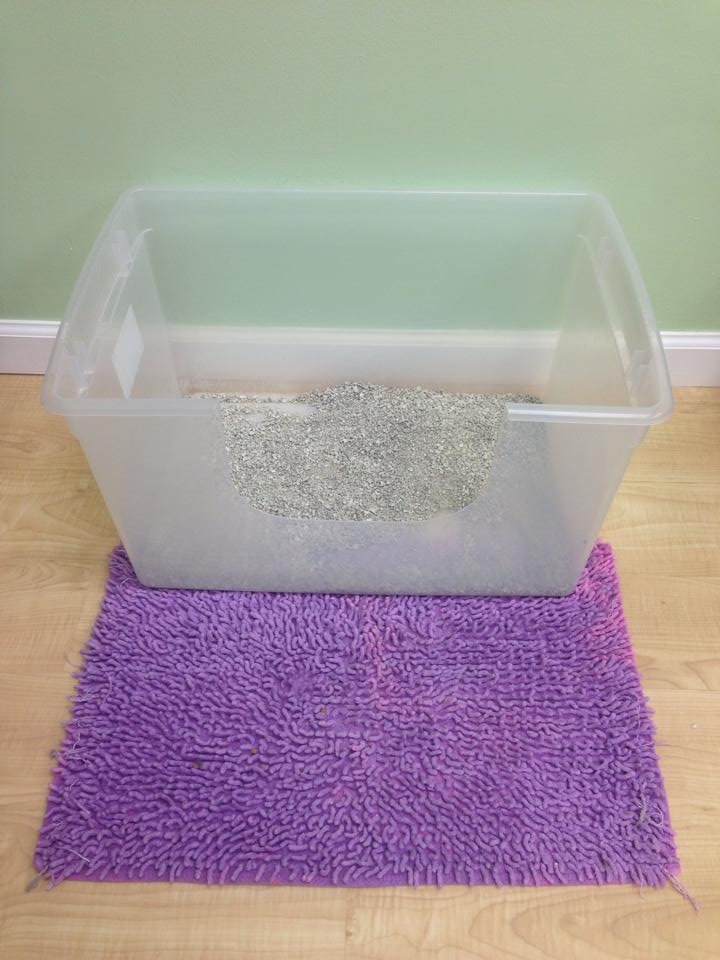
If clay, non clumping litter is selected about 1-1.5 inches of litter should be offered to cover the bottom of the pan thoroughly. It is difficult to scoop out urine, though a children's sandbox shovel can work nicely. Because it is non-scoopable it is recommended to dump the entire box daily. 

Unfortunately, most humans that use this type of litter only scoop out the fecal material and then stir in the soiled, urine soaked litter. This is NOT an acceptable way to maintain the litter box. 

To the cat, the entire box is now soiled and there is not a clean place to step. This is very much like us using a public toilet that is not flushed and has pee on the seat. You would go to the next stall wouldn't you? Well, your cat can't, so they choose the dining room carpet instead! After all, it is soft, absorbent and always clean.

IMG_2988
An example of a box with a shallow amount of clay litter to be dumped daily.

Clumping litter is preferred by the majority of cats and their humans. But cleanliness can still be a huge issue. Cats do not ever want to have to step on urine or feces to go to the bath room (See Part 1 of this series about size and number of boxes).

Clumping litter allows for easier removal of waste and you can provide the preferred litter depth (for most cats) of about 3-4 inches.

Let's talk litter depth for a minute. Too deep is well, too deep and cats don't like to feel as if they are navigating quicksand. This is especially important with seniors!

Too shallow leaves the box gummy and gross and can make it difficult for the cats to leave the box without soiling their paws.

Adjustments may need to be made based on individual preferences, handicaps, disease processes etc.


All litter should be scooped daily,
twice daily is better.

Alternative substrates: thinking outside the box

While some cats will use whatever you offer others have distinct substrate preferences. A cats paw pads are extremely sensitive and some textures may just not feel good to a particular individual. 

For the most part cats prefer the softest texture you can provide. Sadly, there are many products on the market made for humans and not cats and they are too hard on their delicate feet. Litters to avoid include: pine nuggets, newspaper pellets, hard plastic crystals. These litters are designed by and for humans and in most cases do not appeal to cats. 

IMG_4582

Alternative Substrate Ideas:

  • Puppy training pad
  • Empty pan (no litter at all!)
  • Shredded paper or paper towels
  • Sandbox sand
  • Sterile potting soil
  • Carpet scraps/washable bathmats

*This list is for cats that have already decided that traditional litter is not something they are interested in using. 


A word of caution...

Abruptly changing your cats' litter is very stressful. There is a scientific way of going about solving these problems which allows your cat to make a behavioral choice. If your cat is not using their litter box and you would like help, please complete the behavior questionnaire for a consultation and I will help you through this process in a way that will give you the best possible outcome. 

So how often should you dump and scrub the box and what should you use to clean it?

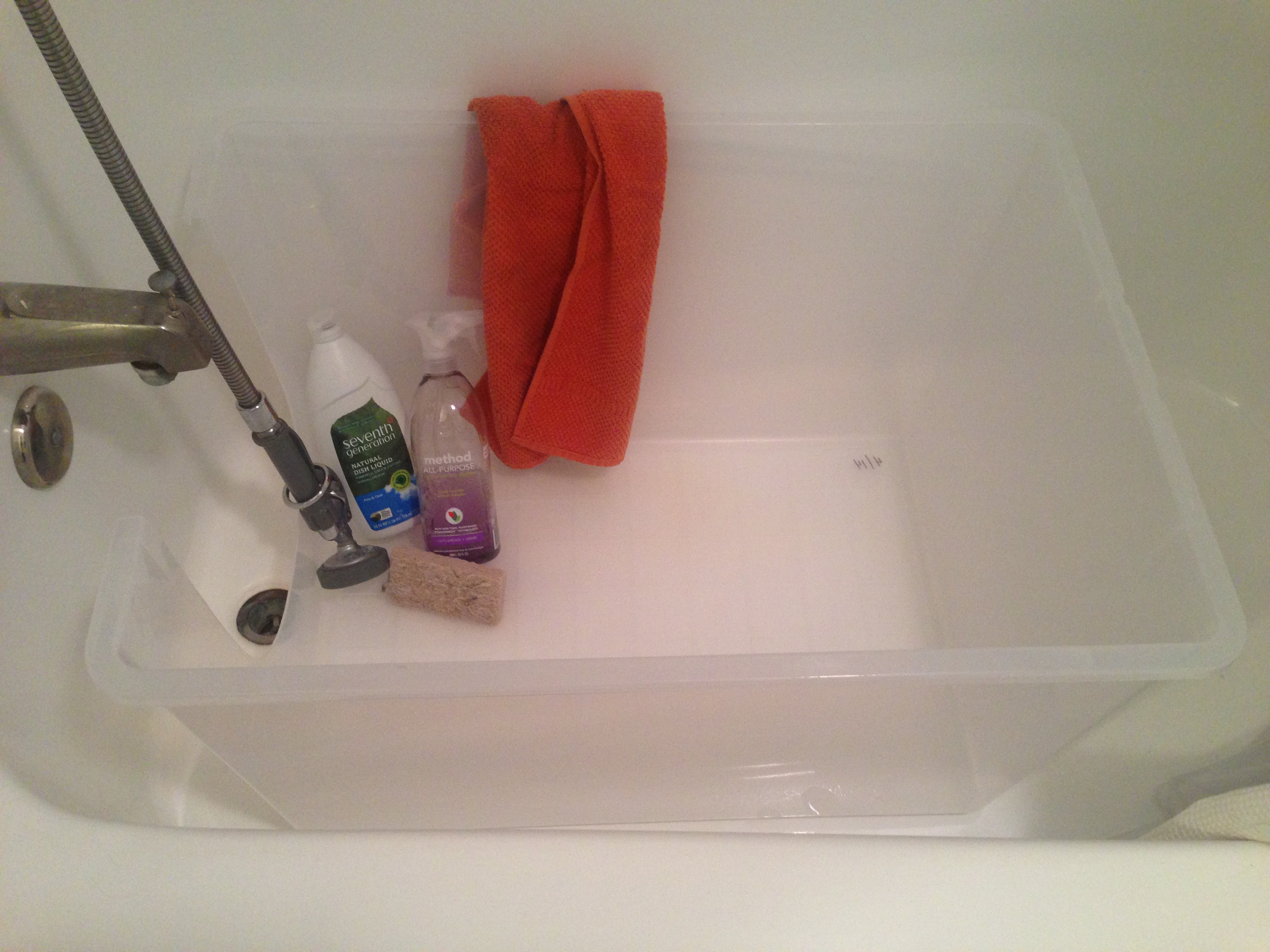
If using clumpable litter I recommend that you dump and scrub all boxes on average every 4-6 weeks. This will vary based on the number of cats, number of boxes and the frequency of use. (Hint: the more boxes you have the cleaner they remain for a longer period!) Use unscented dish soap or at least a scent cats like such as lavender or honeysuckle. Cats hate the smell of citrus so stop washing out their litter boxes with lemon scented dish soap if you would like your cats to continue to use their litter box! I like to scrub with hot water in the tub but allow the sun to dry them when weather permits.

If using clay litter and only providing a shallow amount since it needs to be entirely dumped daily, it should be scrubbed out at least once a week. 

If using a puppy pad, empty pan, or one of the alternative mentioned substrates that do not clump the box may also need to be entirely washed more often. 

This is what a dirty litter box looks like in my home. Note: not that dirty is it?

How often should I replace my litter box?

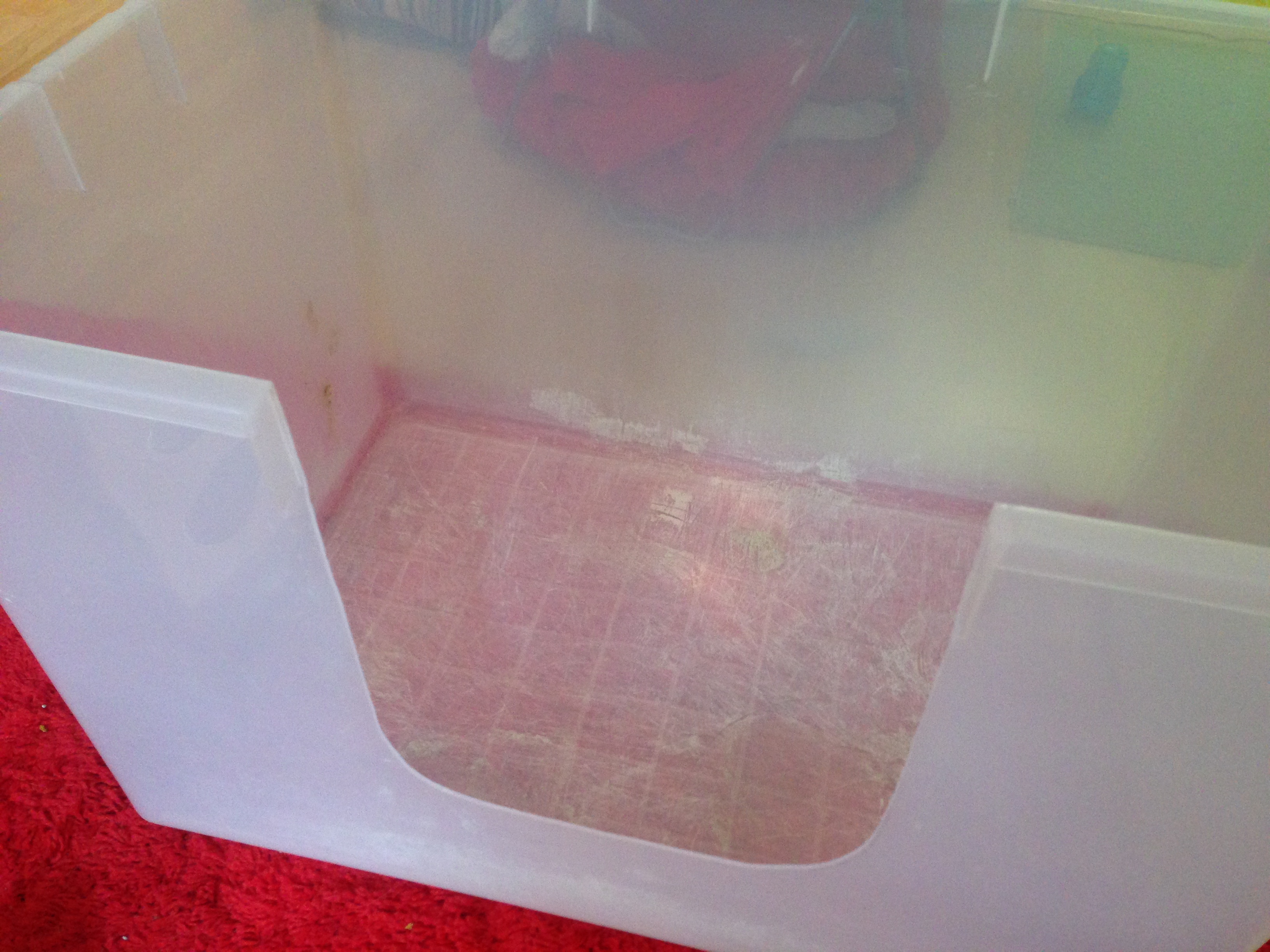
See all of those scratches on the bottom of the box in this photo?

Plastic is porous and harbors odor and bacteria which is why the litter box should be entirely replaced every two years!

Both the cats' nails and the litter granules scratch up the interior of the box and no matter how much you clean it, to your cat, it still smells yucky!

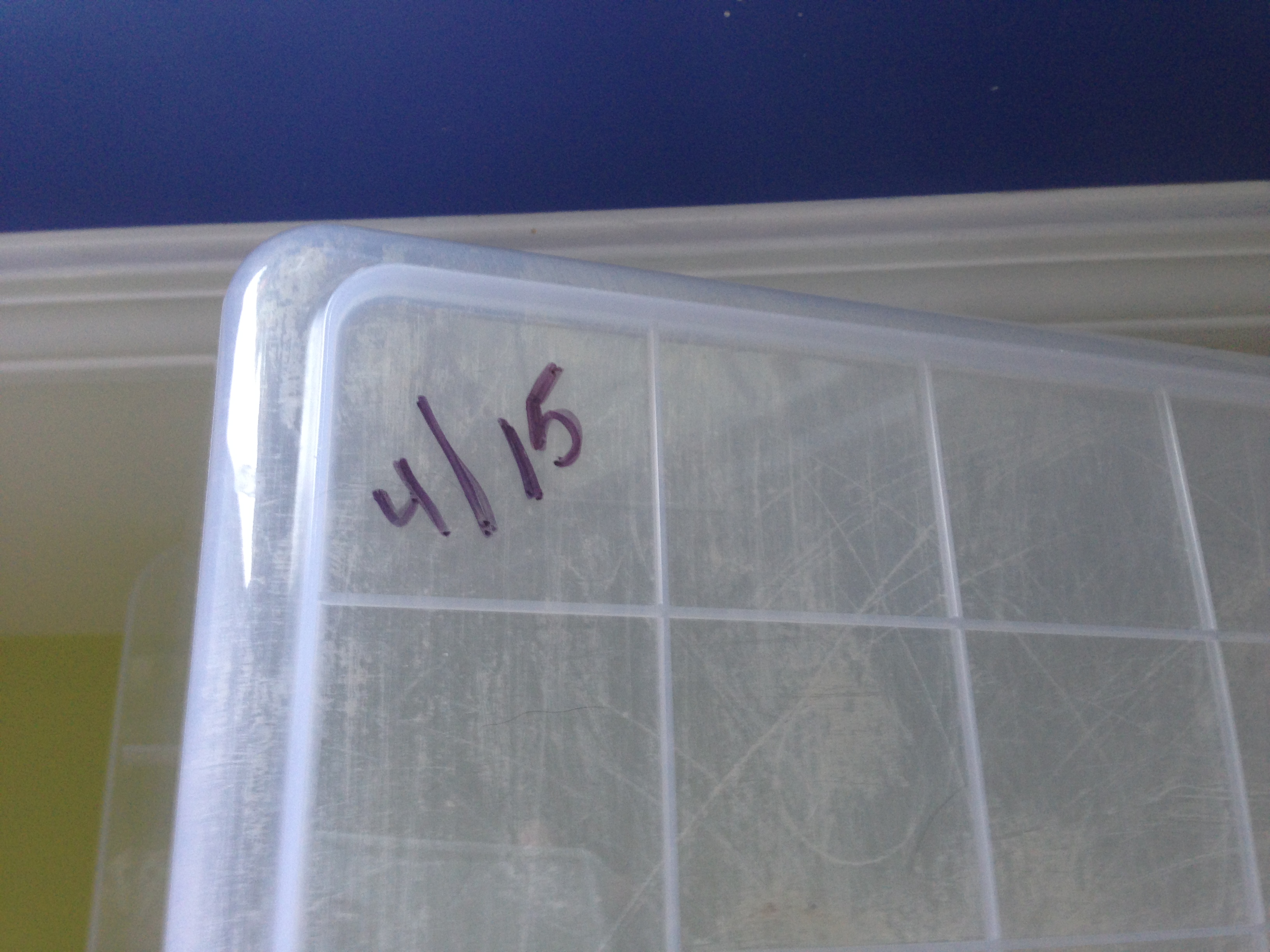
Using a Sharpie to date the bottom of the box is a helpful reminder that it is time to get new ones. 


Date the bottom of your box so you can remember when it is time to replace it!

A quick reference guide of basic do's and don'ts

Do NOT:

  • Deodorizers
  • Scented litter
  • Not cleaning the box with soap & water
  • Hooded boxes
  • Automatic boxes
  • Not scooping daily
  • Making box too hard to get to
  • Using old boxes/pans
  • Utilizing cat doors
  • Plastic liners
  • Changing brands of litter often
  • Placing food and water near litter
  • Using citrus scented cleaners
  • Use of strong smelling or ammonia based cleaners
  • Placing box in busy/loud areas

Please DO:

  • Offer large boxes
  • Scoop daily, twice a day is best
  • Use unscented litter
  • Offer soft, fine grain litter
  • Place boxes where you and your cat spend time
  • Use unscented cleaners or
  • Use cleaners with scents pleasant to cats (lavender, honeysuckle, basil)
  • Dump and scrub out box every 4-6 weeks
  • Entirely replace box every 2 years
  • Provide one more litter box location that the number of cats in the home
  • Do not place boxes in dead end areas with only one way in and out

In summary

Think about how your cat experiences the litter box. All you have to do it scoop it, they have to dig in it, posture to pee or poop, cover and then groom the scent of the flowery fragrances off of their coats. The fragrance that YOU like, not them. Cats don't eliminate in a pile of perfumed sand, they go in dirt, sand, pine straw or mulch. Plus, scented cat litter, combined with the ammonia of urine, well, that IS stinky!

Use a soft, unscented litter, scoop daily, dump and scrub out every few weeks, and change your box entirely every 2 years and litter boxes will not stink up your house.

Join my crusade to prove to the world that you can have litter boxes that are not ugly or stinky, but rather boxes you can be proud to show off. Get the scoop! Be the change!

Filed Under: Blog Tagged With: Inappropriate elimination, litter box avoidance, litter box maintenance

Litter boxes: get the scoop! What kind, how many and where.

This series is an attempt to change the perception of the litter box. It does not have to be gross, smelly and something you hide. Instead, be proud of how clean you keep your cat litter box.

Would you want to go to the bathroom out in the garage in inclement weather? I bet not!

How do you feel about getting swatted in the face each time you come and go from the restroom? Cats do not find it fun either.

Do you want to use an unflushed toilet in a public restroom? Well, your cat doesn't either! We complain when they use locations other than their litter box, yet what we provide is so often unacceptable. 

Join me and let's be the change that cats so desperately need.


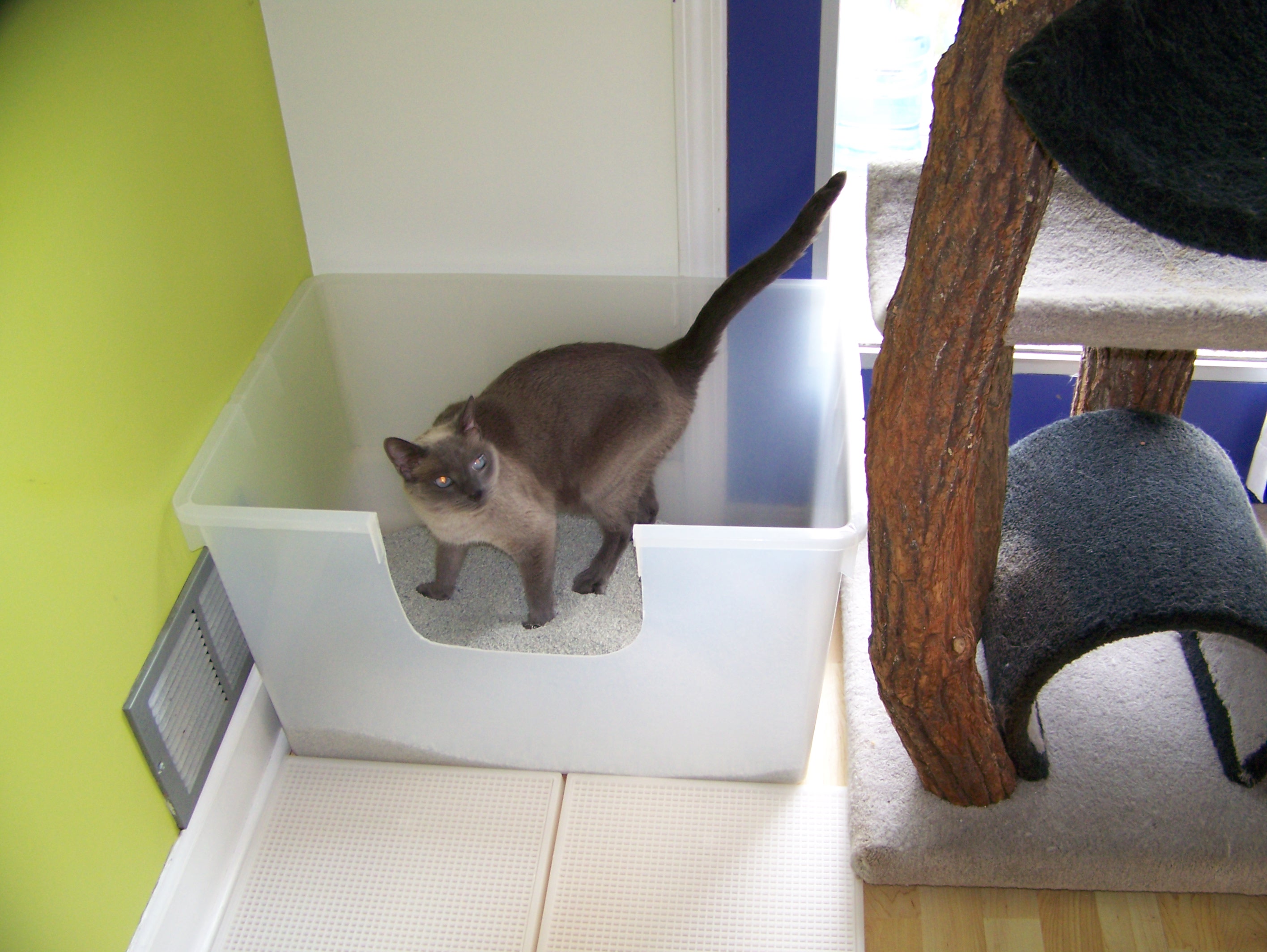
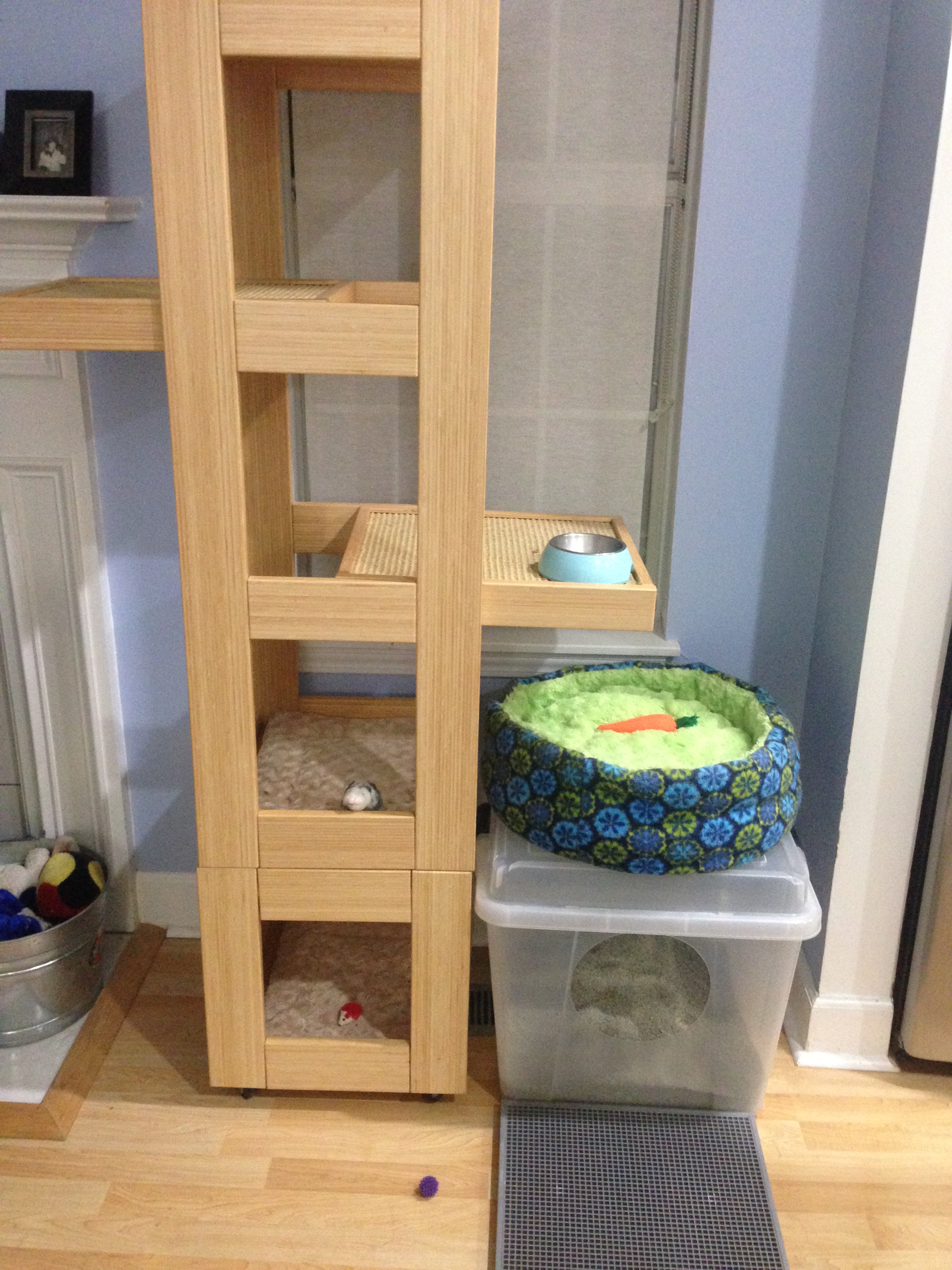
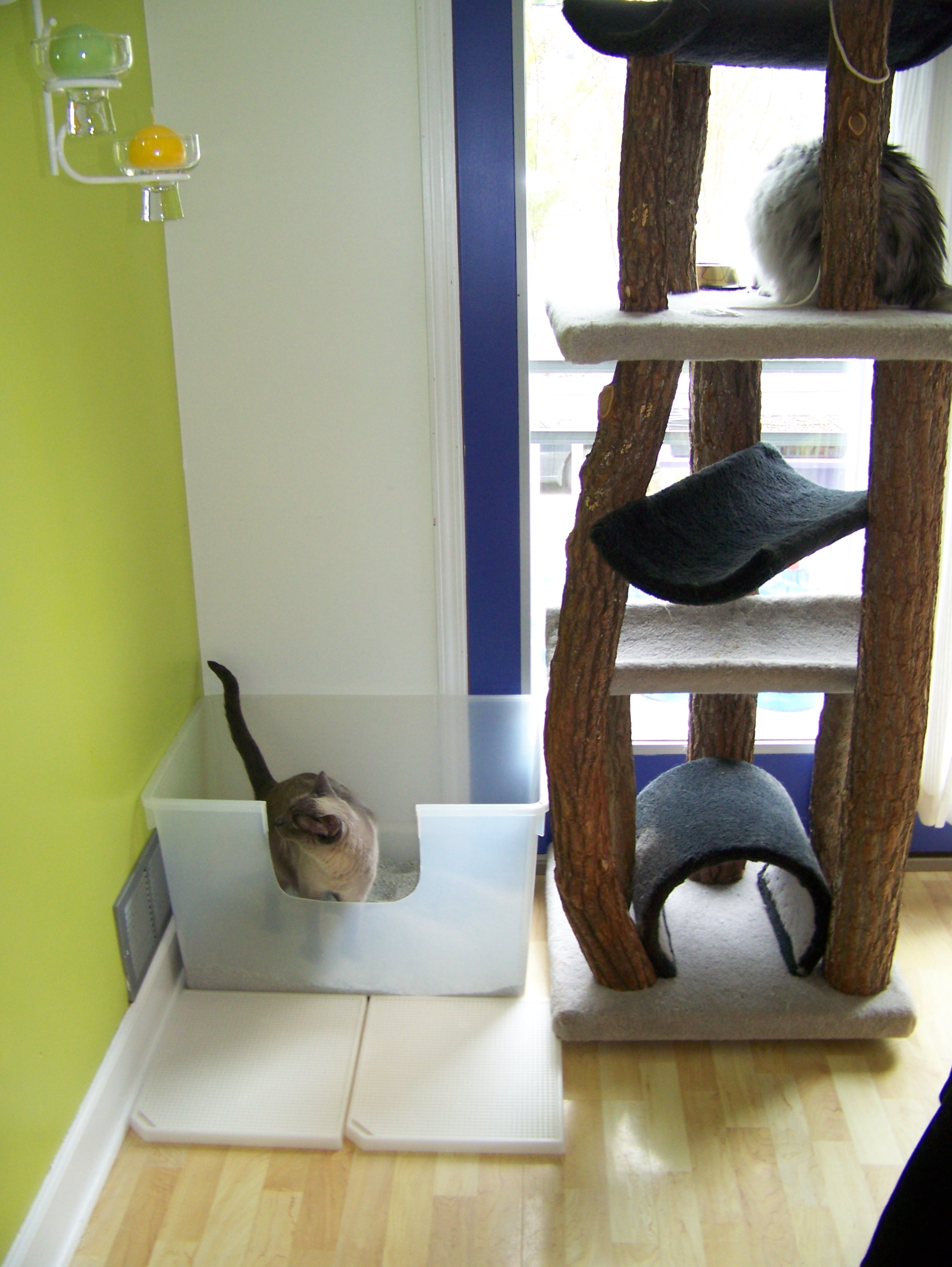
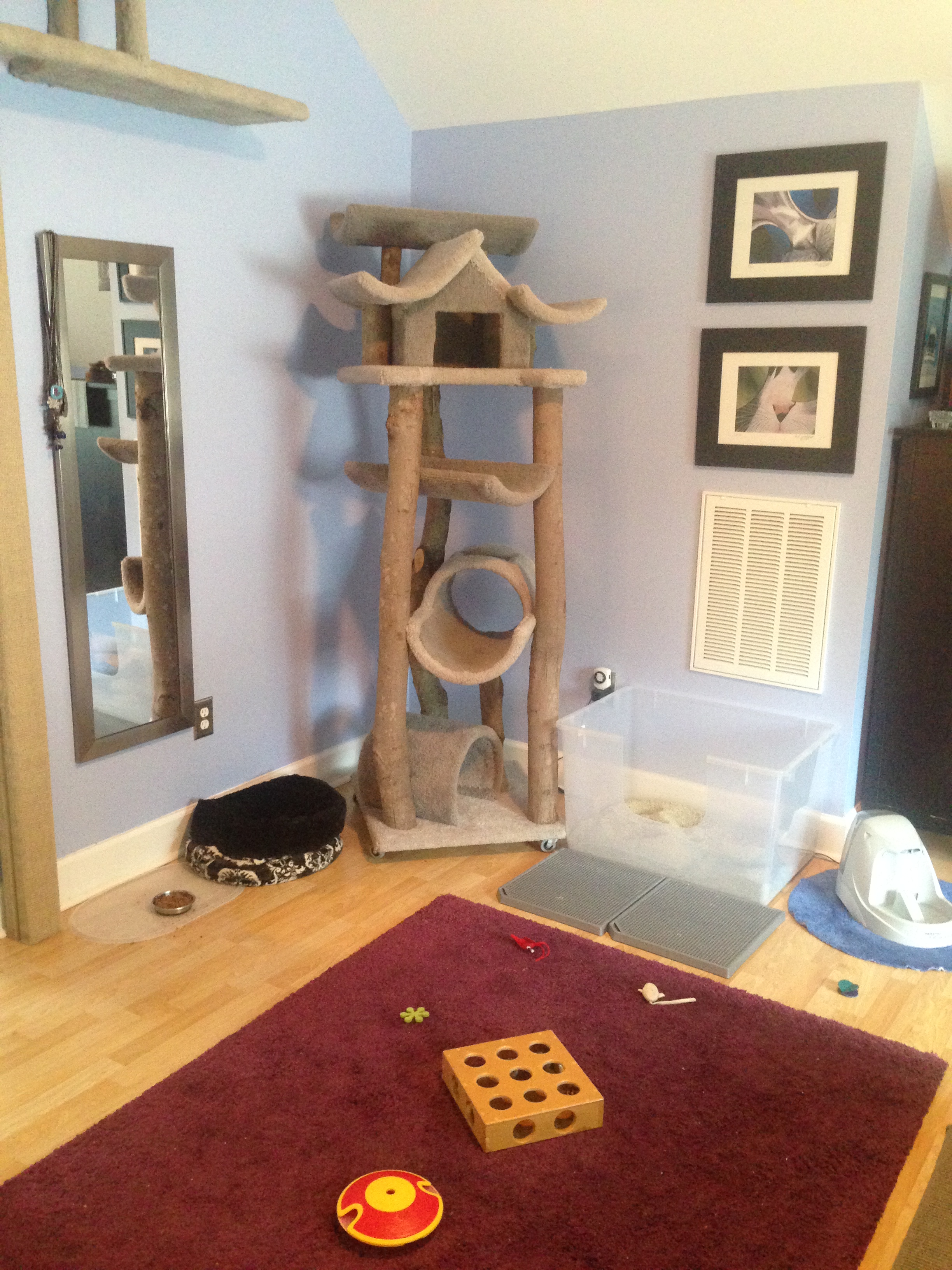
A large box with two exit routes, out the front or jump out the  top onto cat condo.
A large box with two exit routes, out the front or jump out the top onto cat condo.

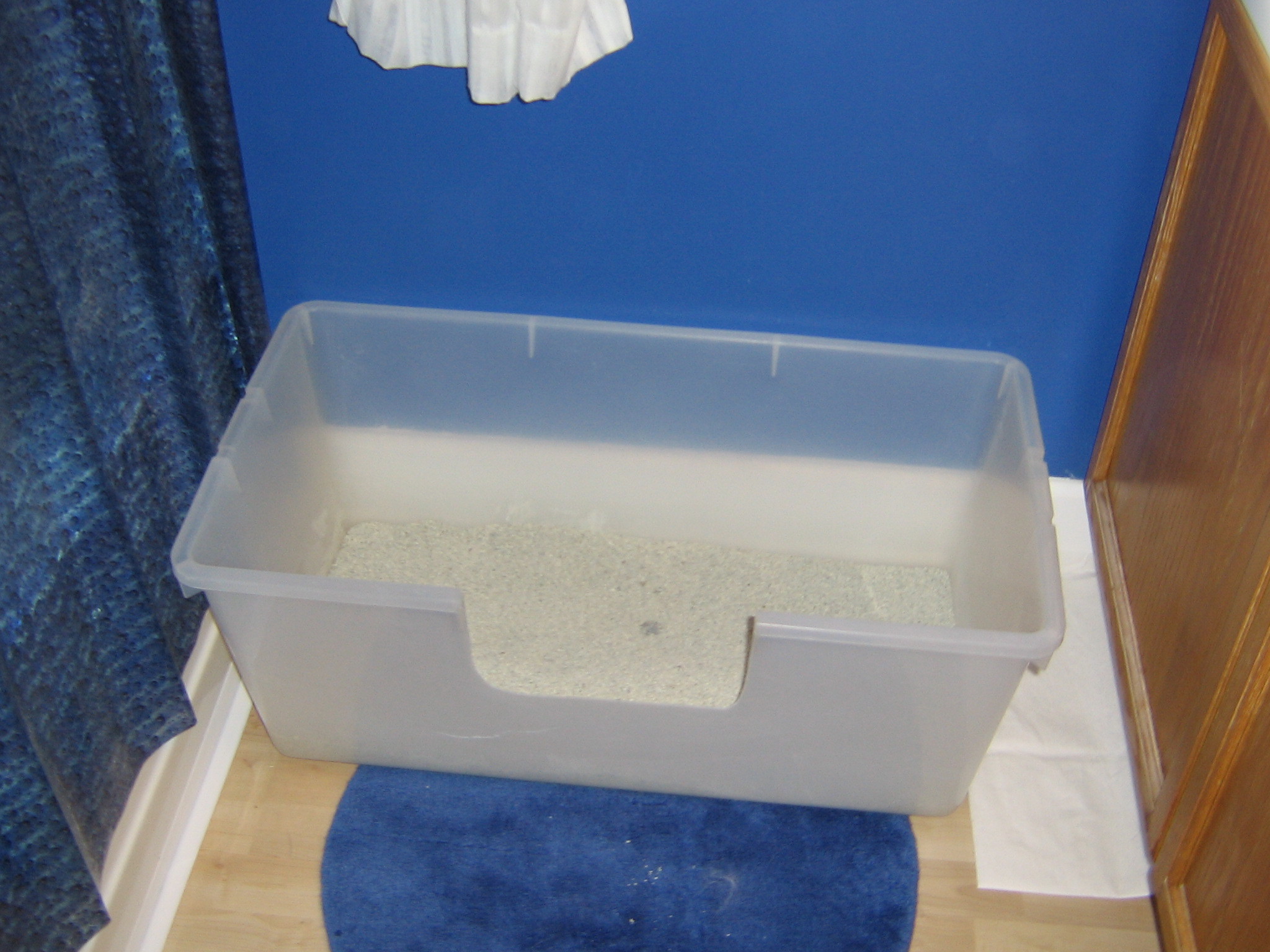
Litter boxes should be BIG! In fact, one and a half times the length of your cat!

They should be CLEAR so they can see who is approaching. Cats are a species that are both predator and prey. When they eliminate they are in their most vulnerable state. They must feel safe and secure when they use the box or they will find another place to go to the bathroom where they do feel safe!

I want one!
Large, clear storage totes work best. Bigger is better!

Large clear storage totes offer the function of a hooded litter box without the hood. For the humans, this keeps the mess contained and the cats cannot accidentally pee and poop over the sides of the pan. For the cats, it offers a nice large surface area to use and they can see if another cat, the family dog, or a toddler is approaching.


Can't live without a hood?

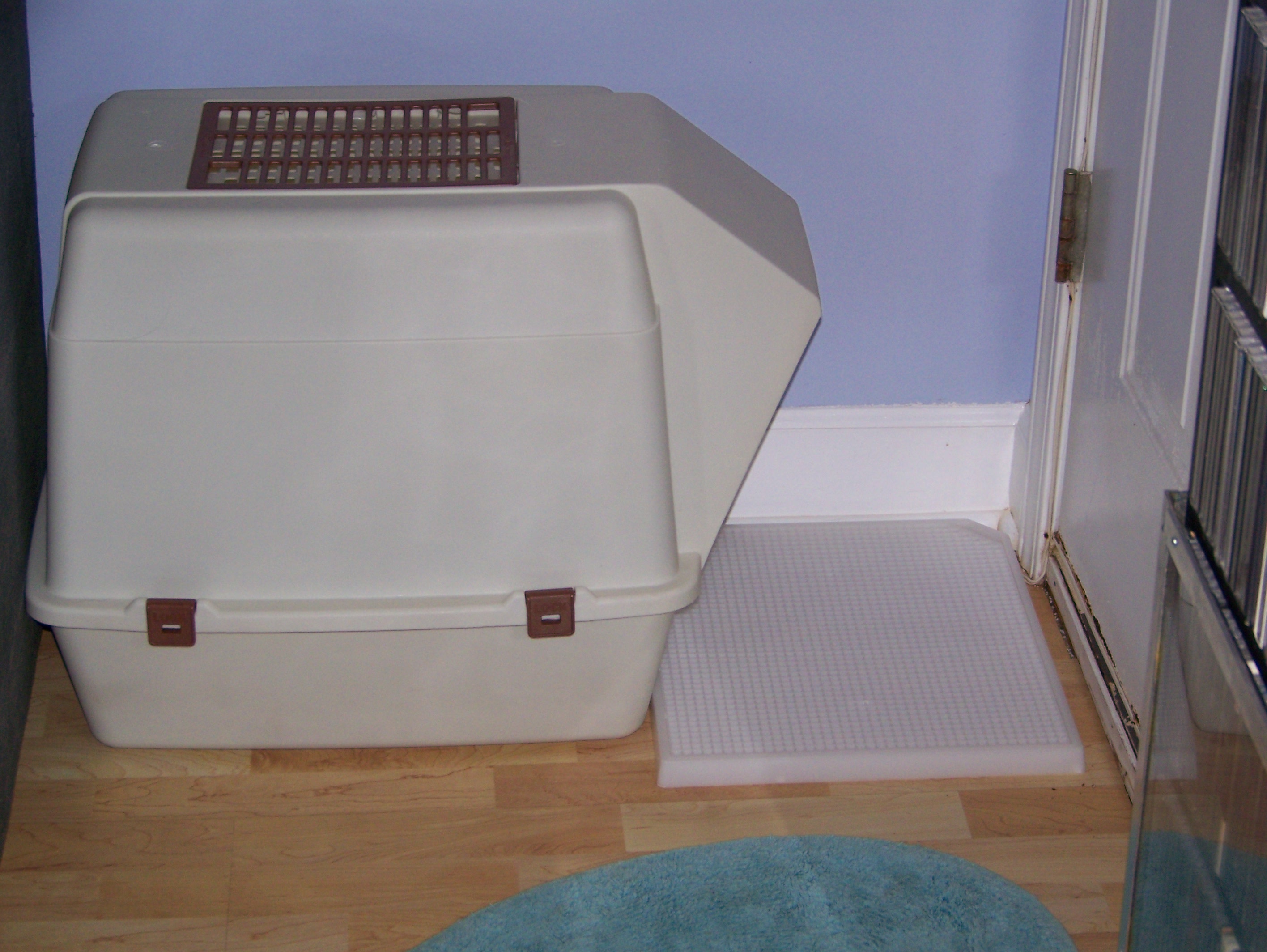
An example of what NOT to do!

Outdoor cats do not eliminate in cave-like environments. This would leave them vulnerable to being attacked or hunted. If you got smacked in the head or ambushed every time you used the bathroom you would find a new, safer place to go, wouldn't you? 

Left: an opaque hooded box can harbor odors and leave cats feeling threatened. Notice the "dead end" placement too. 

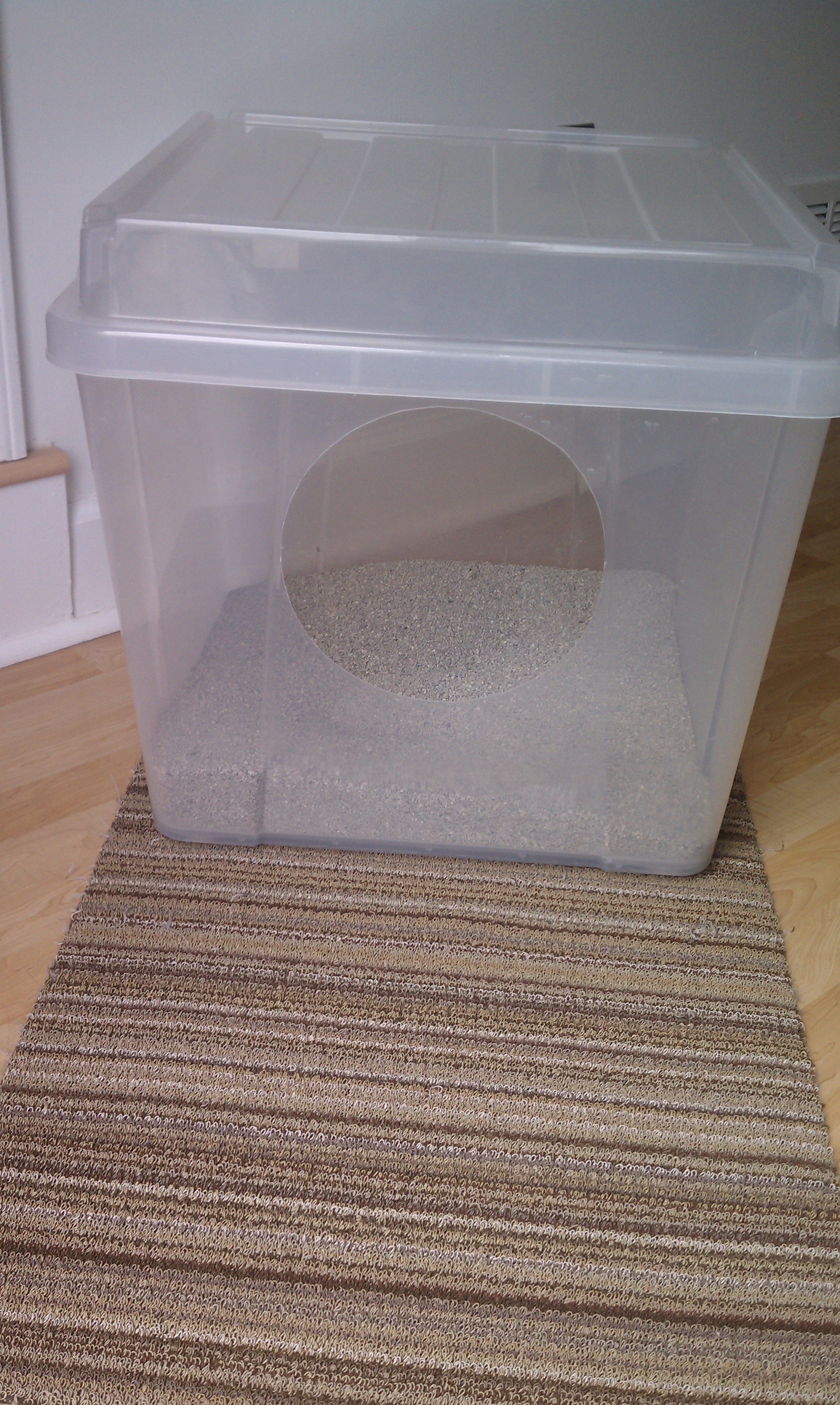
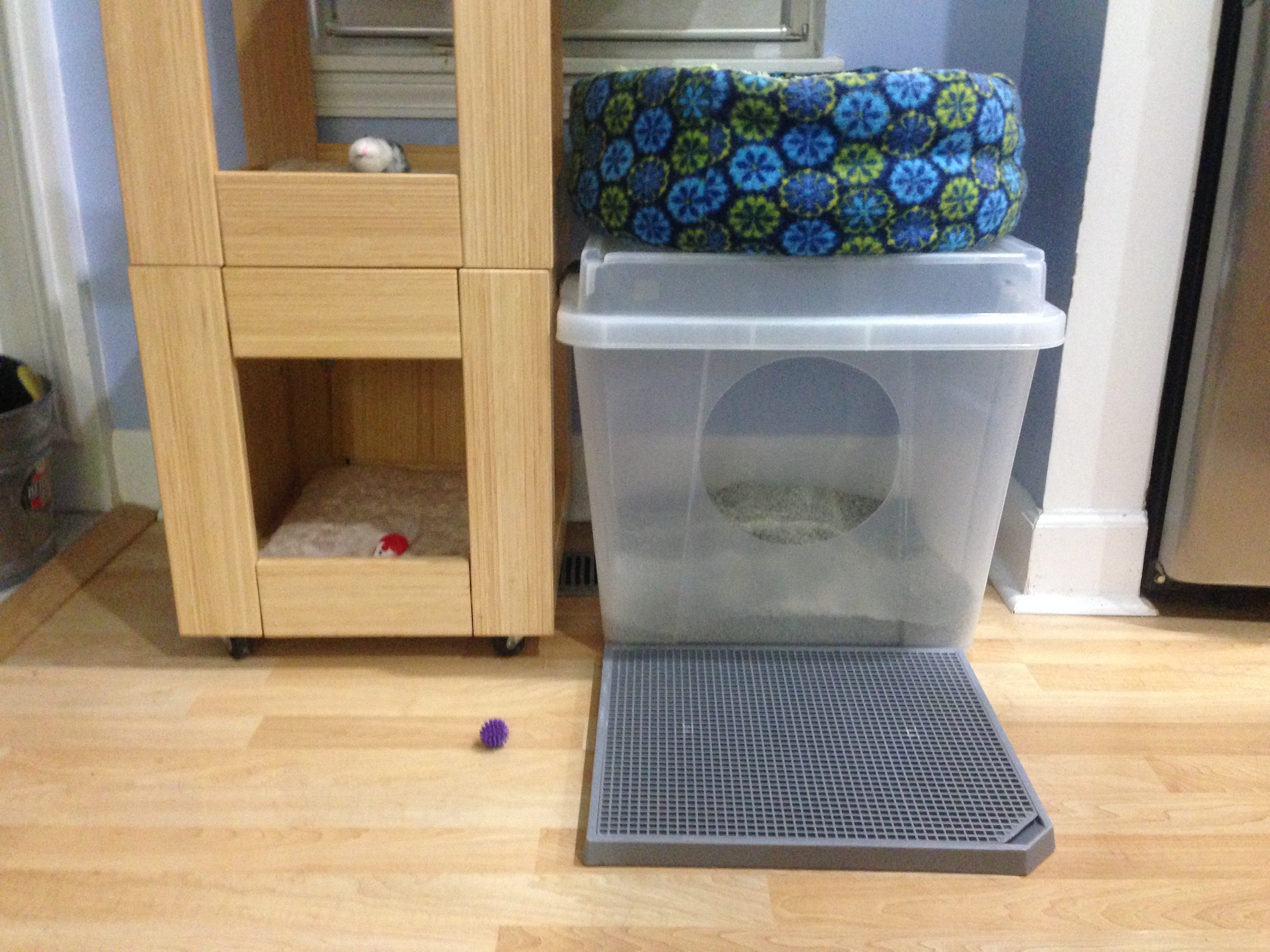
Right: if you just cannot live without the hood this is the best covered box to have because at least it is clear so the cats can see who is approaching and be able to anticipate an ambush. This should only be an option, but NOT the only box offered!

A hooded box that is 100% clear.

Wait, I need how many litter boxes?

ff_logo_vector_small

If you have 2 cats than you need 3 separate litter box LOCATIONS!

The Best Litter Box
Because the likelihood of this is rare!
Mater bedroom litter box

Cats prefer to urinate in one location and defecate in a completely separate location. This is normal cat behavior. Even if you have one cat you should provide two separate litter box locations. 

Cats are fastidiously clean animals and never want to be forced to step on urine clumps or feces to eliminate. 

Even if you have one cat, a litter box option on every floor is recommended. After all, we usually have a toilet on every level now don't we?

The more box locations you provide the more difficult it can be for one cat to "resource guard" and keep other cats from being able to access the boxes. Resource guarding is a common reason for elimination outside the litter box. One cat cannot be in multiple places at one time!

Litter boxes should be spread out, or "heathered" throughout the home. This also prevents odors from being concentrated in one area.

The truth of the matter is that this is simply a guide. It may be necessary to offer more boxes based on the relationships of the individuals sharing the space. These are guidelines but not hard and fast rules. Offer as many boxes as needed to keep the cats using them! 

Where on earth am I going to put all of these litter boxes?

Food, litter and vertical space in 2 square feet!

Just about anywhere!

Cats prefer to leave their smell where your scent is strong. Elimination is also communication! They want to mark you, their favorite human!

Cats prefer to urine and feces mark around the perimeter of their space whereas scratch marking is done in high traffic pathways. So be sure to place litter boxes around the perimeter and not in the center of the room.

Scoop daily, twice a day is better!

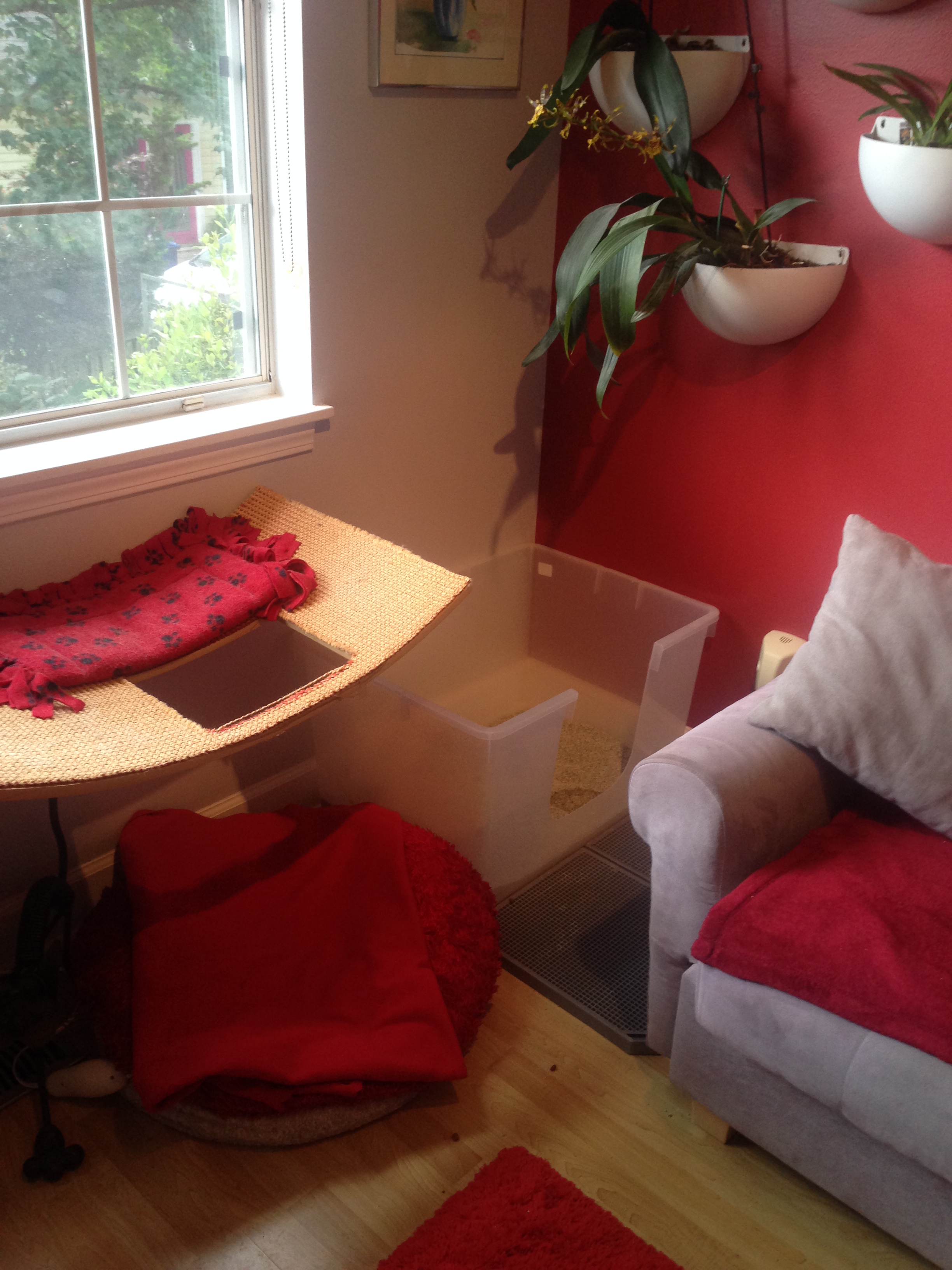
Note two exit points, cut opening and cat condo.

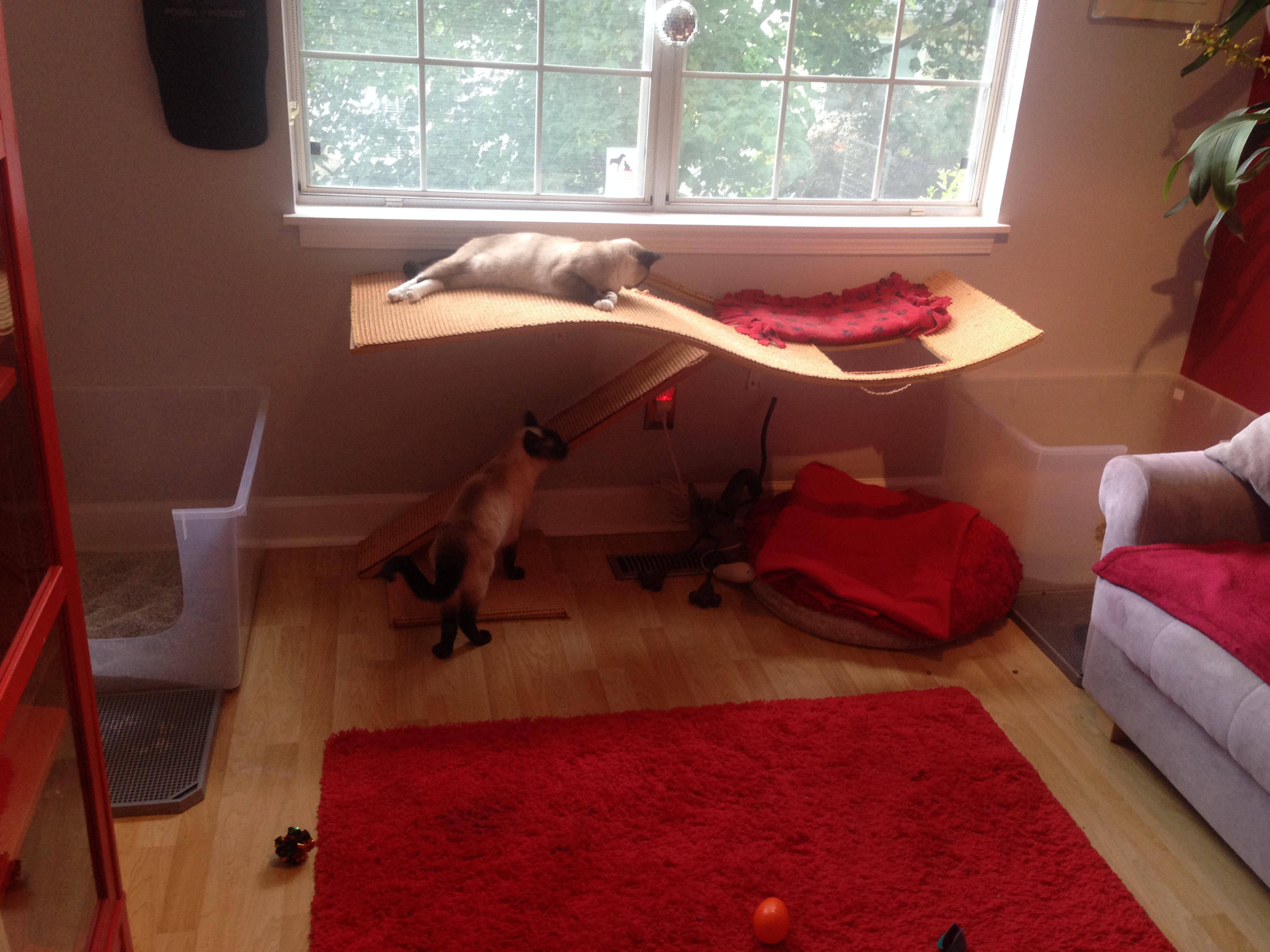
This box is in a living room (look closely it is beside the refrigerator heading into the kitchen). Note all that is provided in such a small area: vertical space, window perch, horizontal scratching options, canned food dish up high away from the dog, litter box and beds all in 2 sq feet!

A close up view of living room box.

This box is in a dining area. The cats were urine marking the back door and needed an appropriate target in this space. They can exit the cut opening or jump up onto the cat condo to escape a potential threat. It is important to avoid dead ends when selecting locations.  Feeding station, vertical space, window viewing, and litter all in a small square footage. 

Bathrooms! You go to the bathroom there, why shouldn't your cat?! It's purrfect.

IMG_4610

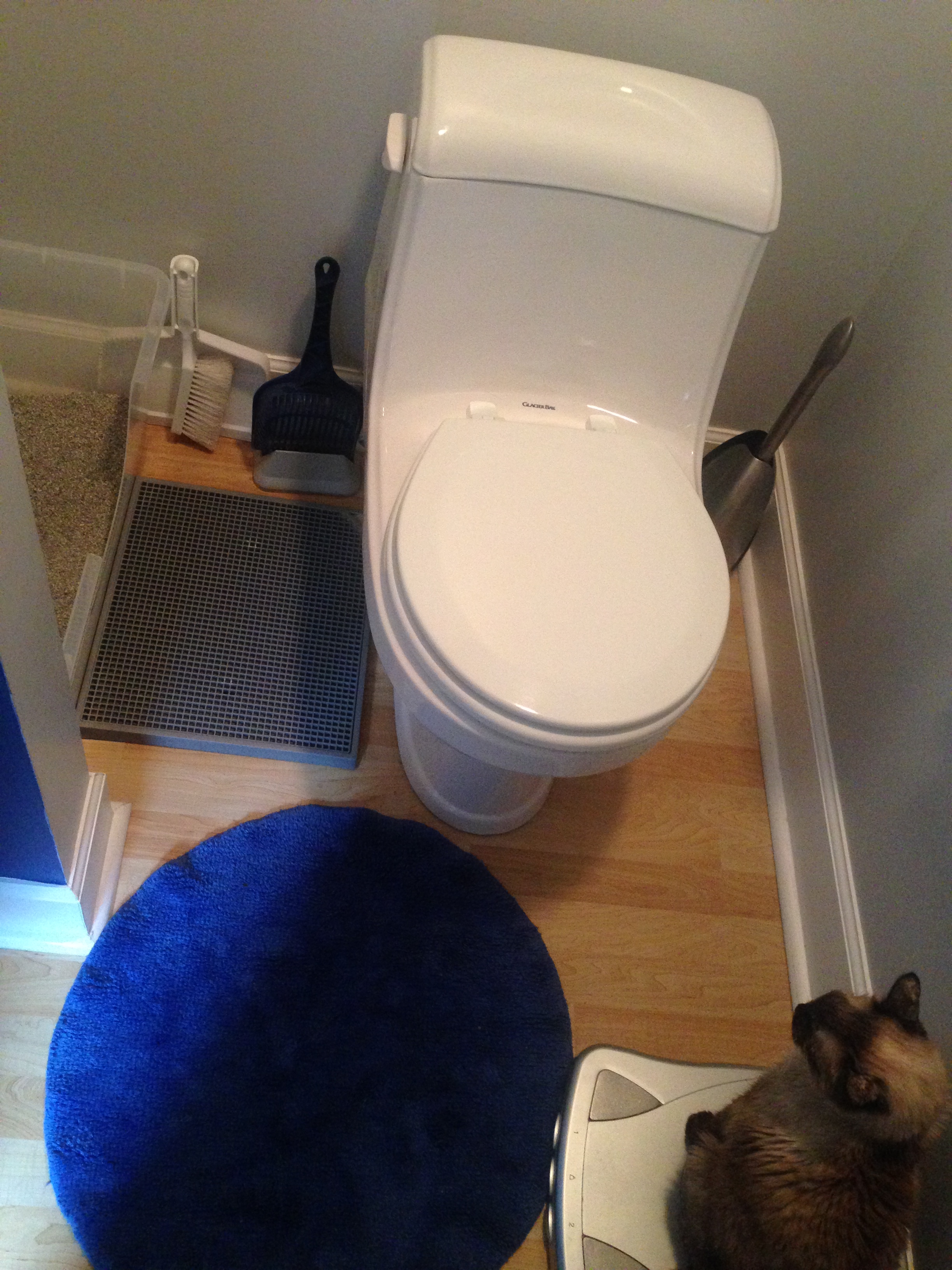
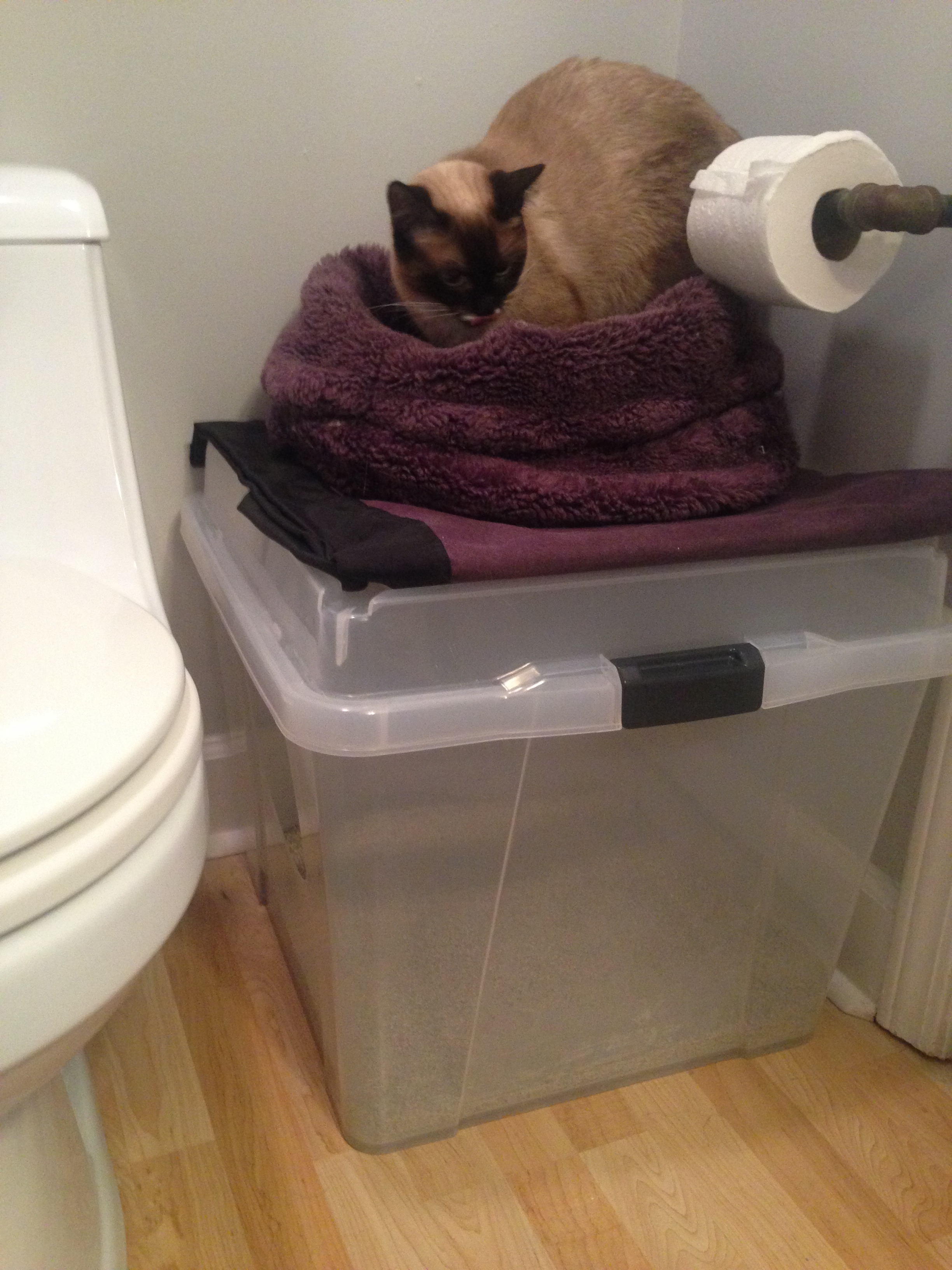
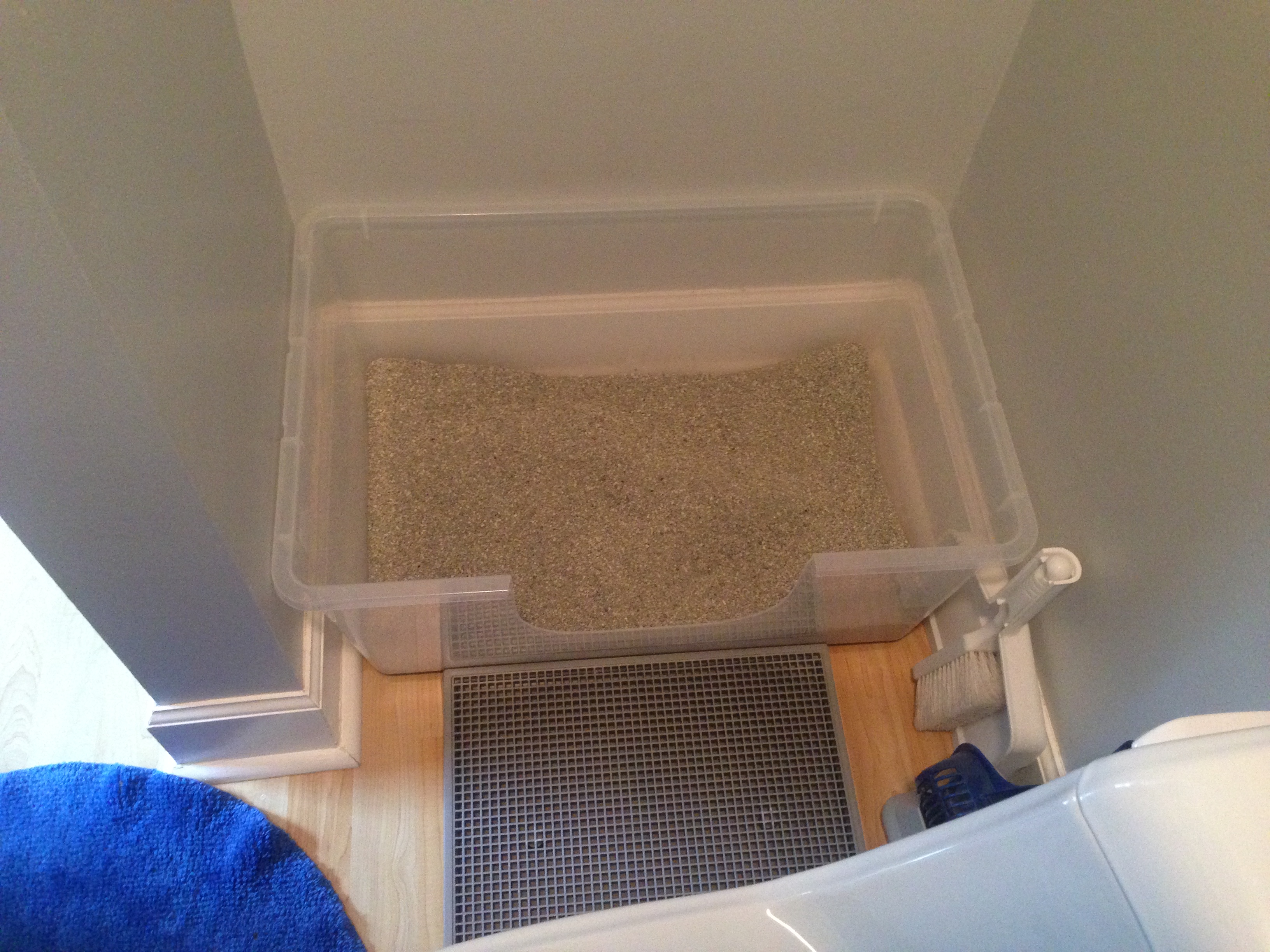
Left: a step out mat catches the litter to maintain cleanliness. High sided box contains most of the litter scatter. 

Right: box opening is turned toward the toilet to minimize litter scatter and a bed placed on top to maximize amenities in a small home.

These two things are ONLY okay because of a harmonious household. Ideally rotating the opening to face out would provide easier access. It would NOT be recommended to have a bed on top in a home with aggression problems. 


IMG_4593
In the master bathroom

Important reminder

Litter boxes should be separate from food and water sources. Cats are clean animals and do not want to eat near where they eliminate!

Picture 241

Dens, sitting rooms, sun porches, home offices, and yes, even the master bedroom!

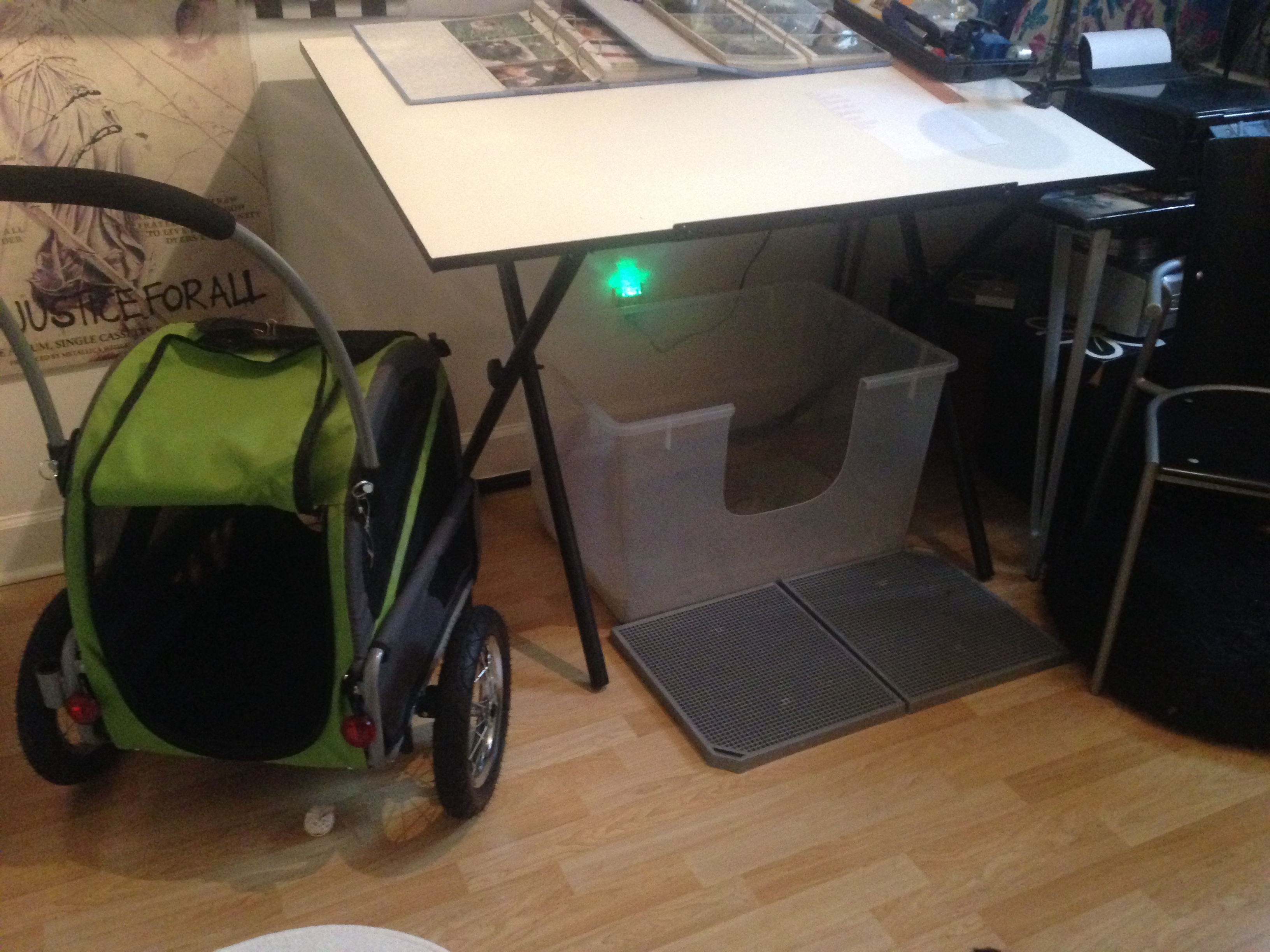
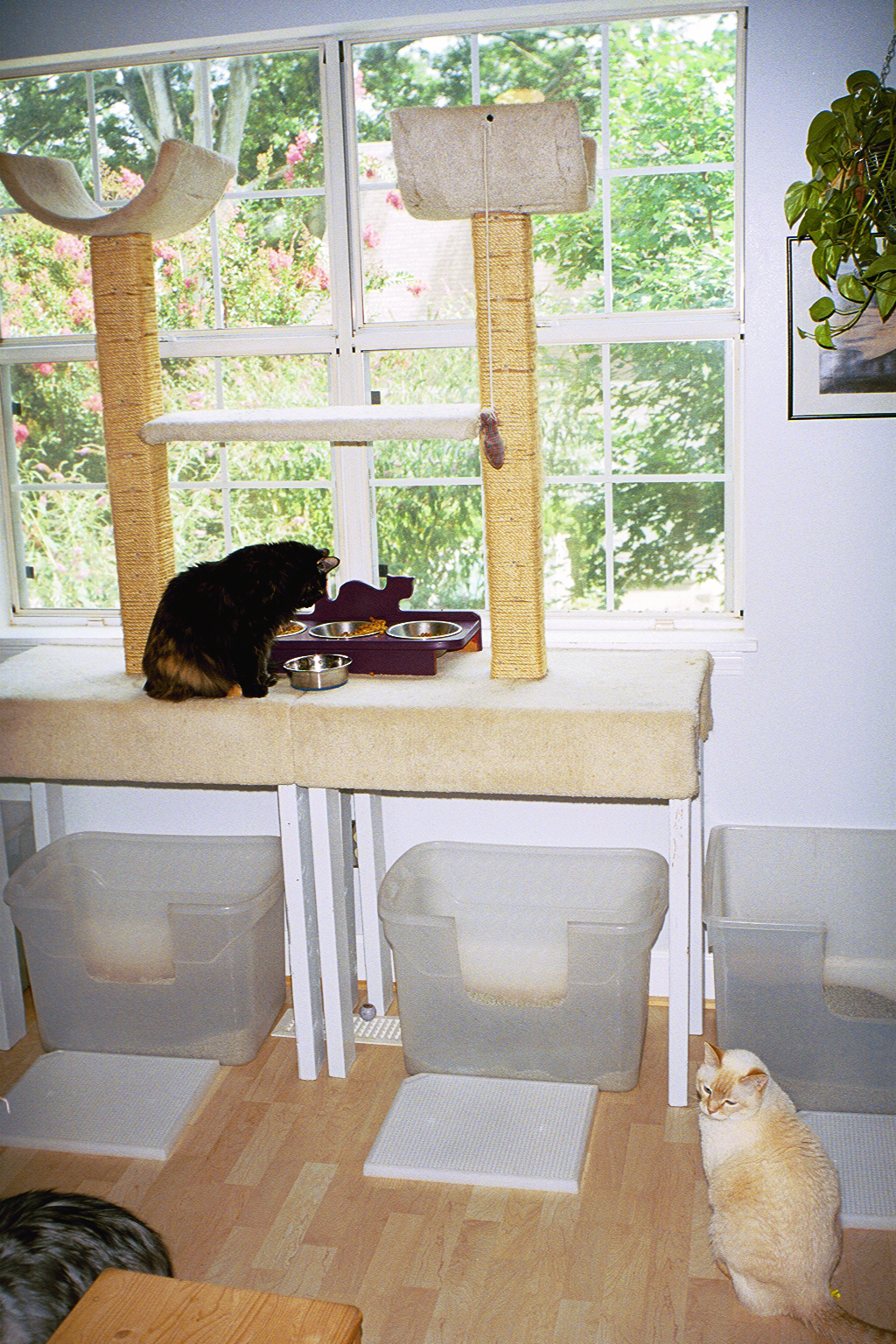
Two boxes at opposite corners with multiple exit routes.
Under the drafting table in our "studio." (home office)
Master bedroom: can food bowl, water fountain, litter, foraging toys, & vertical space.
Offers multiple escape routes: jump up, go behind sofa or exit to the front of sofa.

What cats DO NOT like...

Cat rooms (a.k.a. litter box rooms)-they are dusty, stinky and gross and cats do not feel the need to mark there. How much time do you spend hanging out in the "cat room" anyway? Food and water are often in these rooms as well which is also not ideal.

Having to go through a cat door to get to the box is really no different than a hooded litter box. It is threatening and scary because they cannot anticipate what is on the other side. 

Automatic boxes are not preferred. Monitoring your cat's litter box output is a very important part of monitoring their health. The size and shape and frequency of the urine clumps and the consistency of the stool is vital information for you to know. Automatic boxes take that information away! If you use one, you should always have a regular box as well!

Locations where litter boxes should NOT be placed: 

Laundry rooms-they are scary and loud

Basements-dark and dank with no desire to mark there

Closets-threatening and no different than a covered litter box


A whole bunch of boxes lined up in a row is just one giant box to your cat!

In summary

We humans work really hard at hiding litter boxes, we try to avoid scooping them, and apparently we cannot stand the sight of the box either. It's crazy! You have cats, and cats need to go to the bathroom. Why do we keep making it so damn difficult? 

Big boxes, open areas, keep them clean. Have litter boxes you are proud of and be the change cats need! 

One of the best compliments I have ever received was when a guest arrived at my home and asked me, "where is all the hair and why doesn't it smell in here"? I had 16 cats and 3 dogs at the time. Our home is 1200 square feet and I made room for 13 litter boxes. 

Join me, we can do this folks! Get the scoop and be the change!

Filed Under: Blog Tagged With: elimination outside the box, Inappropriate elimination, litter box avoidance, Litter boxes

Footer

Insured and Bonded via Business Insurers of the Carolinas

Copyright © 2026 Fundamentally Feline

0
Your Cart (0)
Your Cart is Empty!

It looks like you haven't added any items to your cart yet.

Browse Products
Apply a promo code
Subtotal
Shipping & taxes calculated at checkout.
$0.00
Checkout Now
Powered by Caddy