• Skip to primary navigation
  • Skip to main content
  • Skip to footer

Fundamentally Feline

  • Home
  • About
    • About Cat Behaviorist Ingrid Johnson
    • Ingrid in the Media
    • Muses
  • Education
    • Client Handouts & Articles
    • Feline Fundamentals
  • Videos
    • About Our Videos
    • How-To Videos
    • Foraging Videos
    • Training Videos
    • Behavior & Enrichment Videos
  • Services
    • What We Offer
    • Behavior Consulting
    • Medicating Consults
    • Vertical Space
    • Litter Box Cutting Service
    • Testimonials
  • Shop
    • Shop All Products
    • Foraging Toys
    • Scratching
    • Vertical Space DIY Components
    • Swag for Humans
  • Contact

Blog

How to encourage your cat to use a cat wheel.

Have you often dreamed of buying a cat wheel for your cats only to wonder, “How will I get them to use it?” Or maybe you already have one stuck in the corner of a room somewhere collecting dust and dirty laundry? Either way, there is a process to it and while there are a precious few cats that will take right to one, most need training and encouragement. If you break it down into a few simple steps, your cats can get a good cardio workout.

Our first cat wheel was a lightweight, hand-me-down from a generous client who could not get their cats to use it. After ensuring we could teach the cats to use the freebie wheel, we then decided the one you see to your right was worth the investment. However, this fancy new wheel is heavier and requires more excursion. The pros and cons of this was that we moved forward with this purchase knowing they understood the concept. However, we had to encourage use all over again and some of the cats still prefer the lightweight model they were originally trained on.
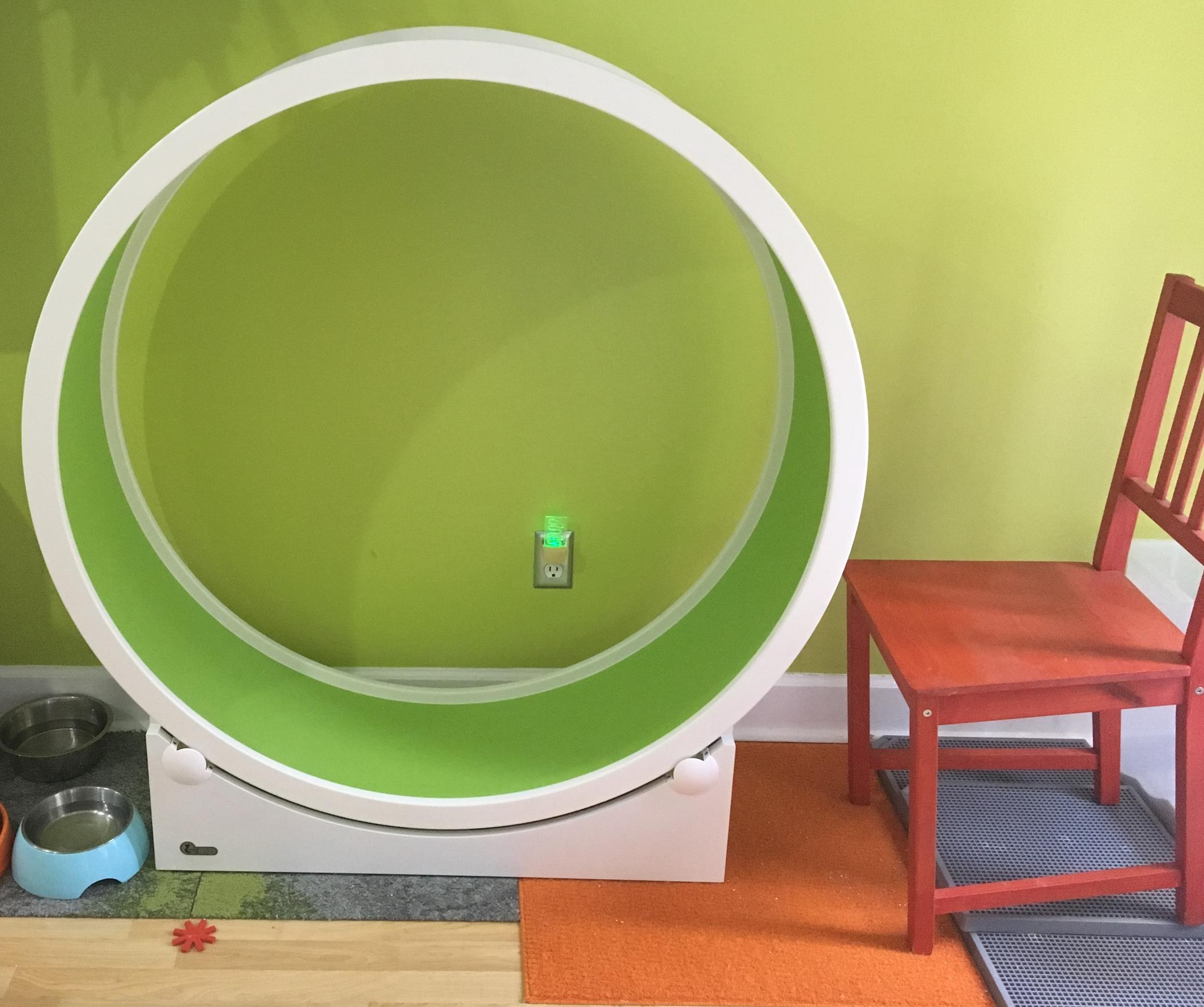
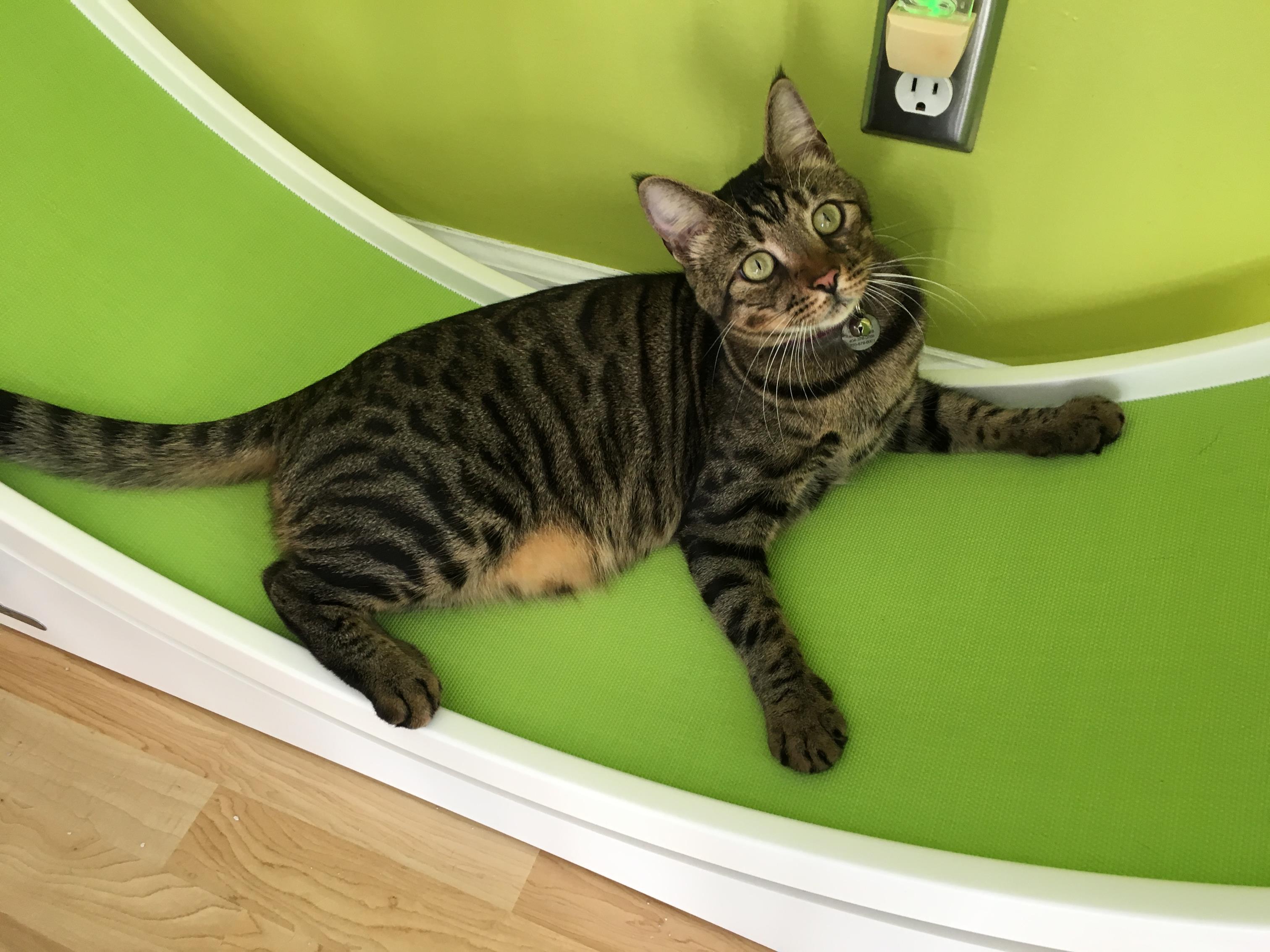
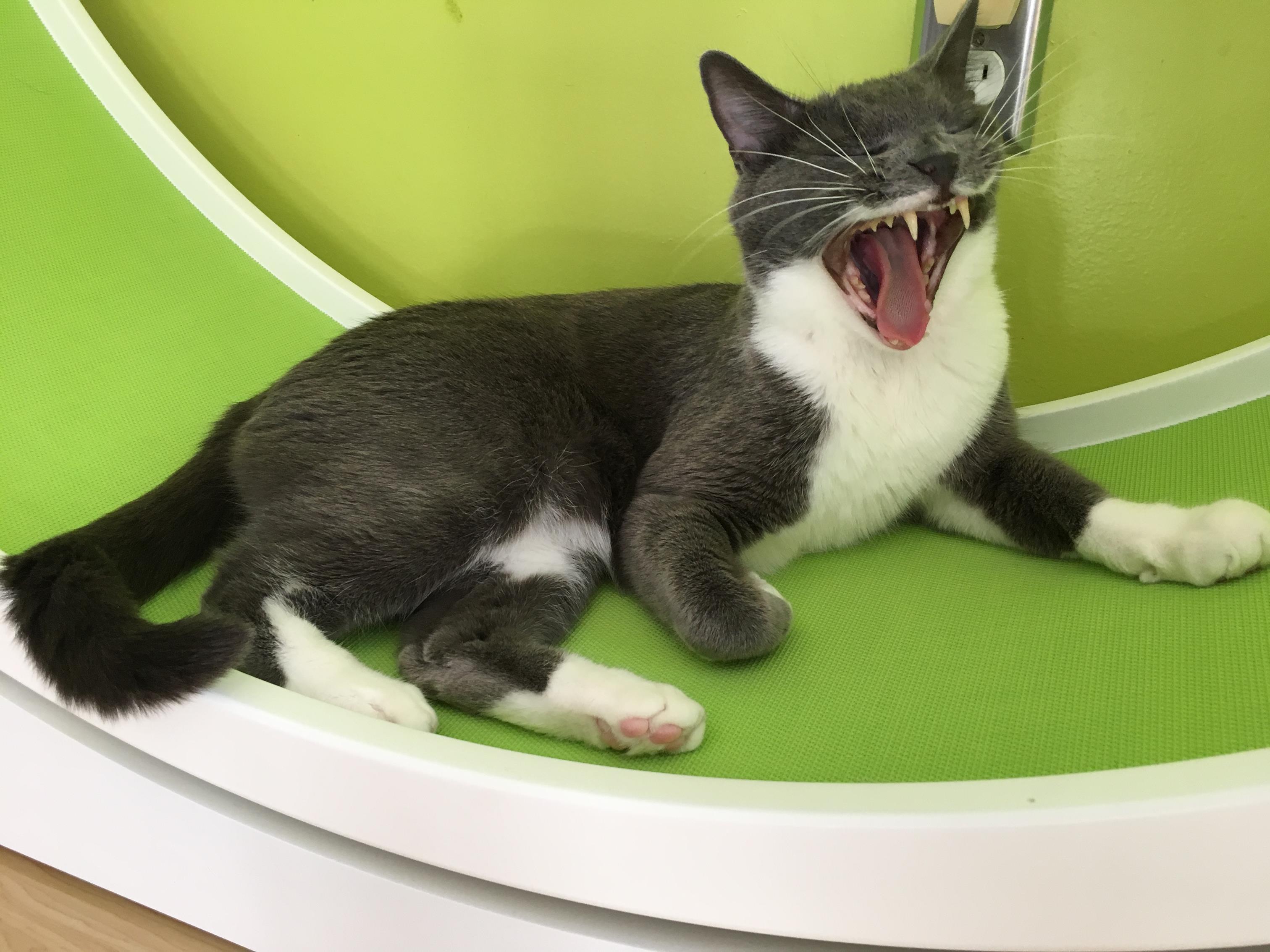
The fancy cat wheel we splurged on after ensuring they would use a cheaper model.
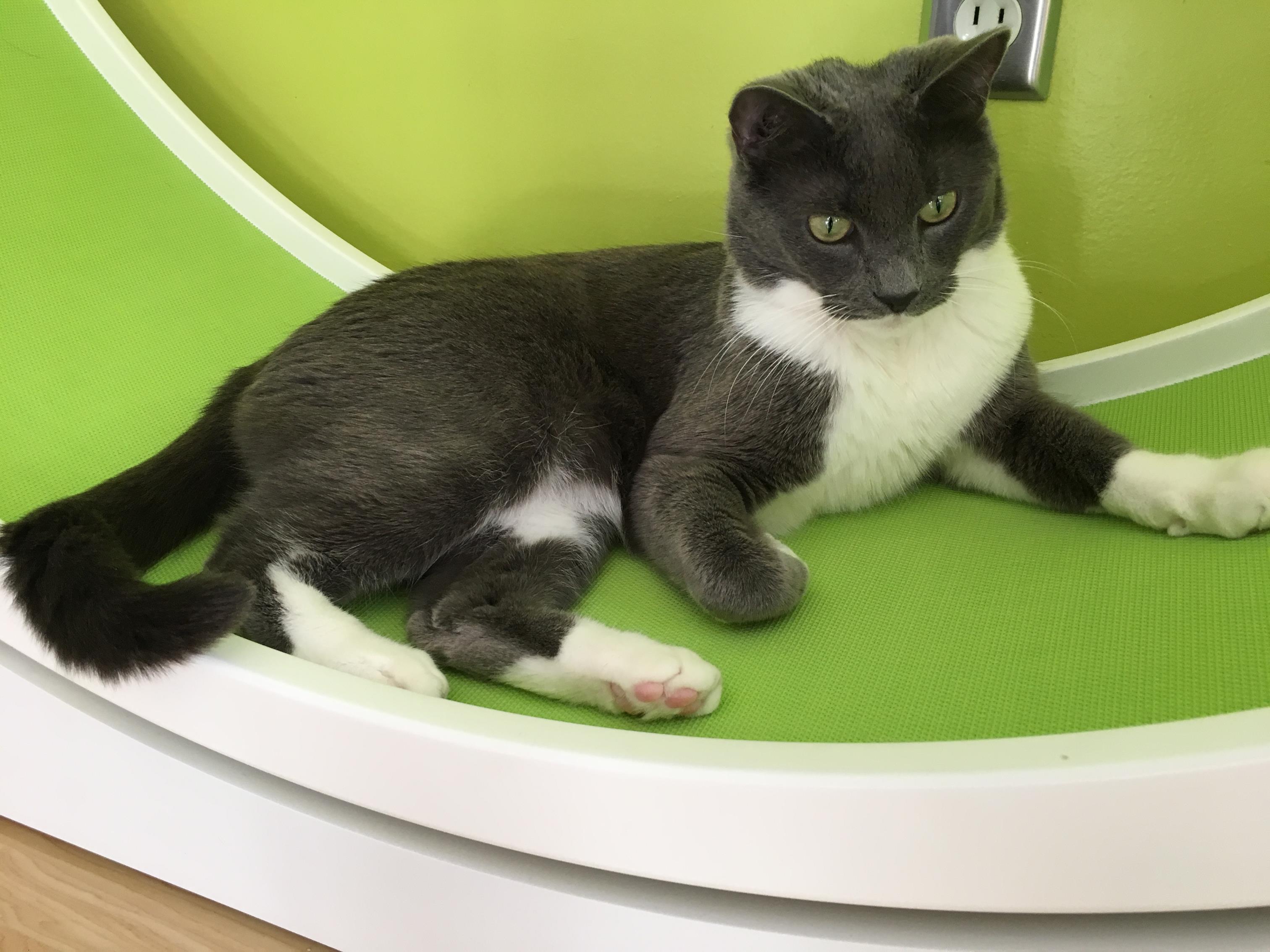
Do not force use. It is ok for them to use it as a bed for a few days and build trust.

First things first, DO NOT plop your cat on the wheel and spin it as fast as possible! That is a great way to make them terrified of it and they will never go near the contraption again. Resist your urges to see them run like the wind! Only patience and positive reinforcement is going to make this happen. Now let’s get started!

Place your cat wheel on a stable surface so that it does not wobble or topple. If it makes a weird noise or is unstable it will likely scare your cat.

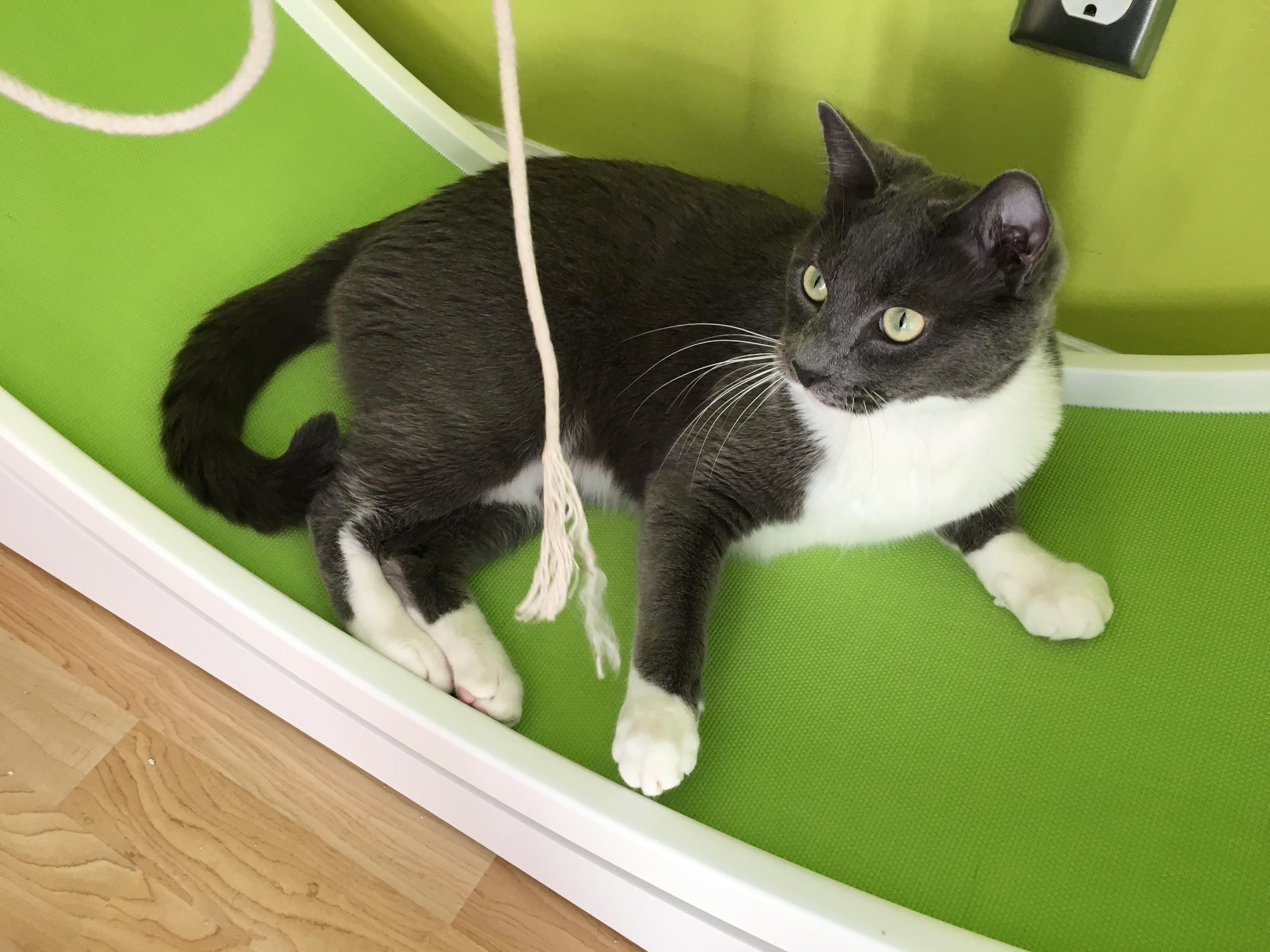
Next, I recommend weighting it down for a few days. This might mean putting an actual weighted item on the wheel or putting something to impede movement on either side. Place a nice cat bed or fleece blanket on the wheel along with some treats and let your cats just hang out on it as if it were a weird new cat condo.
IMG_4003 (Copy)
IMG_4005 (Copy) (2)
IMG_4004 (Copy)

After a few days of this remove these items and encourage your cat to stand on the wheel using treats or play around it using a lure toy. All the while steady the wheel with one hand so it barely moves at all. This allows them to learn to trust it.

Once that is going well, allow the wheel to have just a little bit of movement as your cat plays on it. Encourage them to slowly walk on it while following their favorite lure toy. Hold a treat out in front of them so they take a step or two towards the treat and the wheel moves, but only slightly. Immediately reward them for their bravery! It is very important during this stage that you keep one hand on the wheel so that it does not move too quickly and frighten them.

Eventually, you will be able to continue to build up to more and more movement and hopefully your cat will find it so rewarding and fun they will hop on and motor of their own accord!
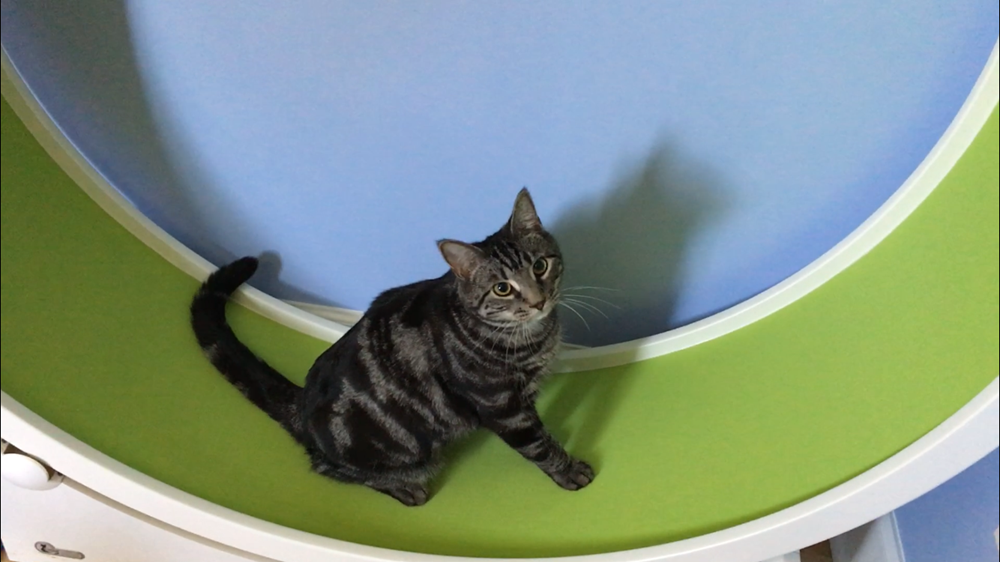
IMG_4826 (Copy)

Watch the video below to see cats loving the cat wheel!
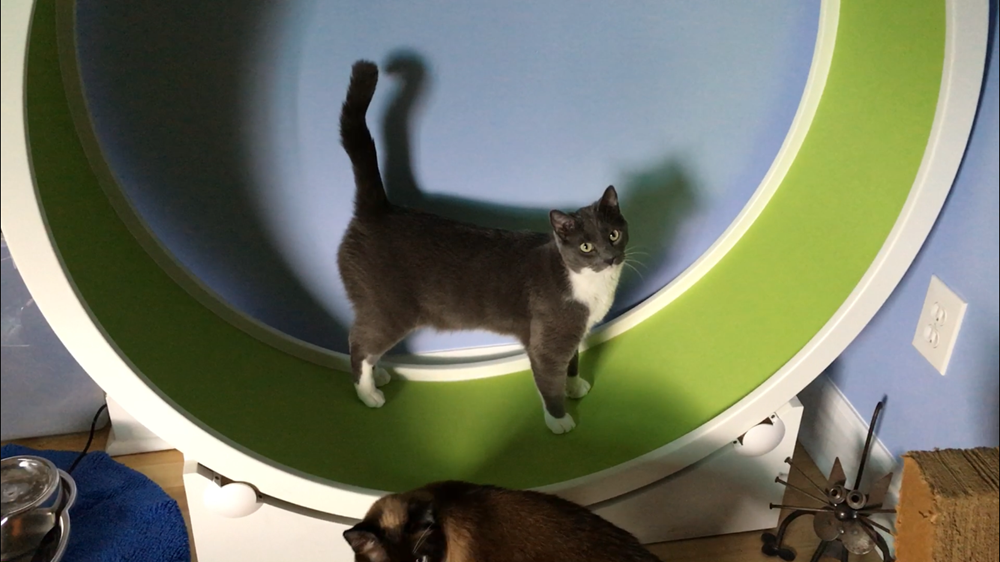
Soren is a firm believer that all cats should have a cat wheel!
Filed Under: Blog Tagged With: atlanta cat behavior, environmental enrichment, fundamentally feline

Catios: Options to Consider When Building a Catio

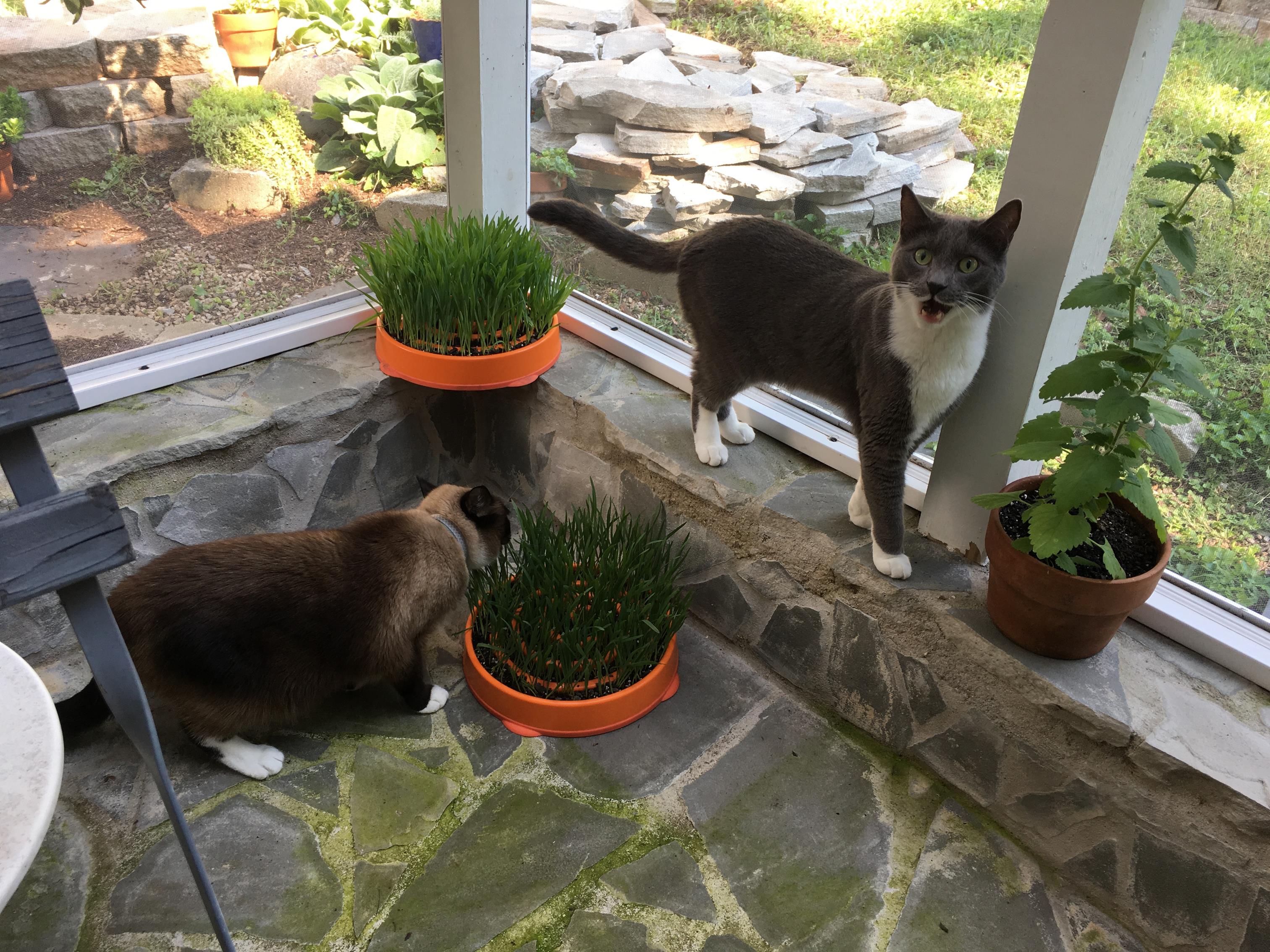
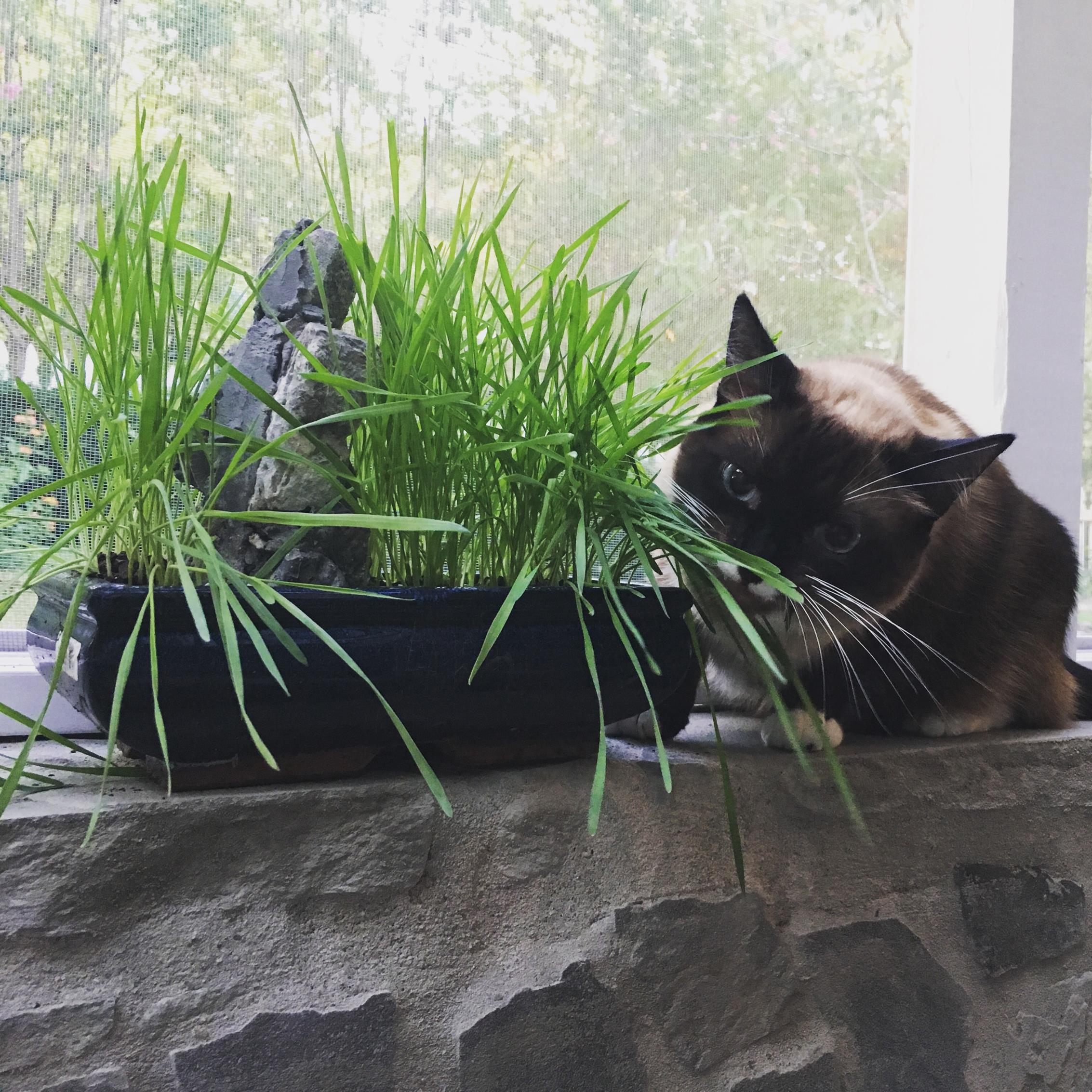
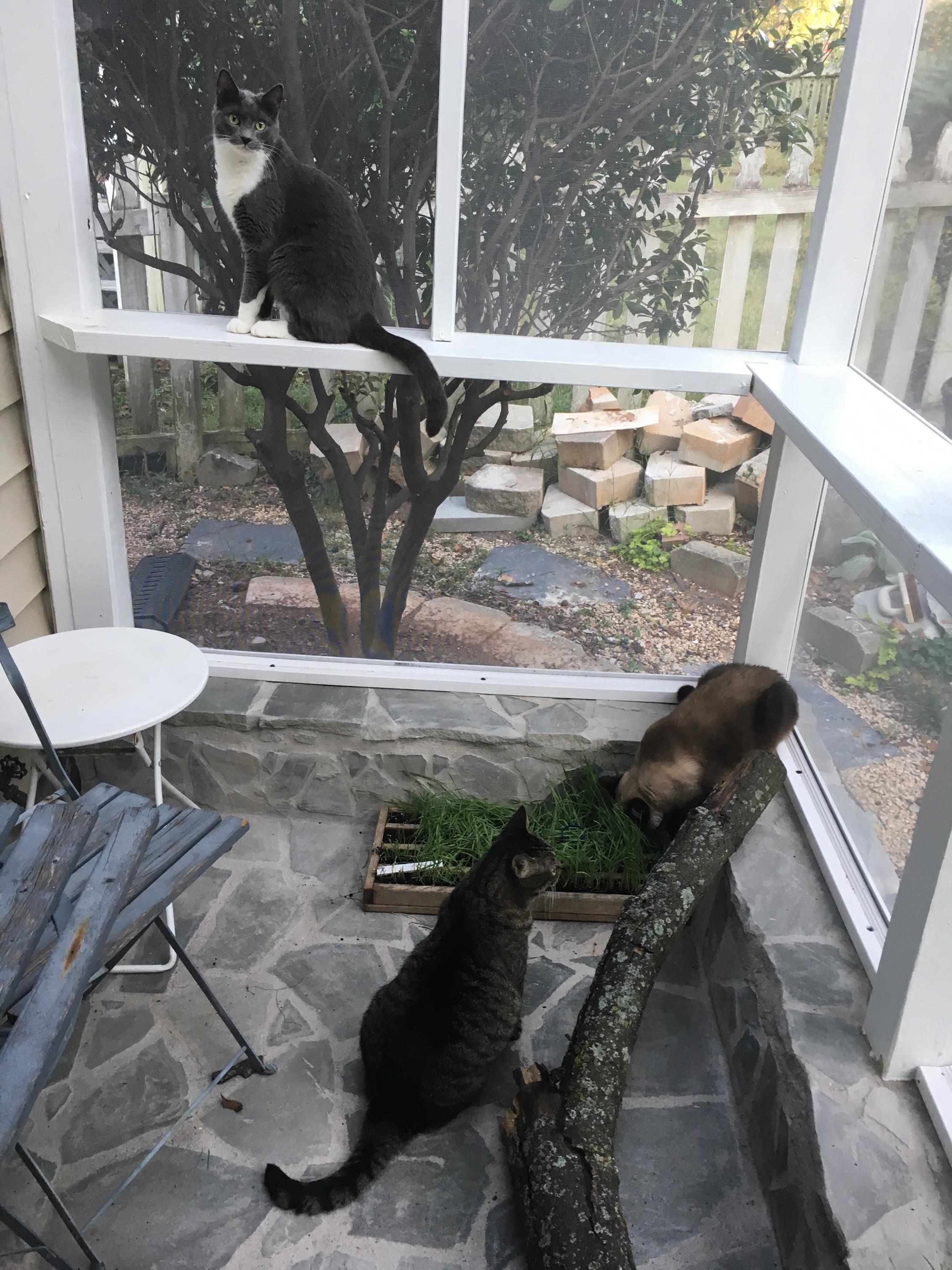
Here Willow and Soren are enjoying their cat grass planters.

Finding outlets for safe outdoor exploration for cats has become an increasingly popular goal for many cat parents. The typical ways of doing so include screened porches, leash and harness walks, outdoor enclosures and even the occasional use of a cat stroller. But the concept of “catios,” or patios designed for cats, are all the rage now. The difference between a catio and just an enclosure for your cats is that they are designed and intended to be enjoyed with your cats. Catios provide a space that both humans and cats can enjoy and gets both of you a little bit closer to nature. These “cat habitats” meet the needs for more mental and physical stimulation while simultaneously addressing wildlife concerns, feline safety concerns, and neighbors who may not want their gardens used as a litter box. It is the best of both worlds!

View "Catio Album" on Facebook here.

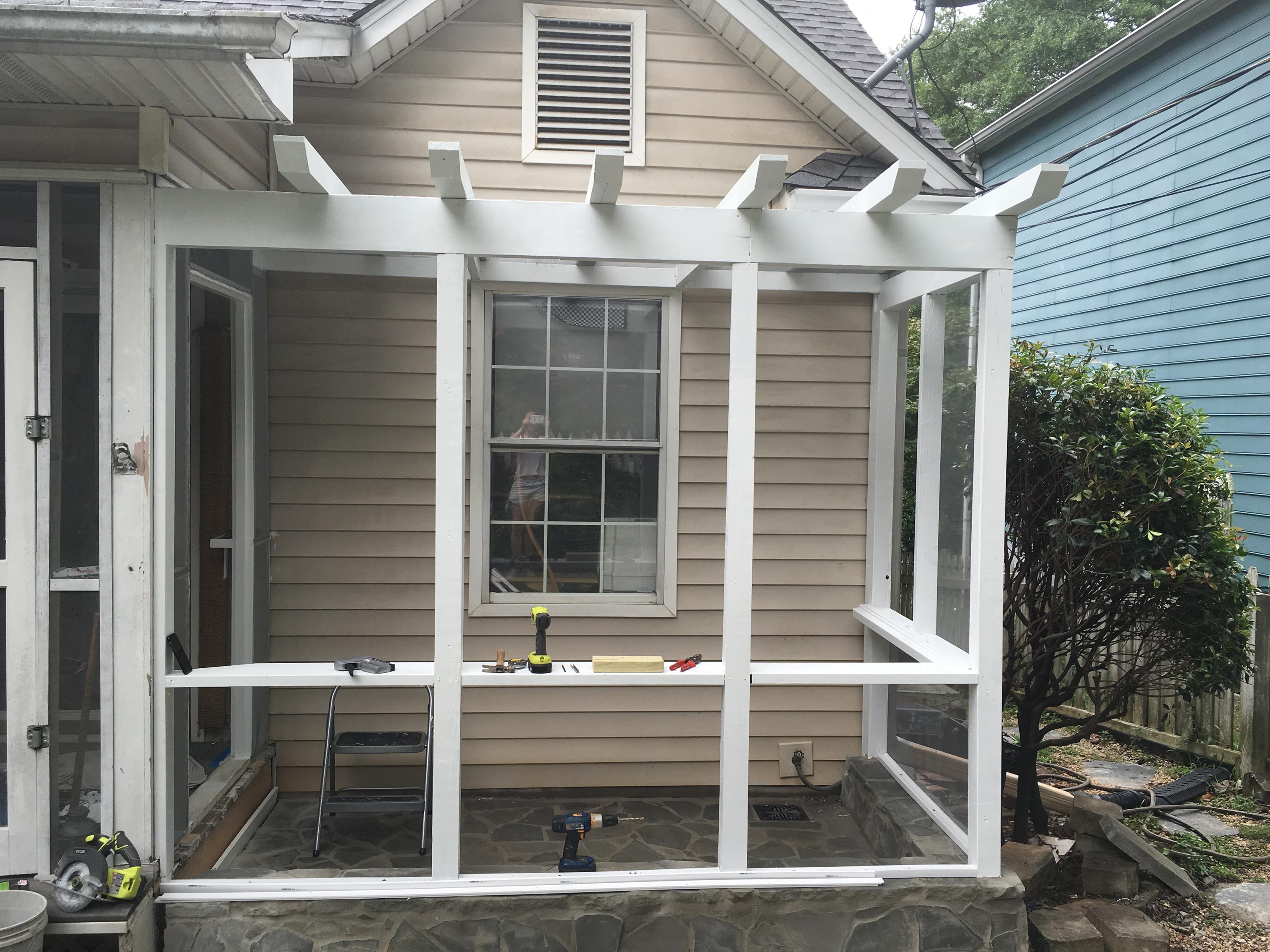
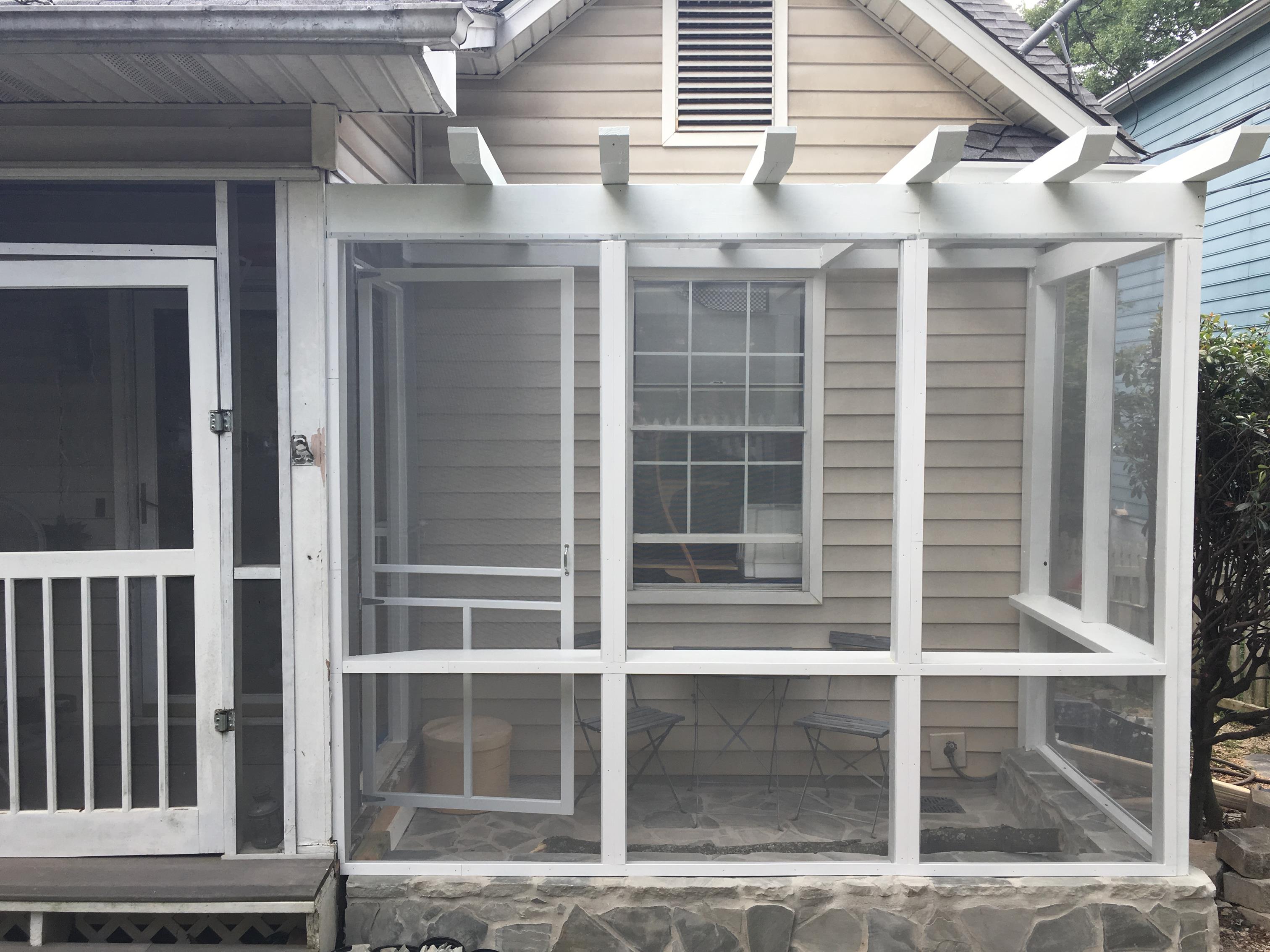
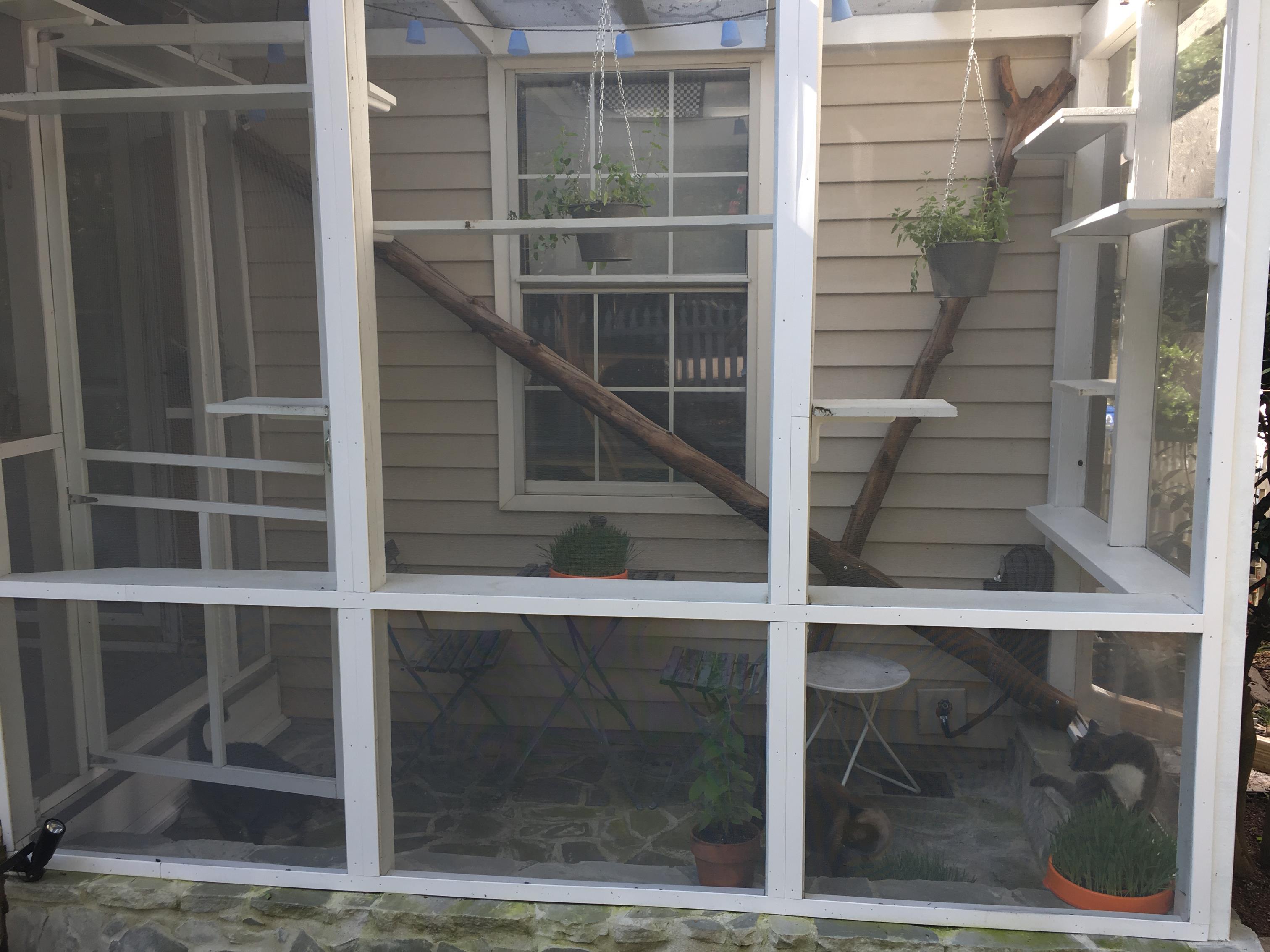
Catios can vary greatly and differ based on the space you have to work with and the creativity of the humans building it. The important distinction between a screened porch and a catio is that catios are exposed to the elements so the cats enjoying the space get to experience the seasons and weather. If a roof is created it is usually screened or finished with chicken wire or the like. If there is no roof and an open fenced area is created then cat fencing similar to the Purrfect Fence (purrfectfence.com) is used so that the cats cannot scale the fence. This type of fencing angles inward and is supple, providing cats with little leverage to propel themselves over it. Your catio can be as simple as a chain link enclosure or a personalized, hand-built structure as complex as you choose.

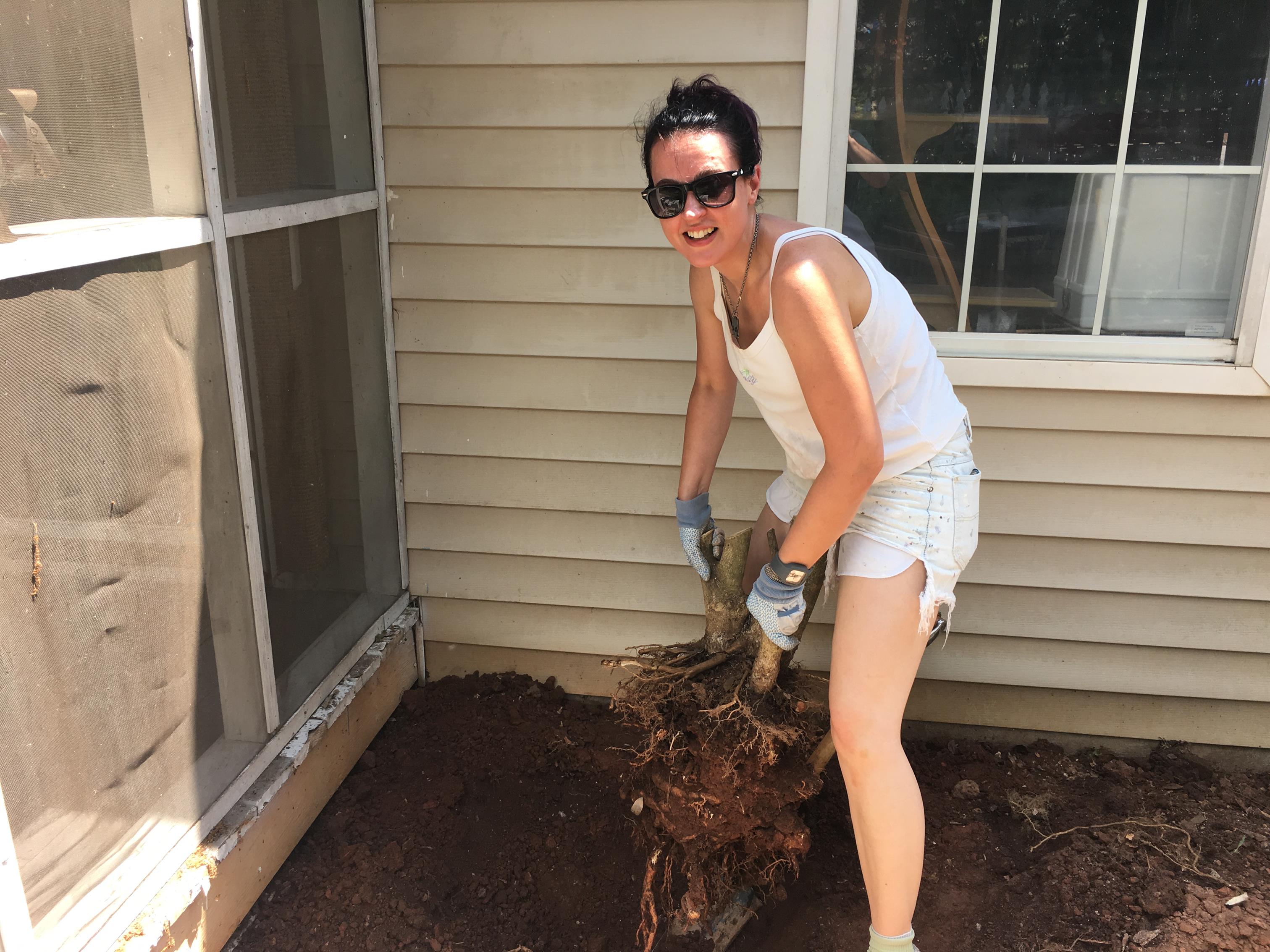
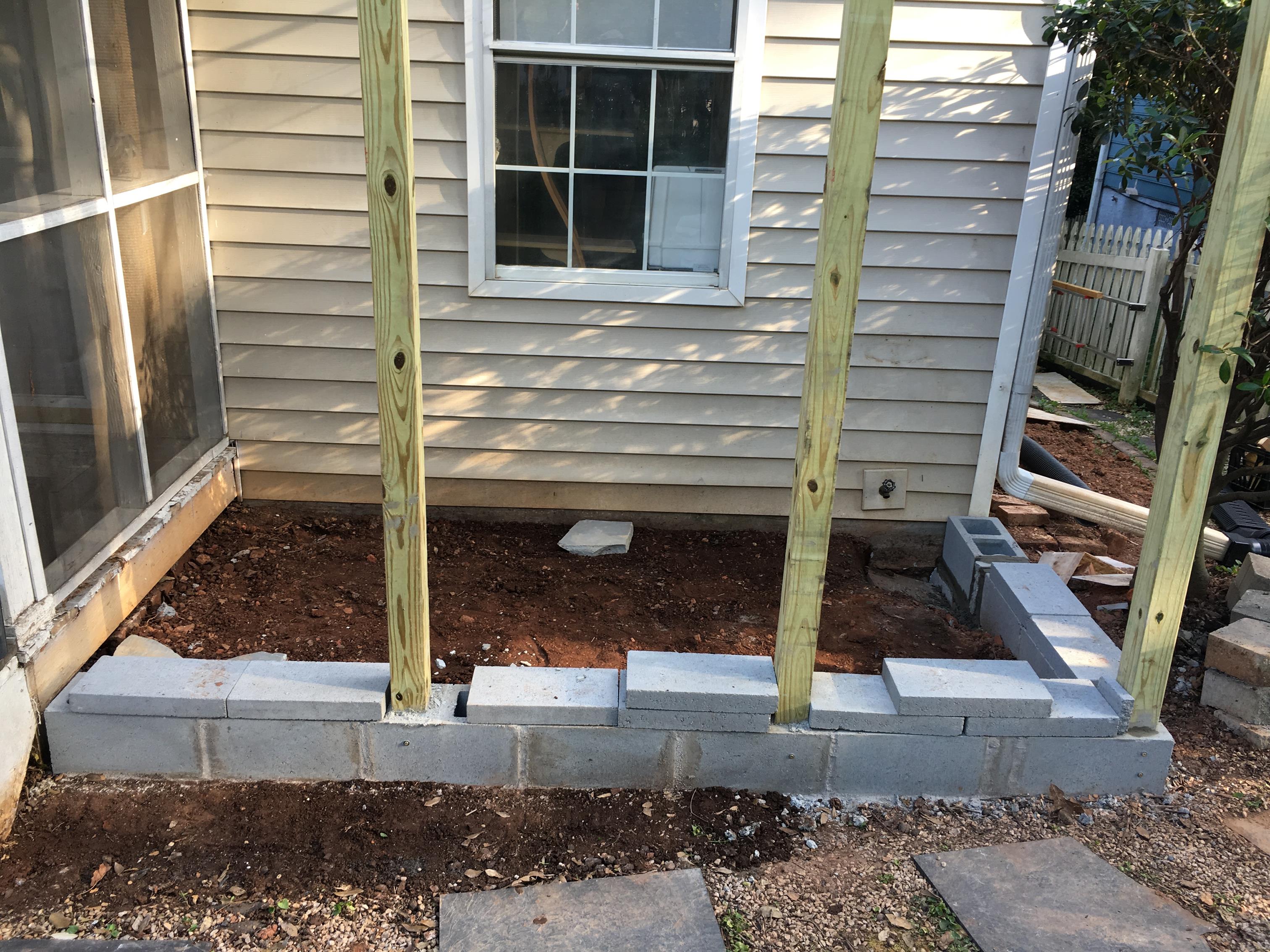
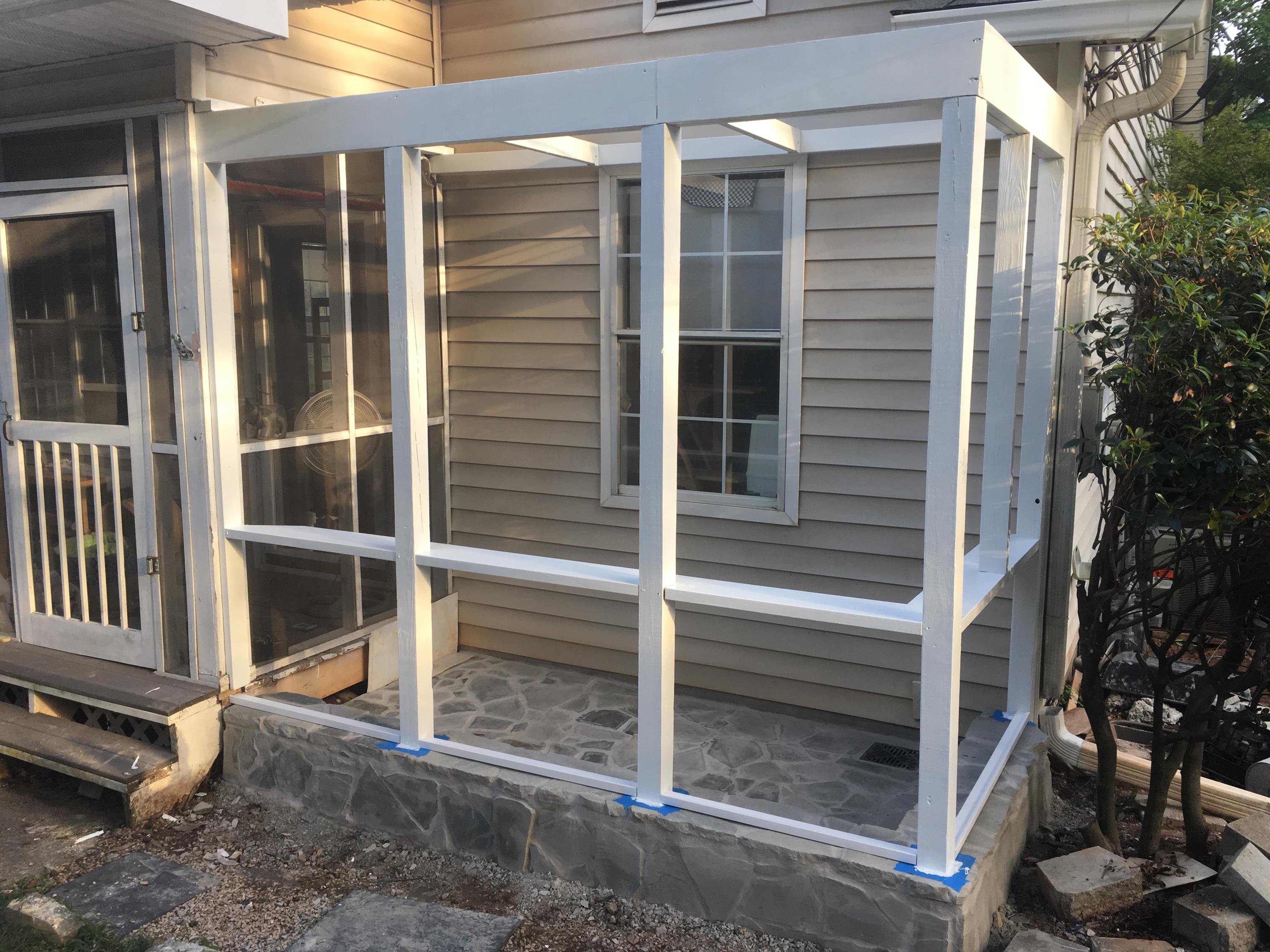
Removing root ball so we can lay the foundation.

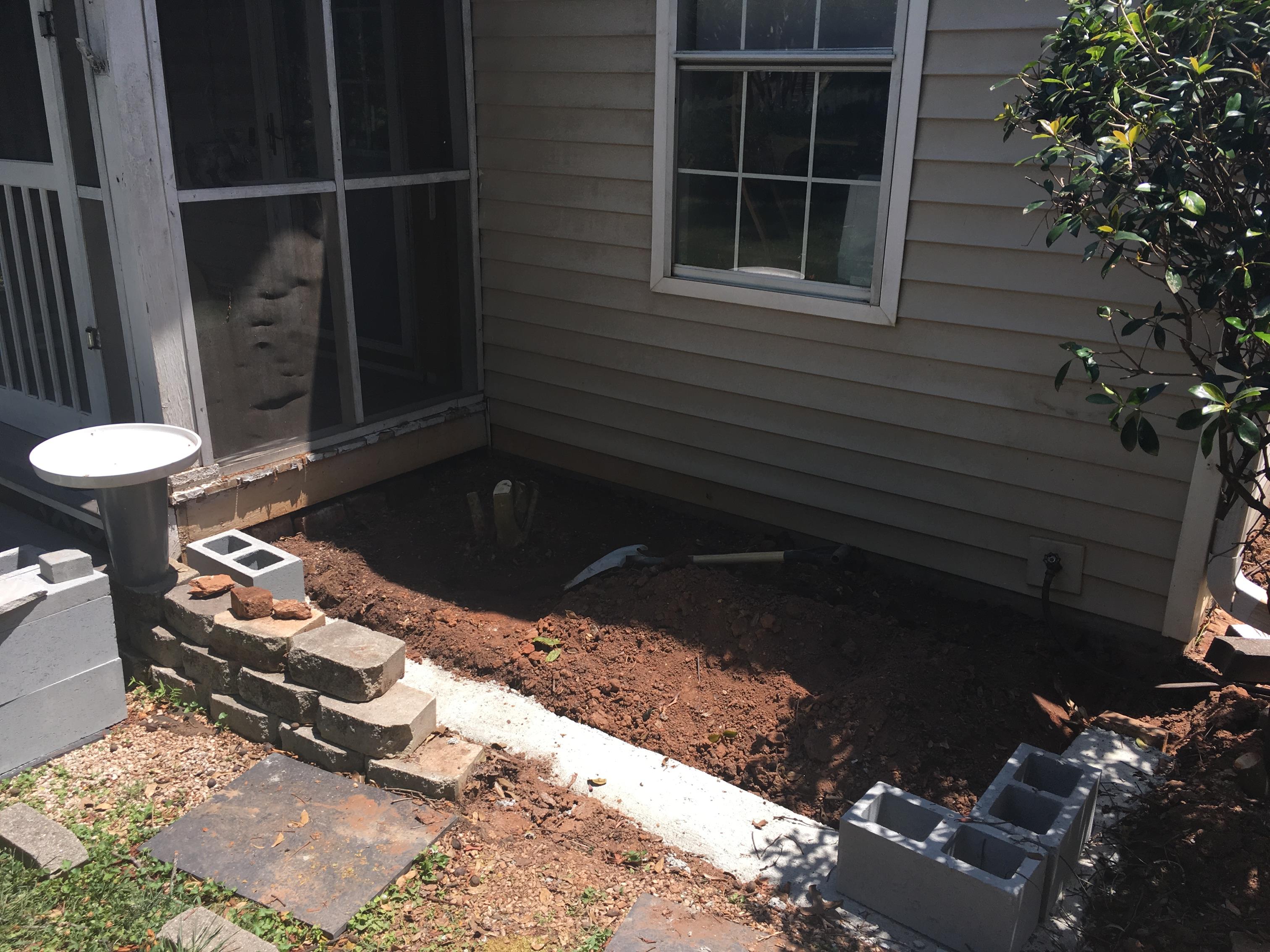
All graded and ready for stone!

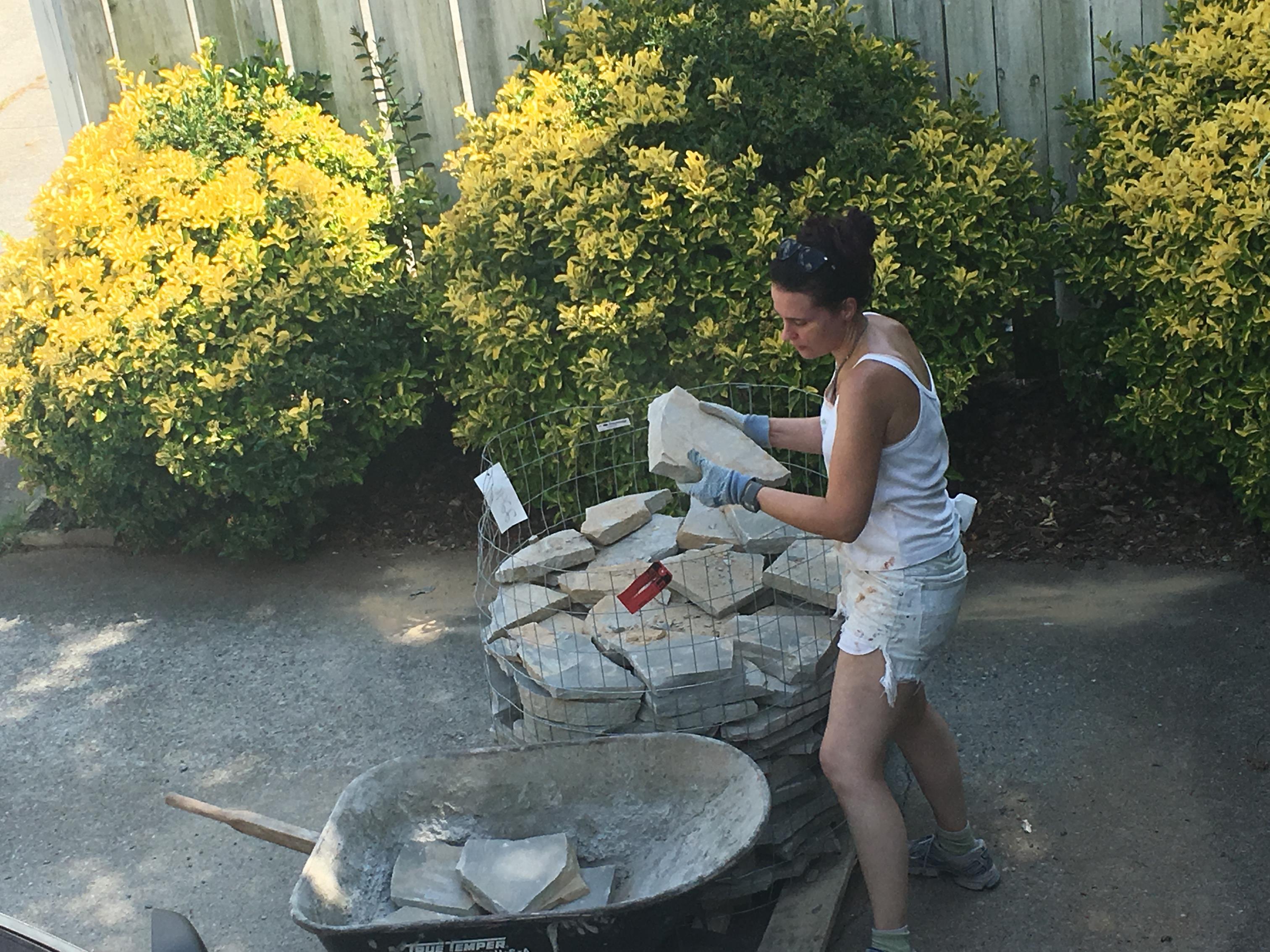
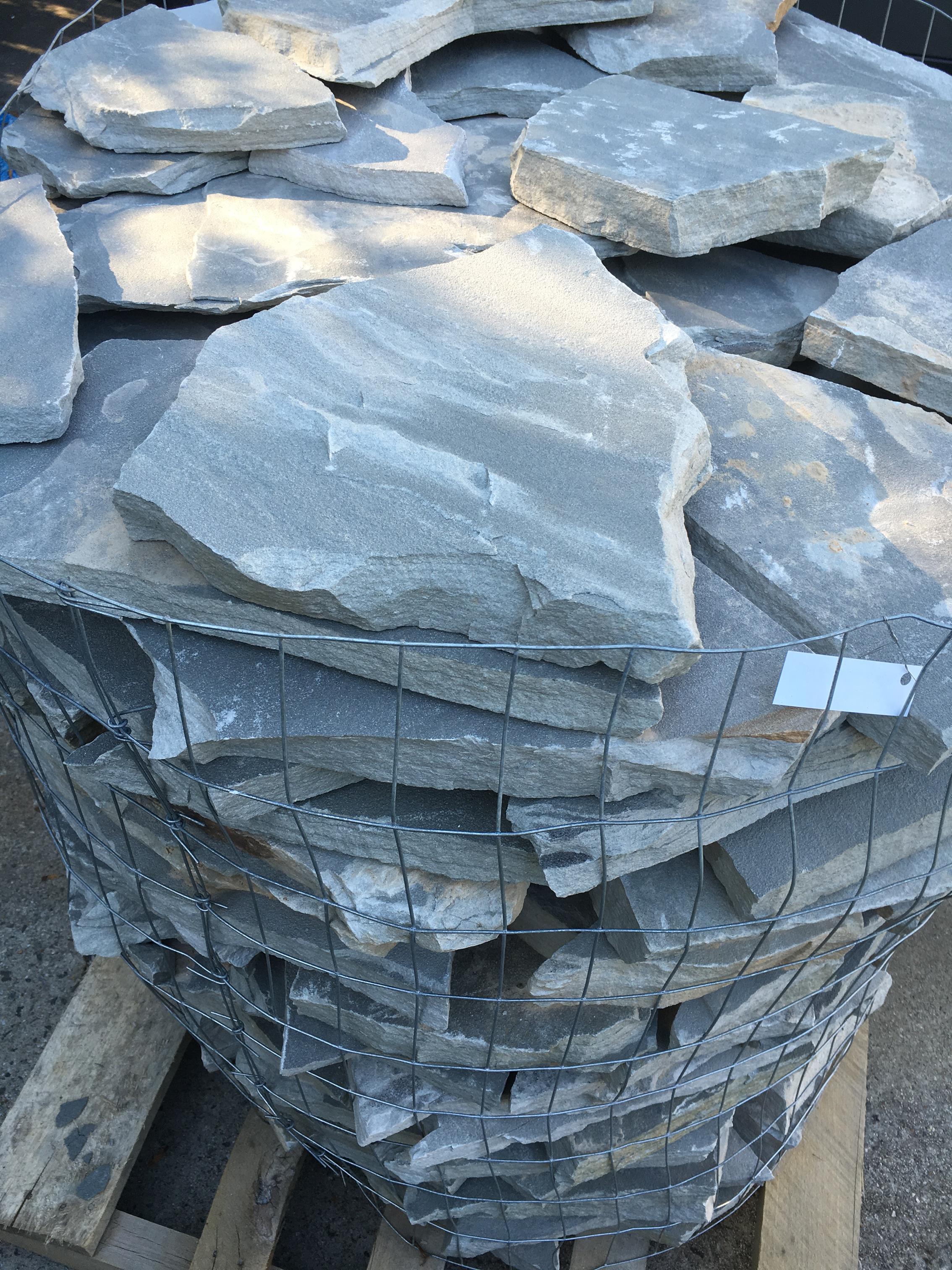
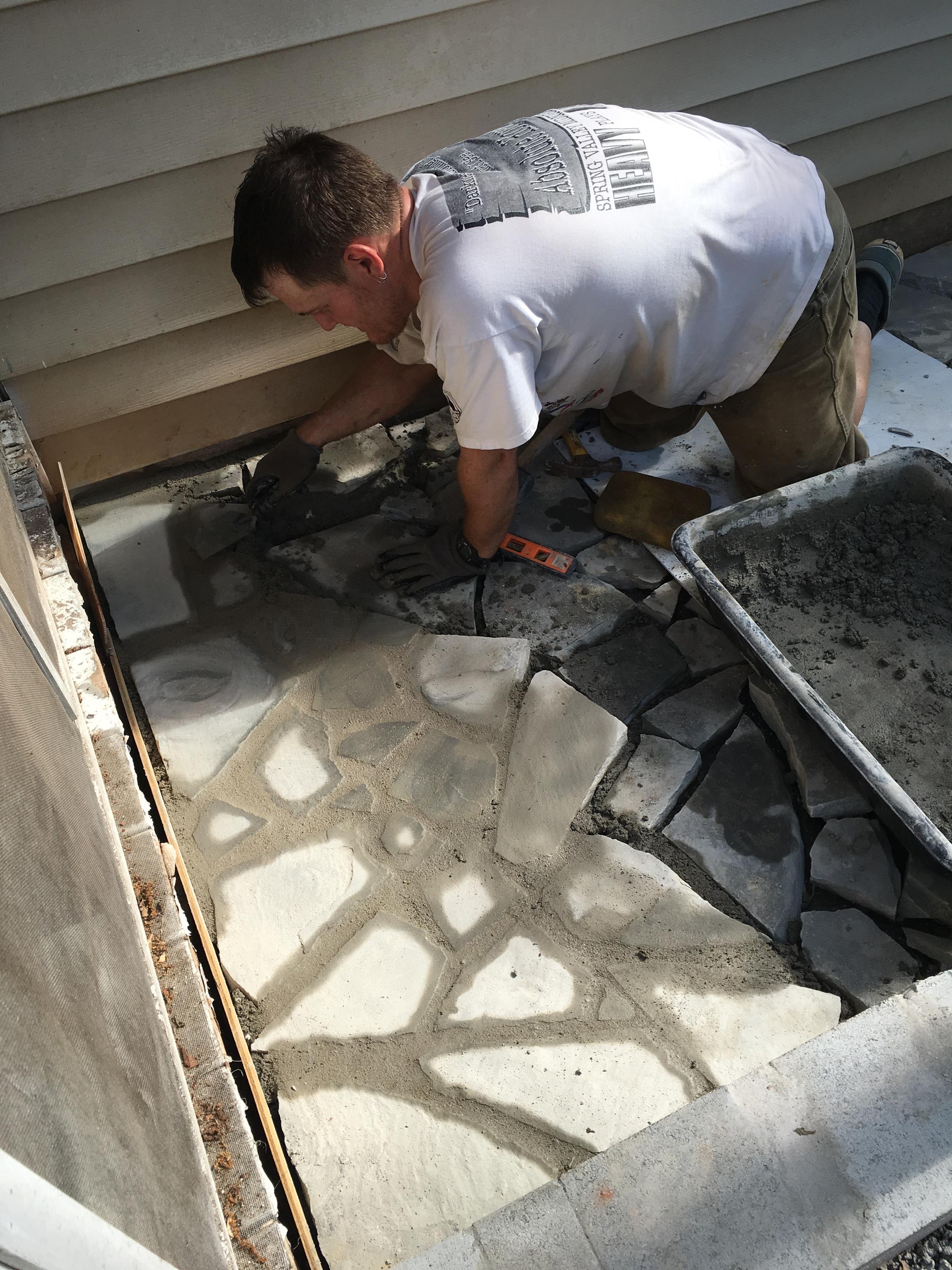
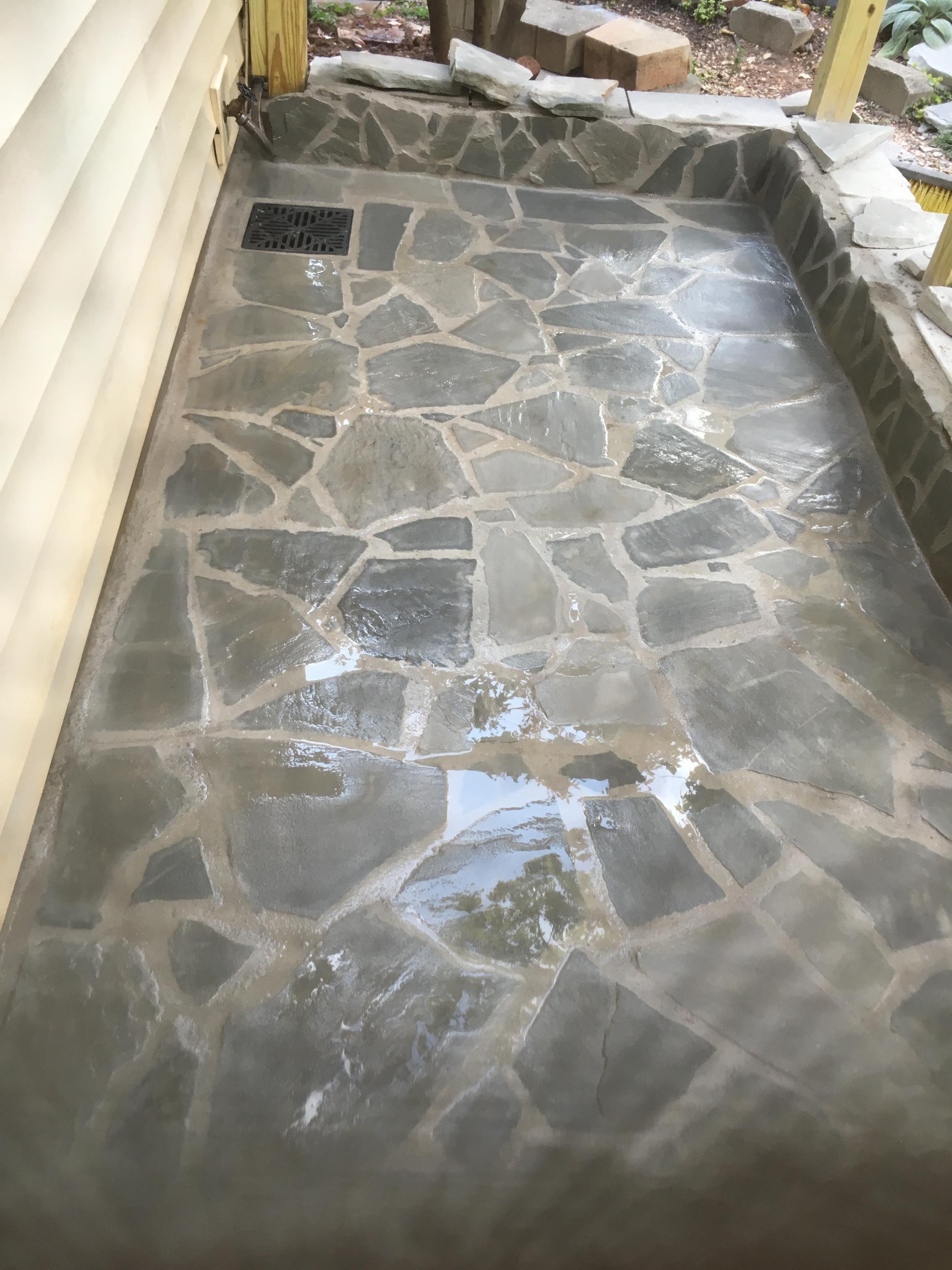
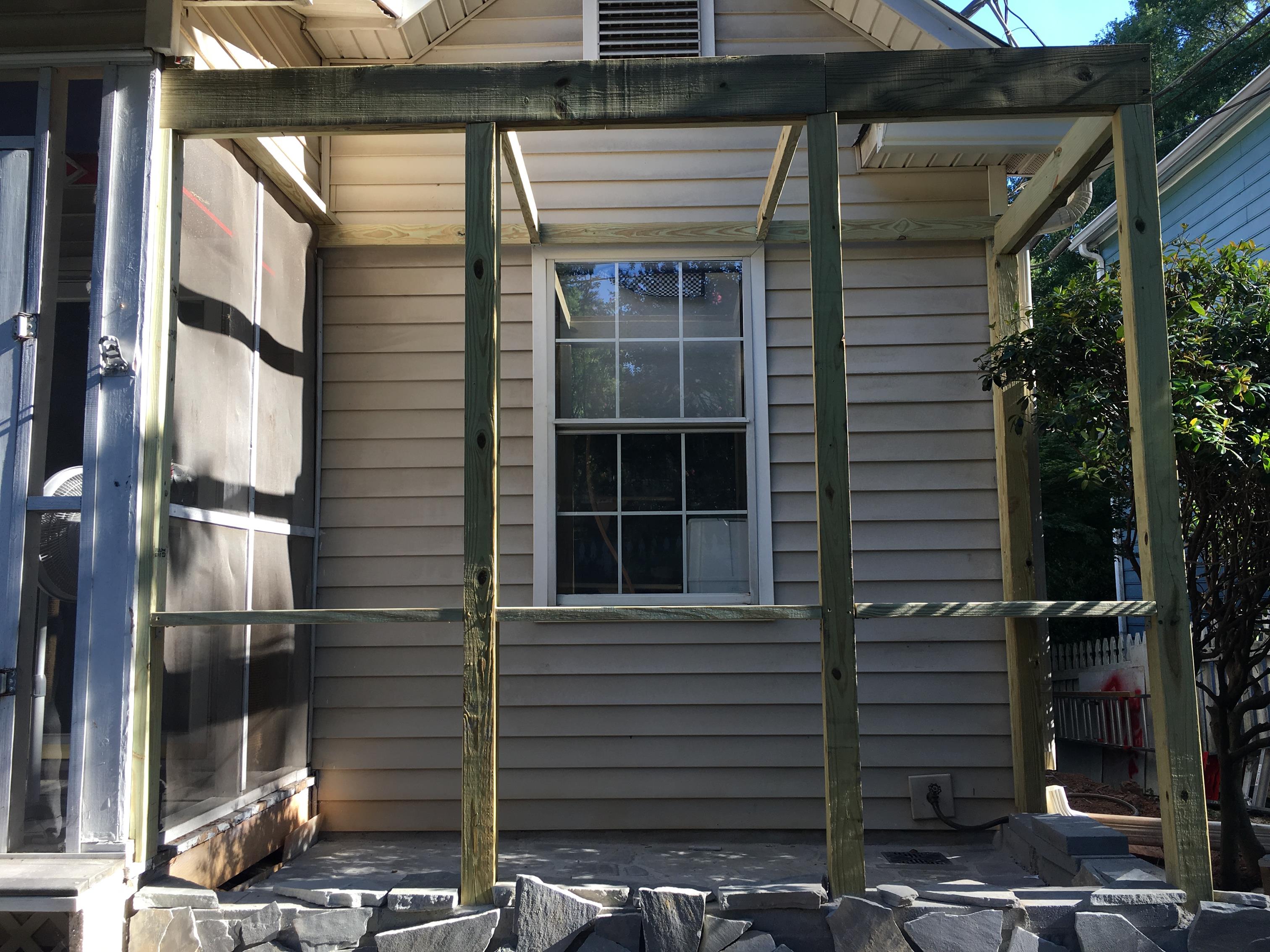
We chose a stone floor to minimize dirt mess & fleas.

Catios generally have a natural “floor” but that can still encompass a wide variety of substrates. These substrate offerings are greatly dependent on the location of your catio. For instance, a lush bed of grass may not be feasible if your catio is in a shady space. Though it is highly recommended that if a sunny spot is available that at least part of the catio is in sun since cats are such worshipers of heat and sunbathing! Flooring offerings include: grass, flagstone, mulch, gravel/loose stone, or even decking, etc. The goal of this whole set up is enrichment so if the space allows it would be ideal to offer as many different textures as possible.

Some choose to have a small covered space with decking or stone and set up patio furniture, tables and chairs etc. and then expand the area beyond to include a portion of the yard or garden, and that might be where the cat gets rained on but also gets grass and plant exposure.

The beautiful stone! (Or at least we think so!)

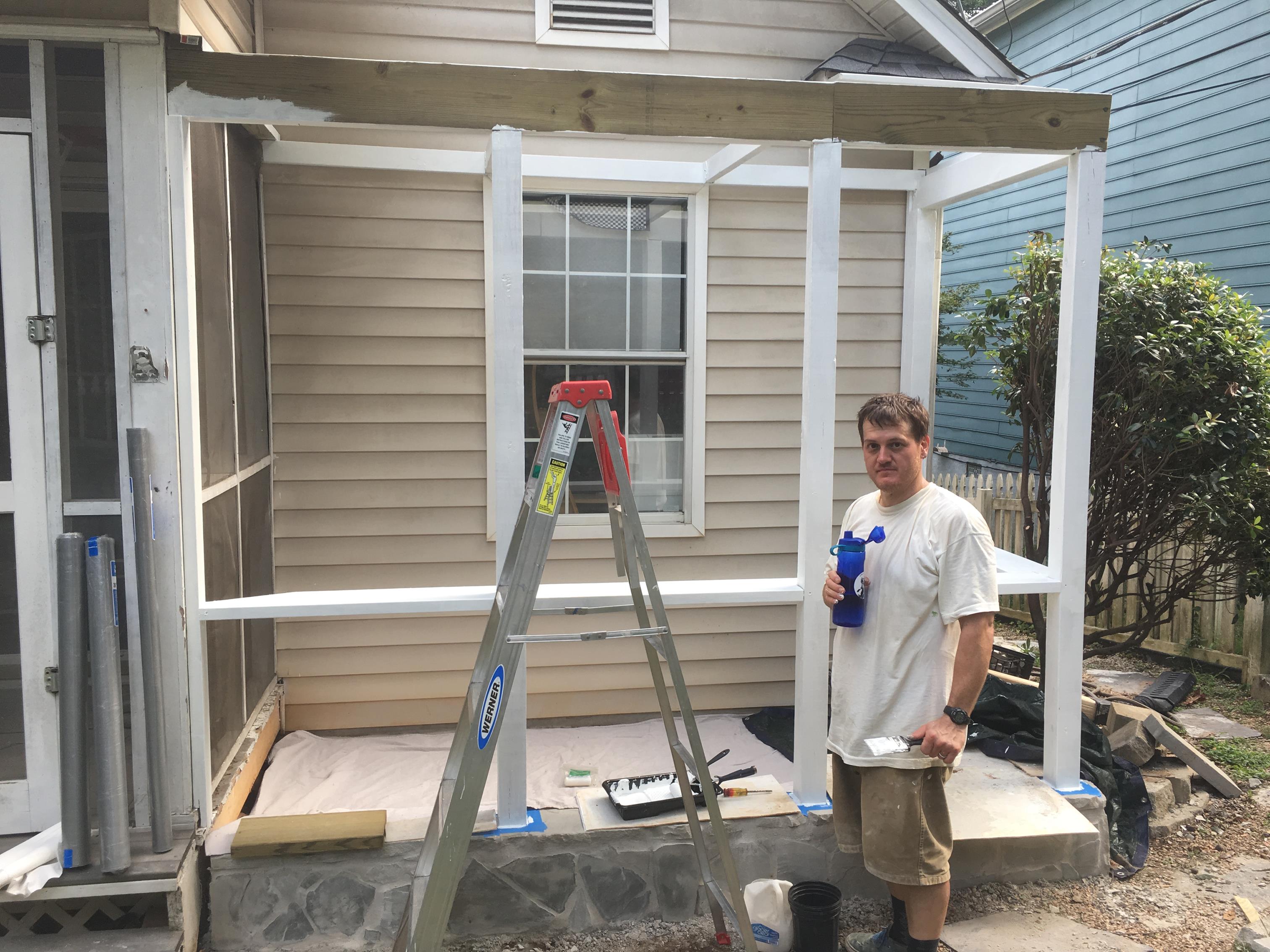
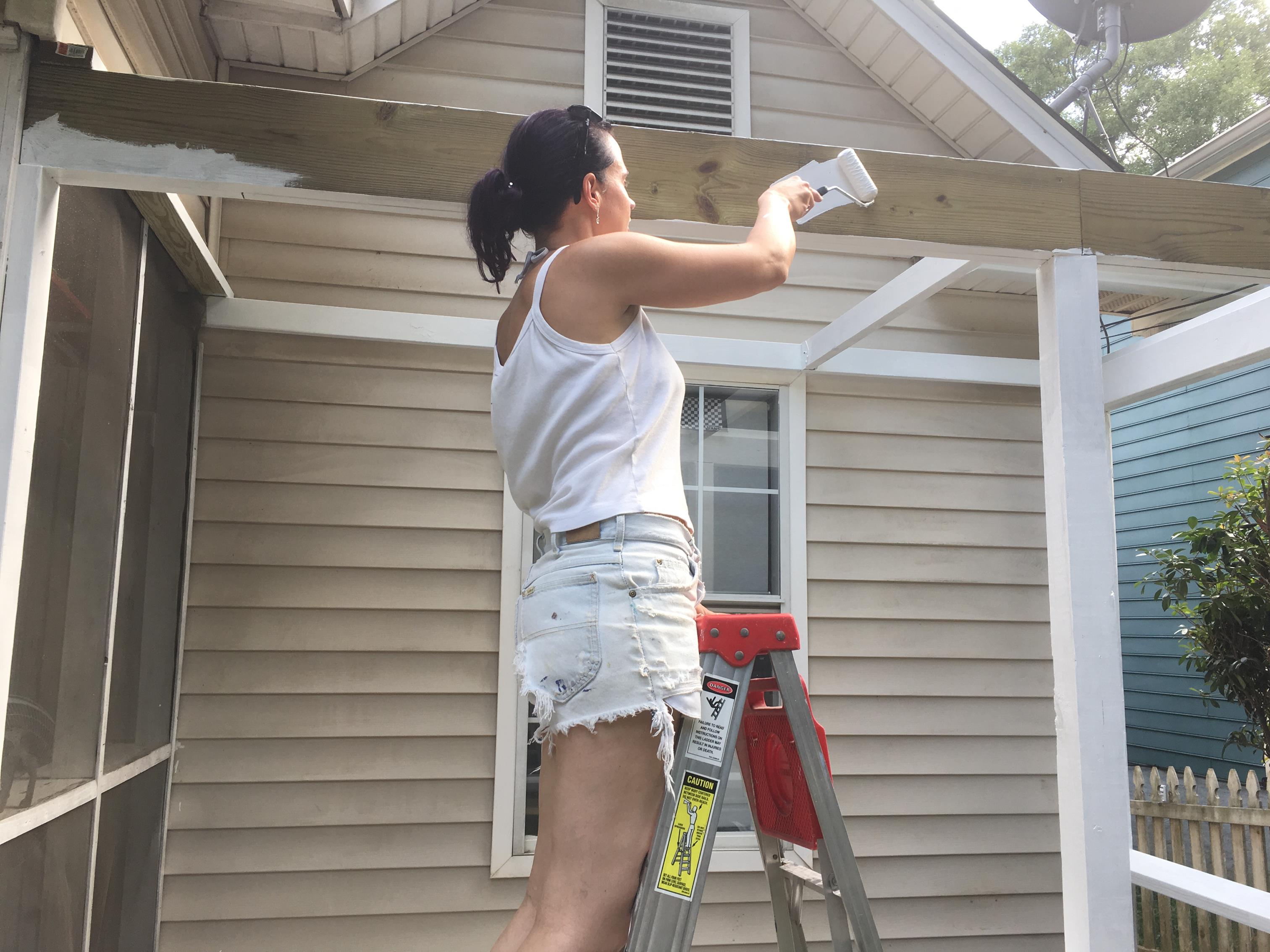
Jake working hard for his fur children.

Finished product. I moved all 2800lbs of stone myself!

IMG_8116 (Copy)

IMG_8220 (Copy)

IMG_8356 (Copy)

Coming and going.

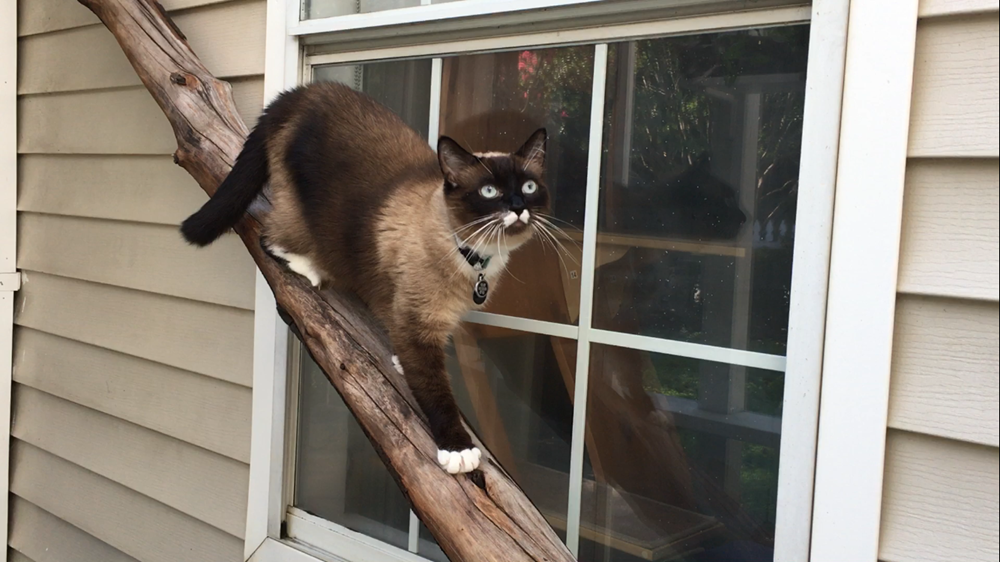
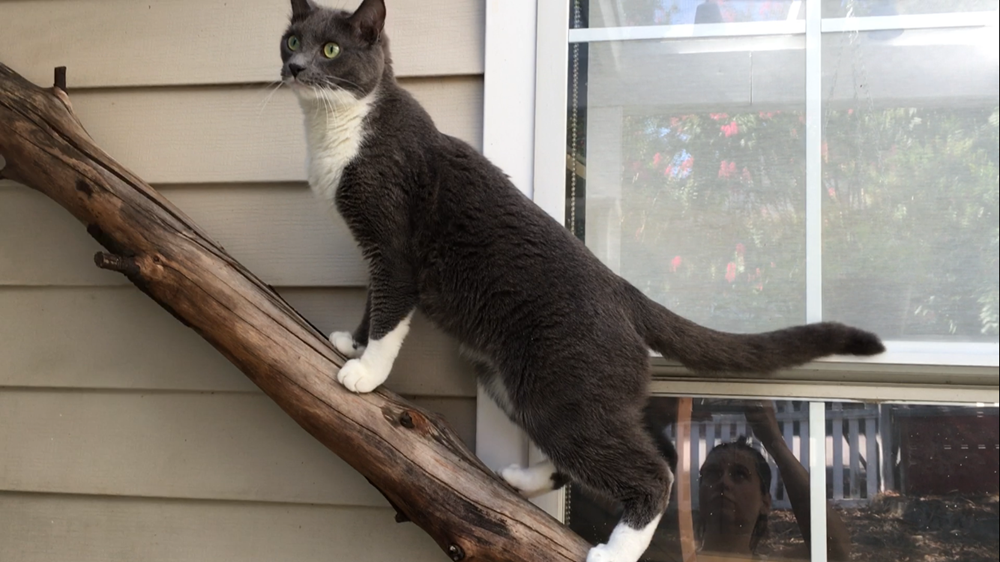
So how do they access the catio? Most human caregivers choose to install cat doors to allow their cats free access. A creative alternative is to utilize the existing windows in your home that are currently in place. Simply remove the screen and allow the cats to jump out the window or walk out a sliding glass door onto their catio. The benefit to the latter is you allow them a wider entry and exit point than a typical cat door allows which can prove less threatening and lessen conflict in multiple cat households. Most cats can be trained to use cat doors, but some resist and an open window is an easy alternative choice.

Whichever entry and exit point you choose ensure that dead ends are not created where cats can be trapped. It is always advisable to have at least two entry points onto your catio so as to not create competition and conflict. Areas where the human caregiver must carry the cat out to the enclosure and place them in it, leaving them “locked up” and often unattended is not advisable and is not a catio, but rather is an enclosure. The cat should have the ability to control and come and go as they choose. A catio is once again defined as a structure that humans and cats share and enjoy together and the former is really just a cage.

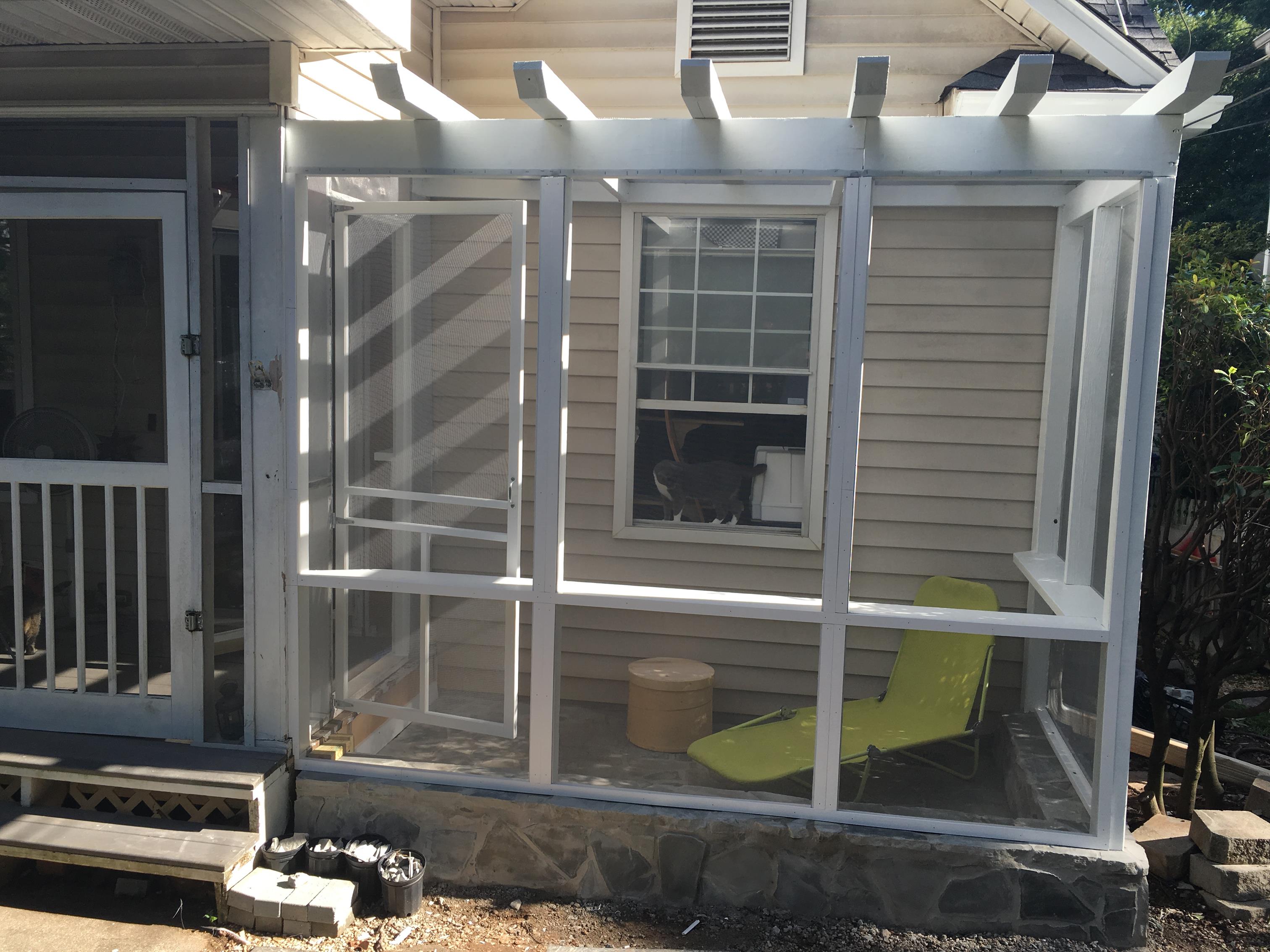
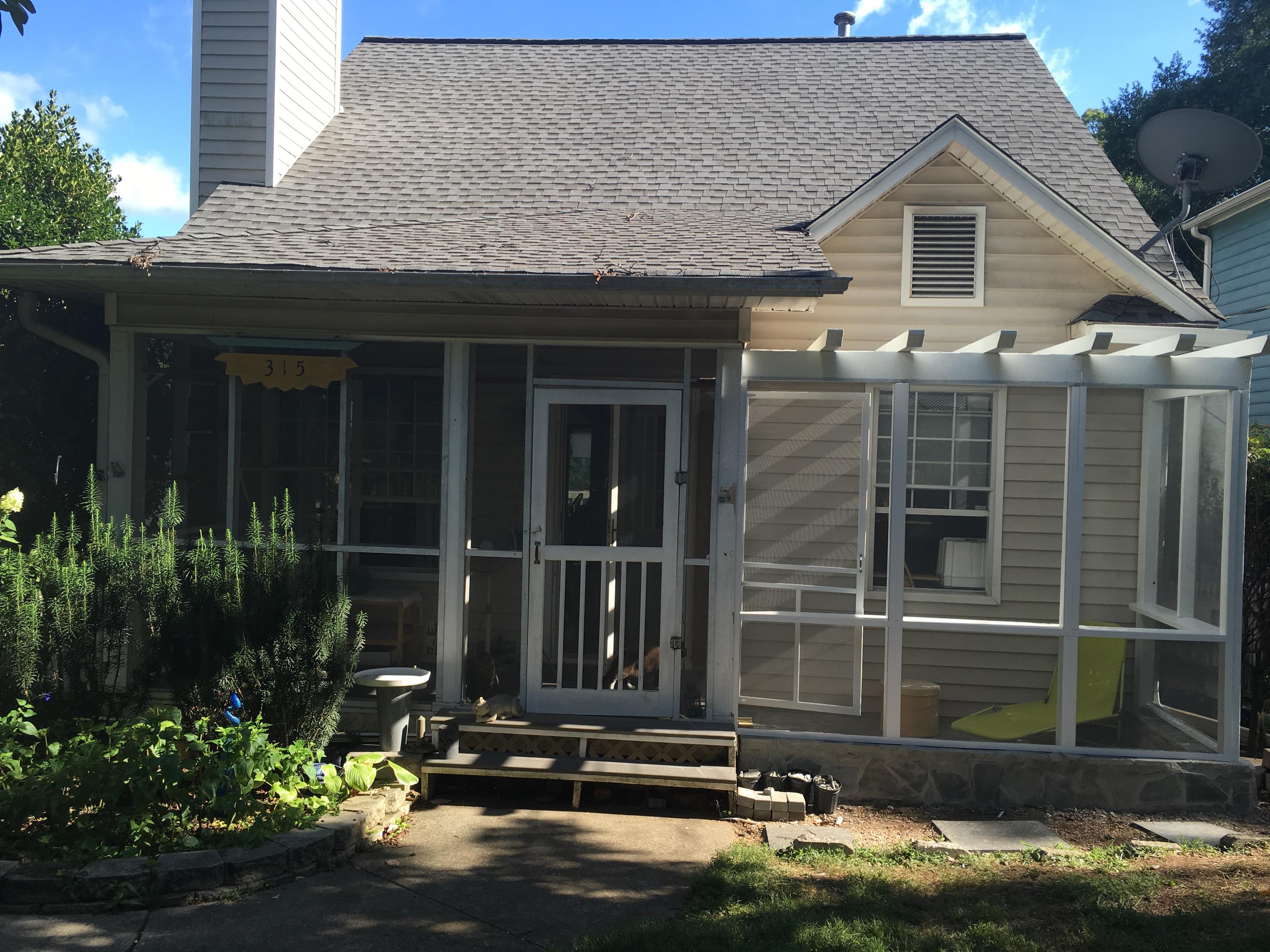
Our catio is accessible three different ways: window with screen removed in catio, window with screen in screened-in porch, and front door.

IMG_8357 (Copy)

IMG_8361 (Copy)

IMG_8409 (Copy)

IMG_8381 (Copy)

Nice addition to the screen porch (left).

Open window, screen removed allows access.

Decorating!

This is the perfect place to go hog wild with your enrichment offerings! Catios can be equipped with all kinds of fun features to encourage exploration and let your tiny tiger feel like they are living in the jungle or on the Serengeti; it’s all about how you to choose to “catify” it!

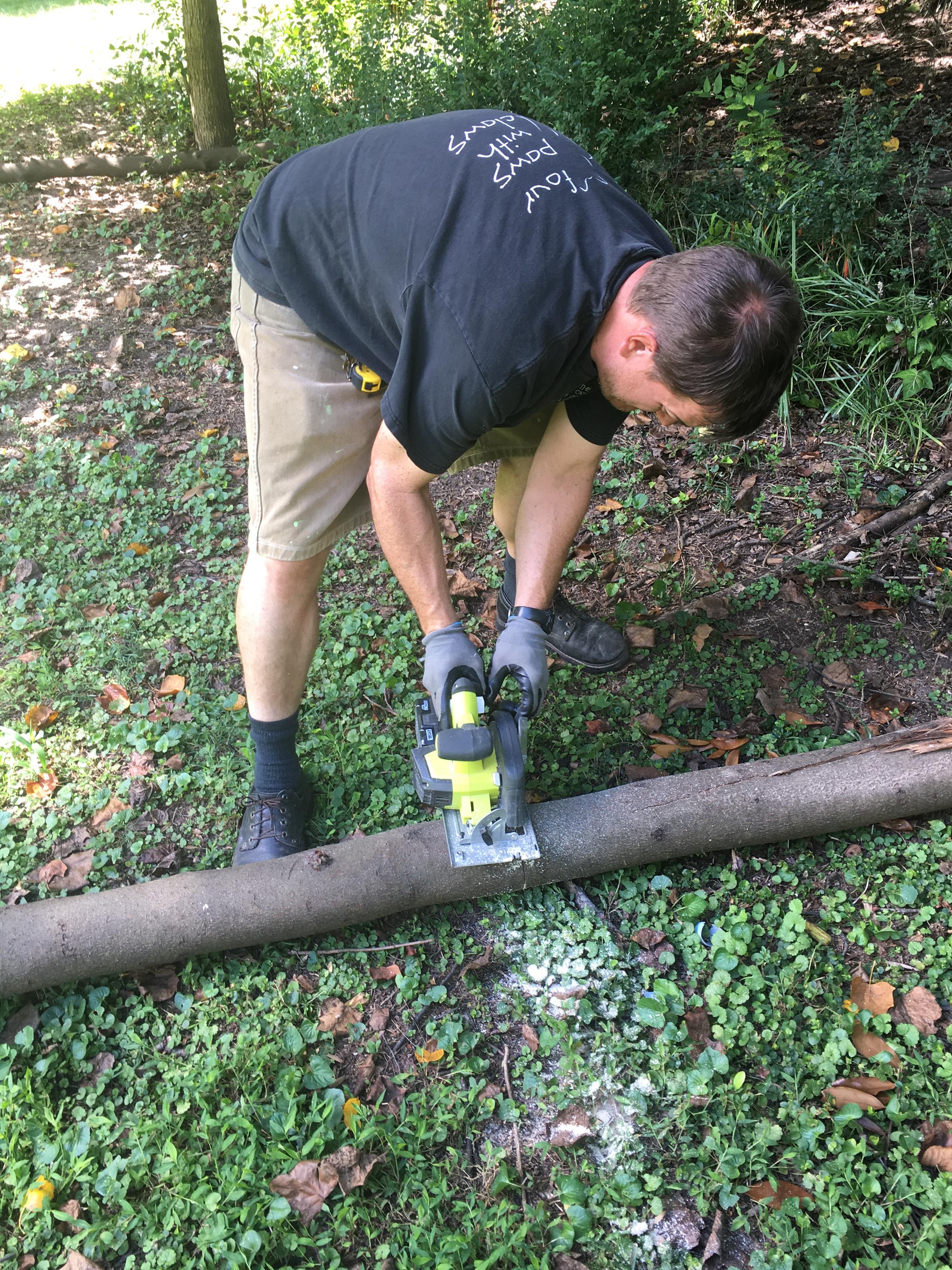
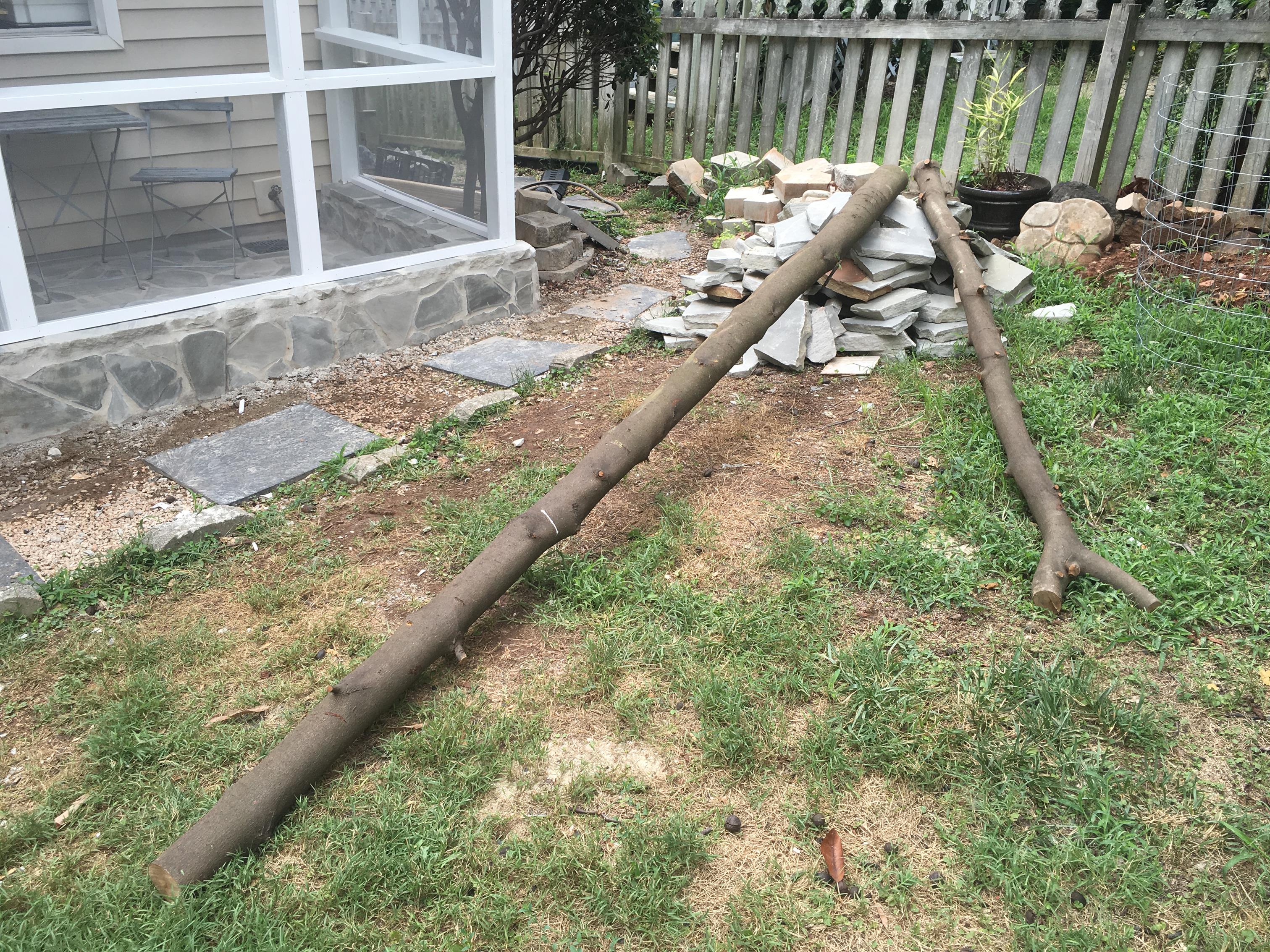
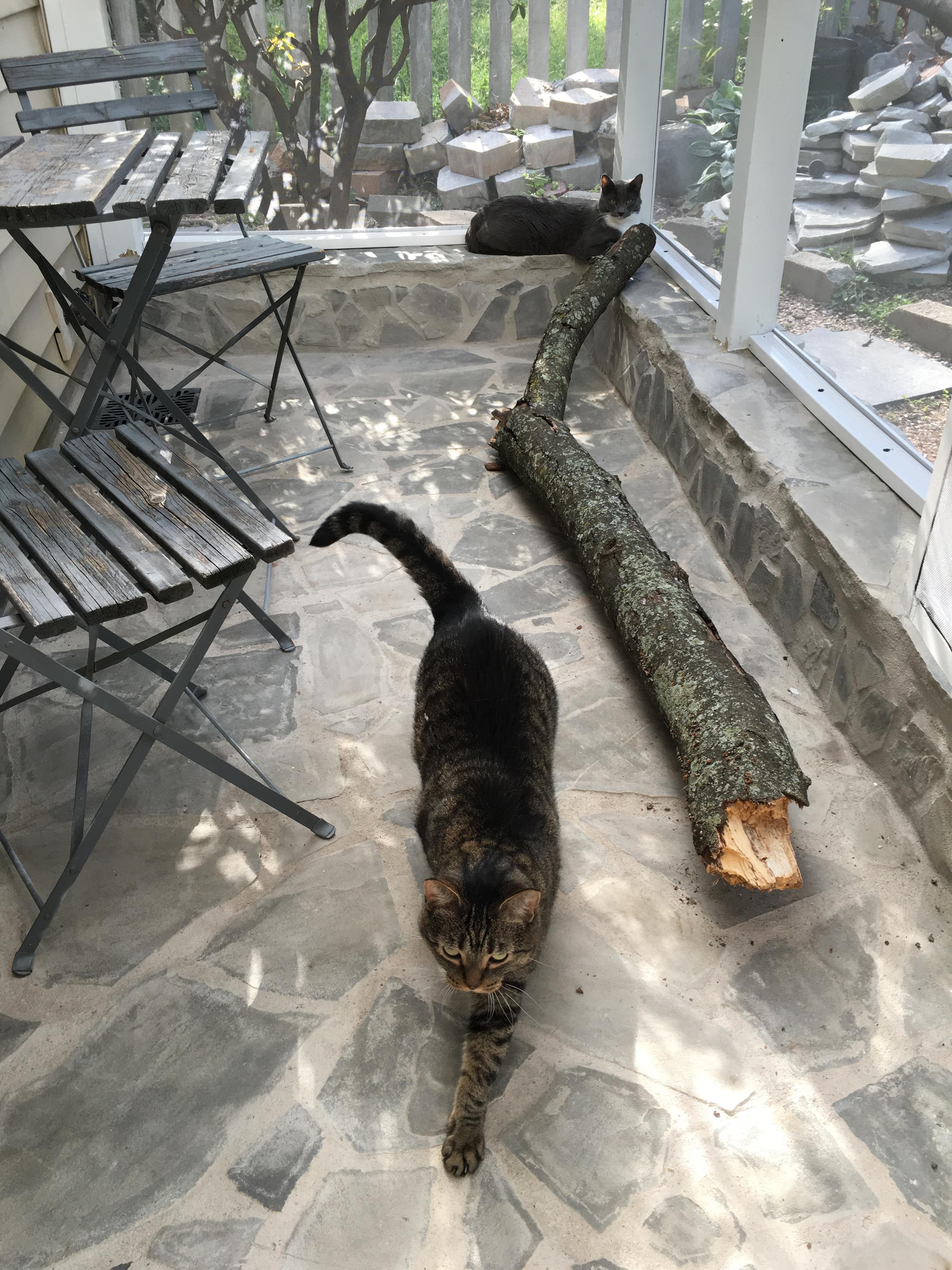
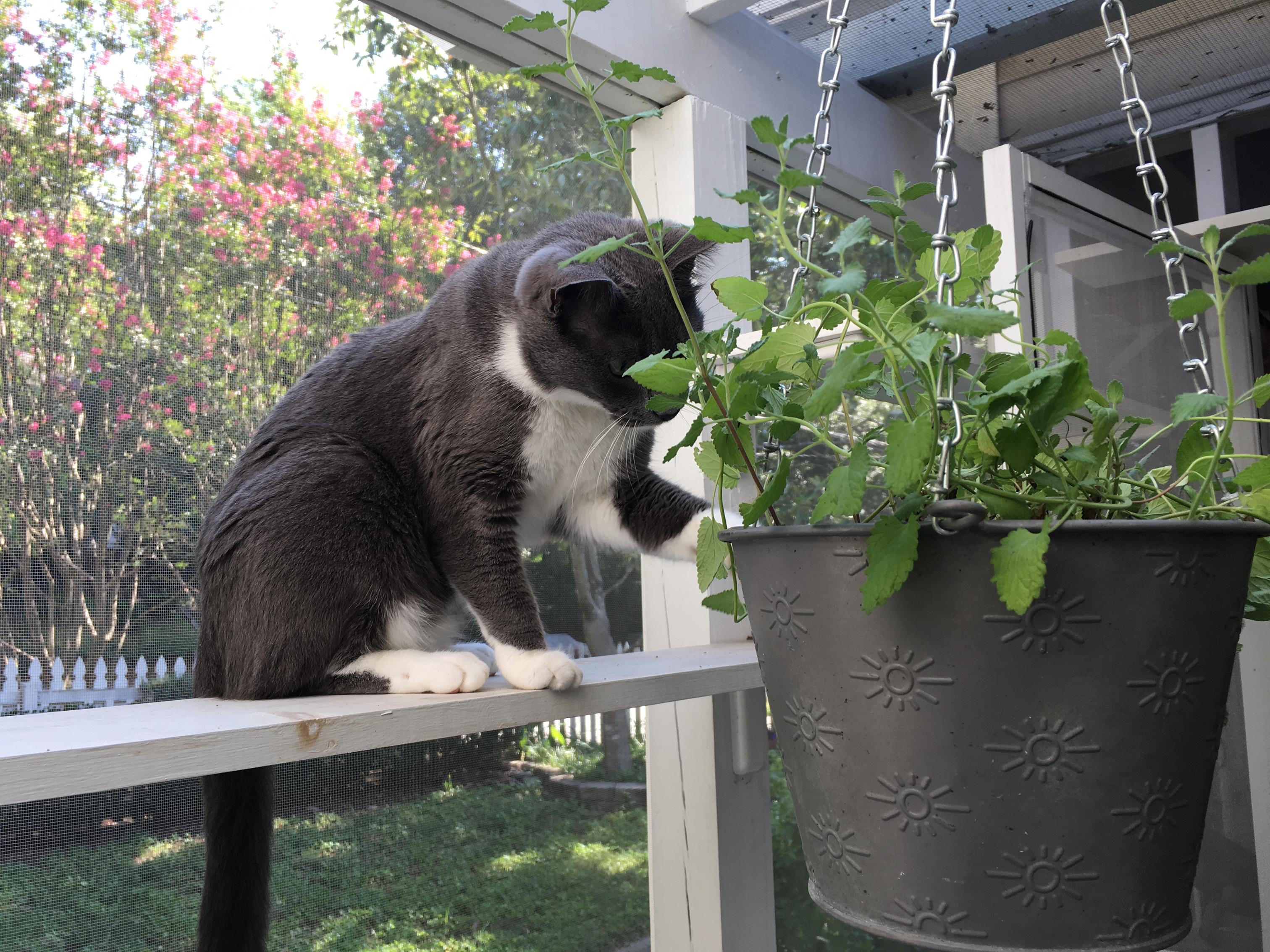
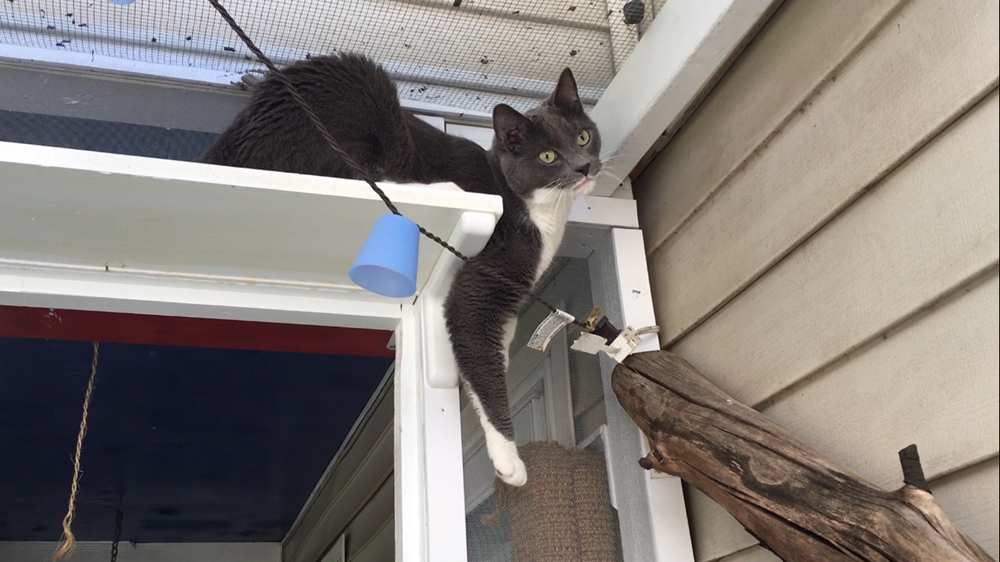
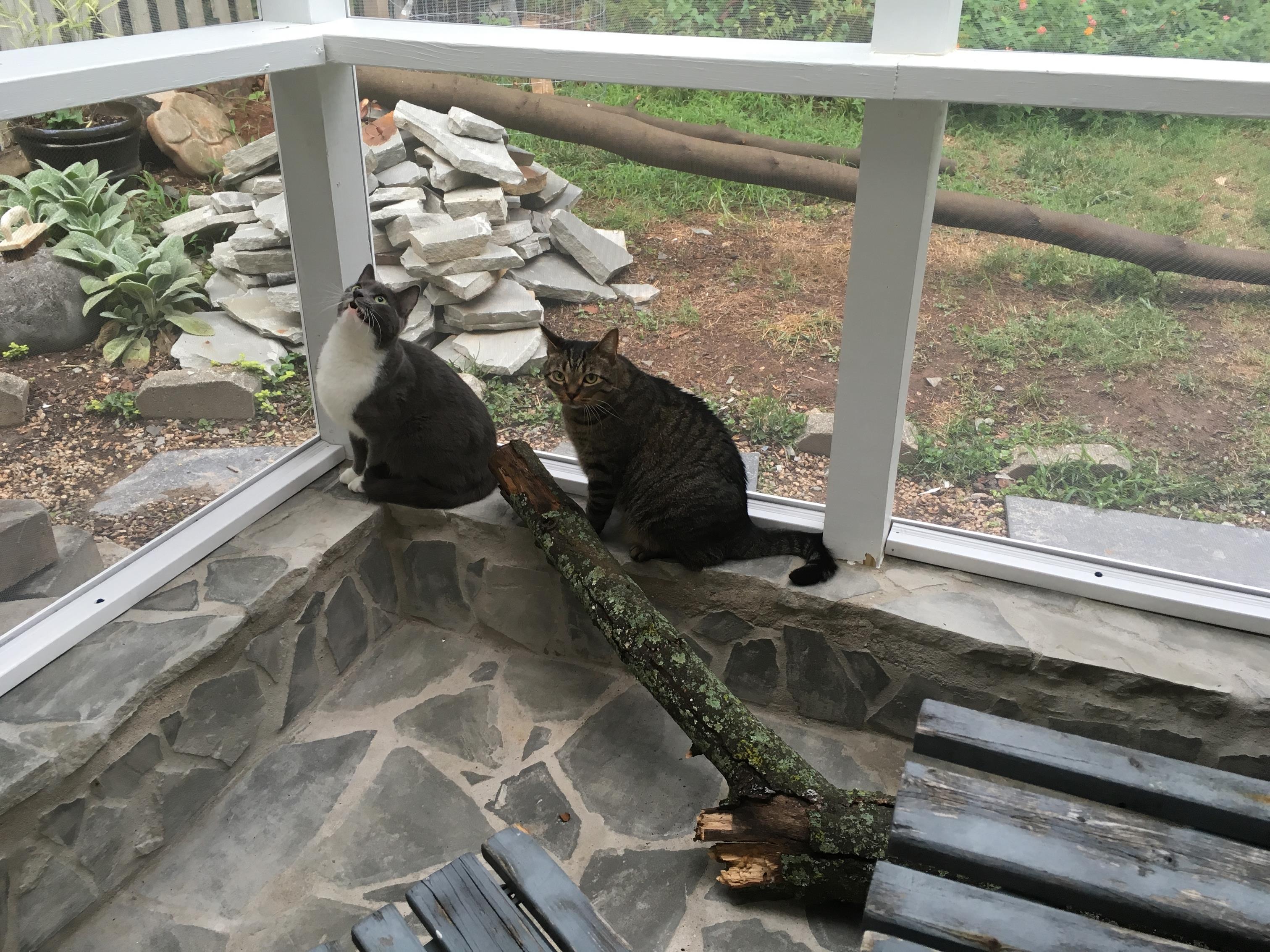
Your catio could even contain full-sized real trees should you choose, but on a more realistic and attainable scale, scavenge logs or large branches from fallen trees and they can serve as giant scratching posts that can allow your cat access to vertical space. Catios are a great place to offer your cats the gift of height; no need for grass and sunshine to be the only feature you are offering here. Get them up high! Most catios are built like screened porches but with an open screen roof,  so build shelves or cat runs around the entire perimeter and use tall logs to grant them access to these runs. Hanging baskets with edible greens can be provided which offers a nice reward for climbing to the top of the space. Just like with access to and from the catio be mindful of dead ends or vertical space shelves that go nowhere. Always make sure you are making a full circle and providing multiple exit and entry points if you have more than one cat.

Jake, live action log foraging post storm!

IMG_8412 (Copy)

IMG_8413 (Copy)

This single log provided so much entertainment!

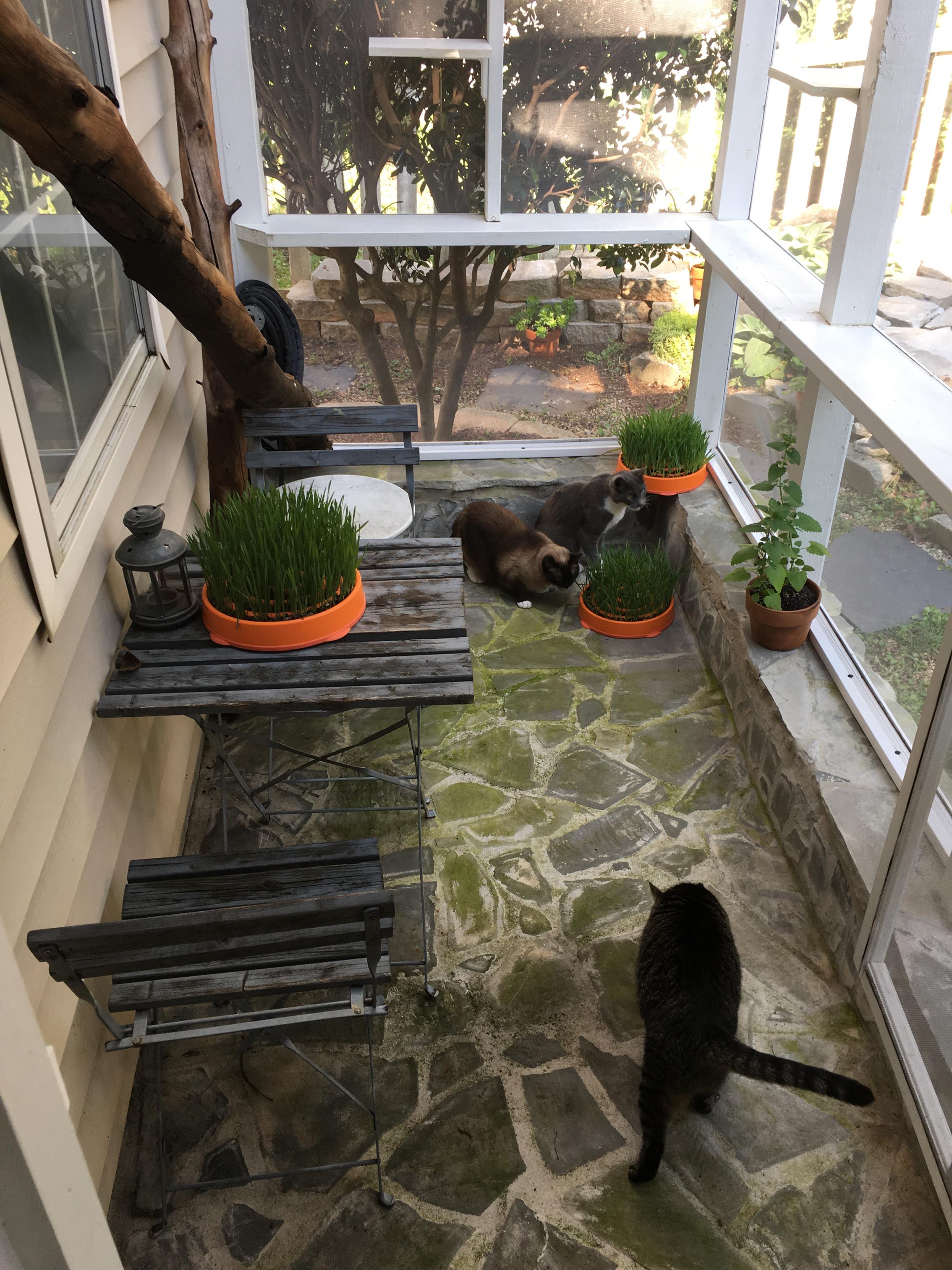
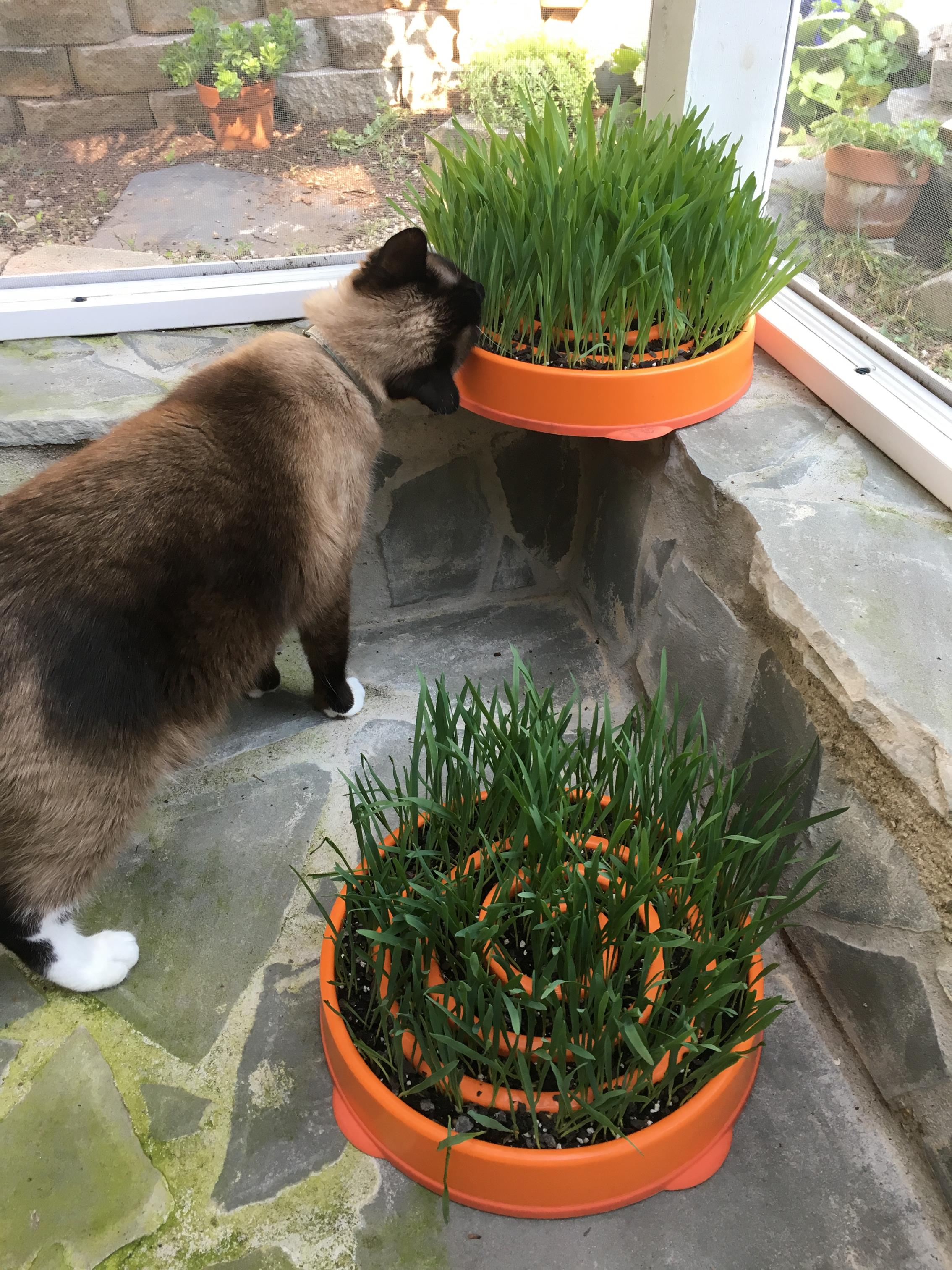
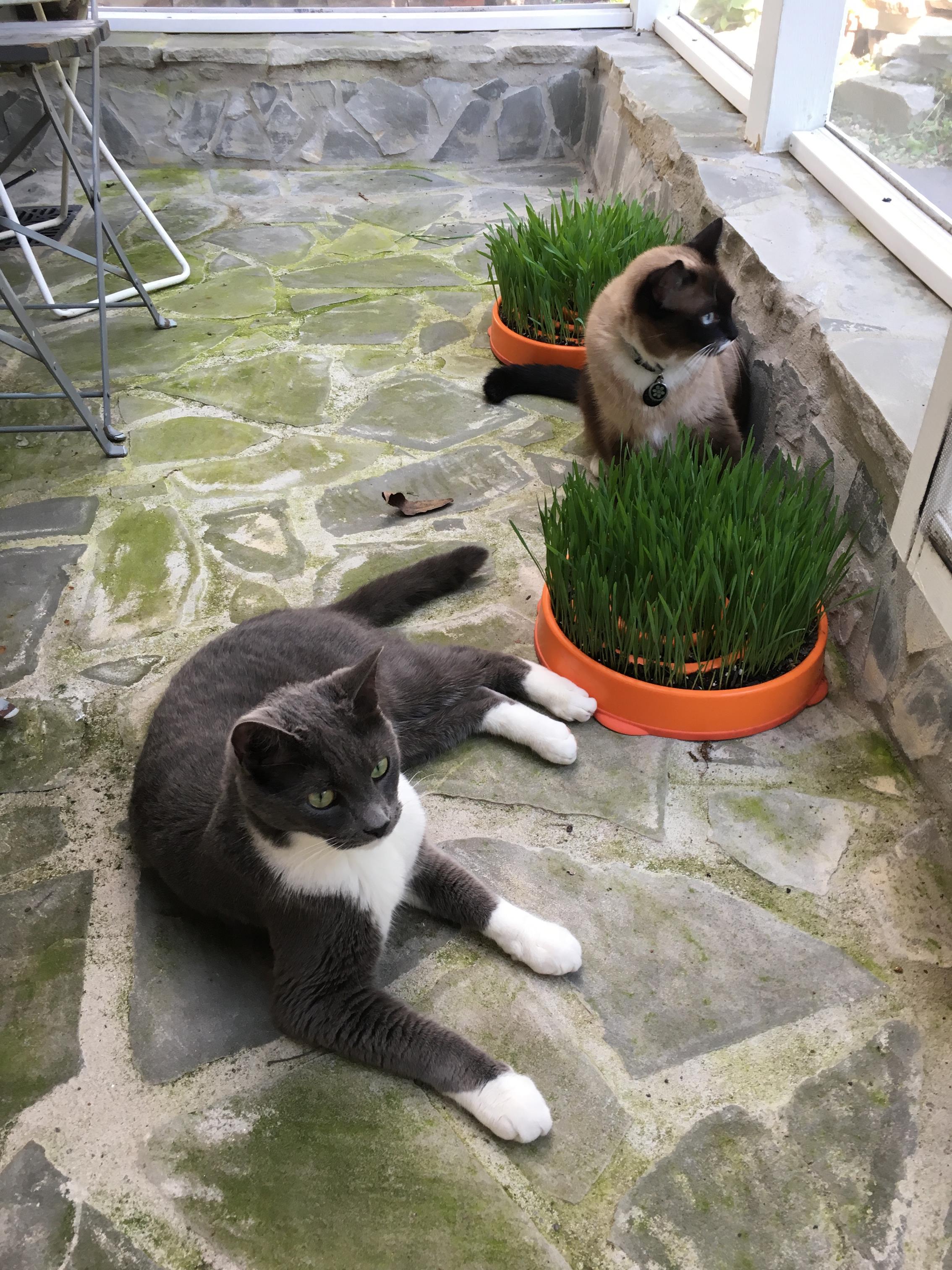
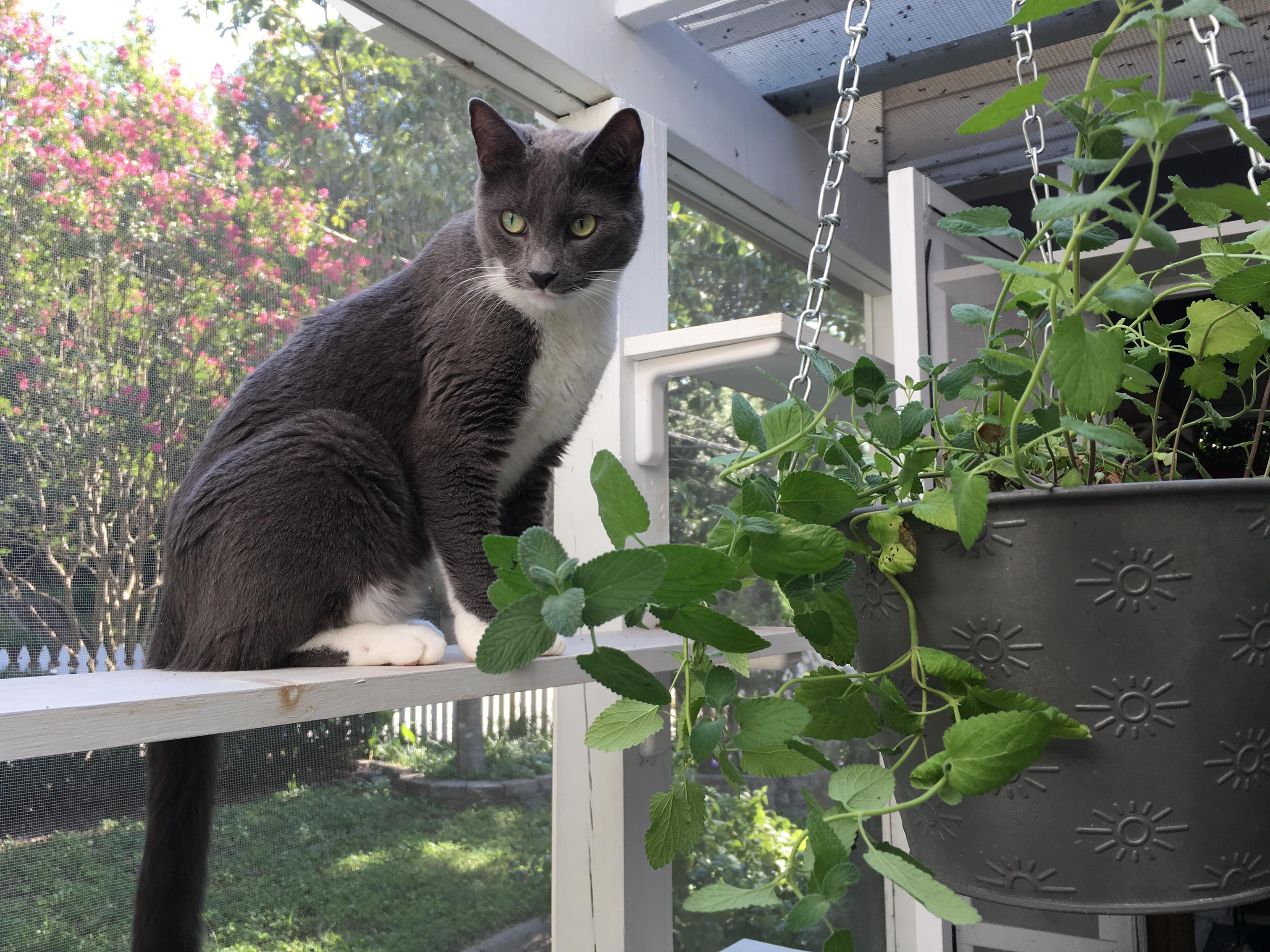
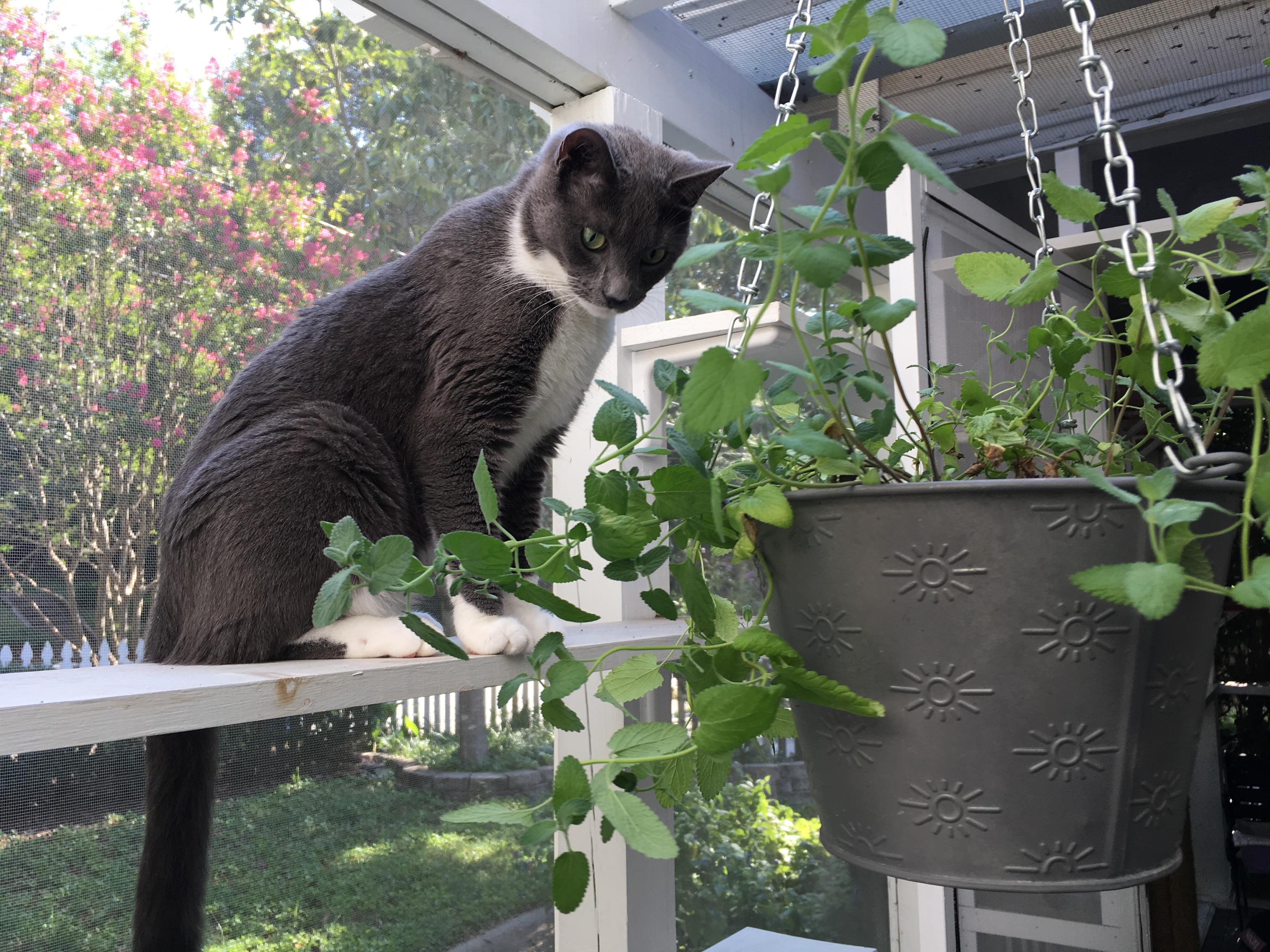
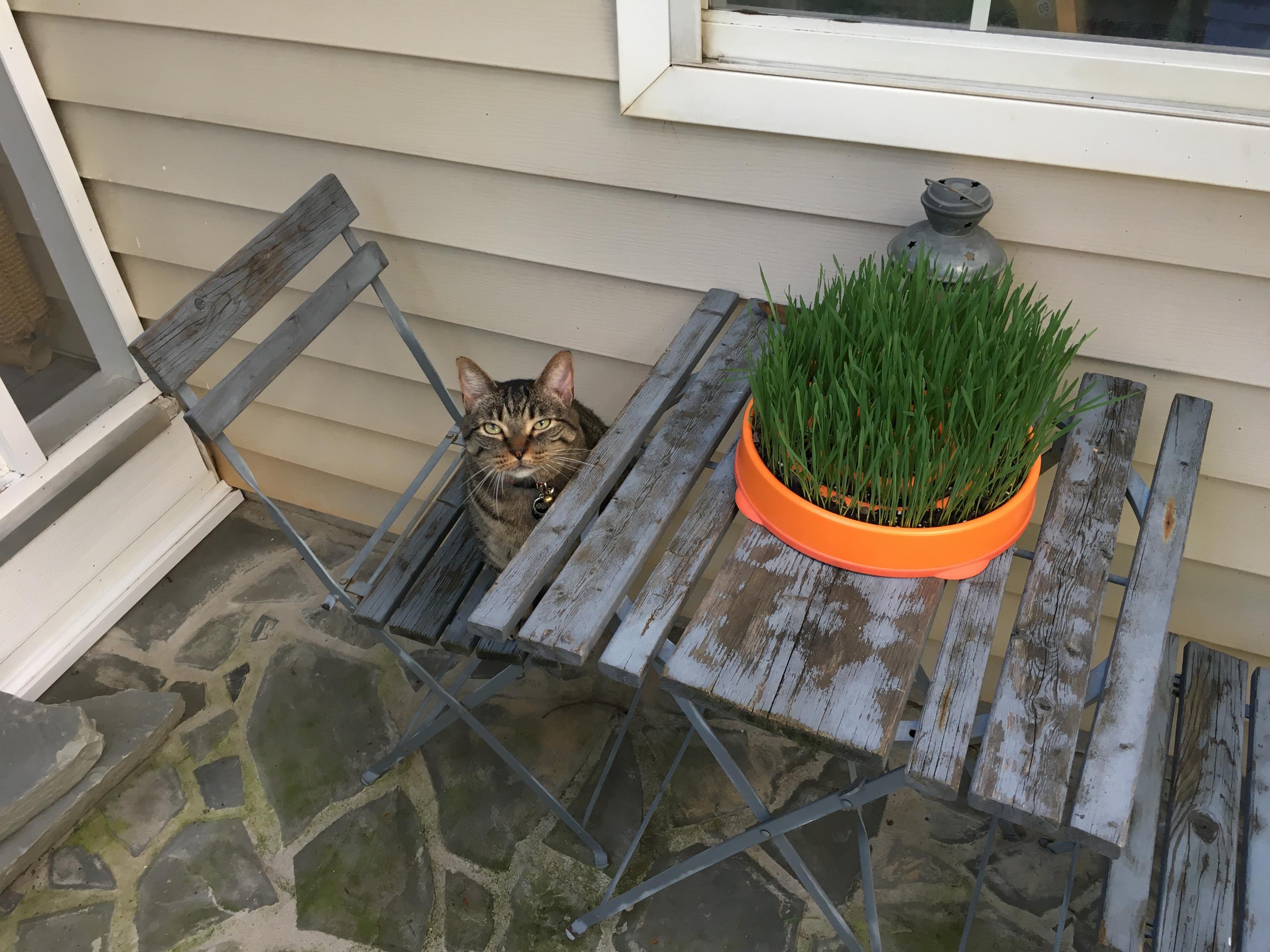
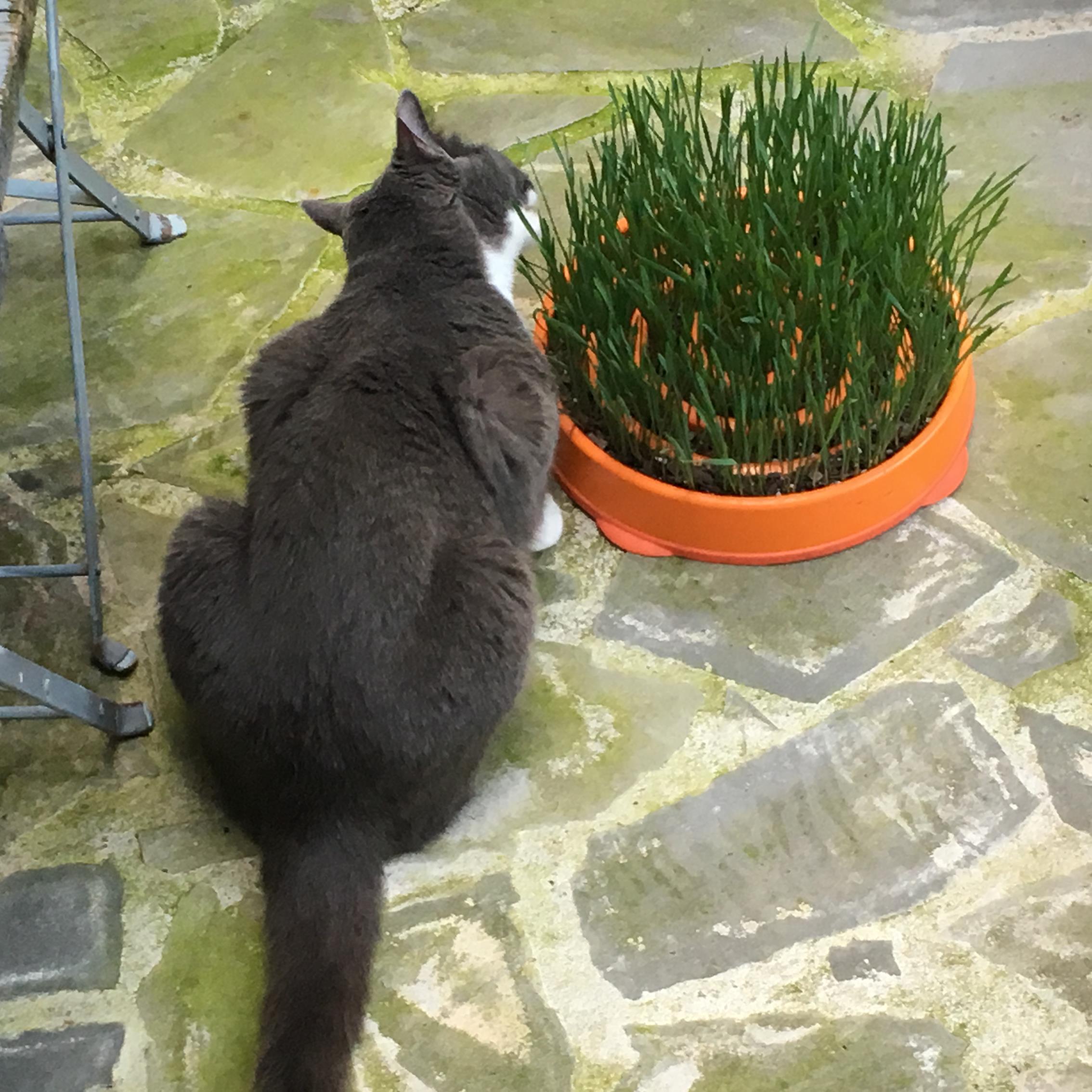
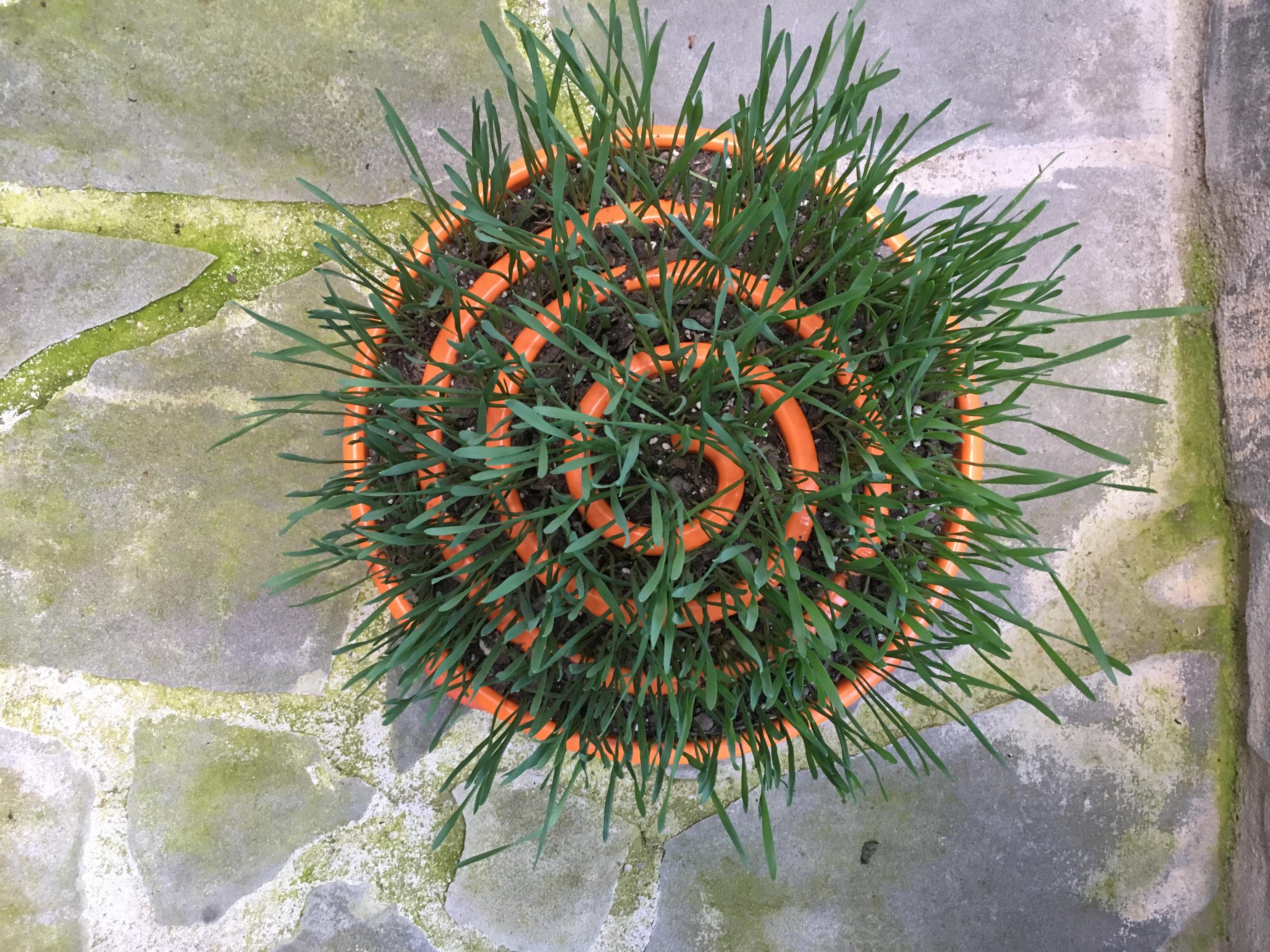
Catios are a fantastic opportunity to test your green thumb and grow wheat grass, barely, oat, rye, catnip, catmint, valerian and the like. The hanging baskets can be aesthetically pleasing an provide greenery up high but offering large patches of edible grasses on ground level is fun too. If you have chosen decking or a stone floor for your structure, growing larger patches of grass that your cat can plop down in is a lot of fun. Play with interactive toys in and around the grass to bring out the predator in your pampered house cat! Another great game is dropping some dry kibbles in the grass for a little foraging fun.

All kinds of feline friendly greens can be planted!

Canine stationary Slo Bowls used as planters!

Just chillin'!
Just chillin'!

Placement of birdbaths and birdfeeders outside the catio creates “cat TV”, a welcomed addition to any outdoor space. Some clients have been known to build fish/koi ponds, install fountains, and cat tunnels. The possibilities are endless and only limited by your creativity and ingenuity.

While all cats should be on heartworm prevention, flea control and benefit from routine intestinal deworming, if their exposure is more than that of an indoor only cat than protection becomes even more important. Cats can get all of the above mentioned critters living indoors, but are even more likely to suffer from them if they go outside or have access to a screened in porch or catio. Please ensure your cat is protected year round from internal and external parasites.

IMG_1106 (Copy)

Soren enjoying fresh greens via vertical space.

IMG_1107 (Copy)

Highest point of vertical space, debating log decent.

Notice the roof, they are exposed to the elements.

There is no right or wrong answer when building a catio. For many humans, it is a constant ongoing evolutionary process. Do not become paralyzed in the project trying to make it “perfect”. Your cat will be thrilled to have a fun new place to explore; it is ok if it is not decorated to a T with cat grass and vertical space from day one. Your catio can be a constantly evolving project which will actually be even more fun for you and your cats, leaving new explorations on the horizon for all!
Just have fun with it and get building!
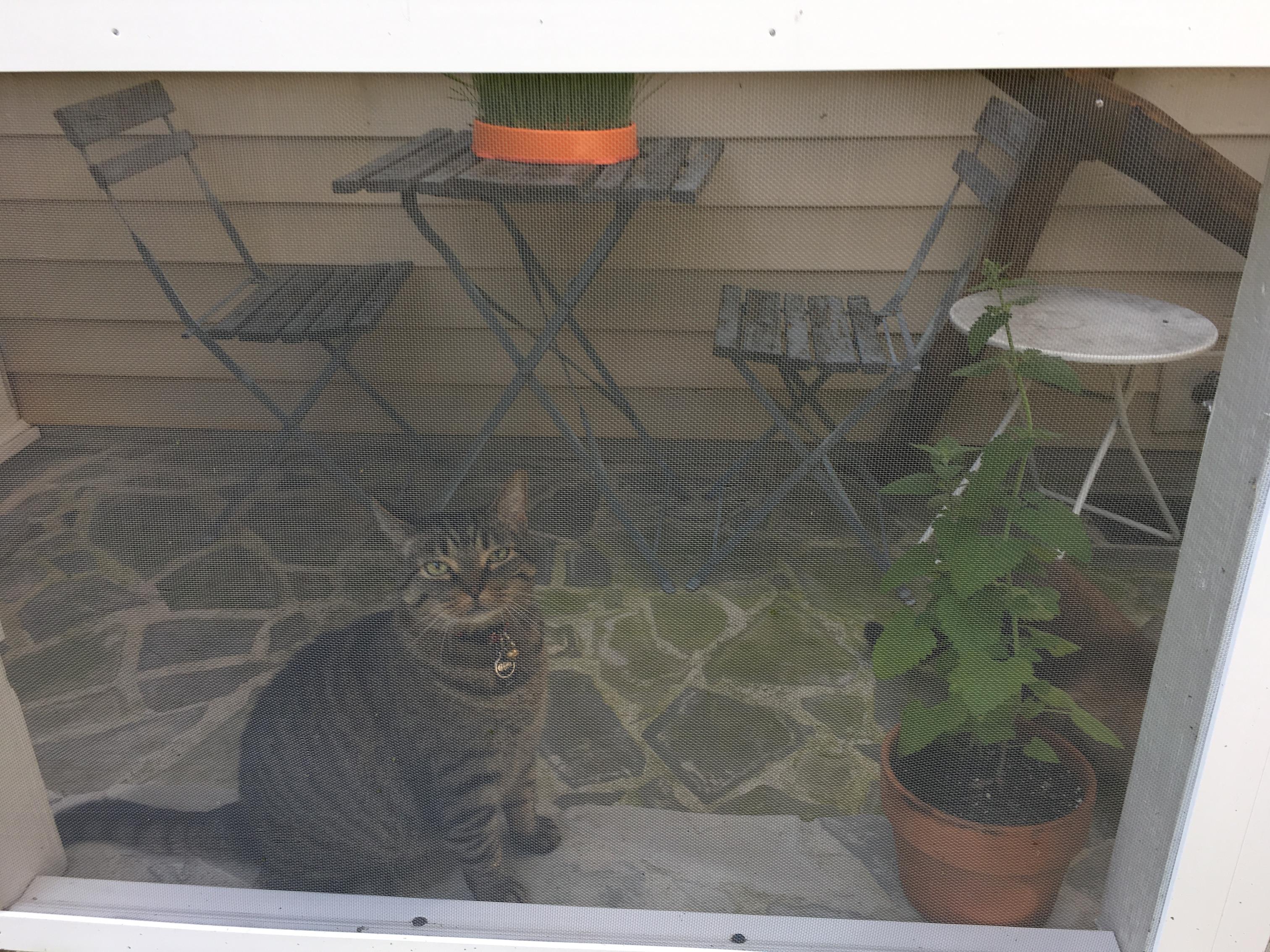
Drinking fresh rainwater from puddles! Fantastic!!

This is a Hitch approved construction!

Watching a squirrel on the screen "roof" #Goodtimes.

Climbing tree logs, the fun of the outdoors, yet SAFE!

Soren's turn. This is not an activity for the senior citizens.

Ready to be served at the "catio cat cafe"!

IMG_1152 (Copy)

IMG_1150 (Copy)

Finished product complete with logs,  vertical space, lights & hanging planters.
Finished product complete with logs, vertical space, lights & hanging planters.

IMG_1088 (Copy)

IMG_8531 (Copy)

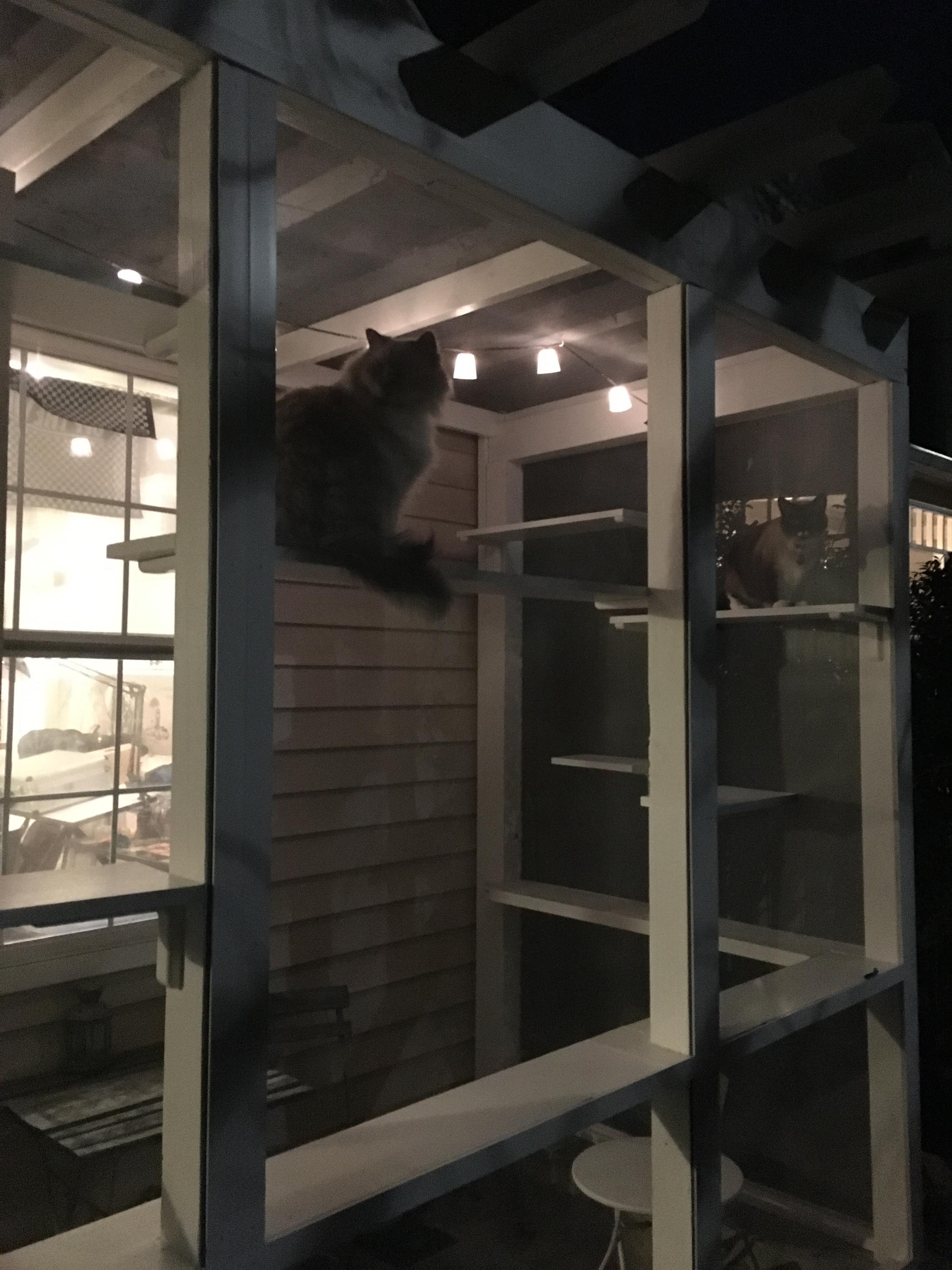
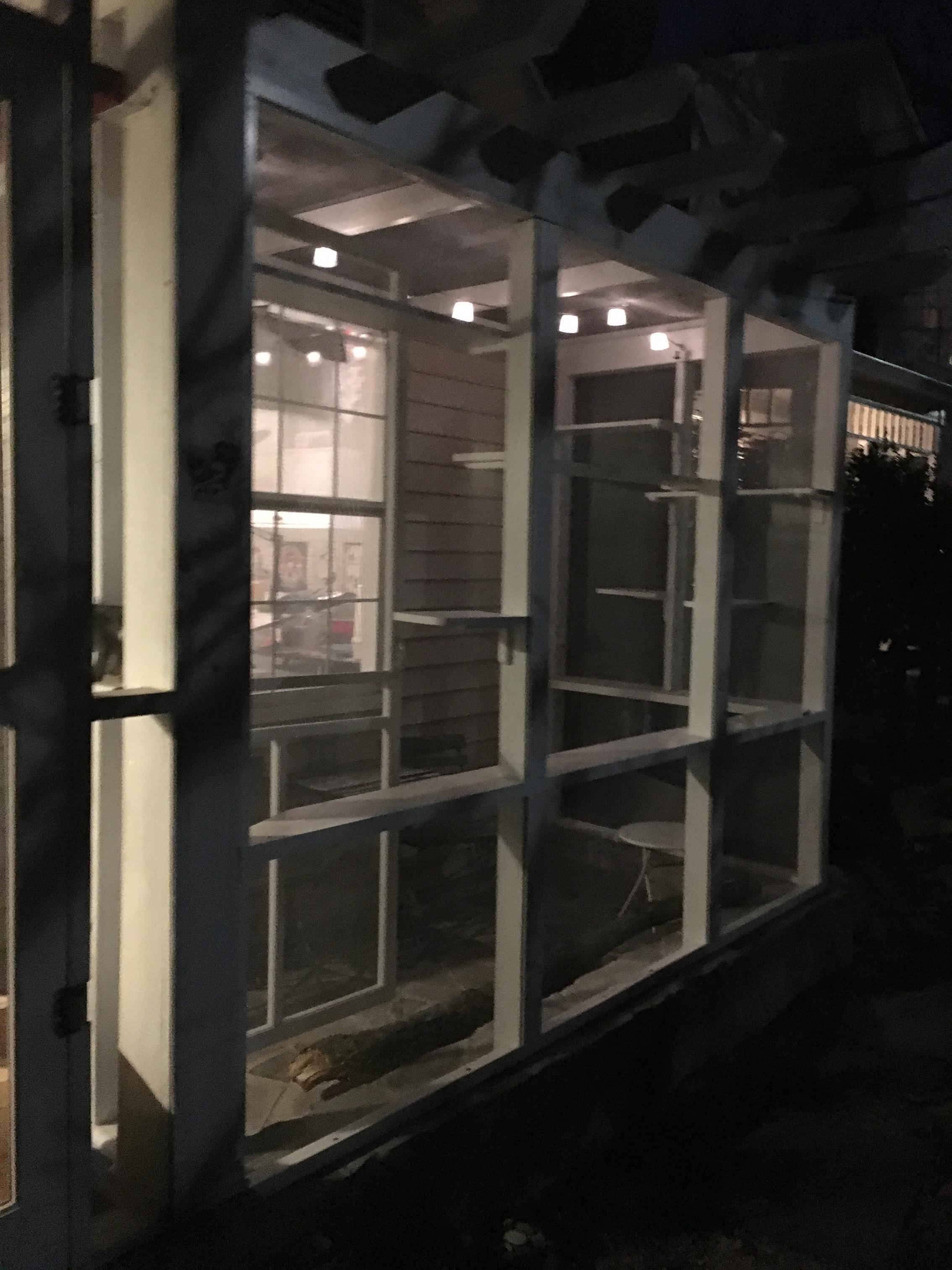
The catio at night!!

IMG_8543 (Copy)

Mood lighting. Great place to have a glass of wine or a beer with your cats.

Filed Under: Blog Tagged With: bored cats, Bring the Outdoors In, cat condos, cat shelves, catification, Catios, environmental enrichment, environmental needs, fundamentally feline, Indoor only cats, vertical space, Vertical space for cats

So you think you have a “master forager”?

If you started feeding your cats via foraging toys from a young age or if your cats are extremely motivated to acquire carbs you may find they are difficult to challenge. If your cats are like mine they can get food out of virtually anything you give them. I refer to these guys as “master foragers” and put them in the “Kitty Einstein” category. These cats can prove tough to challenge. This post aims to offer some examples of how you can increase the difficulty of the food puzzles you offer for greater mental stimulation and, if weight loss is your goal, to make the dry food harder to achieve.

One of the easiest first steps you can take is simply to hide the toys. Rather than filling them and leaving them in plain sight, subtlety place them behind the leg of a chair, behind the sofa, under a lightweight cardboard box or inside a brown paper bag. Hide them in locations of variable discreetness based on your cats’ motivation and ability. Every cat is different. As mentioned above my cats can acquire food from virtually any object I put in front of them, but if I hide the toys they will not seek them out. I find this fascinating. Making cats “hunt” down the toys before they can “work” them works for many households, just not mine. In my own home I spend more time digging them out from under furnishings! I refer to this as “getting them back out onto the playing field” or “foraging for humans!” If you have kids, put them to work and make them seek and find the toys that need refilling!

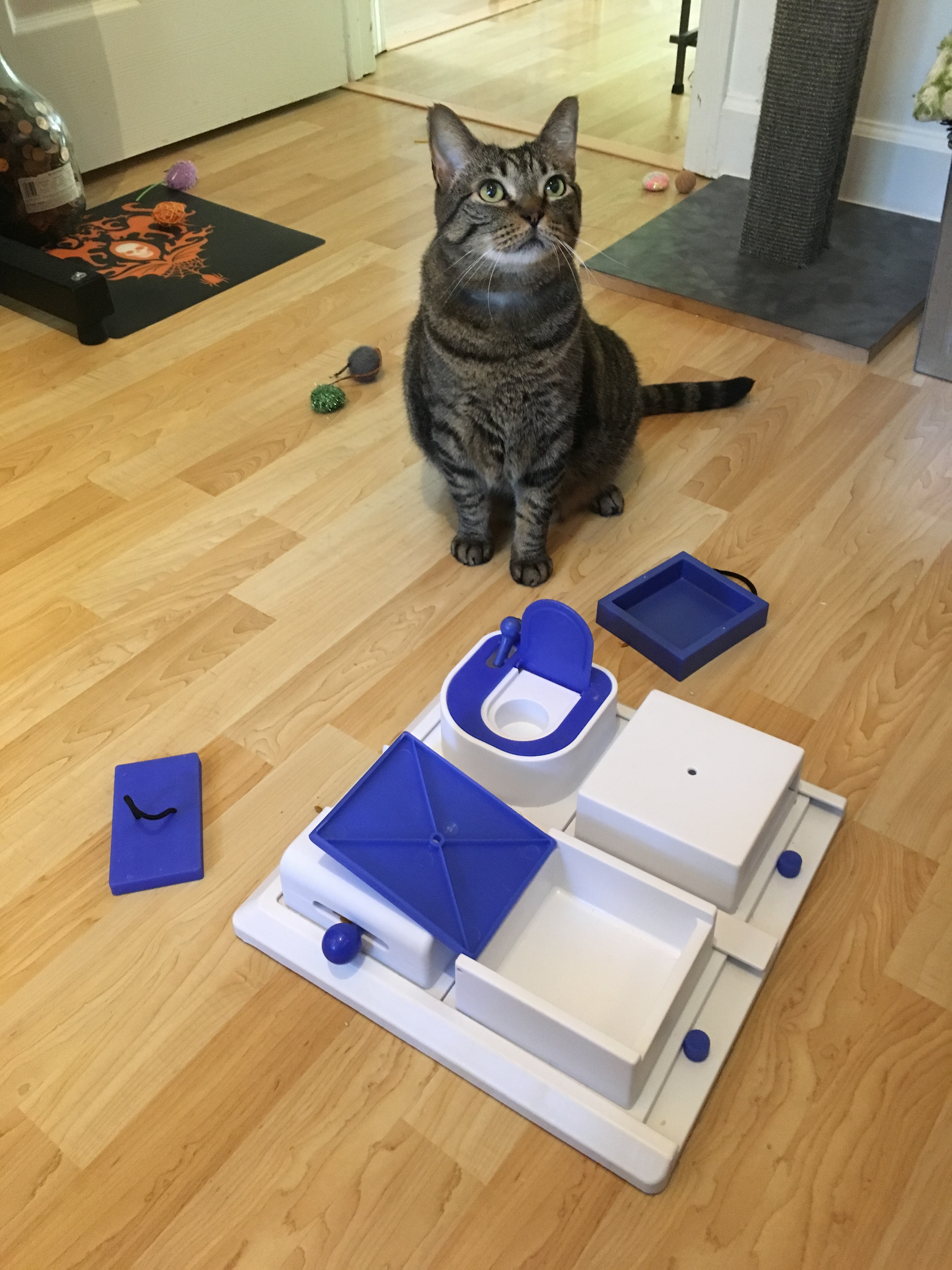
Hitch proudly (and swiftly) empties all five puzzles in the Trixie Pet Poker Box. (opens in new tab)
Hitch proudly (and swiftly) empties all five puzzles in the Trixie Pet Poker Box.

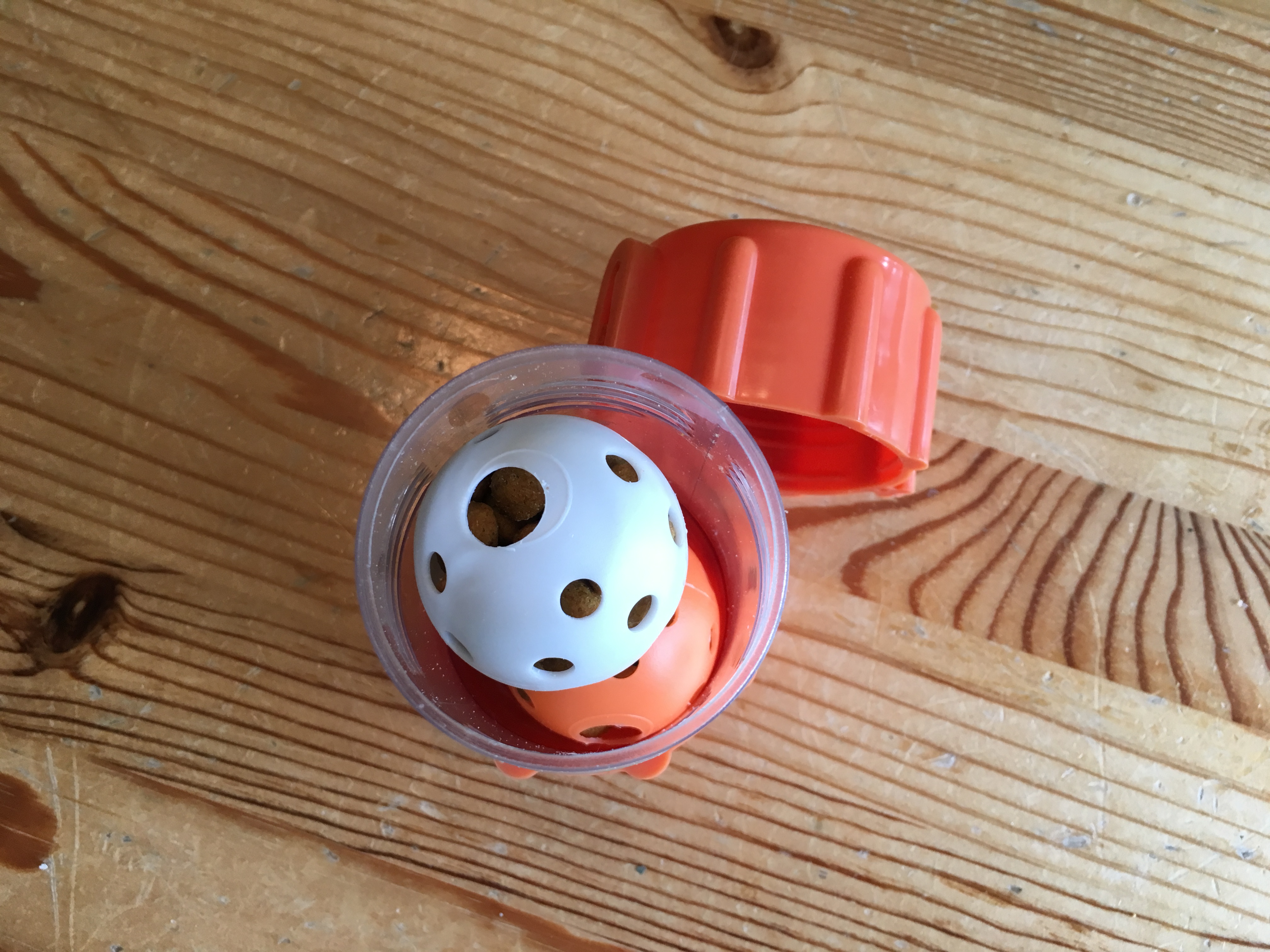
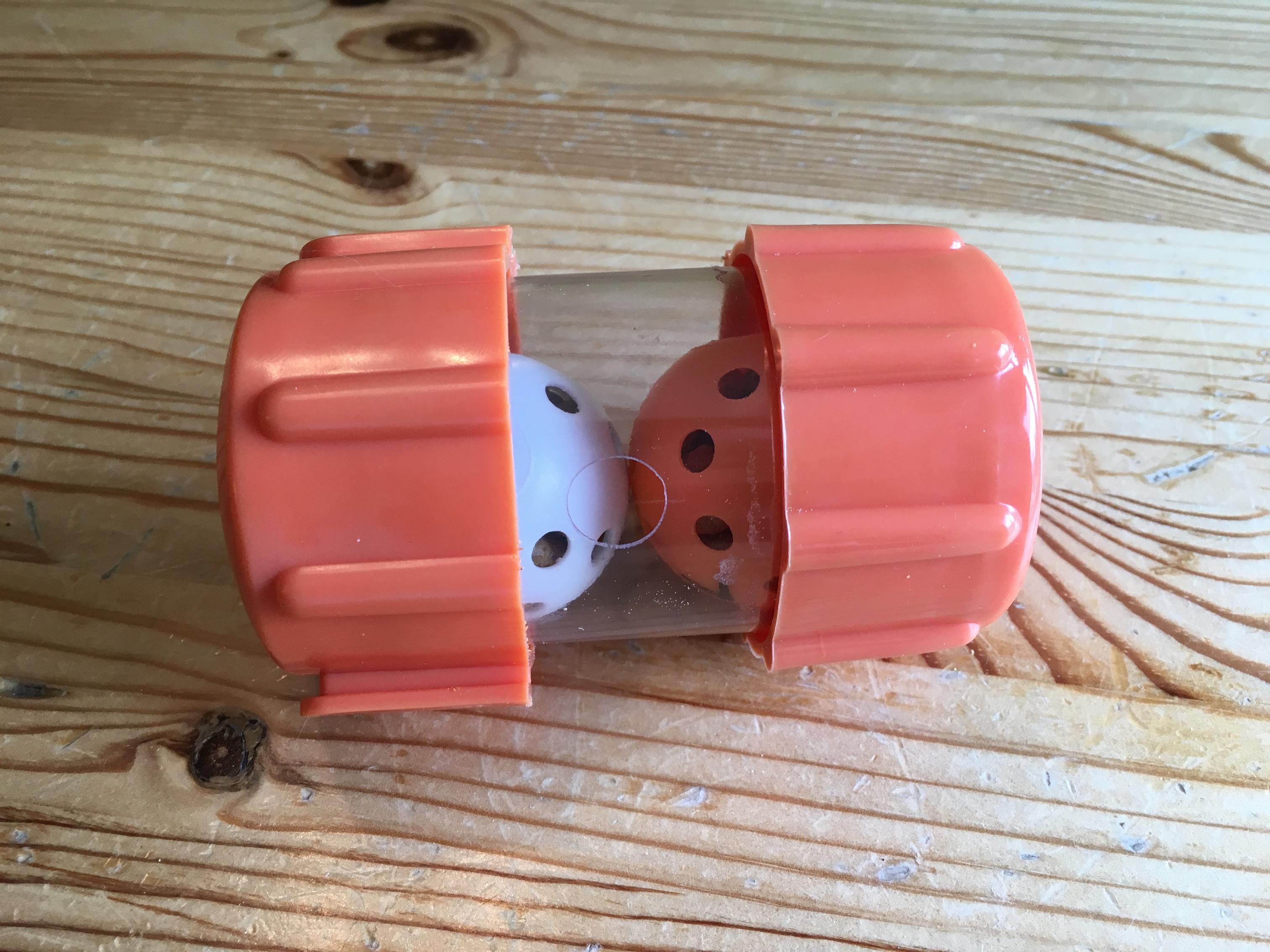
The focus of this post is to help you put your creative thinking cap on to combine toys you already have to increase the challenge. You do not always need to acquire new objects but simply work with what your cat has already mastered. The following is a pictorial tour of many of the toys that have already been featured on Food Puzzles for Cats (or will soon be featured) and the ways with which you can combine them for increased difficultly. If you do not already know, Food Puzzles for Cats is a website dedicated exclusively to all things food puzzle related. You should check it out!

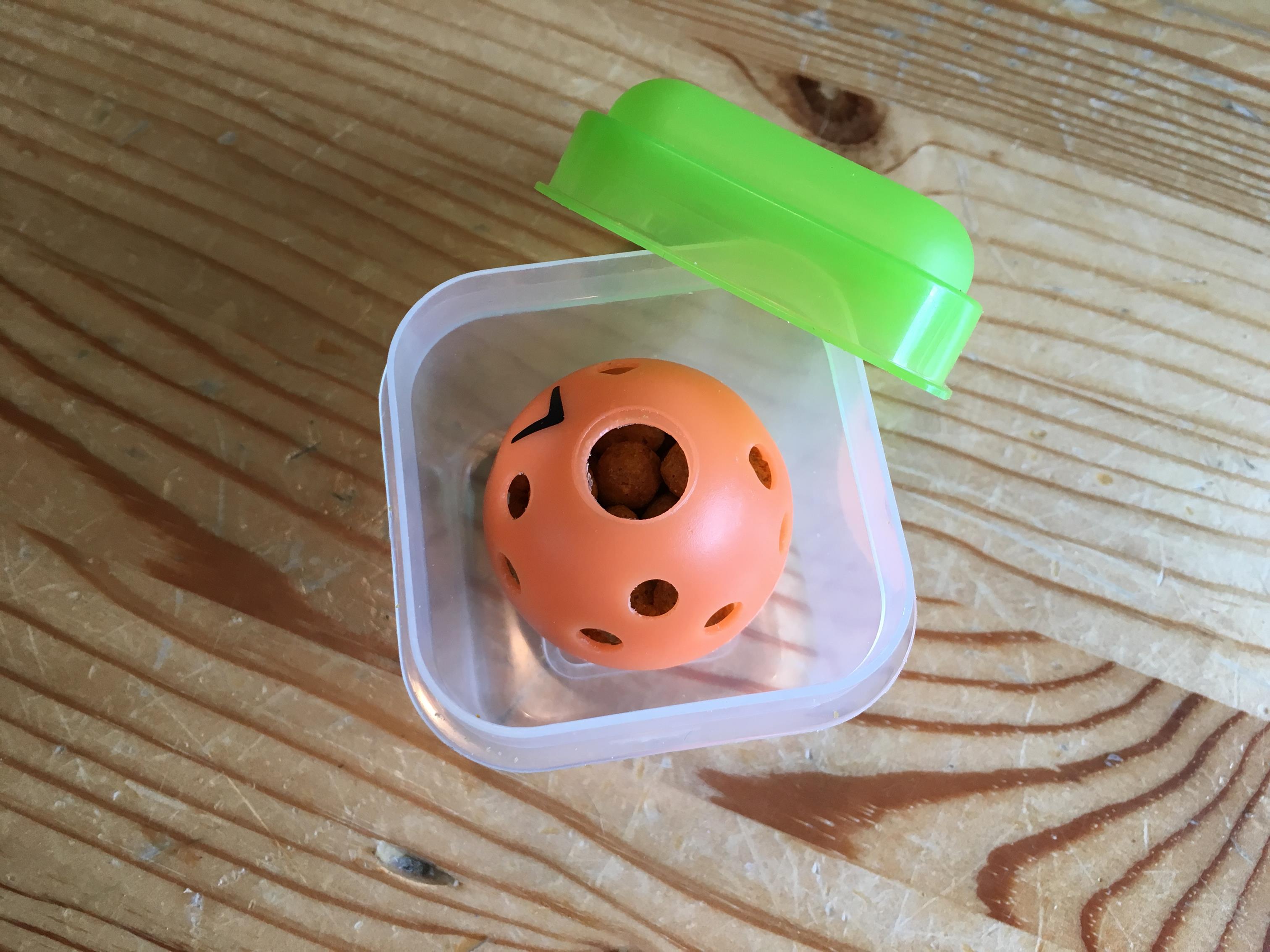
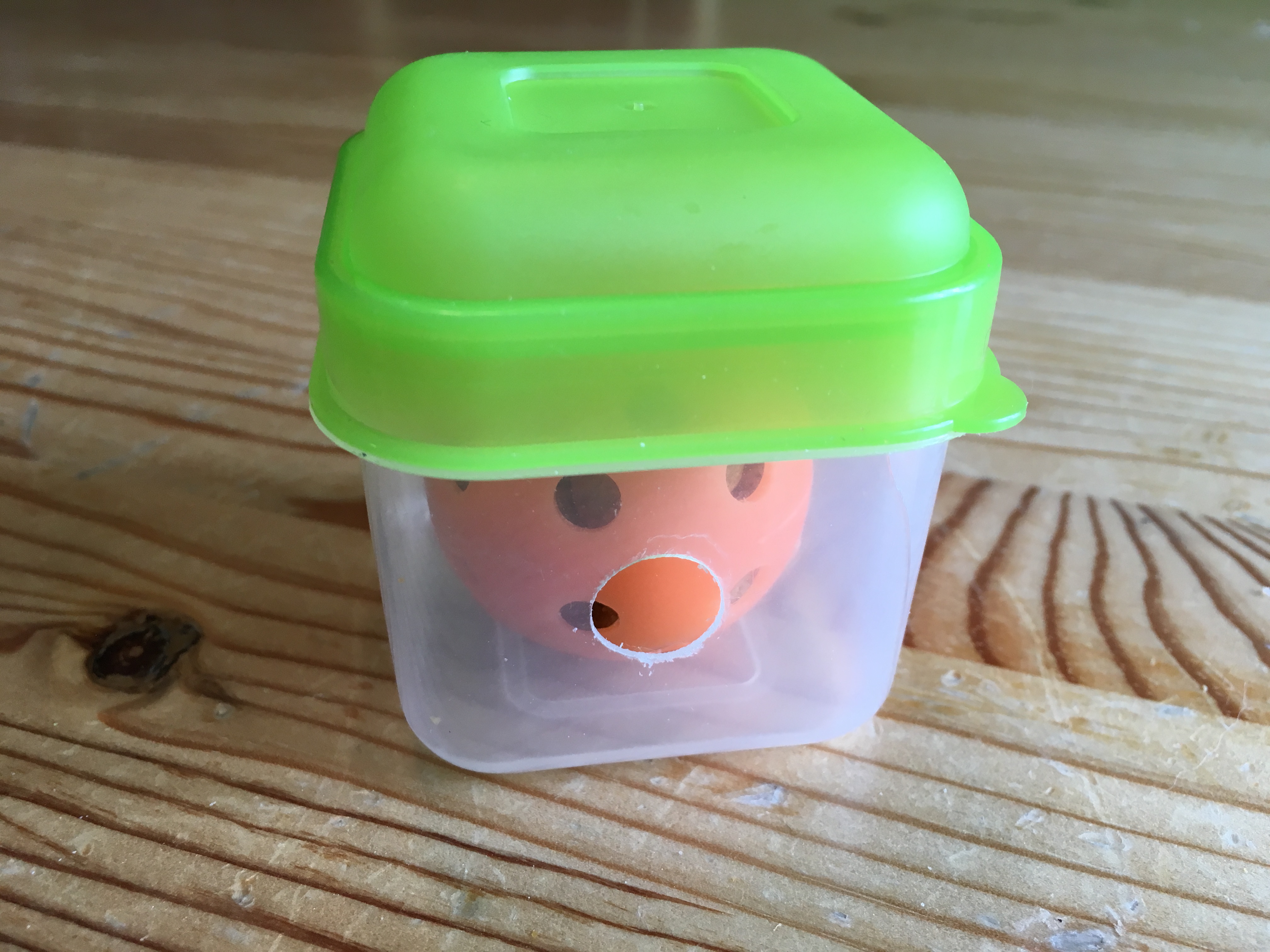
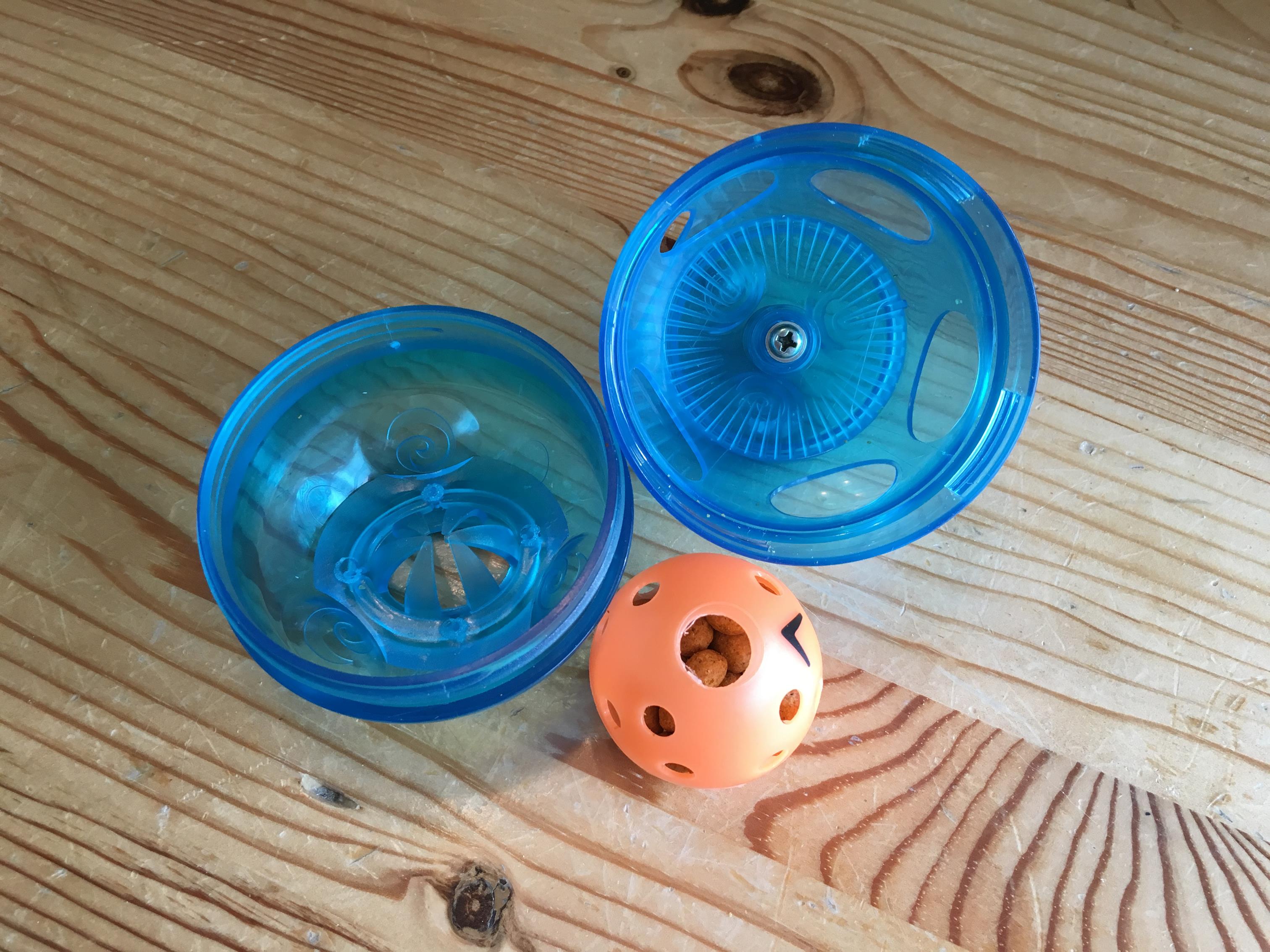
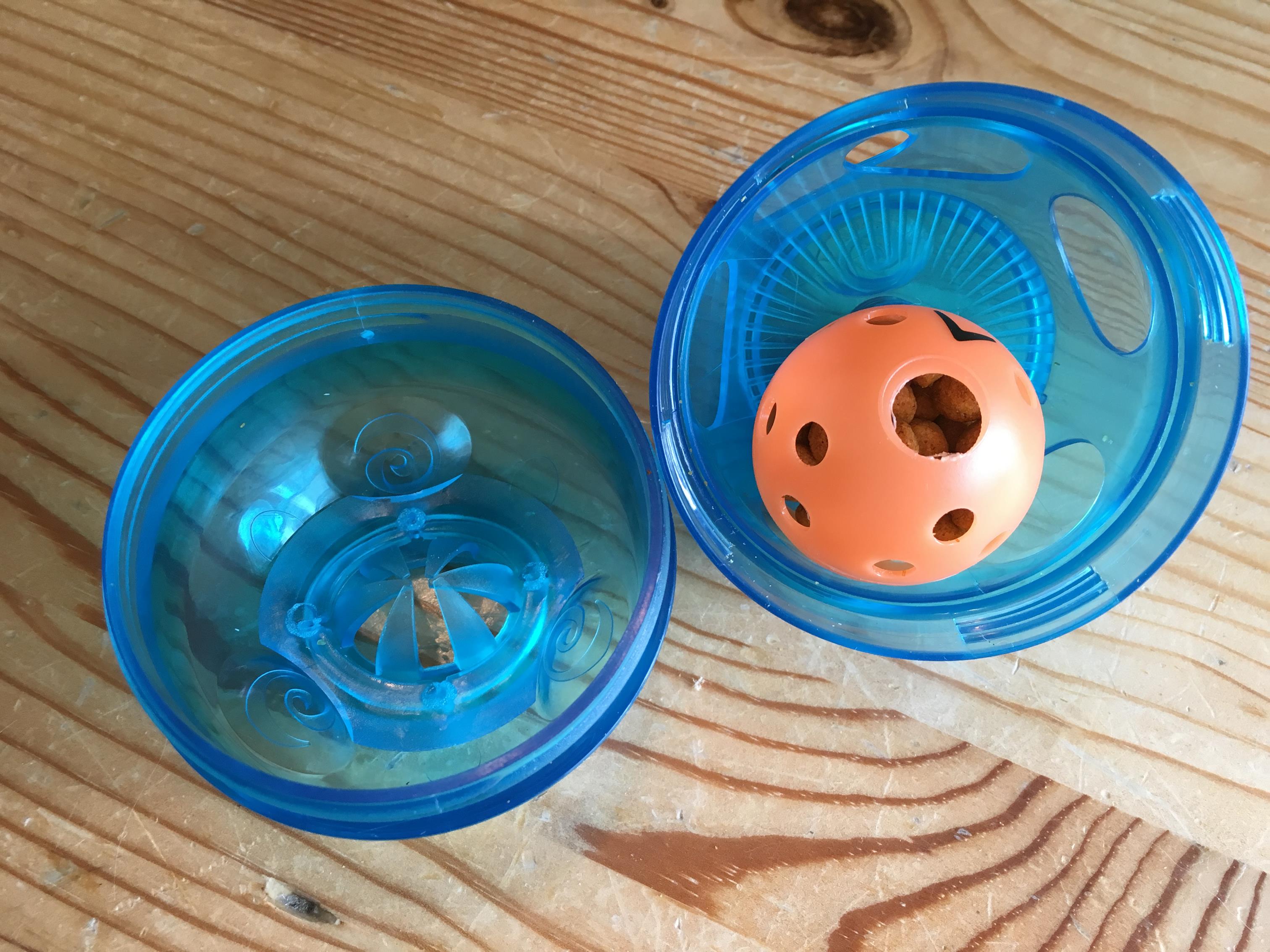
1. Fill ping-pongs from Fundamentally Feline. (opens in new tab)
1. Fill ping-pongs from Fundamentally Feline.
2. Place inside gear toy from Fundamentally Feline. (opens in new tab)
2. Place inside gear toy from Fundamentally Feline.
3. Offer to your Einstein!

Combining objects as shown here requires the cat to "double forage". They must get the food to fall out of the smaller object and whack it around with enough gusto to finally achieve a piece of food from the larger vessel. It requires much more manipulation and effort.

As another alternative you can "dummy fill" an object so that there is something floating around inside that sometimes obstructs the opening. This is often less tedious for the owner than filling small food puzzles, so for busy families a dummy fill may be a quicker & easier choice.

1. Fill foraging wiffle ball. (opens in new tab)
1. Fill foraging wiffle ball.
2. Place inside Busy Buddy Kibble Nibble by Petsafe. (opens in new tab)
2. Place inside Busy Buddy Kibble Nibble by Petsafe.
3. Offer the challenge to your Kitty Einstein!
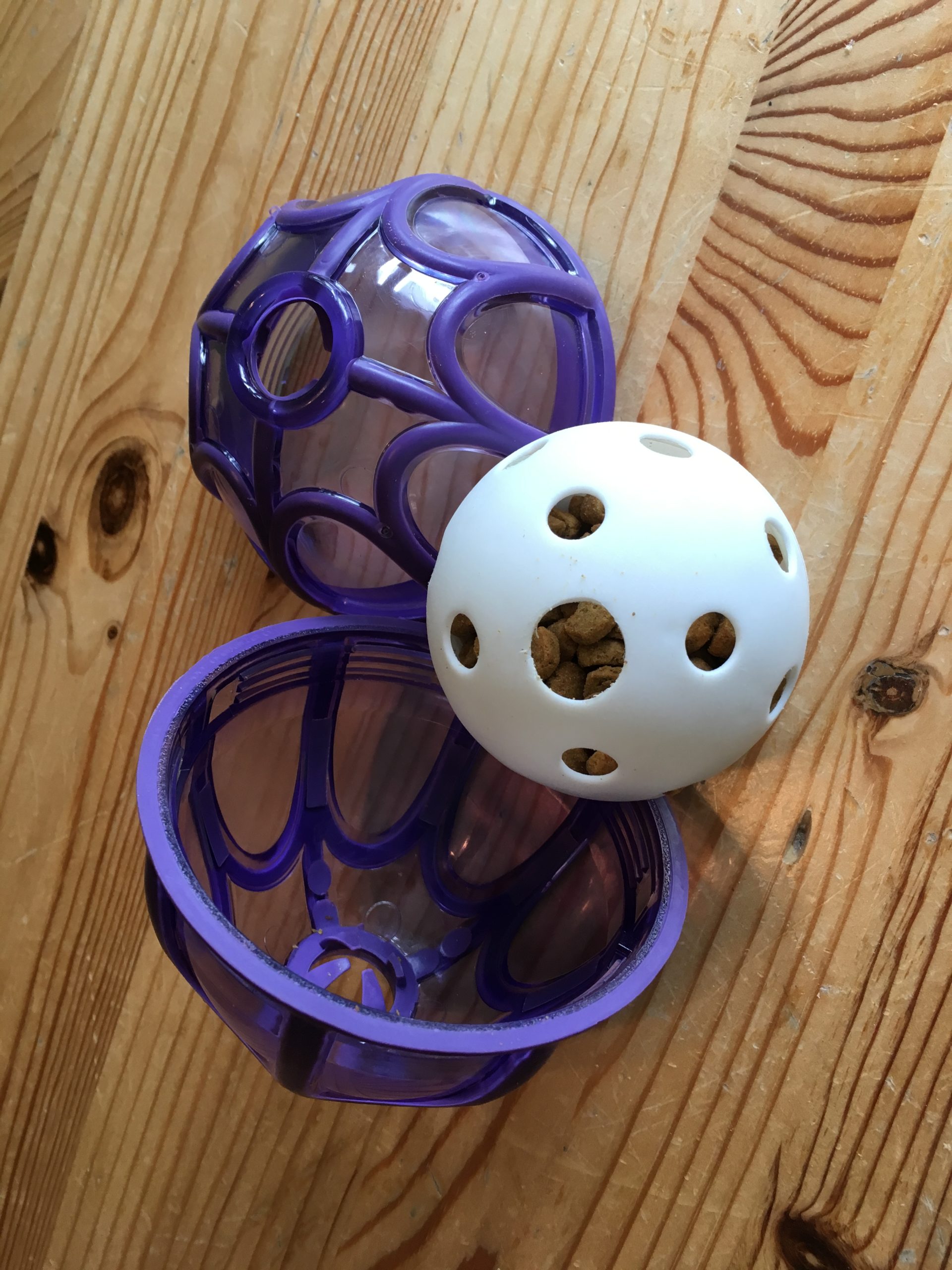
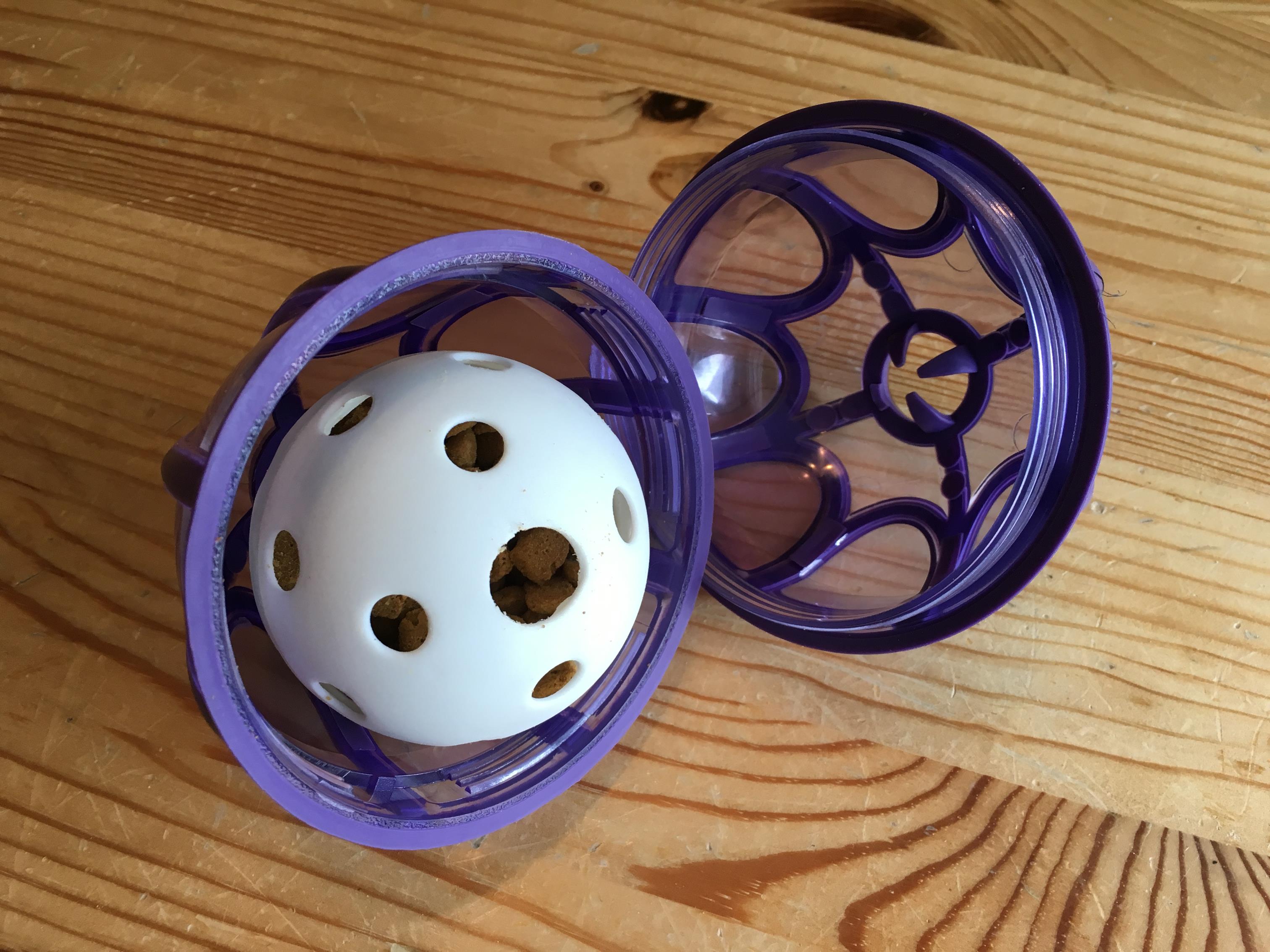
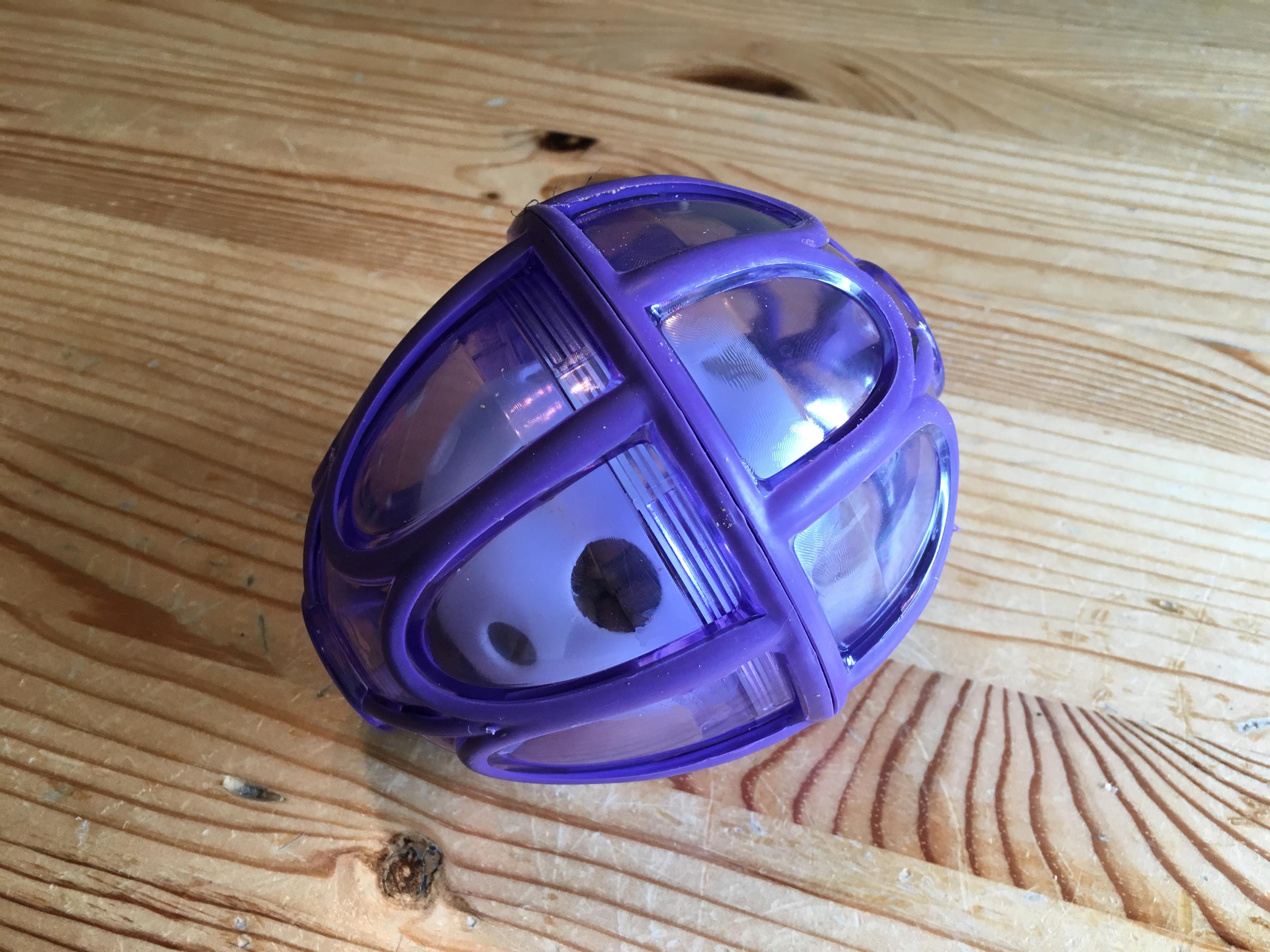
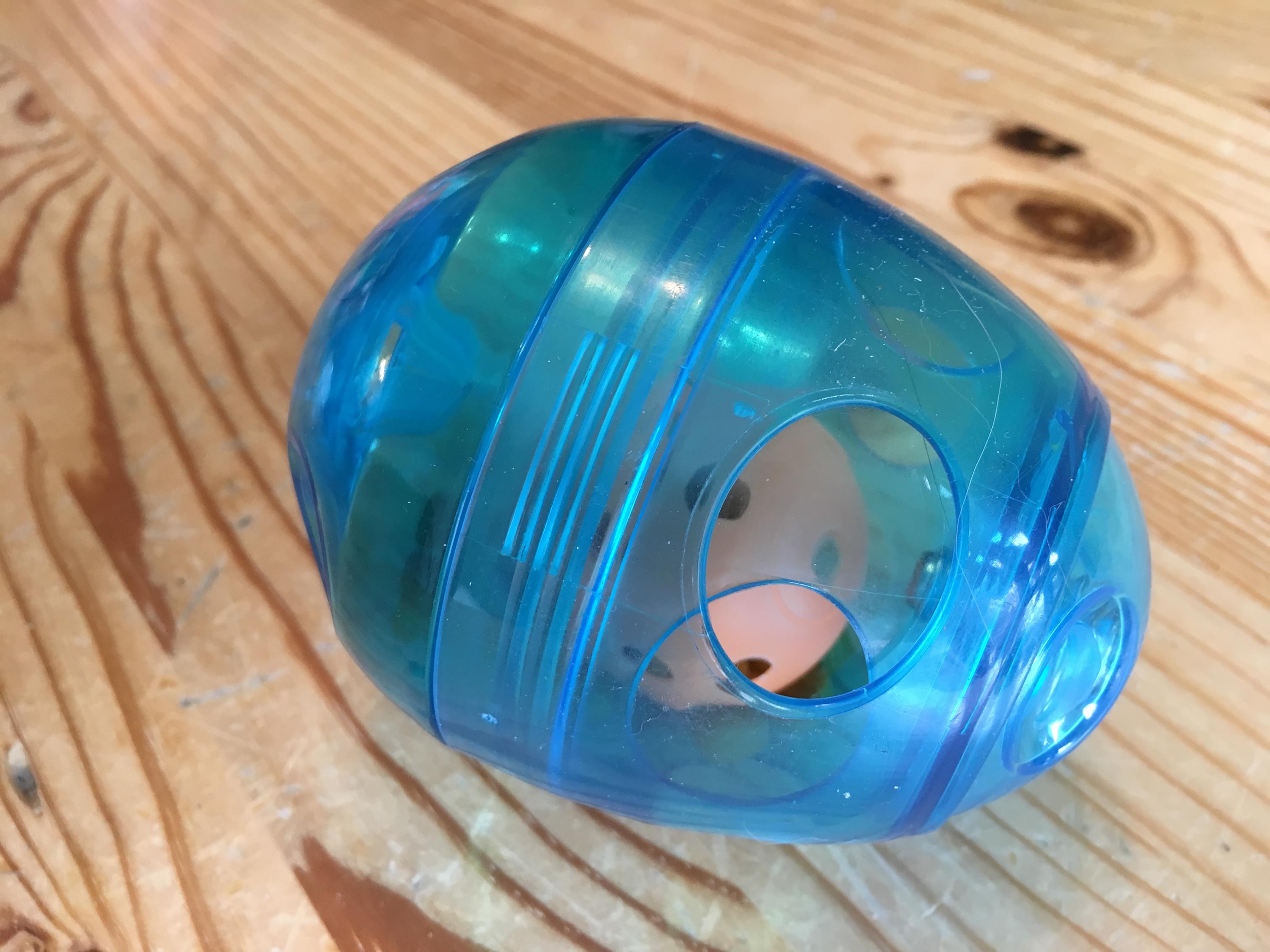
1. Fill foraging egg from Fundamentally Feline. (opens in new tab)
1. Fill foraging egg from Fundamentally Feline.
2. Place inside XL gear toy from Fundamentally Feline. (opens in new tab)
2. Place inside XL gear toy from Fundamentally Feline.
3. Offer this heavy & hard to roll challenge to your cat!
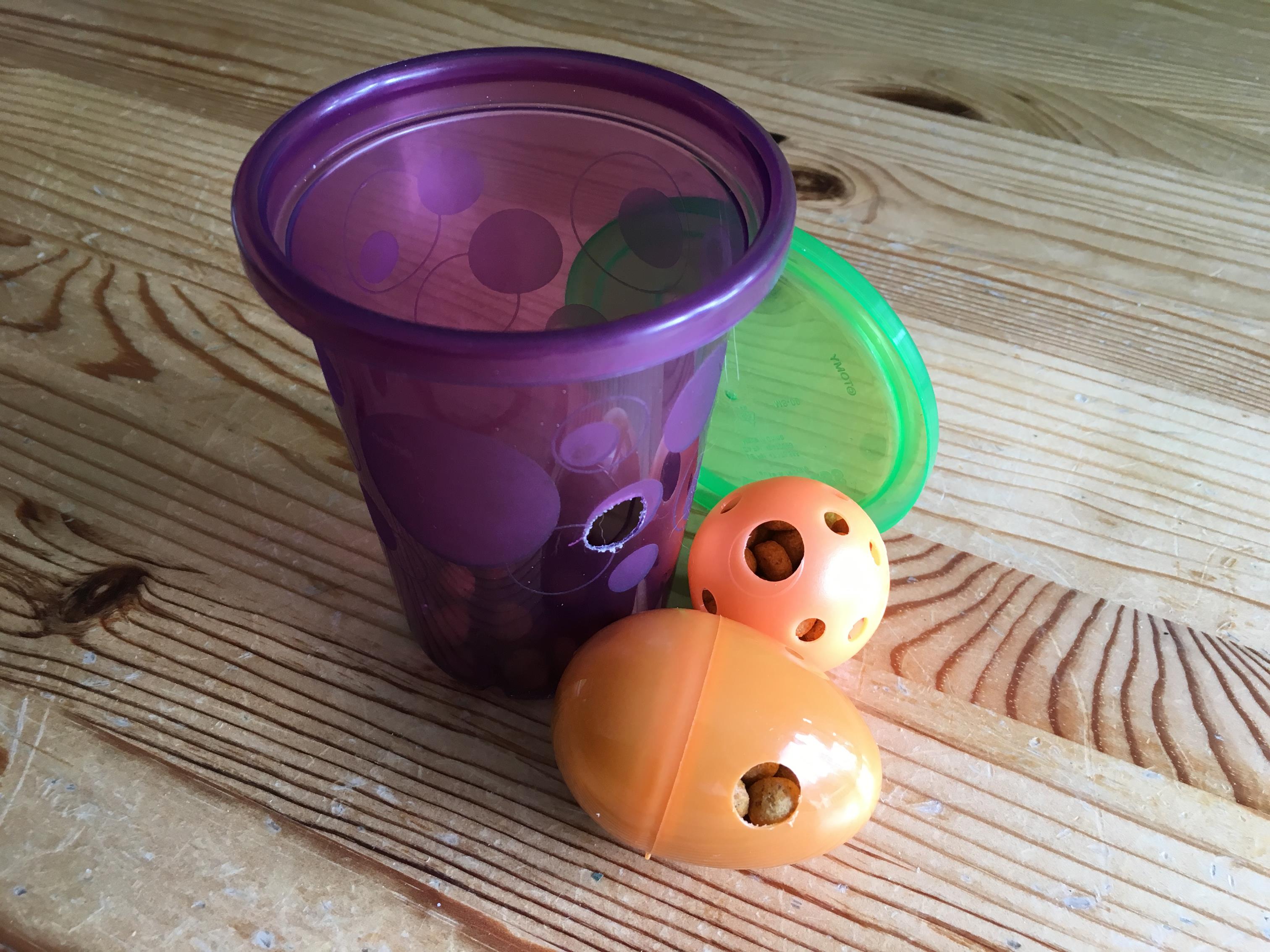
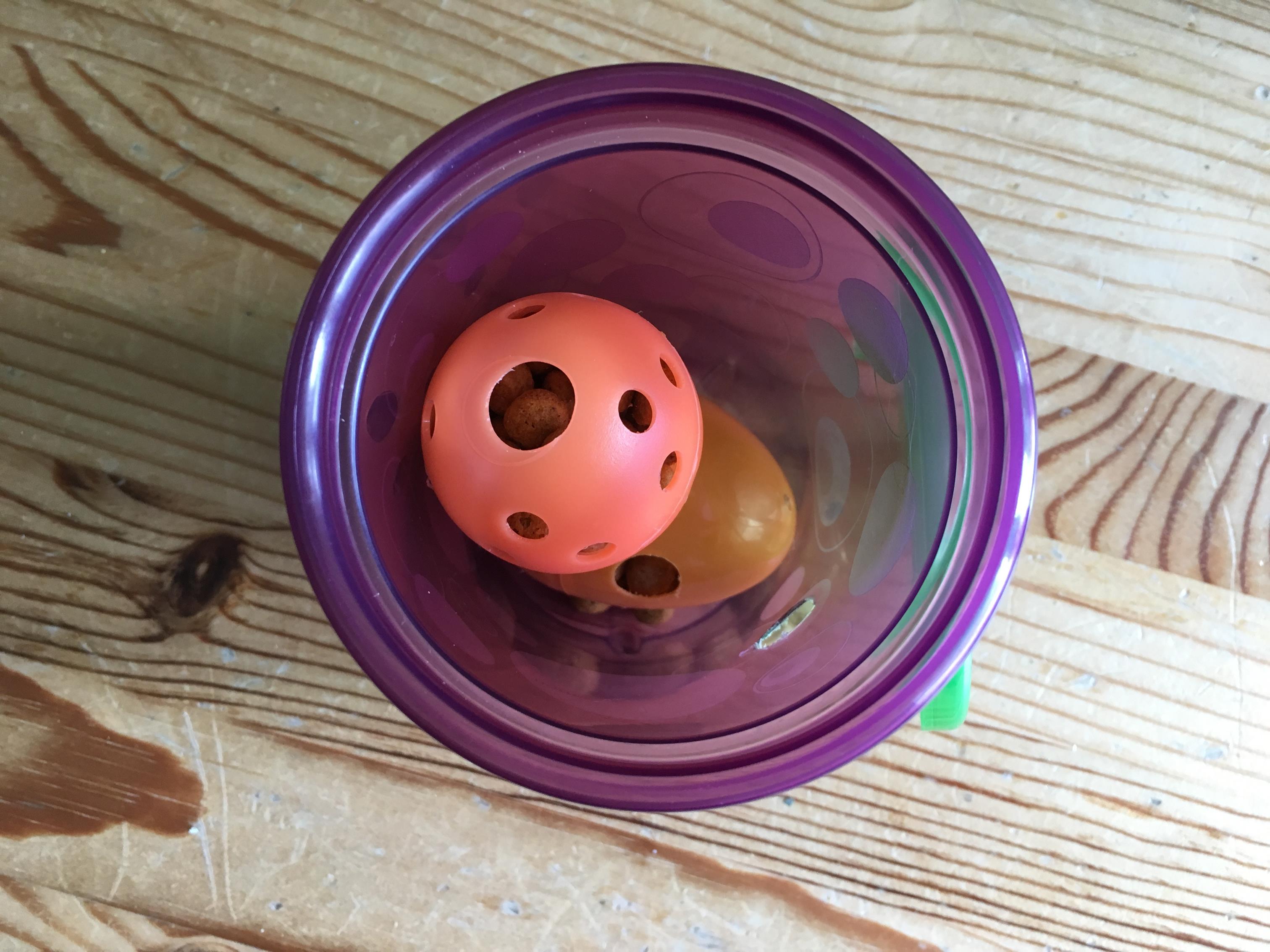
1. Fill a mini egg/ping-pong by Fundamentally Feline.. (opens in new tab)
1. Fill a mini egg/ping-pong by Fundamentally Feline..
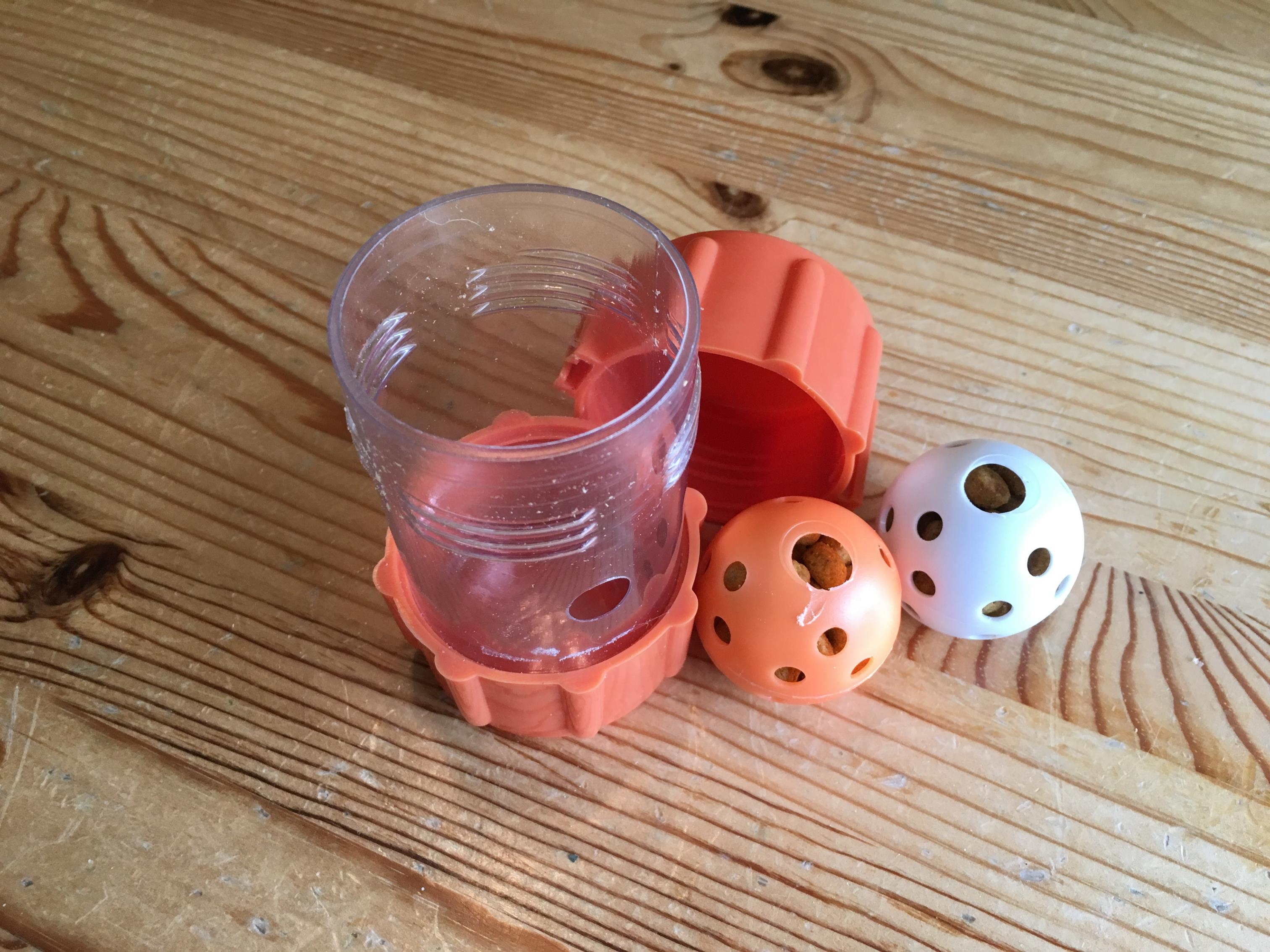
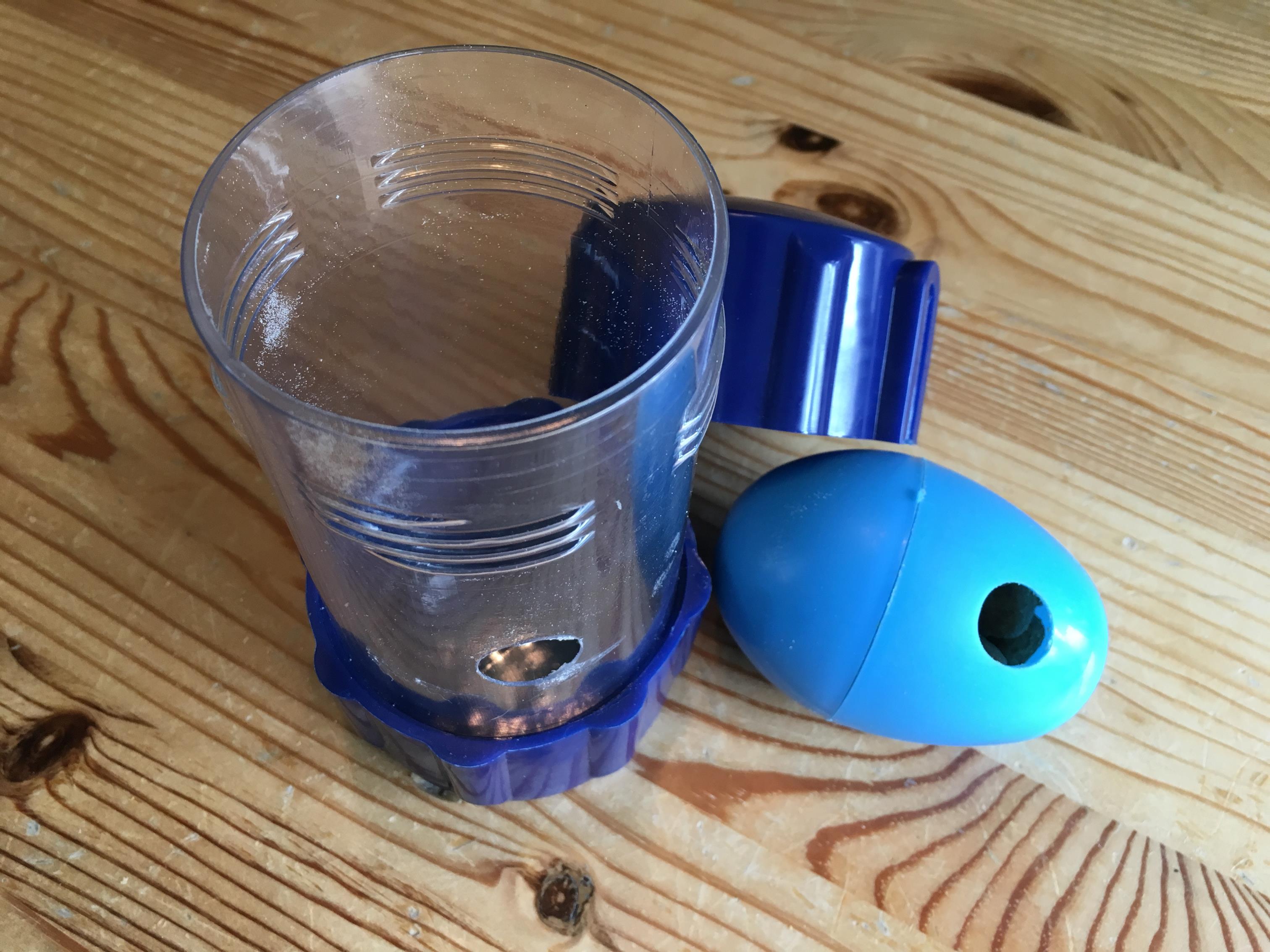
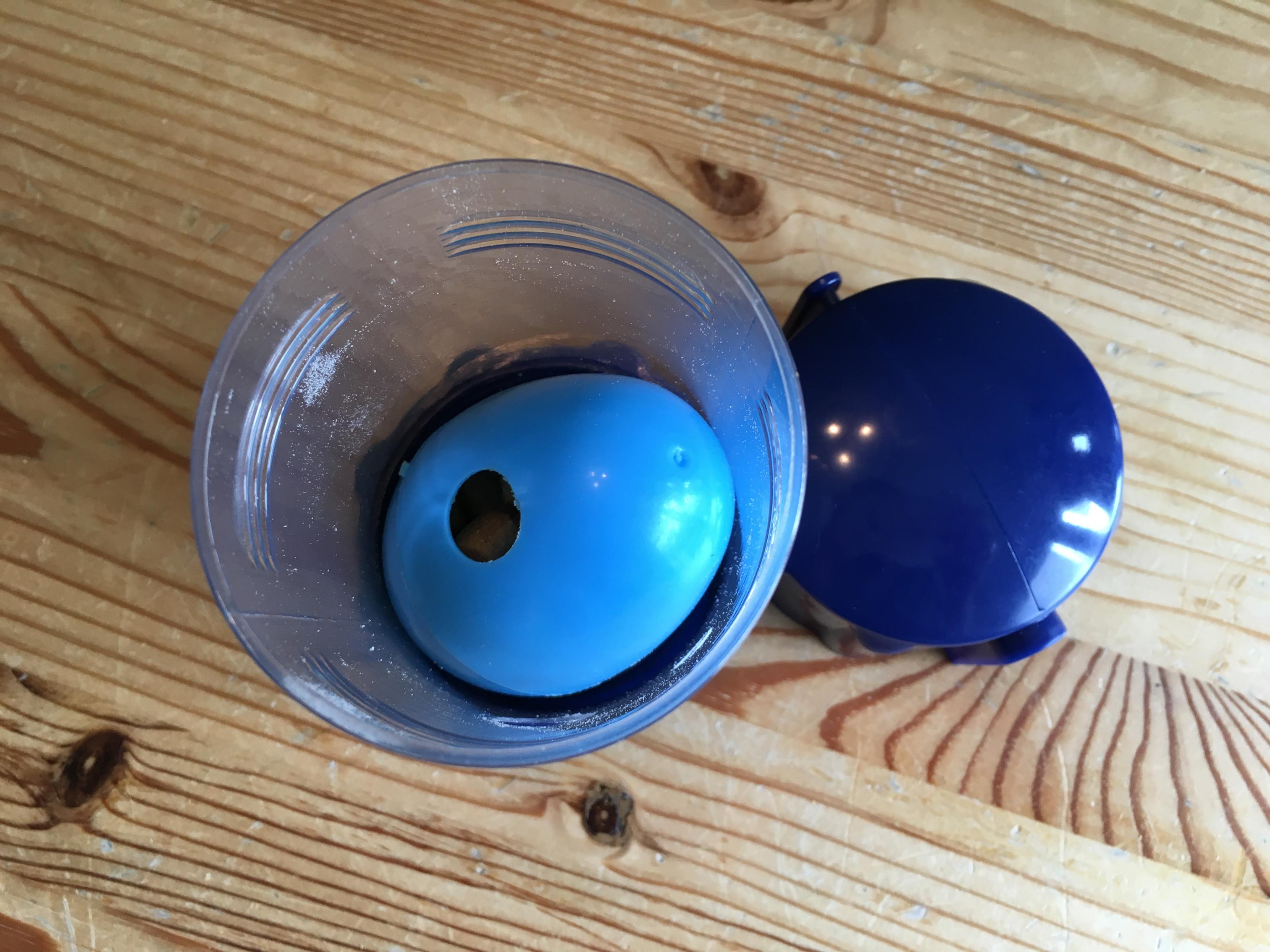
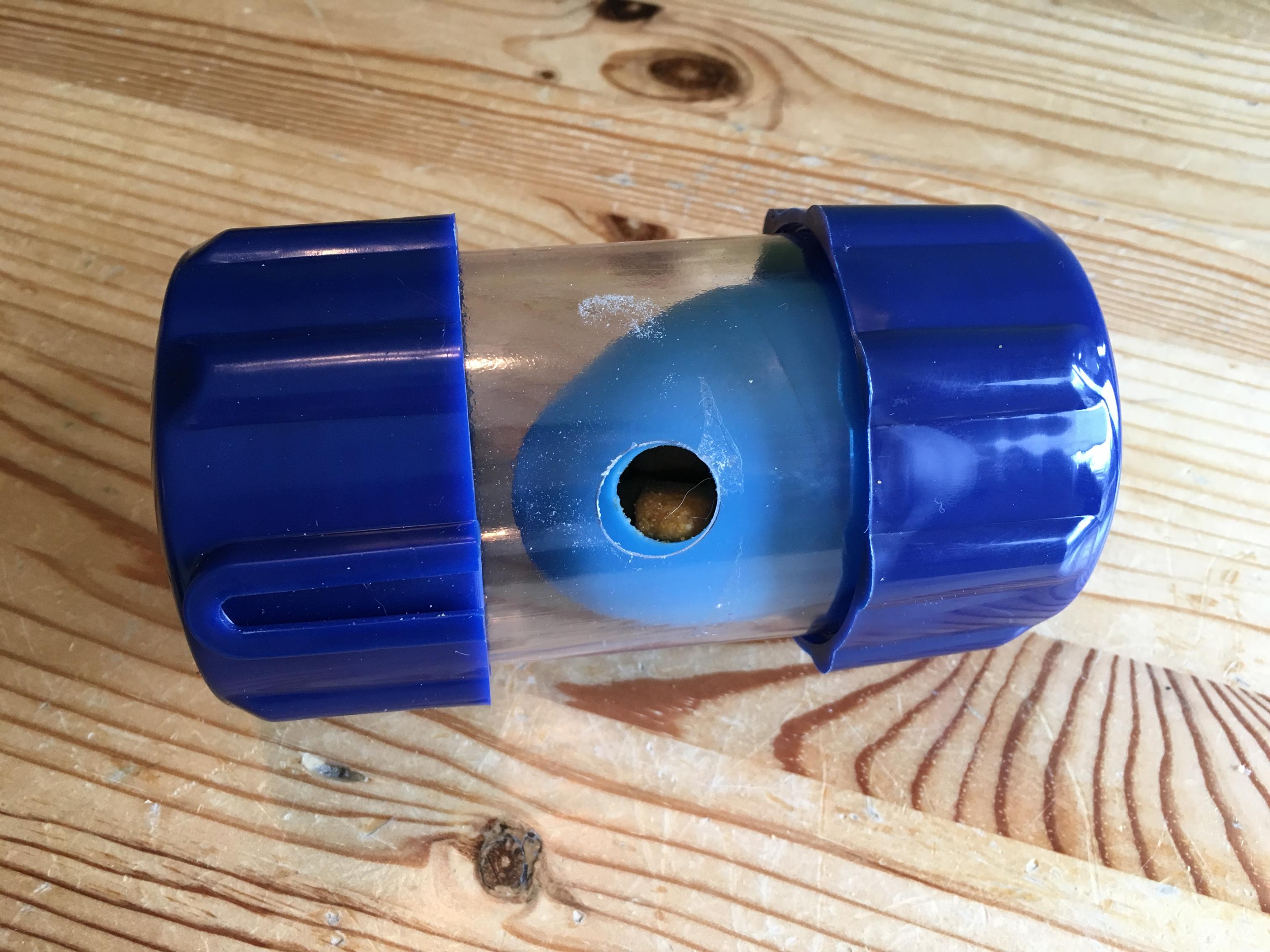
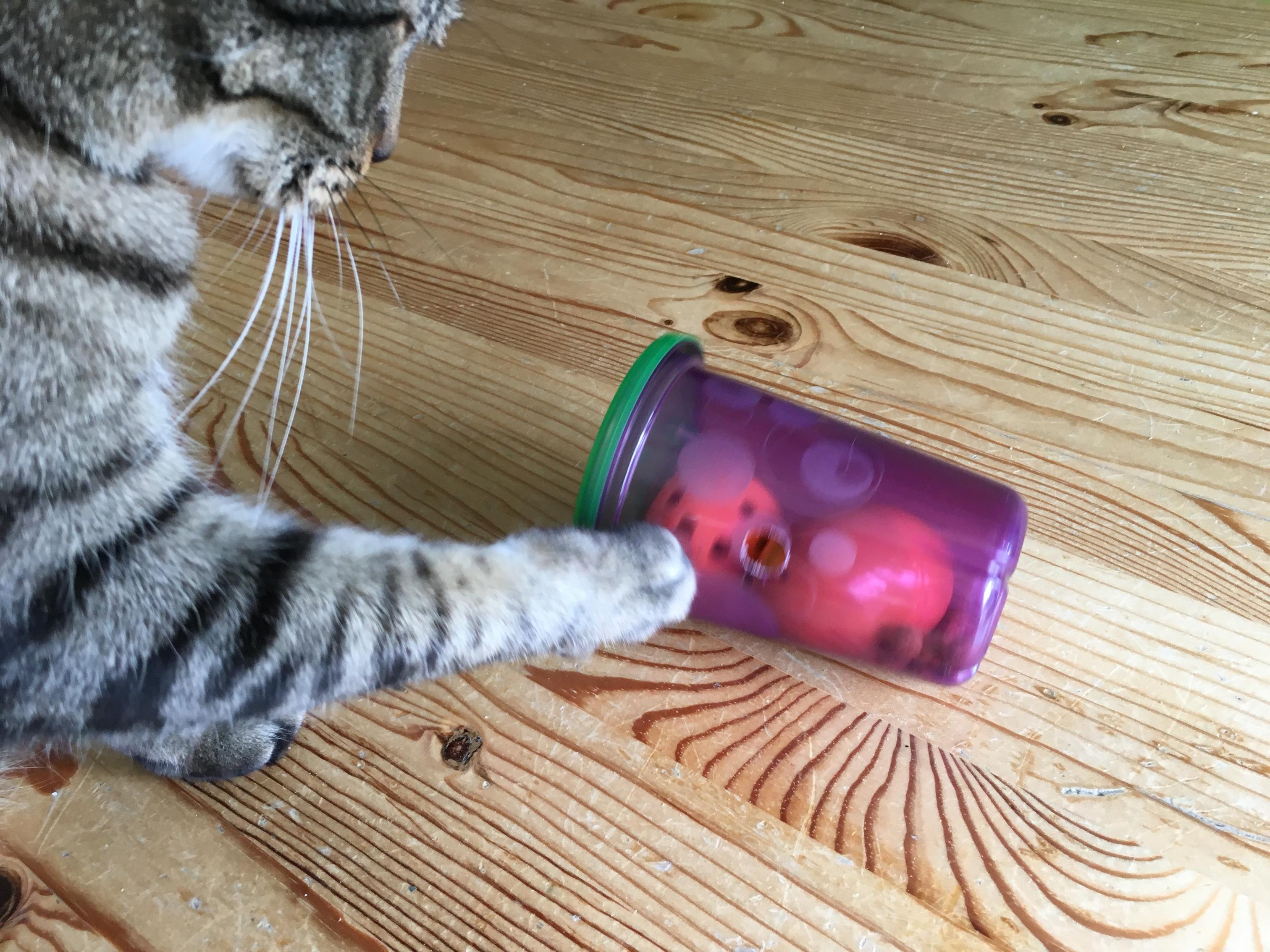
2. Drop inside foraging cup by Fundamentally Feline. (opens in new tab)
2. Drop inside foraging cup by Fundamentally Feline.
3. No match for my master forager!

Cube-shaped objects are one of the most difficult puzzles you can offer your cats. I recommend starting cube-shaped toys on an area rug so that they can learn to easily flip the toy. Once they get the hang of that they can typically utilize the cubes on any surface, but if you need to increase the challenge even further, you guessed it, double up!

Take a look at this video to see a master forager whacking a cube around like it is nothing!

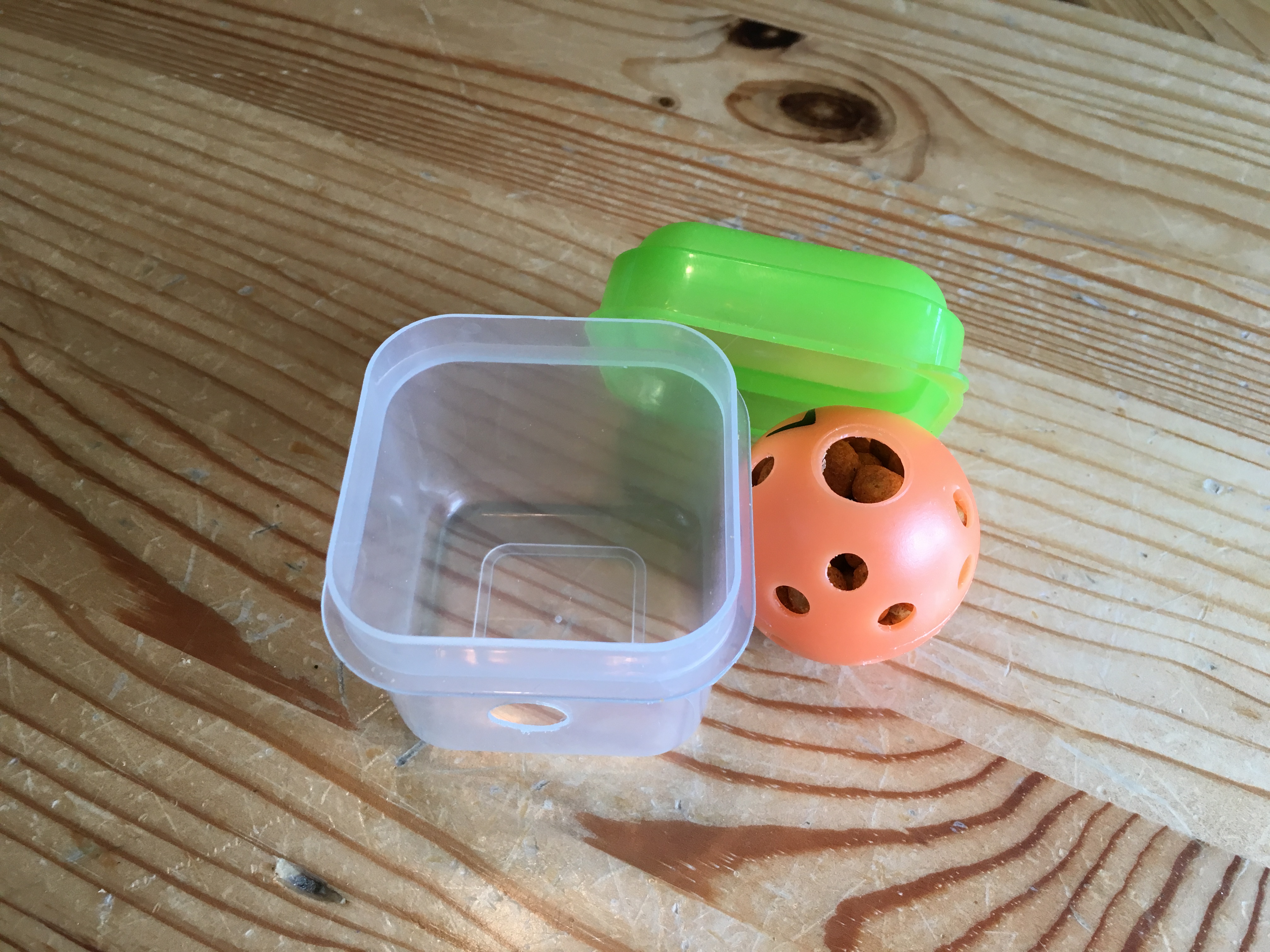
1. Fill a ping-pong by Fundamentally Feline. (opens in new tab)
1. Fill a ping-pong by Fundamentally Feline.
2. Place inside foraging cube by Fundamentally Feline. (opens in new tab)
2. Place inside foraging cube by Fundamentally Feline.
3. Boom! Increased challenge! (opens in new tab)
3. Boom! Increased challenge!

If nothing else I do hope you are appreciating the versatility of the foraging ping-pong balls! They can be used in many creative ways as can the mini and full sized eggs.

In my experience rolling puzzles are, as a whole, more difficult for most cats than are stationary puzzles. In fact, some cats completely refuse to use rolling puzzles, but are masterful paw manipulators and need to have their stationary toys made more difficult. Here are a few ideas to do just that!

Either fill ping-pong or just drop in regular cat toys. (opens in new tab)
Either fill ping-pong or just drop in regular cat toys.

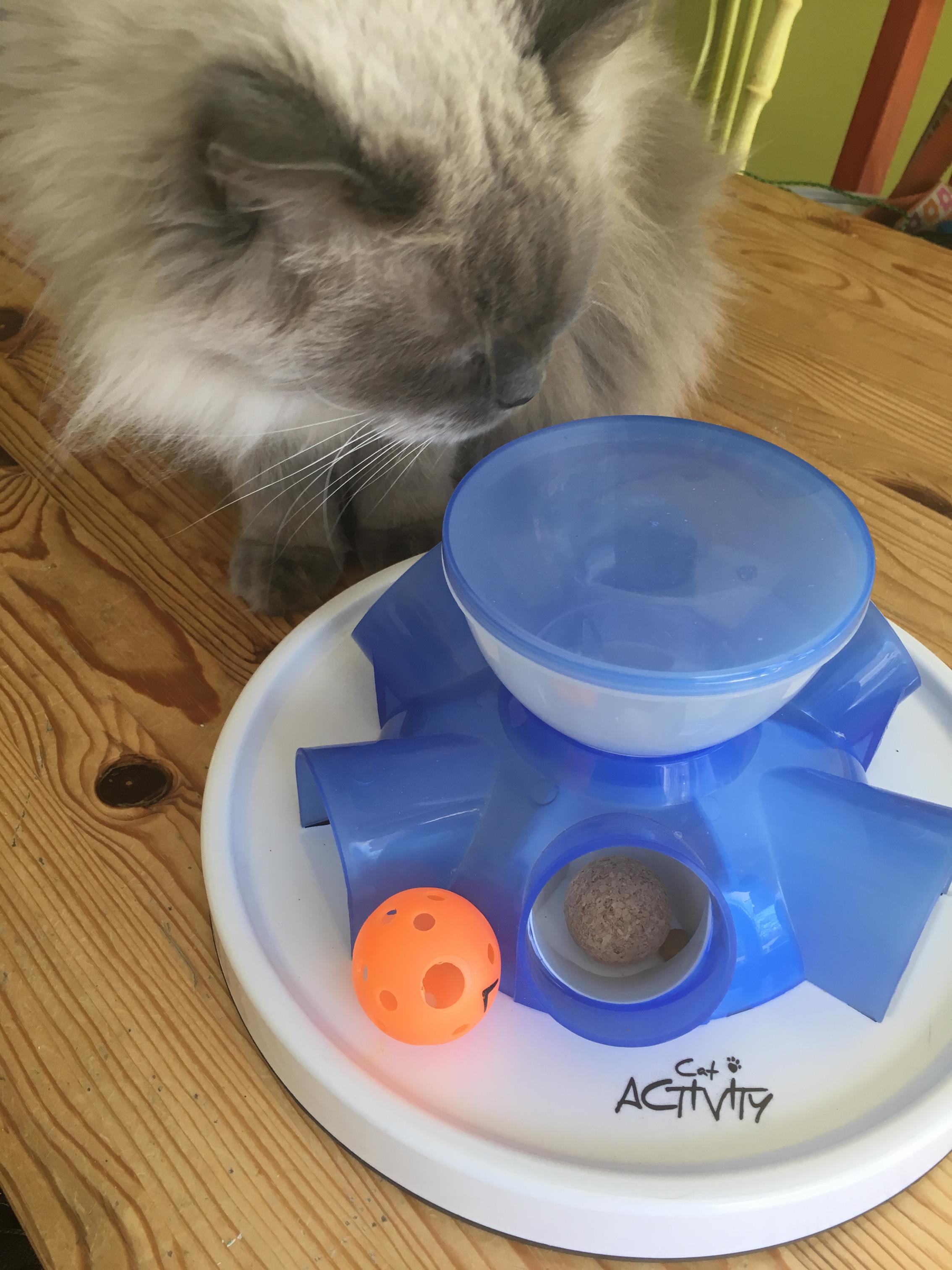
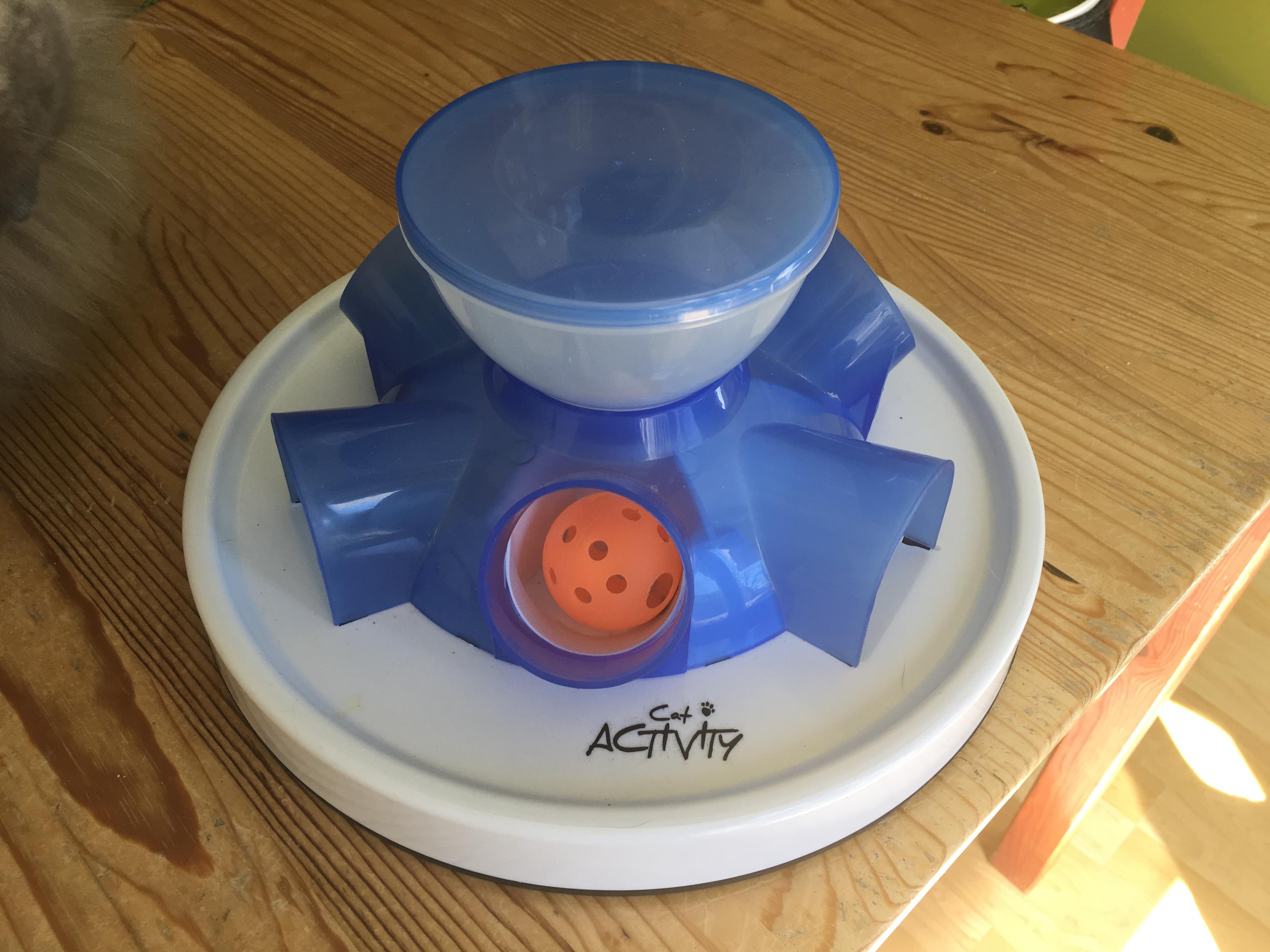
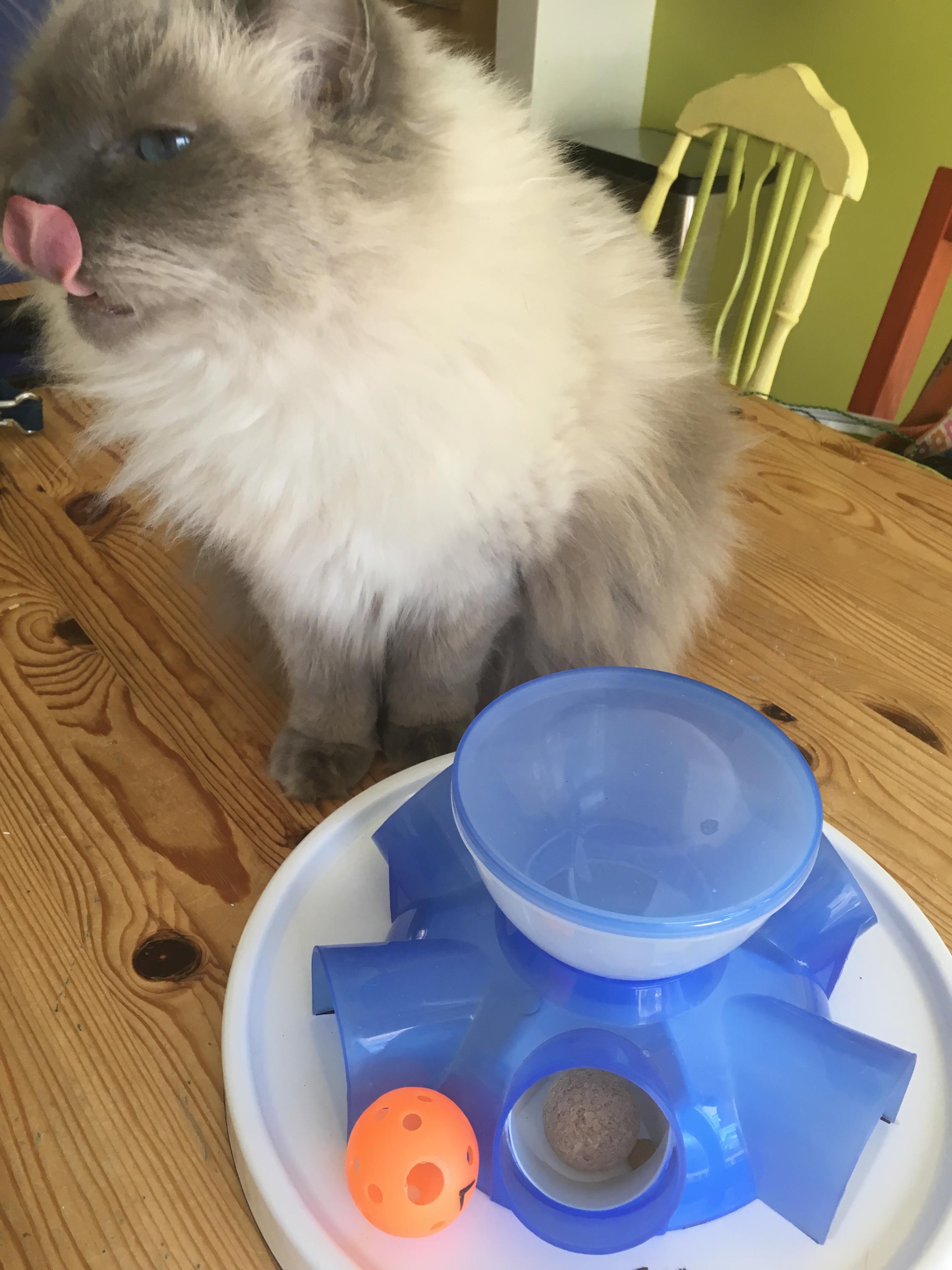
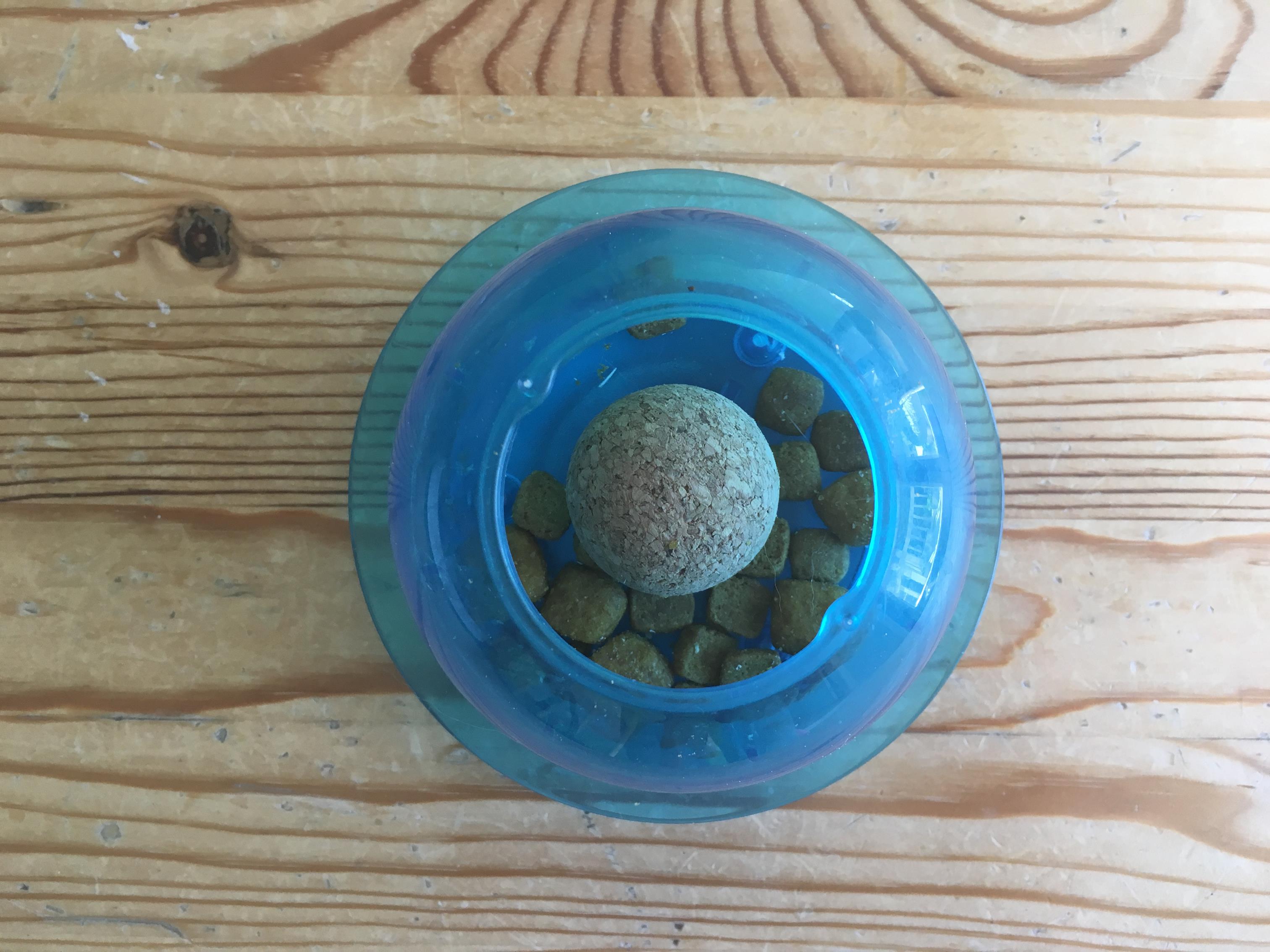
You guessed it, ping-pong balls again! Either fill the ping-pong and drop inside the wells of this Trixie Pet Tunnel Feeder or place balls and mice in the tunnels so your cat has to work around them or fish them out! Notice the alternative cork ball in the tunnel.

IMG_0094 (Copy)
Samson says, "DELICIOUS!" (and easy-peasy)
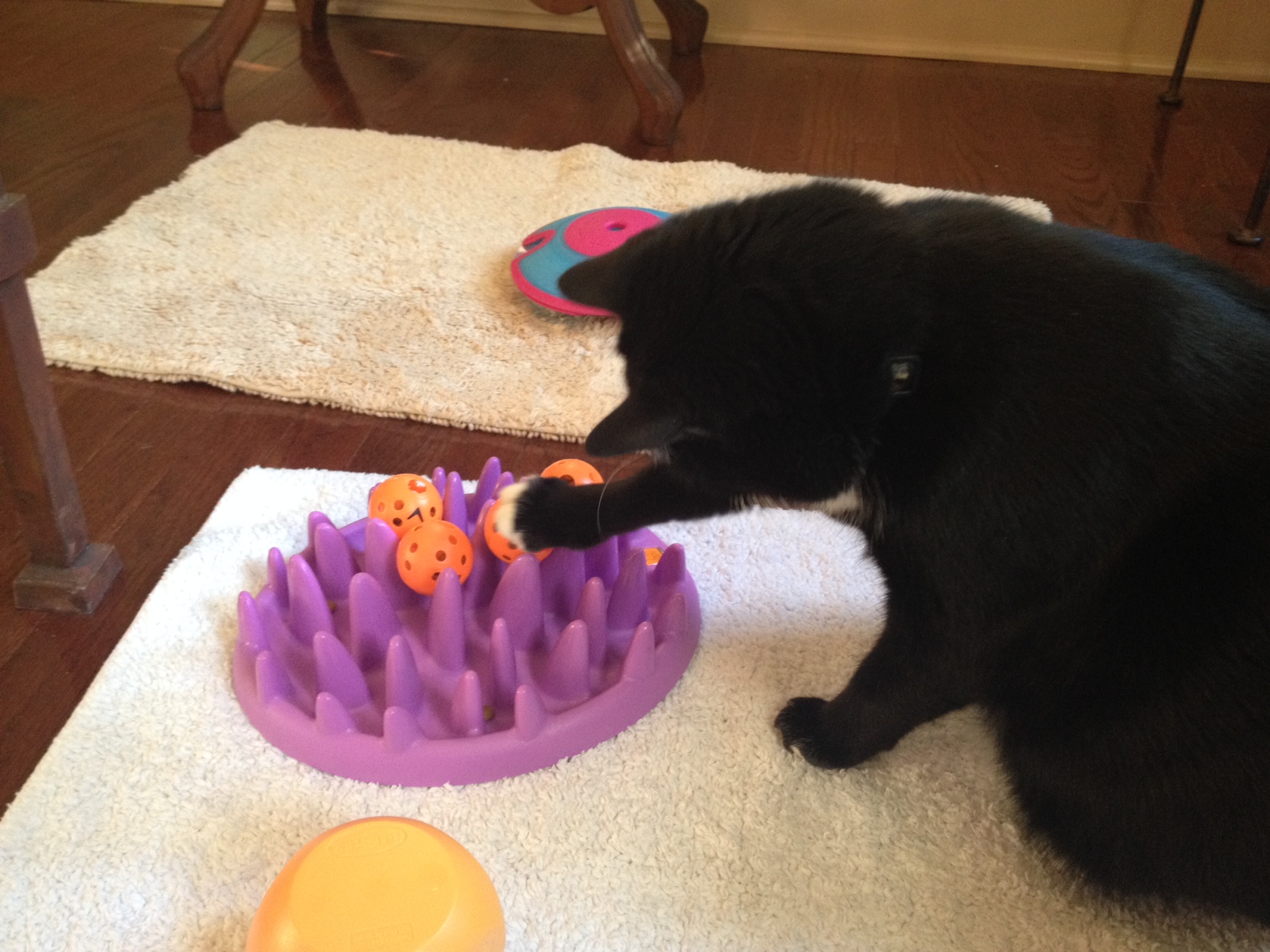
Voodoo with stuffed ping pong balls dropped into Catch toy for increased foraging challenge. She is a master forager!

Left: Fill ping-pongs and place within the spikes of the "Catch" so your cat has to spin the balls to allow the food to drop below to be fished out with a paw.

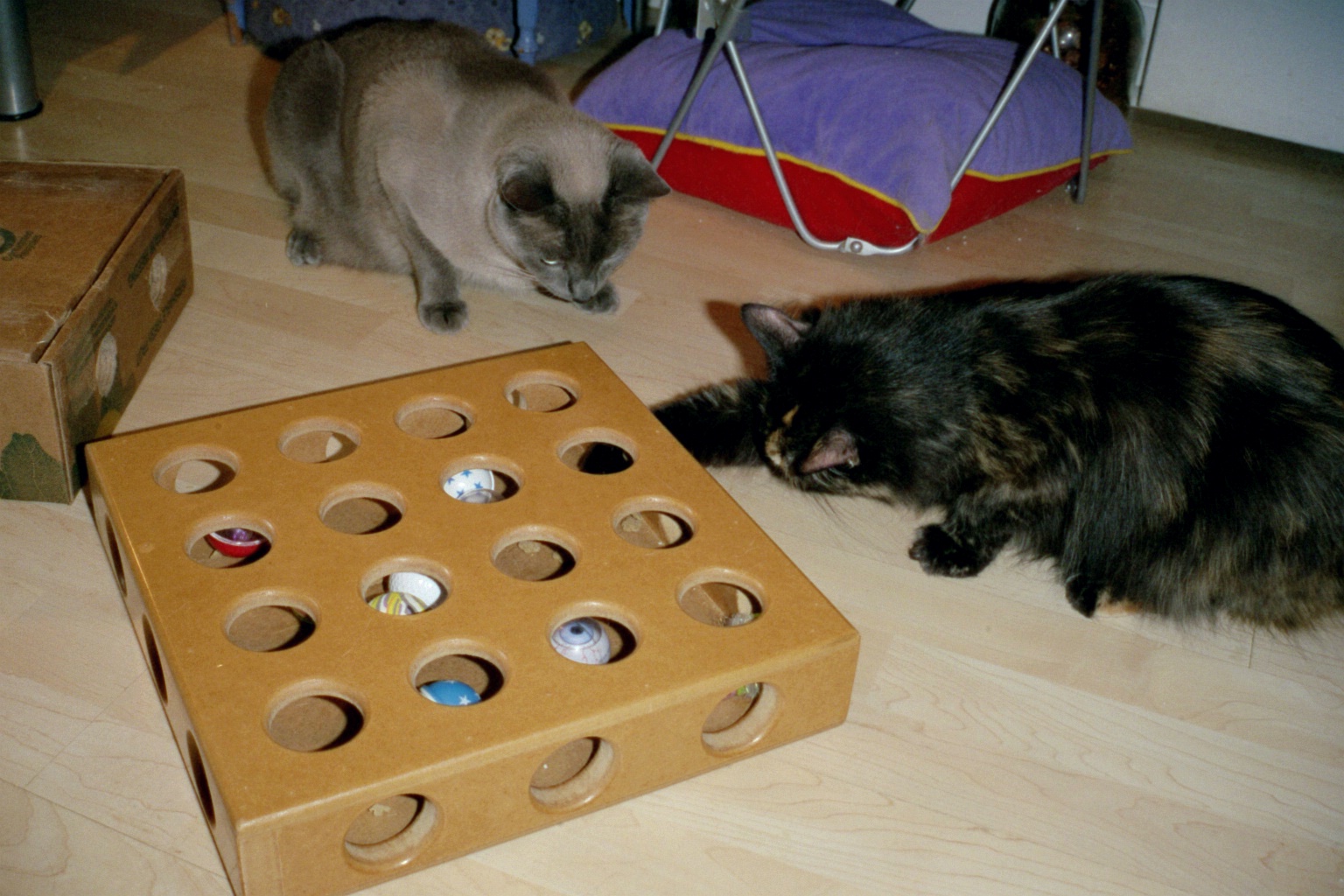
Right: Fill Peek-A-Prize box with loads of balls and cat toys making it difficult to achieve the dry food OR fill ping-pongs and drop inside so they have to spin the food out of the ball and extract from the box.

Picture 273

Weighted toys also add significant challenge. Check out the Pyramid by Nina Ottosson. But you can also add weights or a large cats eye marble to a toy like the Mad Scientist (below) so that the beakers do not tip as easily and the weighted object inside also obstructs the openings from time to time making it difficult to dispense the food.

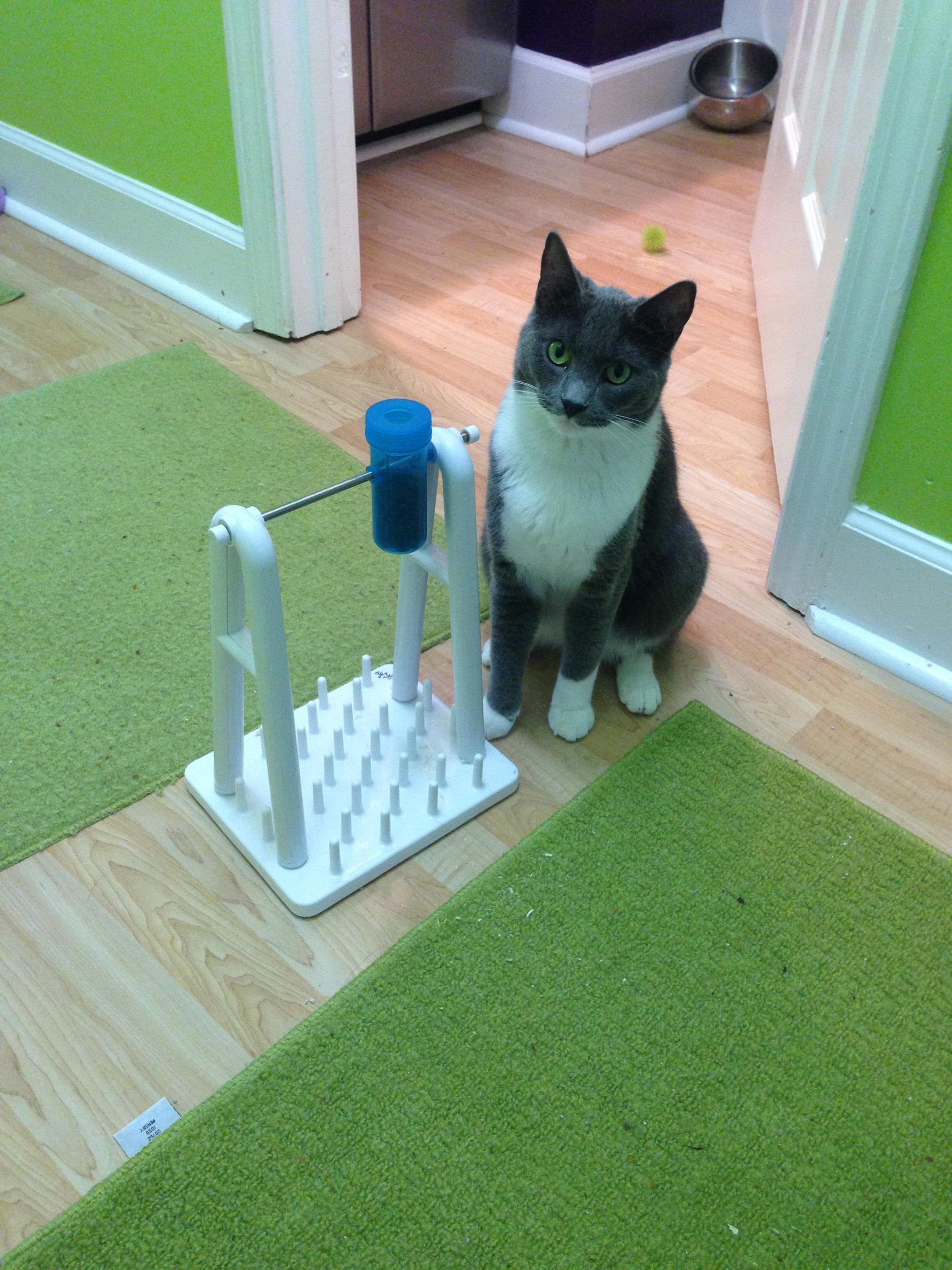
Place ball or ping-pong inside Fishbowl as an obstacle! (opens in new tab)
Place ball or ping-pong inside Fishbowl as an obstacle!
Weights/marbles in beakers=heavier & obstruct flow.
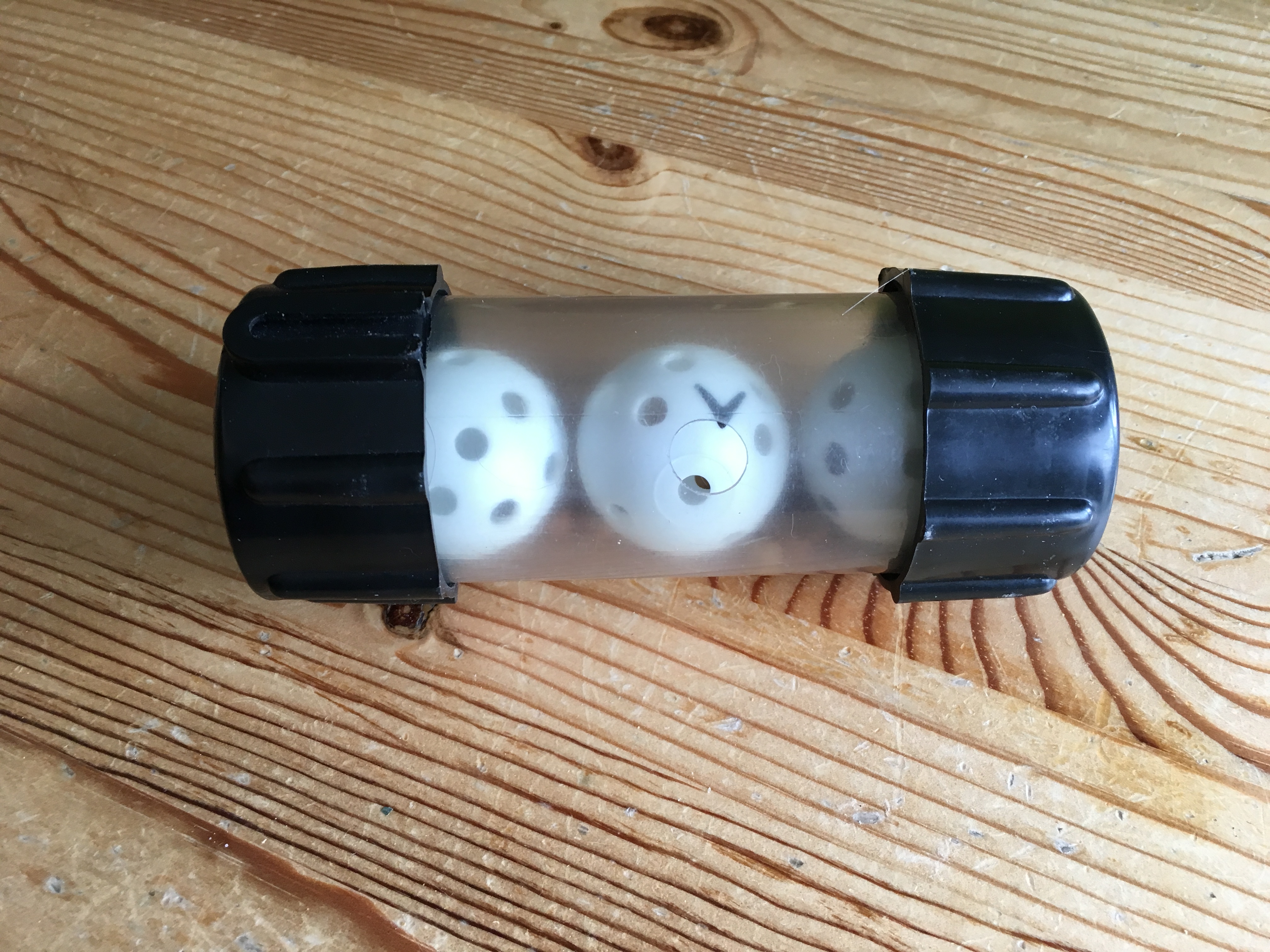
Long gear filled with 3 pre-stuffed ping-pongs. (opens in new tab)
Long gear filled with 3 pre-stuffed ping-pongs.

Do not offer these suggestions to your cat unless they are truly skilled at foraging as we do not want to frustrate them and have them decide that it is no longer rewarding to interact with the food puzzles. Remember too that it is imperative that cats eat EVERYDAY and multiple times a day. You never, ever want to take the, “if they are hungry enough they will figure it out” mentality as that is a great way to make a cat very sick.

So if you have an easy, beginner toy such as the Egg-Cersizer featured below, please don't throw it away! Double up to increase the challenge!

1. Fill ping-pong from Fundamentally Feline. (opens in new tab)
1. Fill ping-pong from Fundamentally Feline.
2. Place inside Egg-Cersizer from Petsafe. (opens in new tab)
2. Place inside Egg-Cersizer from Petsafe.
3. Set to one hole & you just made an easy toy hard!

I certainly hope that this post helps you get creative and helps you challenge your cats. Visit my You Tube channel or the Foraging Videos tab on this site for more foraging fun! Happy foraging!

Filed Under: Blog Tagged With: difficult food puzzles for cats, environmental enrichment, feline foraging toys, feline games, food puzzles, Food puzzles for cats, Foraging, foraging toys for cats, fundamentally feline, homemade food puzzles, Homemade foraging toys, increasing the challenge, rolling food puzzles, stationary food puzzles

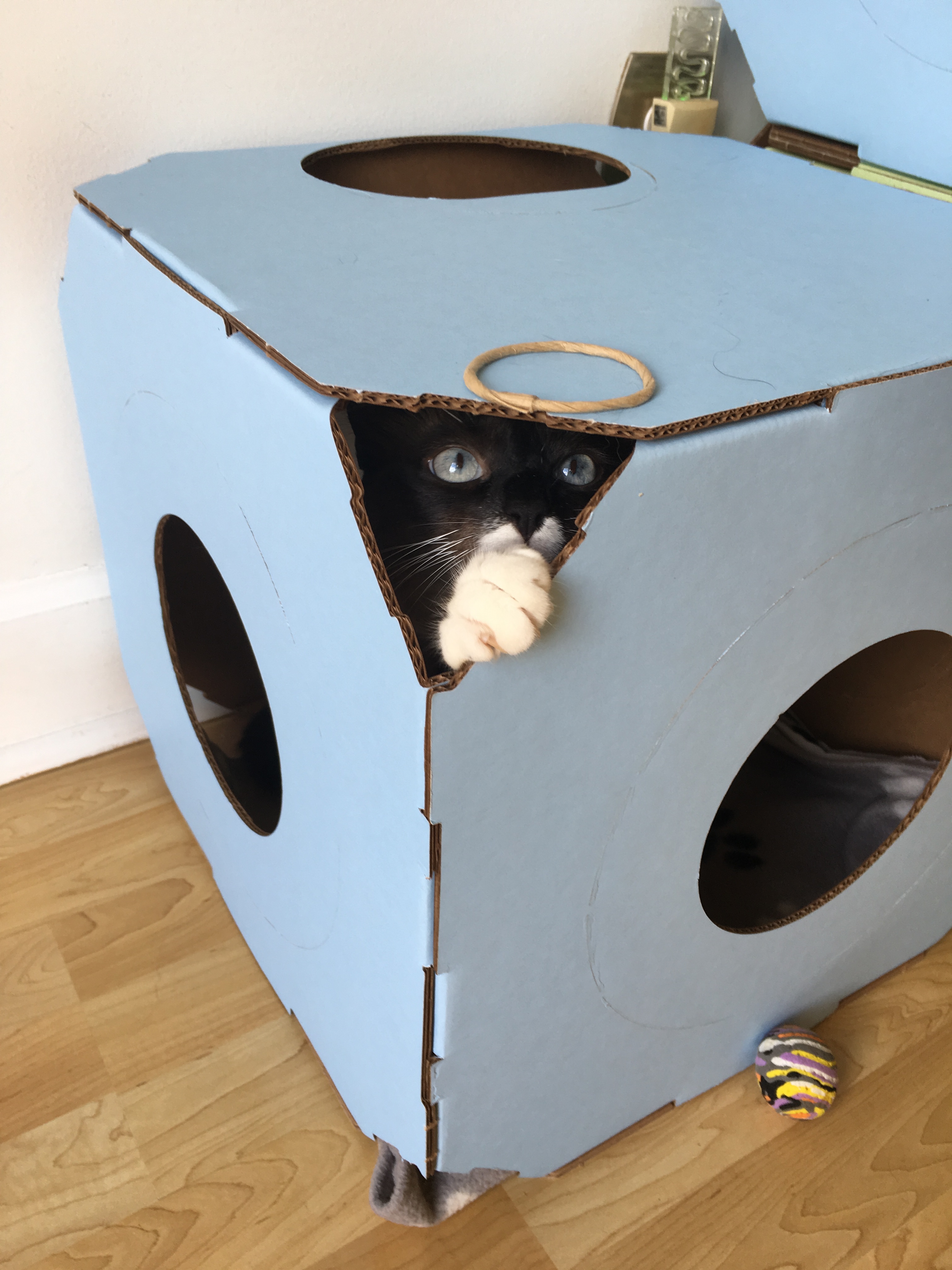
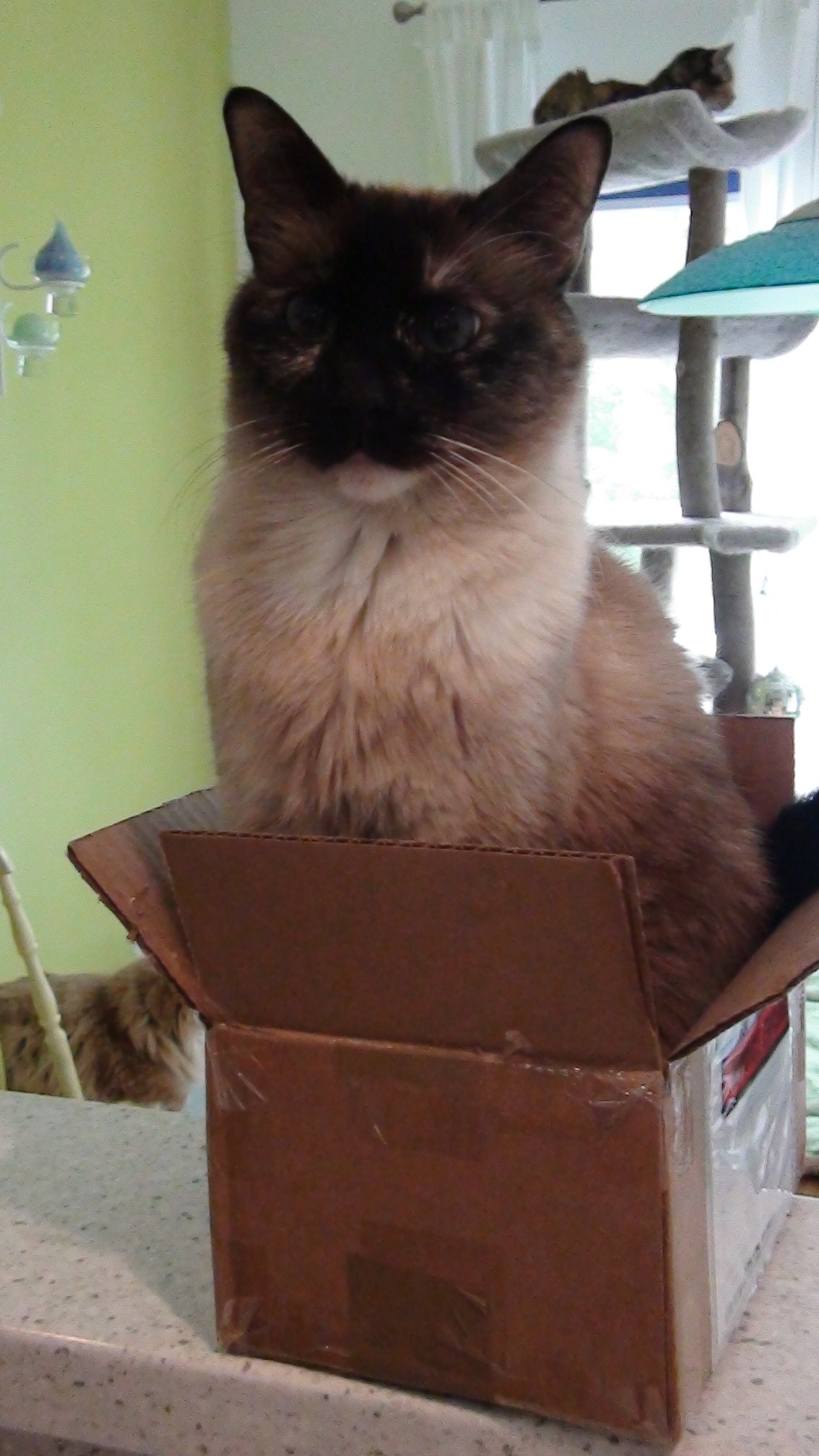
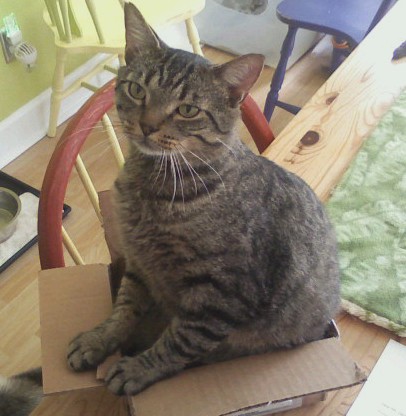
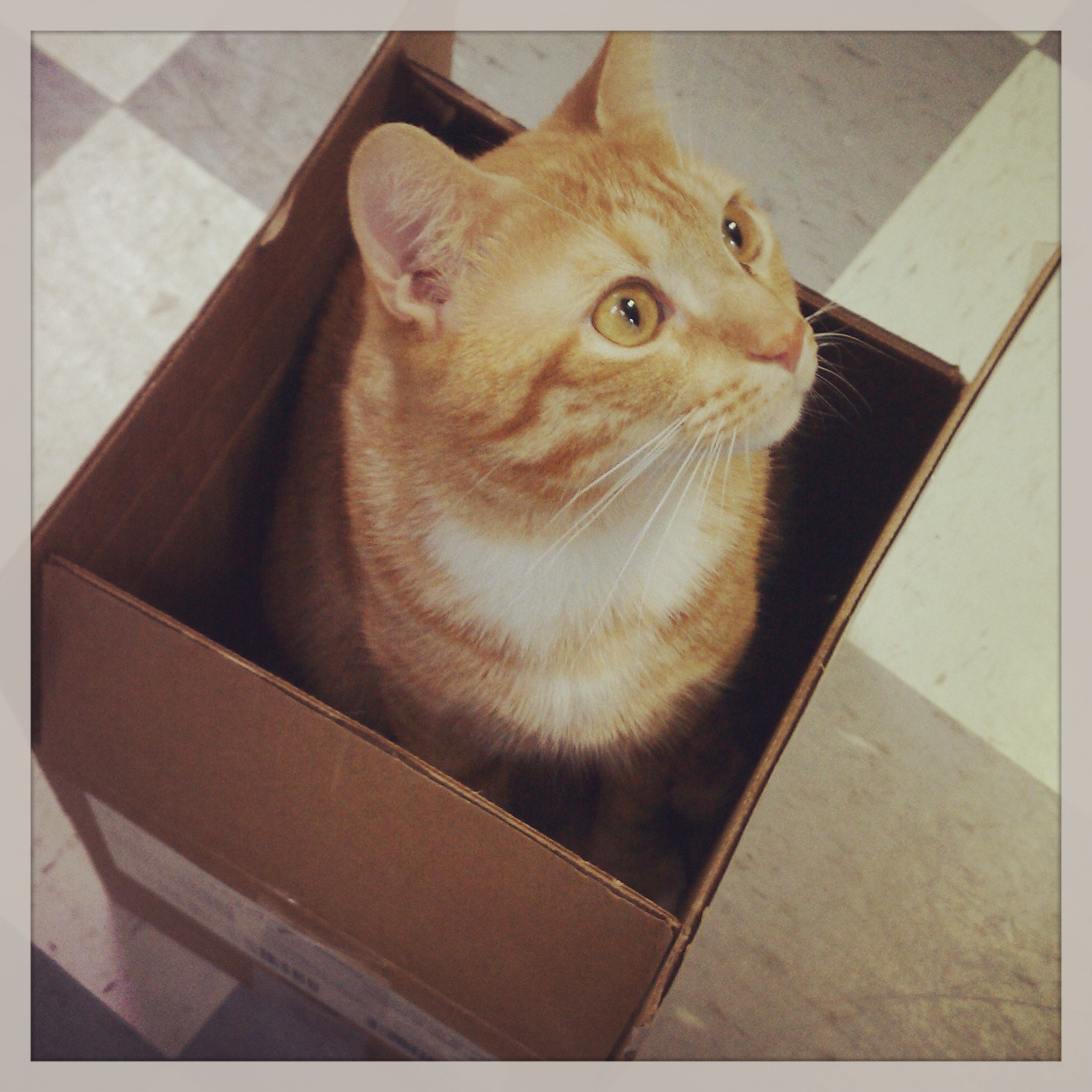
It’s More Than Just A Box!

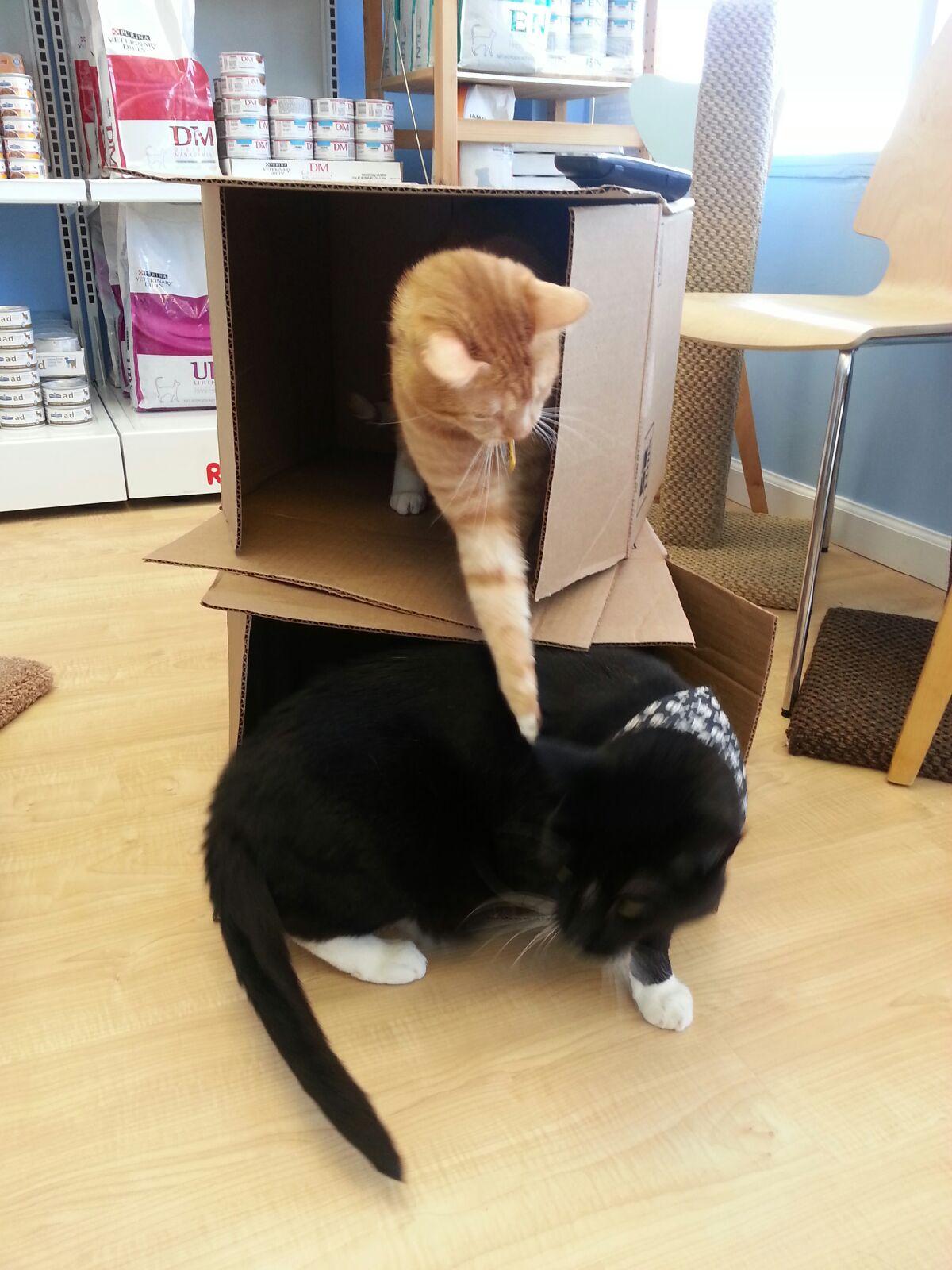
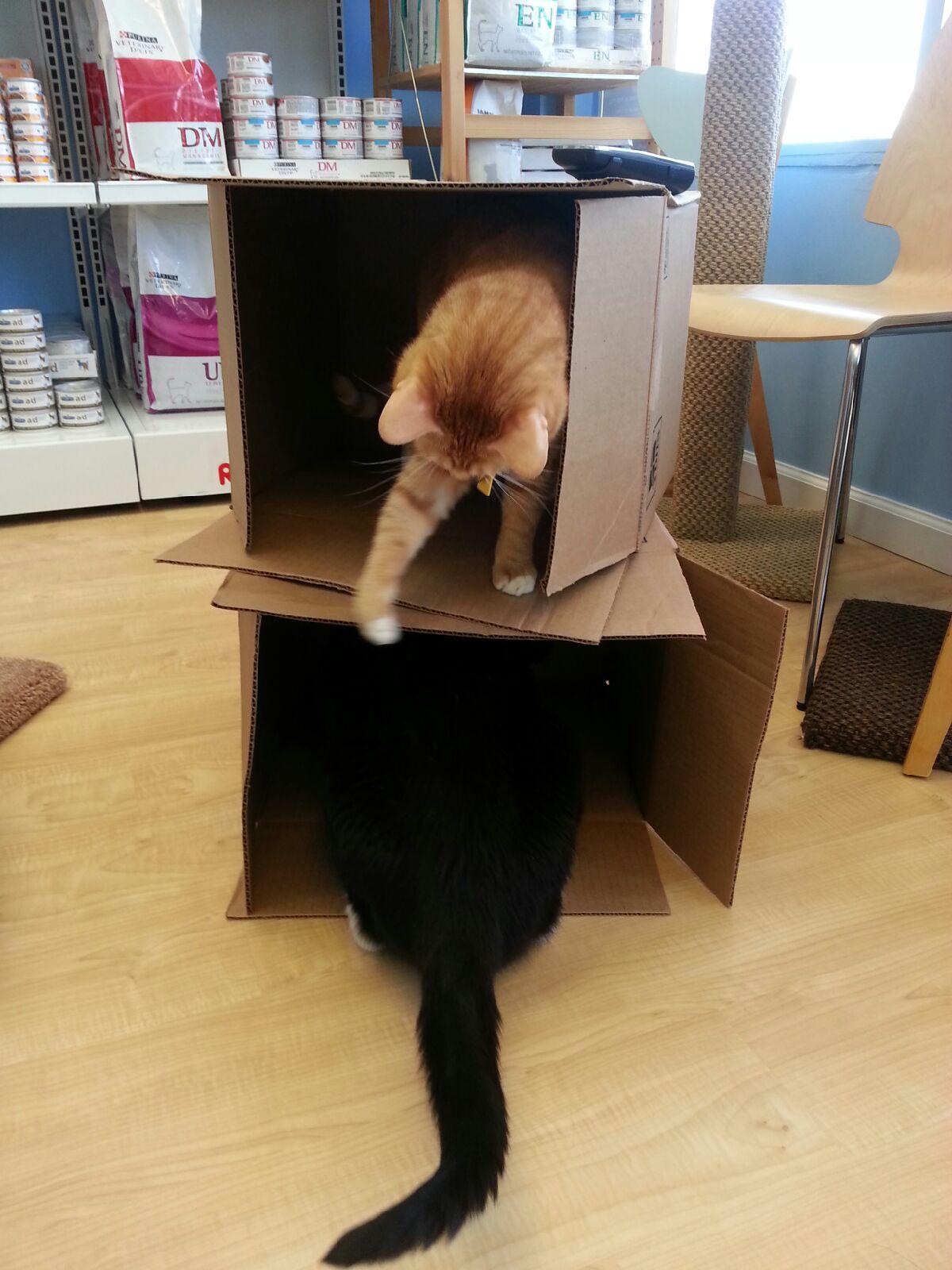
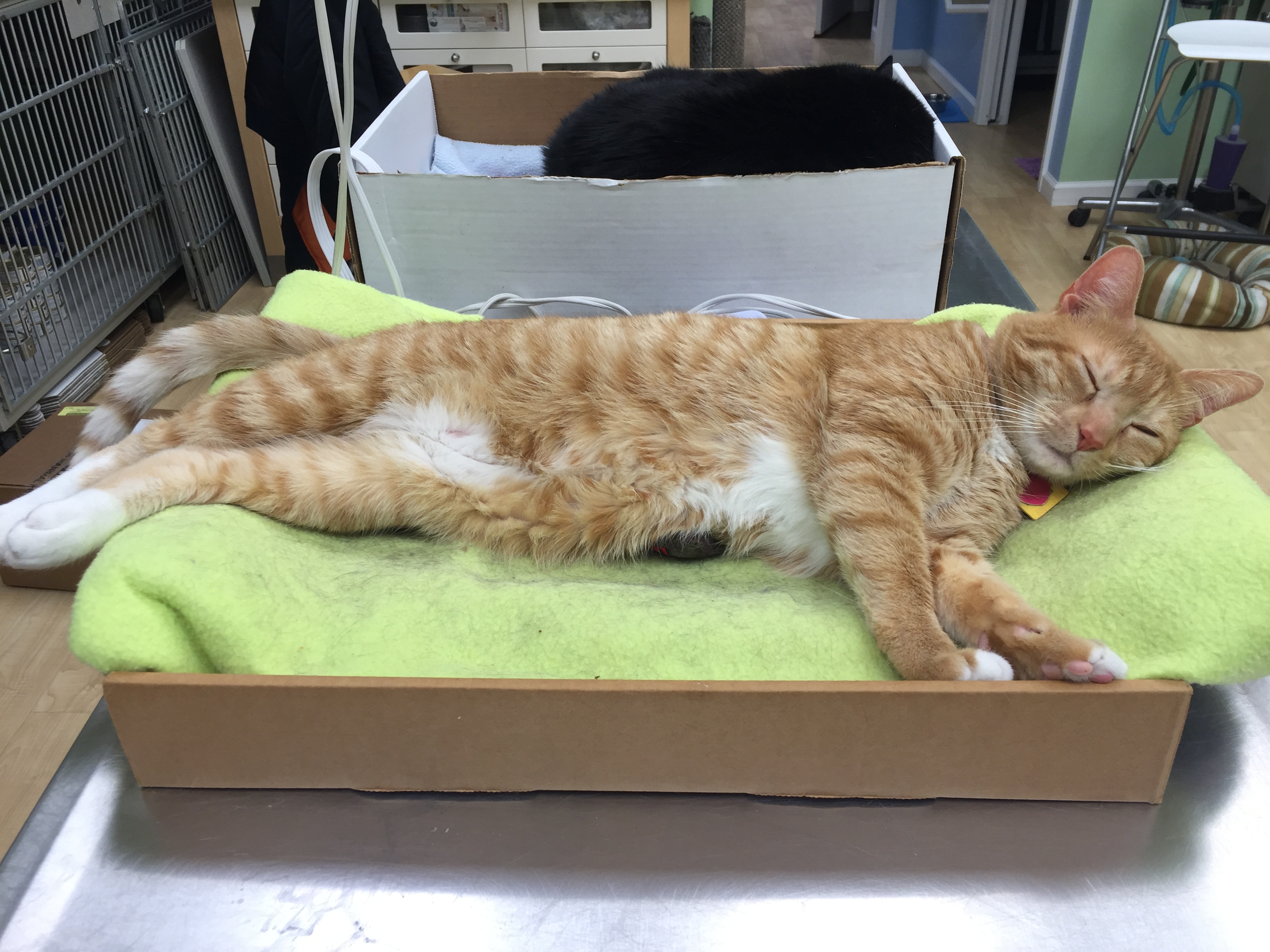
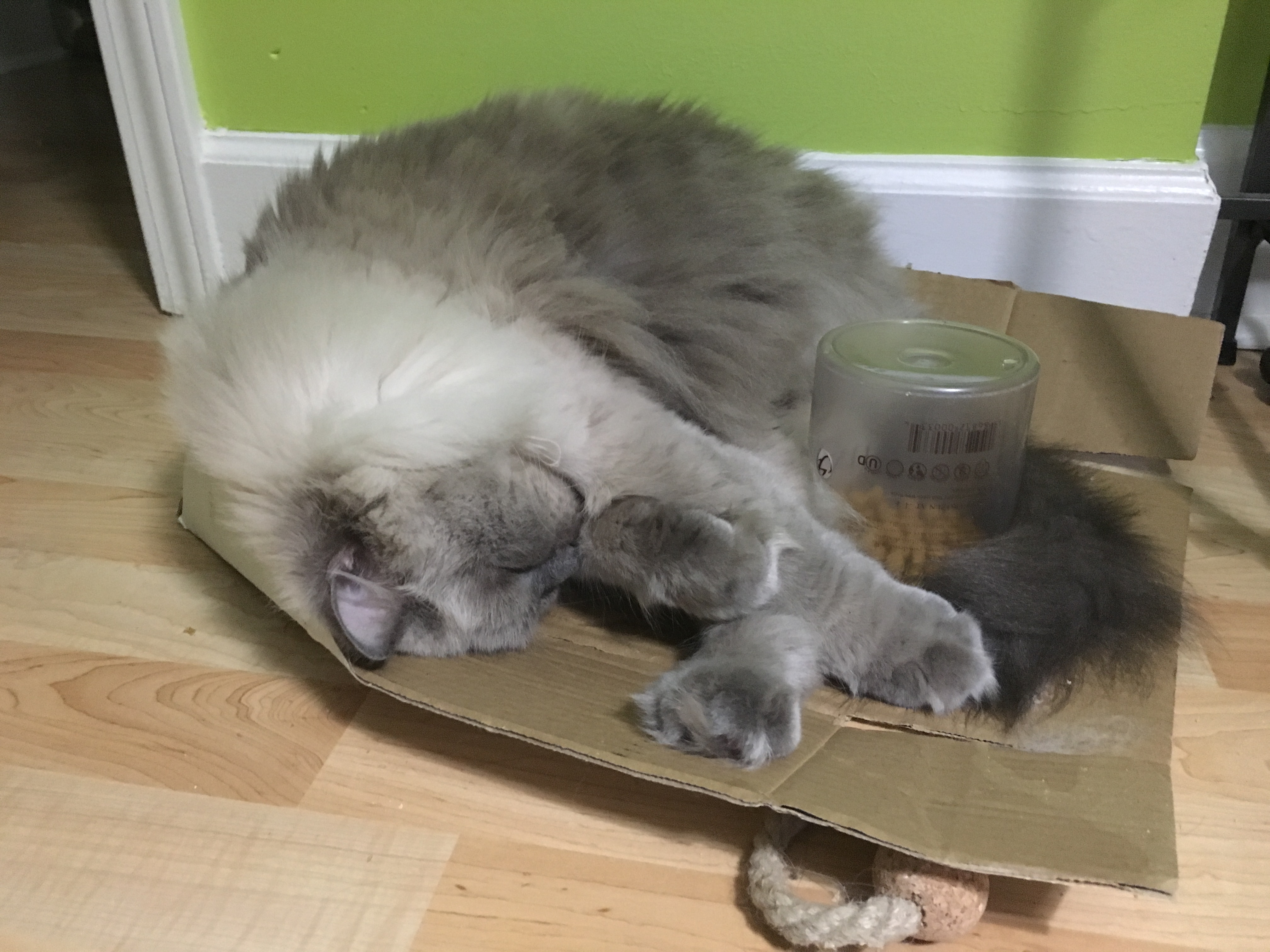
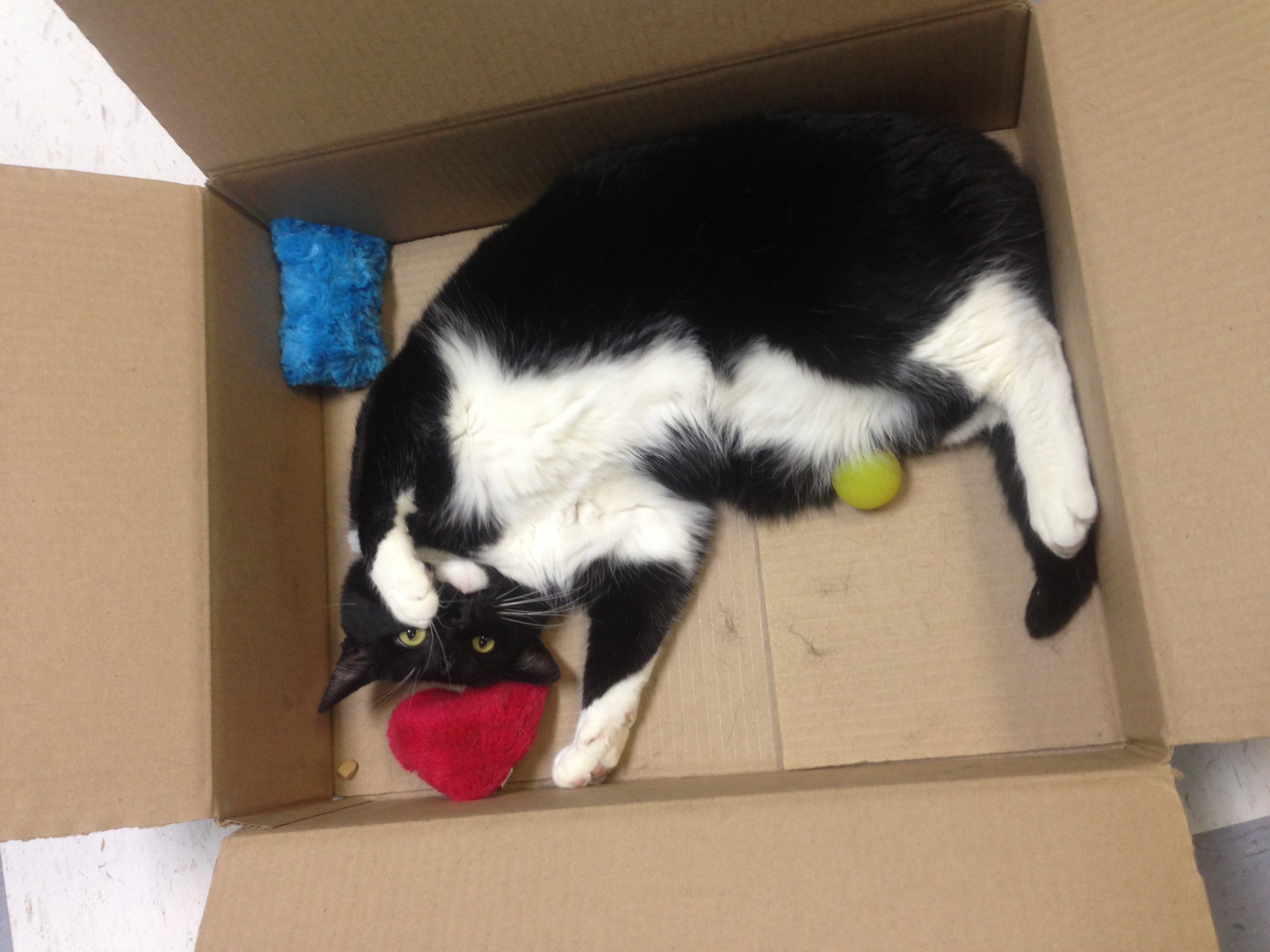
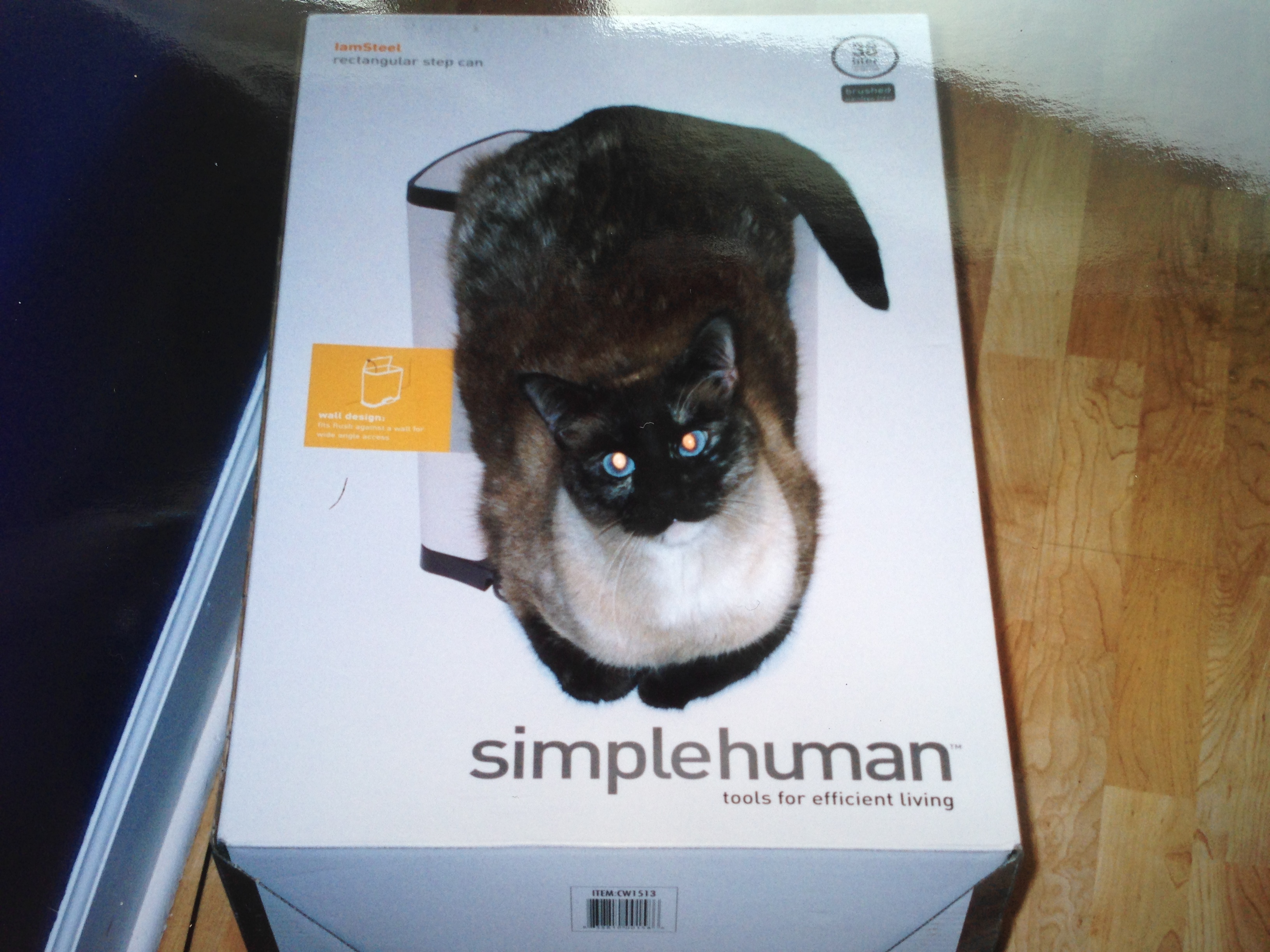
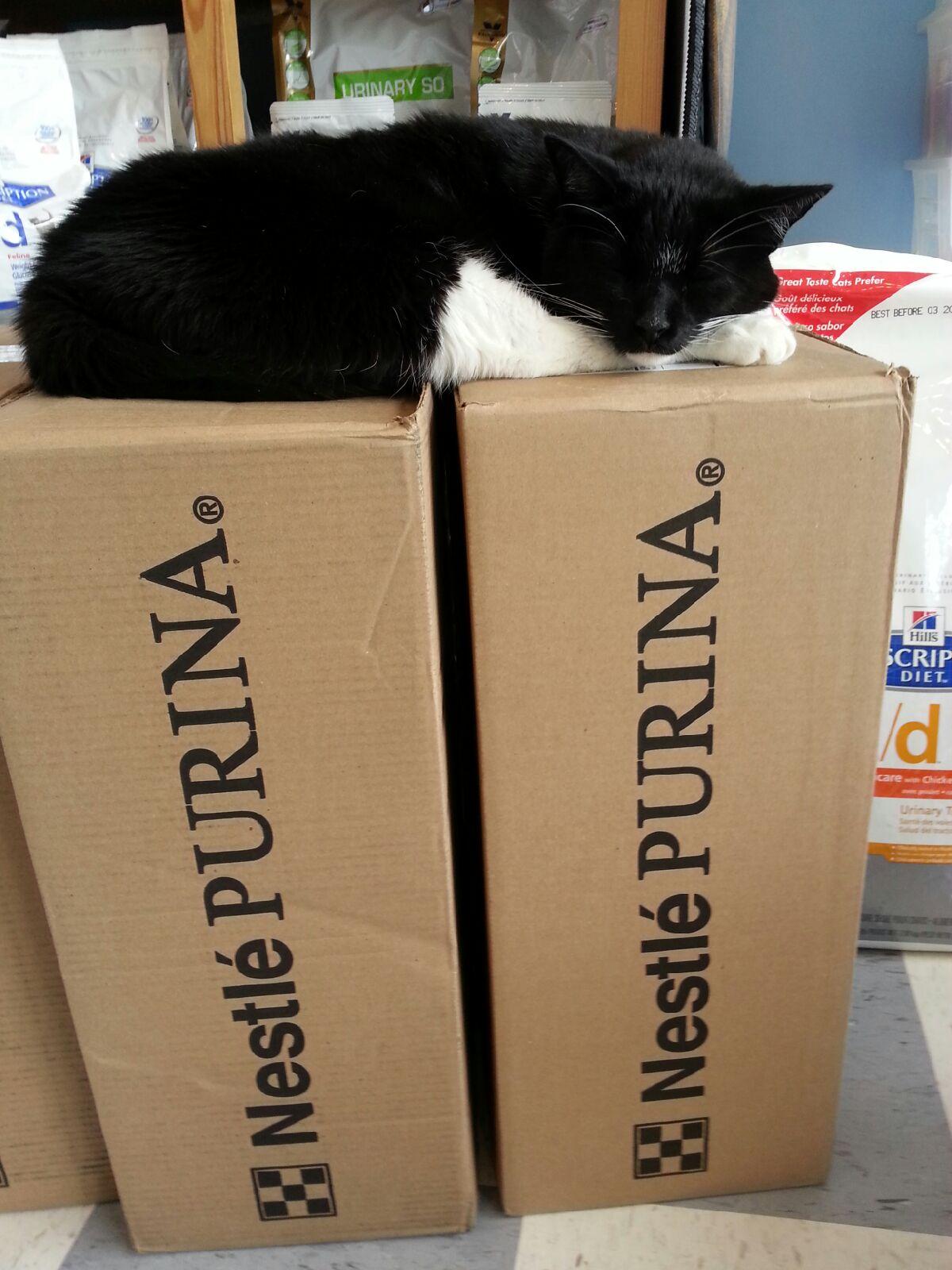
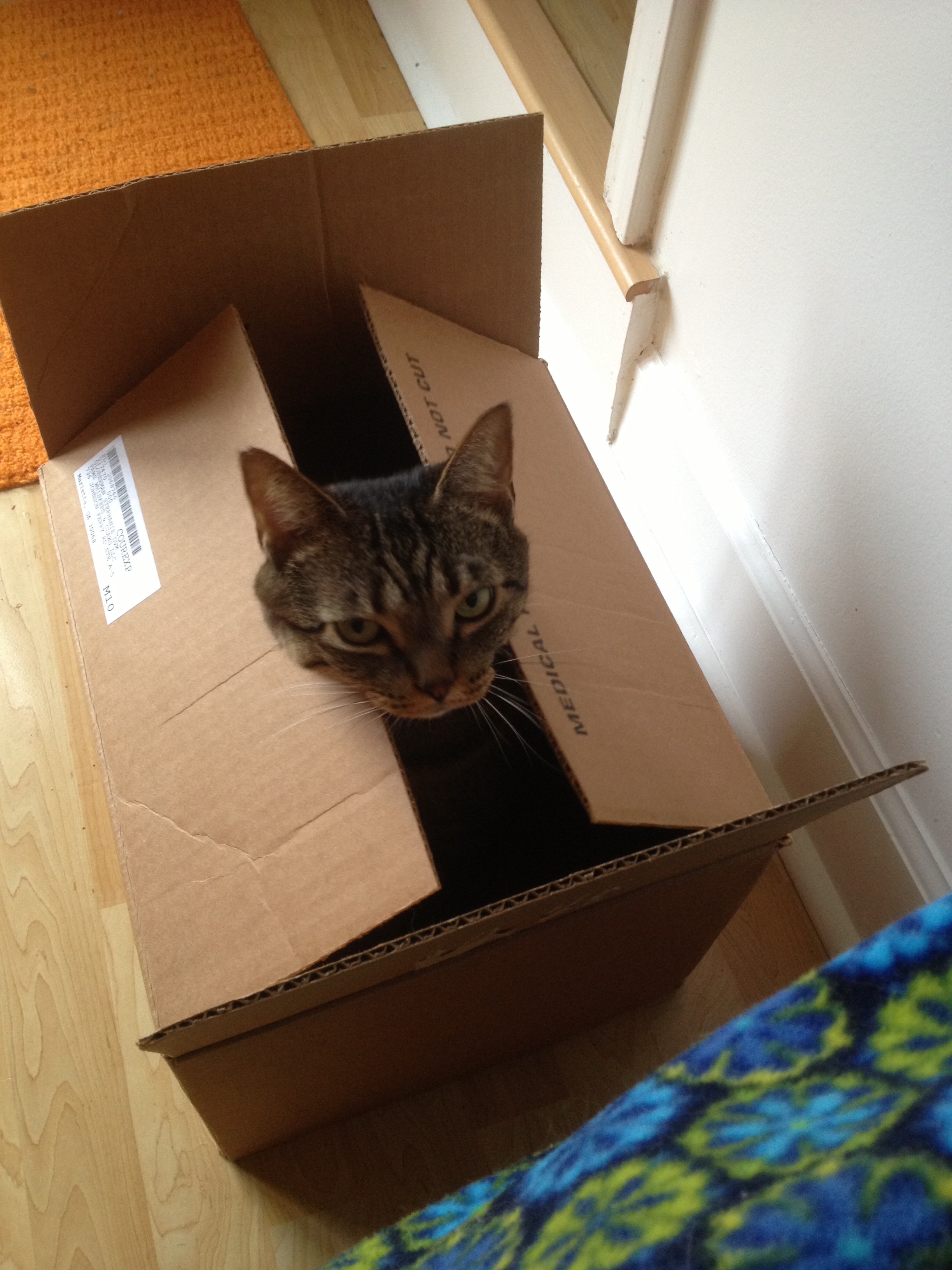
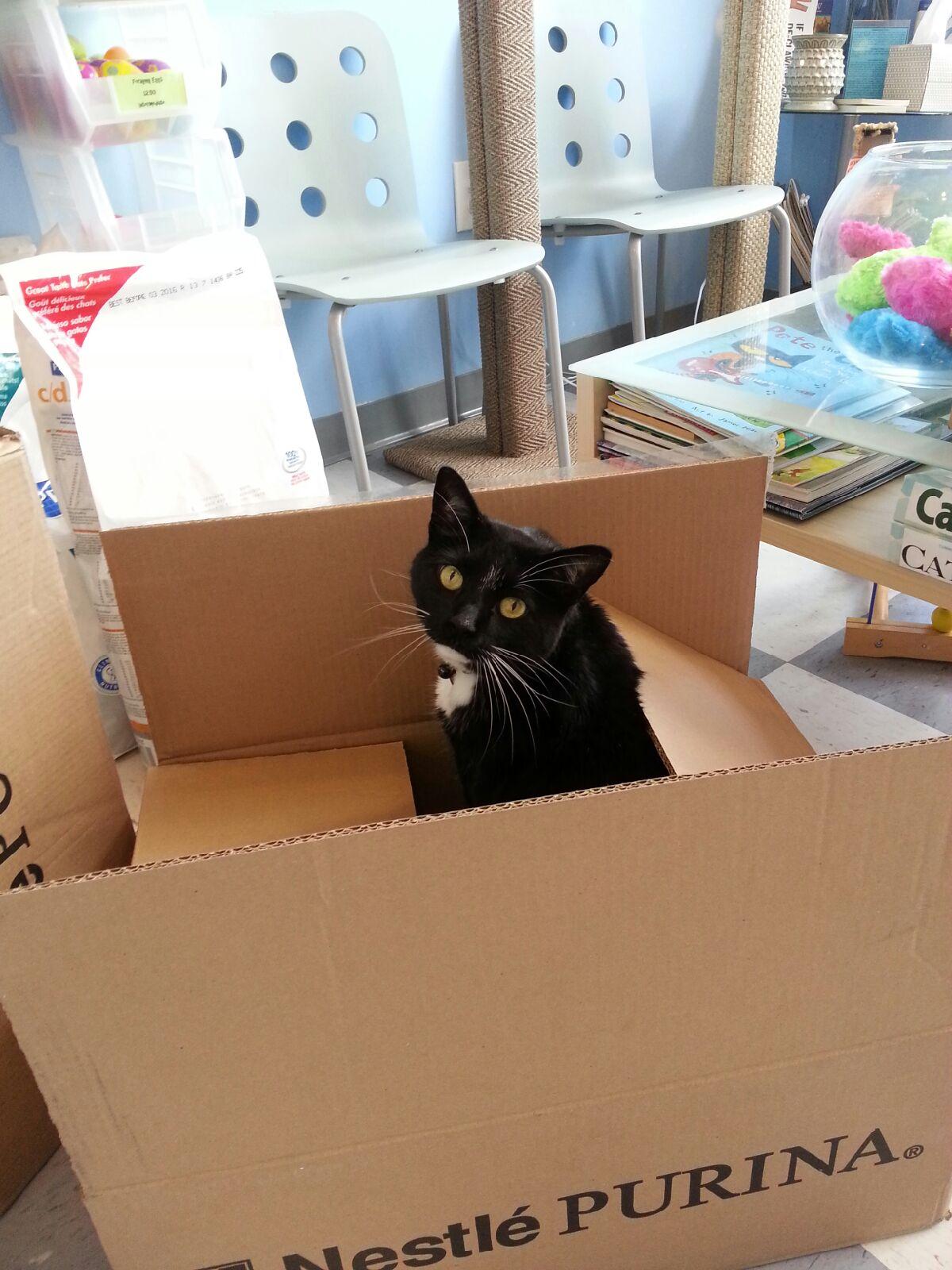
A pictorial tour of the many glorious uses of the cardboard box as an enrichment tool for your cat. It is so much more than "just a box".

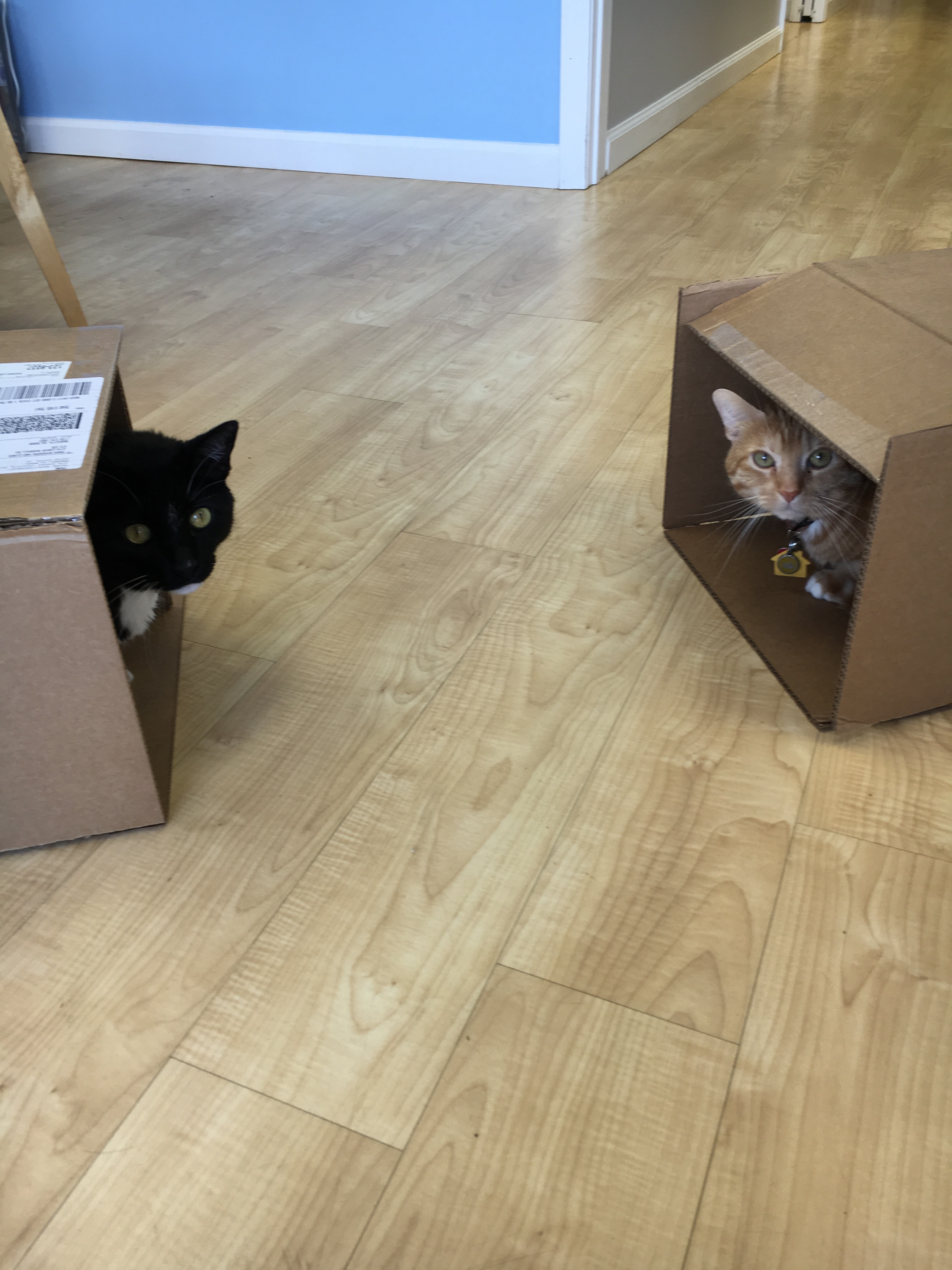
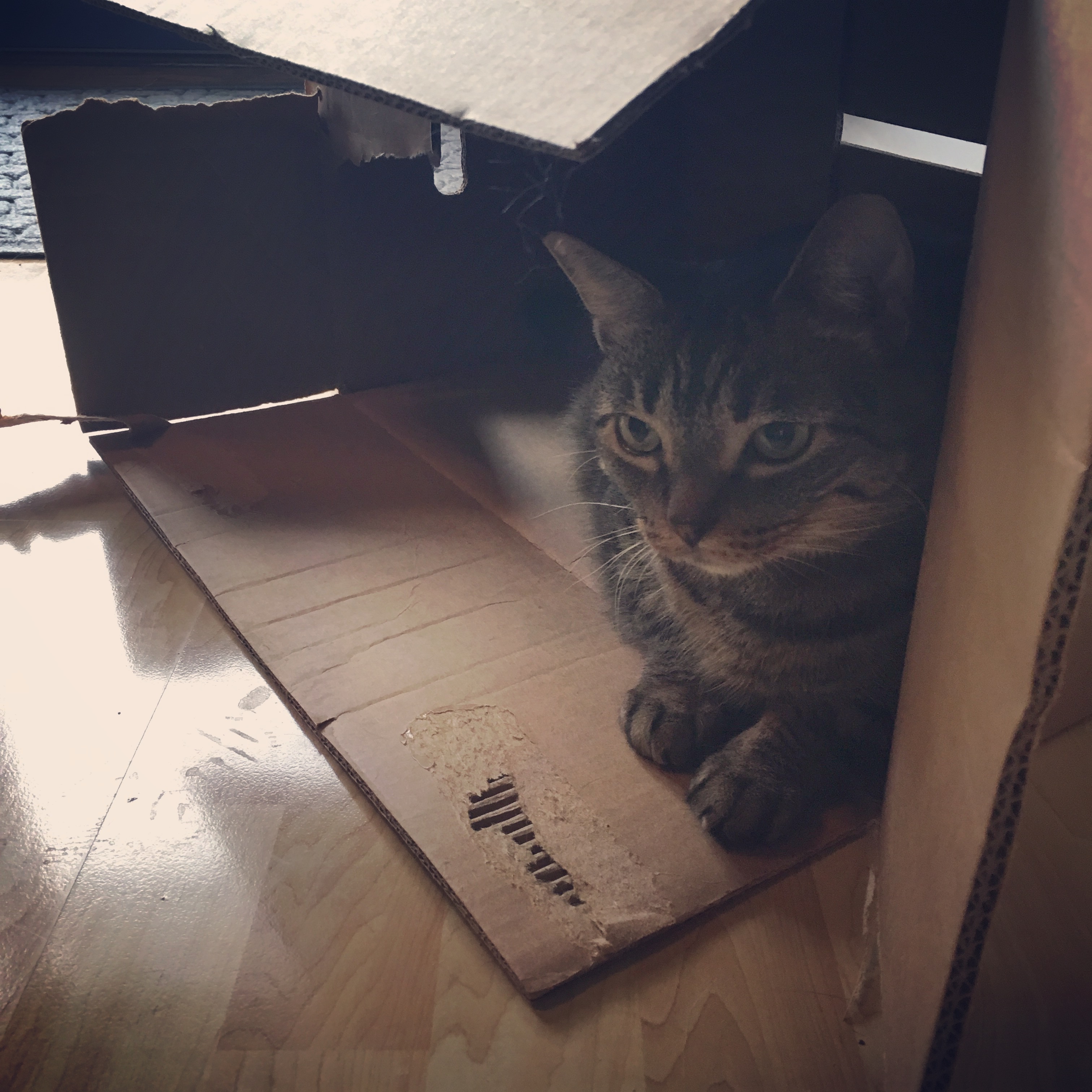
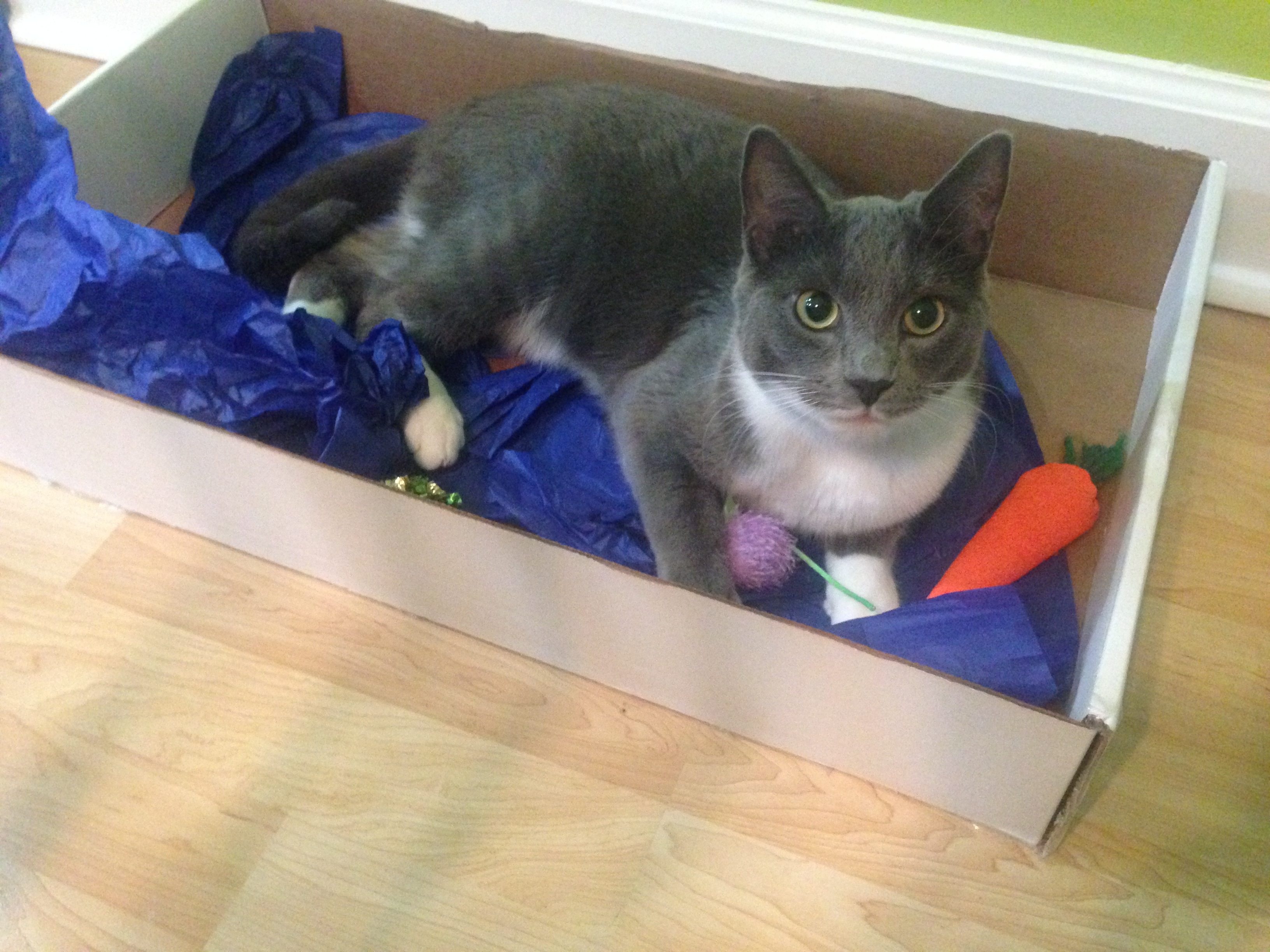
It's a hideout or cubbyhole

Cats love the security boxes provide.

Cats take great comfort in the safety and security that a cardboard box can offer. As a species that is both predator and prey they like to feel protected and "have their back."

As a predator, boxes provide a great ambush opportunity for pouncing on unsuspecting friends!

img_1307

A quiet moment alone to ponder.

An impromptu cat condo

img_4340

Boxes can stack in many configurations to create a cardboard castle for your cats.

Can't afford a cat condo?

Just moved and not sure where to put vertical space for your cats? No problem! Stack up some boxes and you are all set.

Clip them together with binder clips for stability, cut holes in them to allow your cats to climb through the different levels. You can also move them around and reconfigure to renew interest!

img_4341

A cozy bed

Fully equipped with heating pad and fleece!

Did you know that cardboard is insulating?

One of the theories as to why cats enjoy cardboard boxes so much is because when they nestle down in one it aids in maintaining their body temperature. This is referred to as maintaining the cats "thermal neutral zone." Meaning they can more easily maintain their body temperature without having to expel much energy.

Don't forget to bring your food puzzle to bed with you!

It's a fun toy!

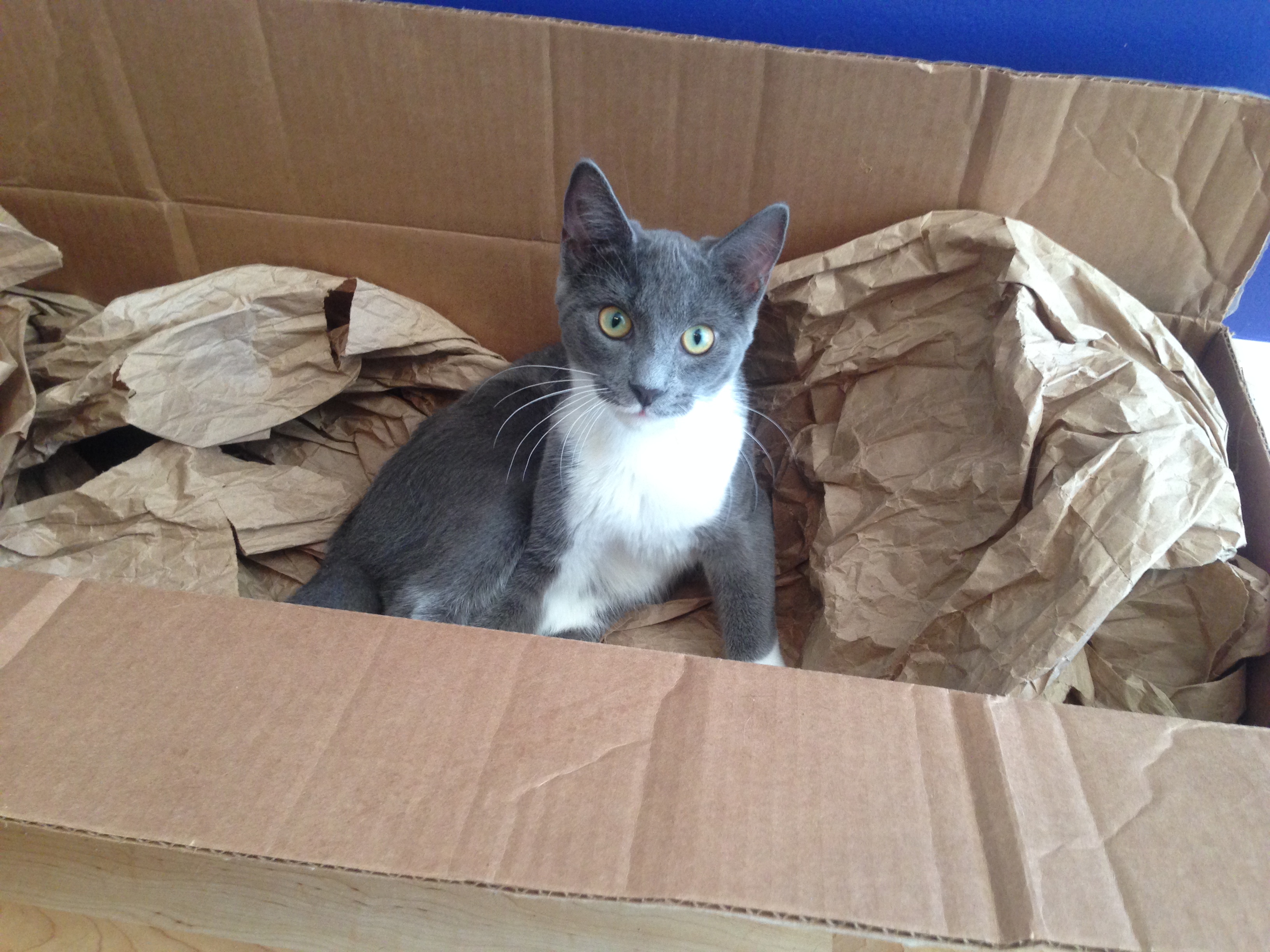
Stuffed with tissue paper and toys!

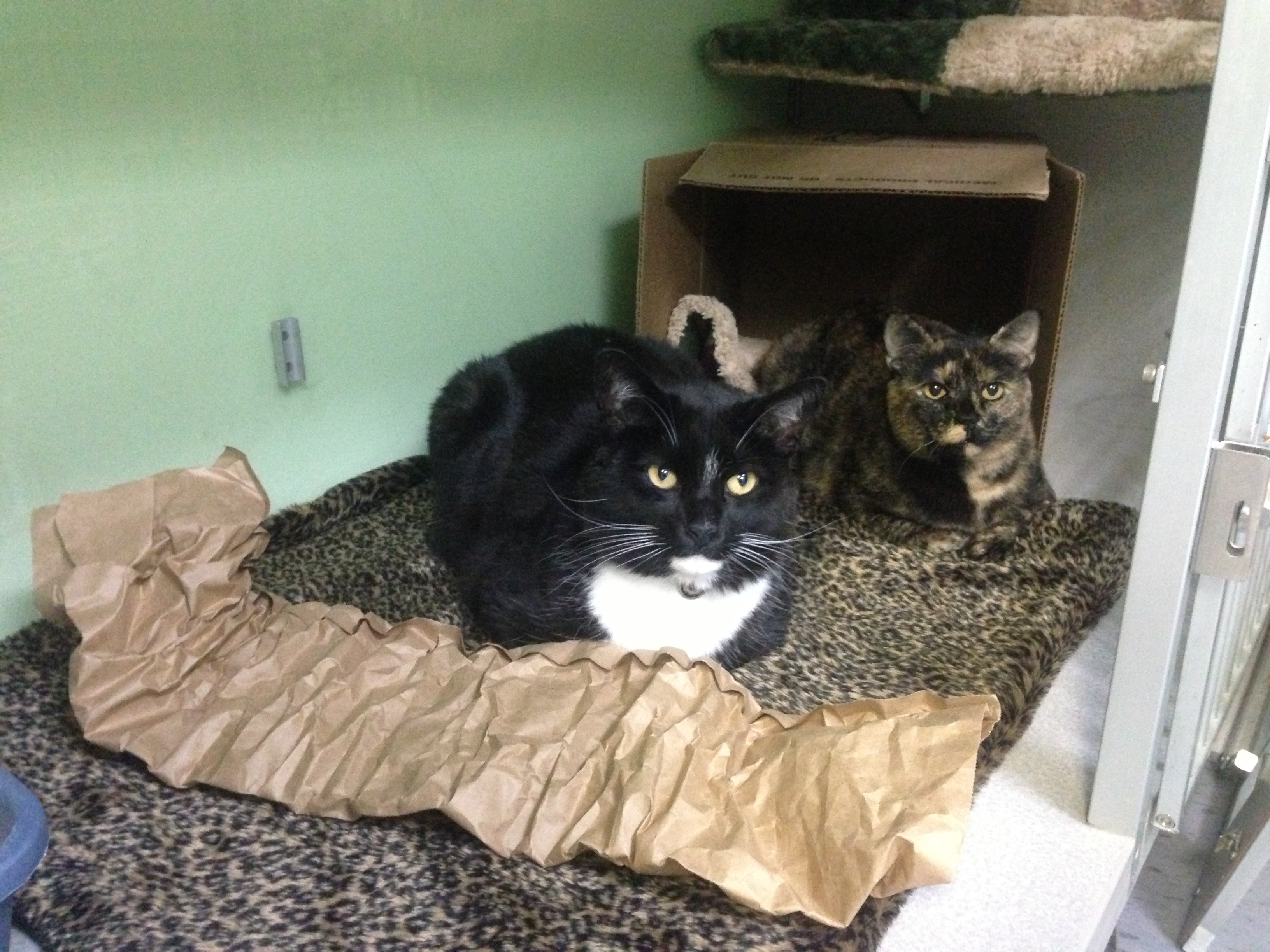
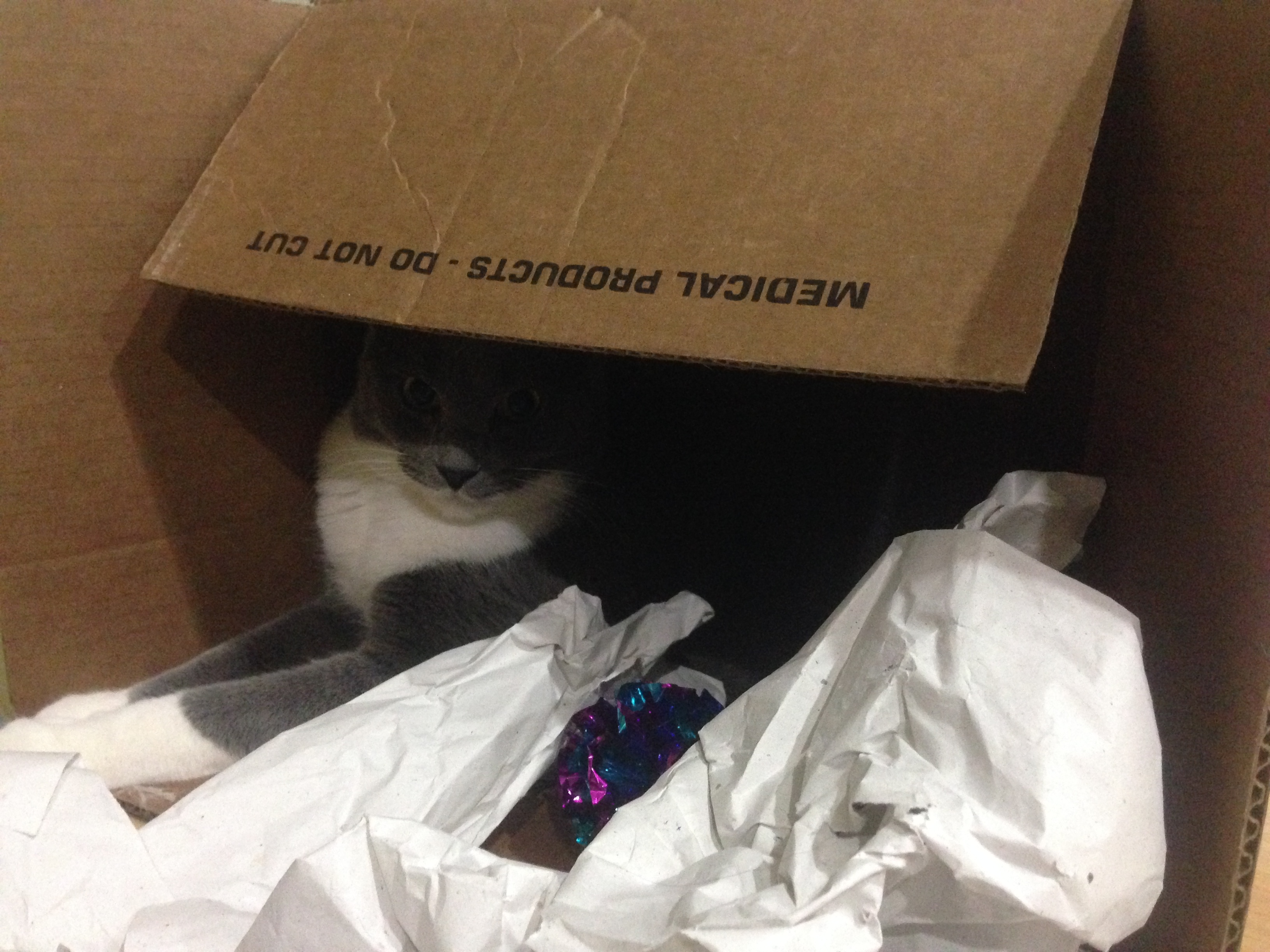
Do you have a cat that likes to shred paper? Stuffing a box with craft paper, tissue paper, even ripped up brown paper bags can be loads of fun for your cat. Especially if they like to make noise!

Drop in your cat's favorite toys, a few pieces of dry food or treats and they can go fishing through the paper for snacks and treasures.

Stuffed with crinkly packaging/craft  paper.
Stuffed with crinkly packaging/craft paper.

Use one as a food puzzle

This is a Harry and David pears box!

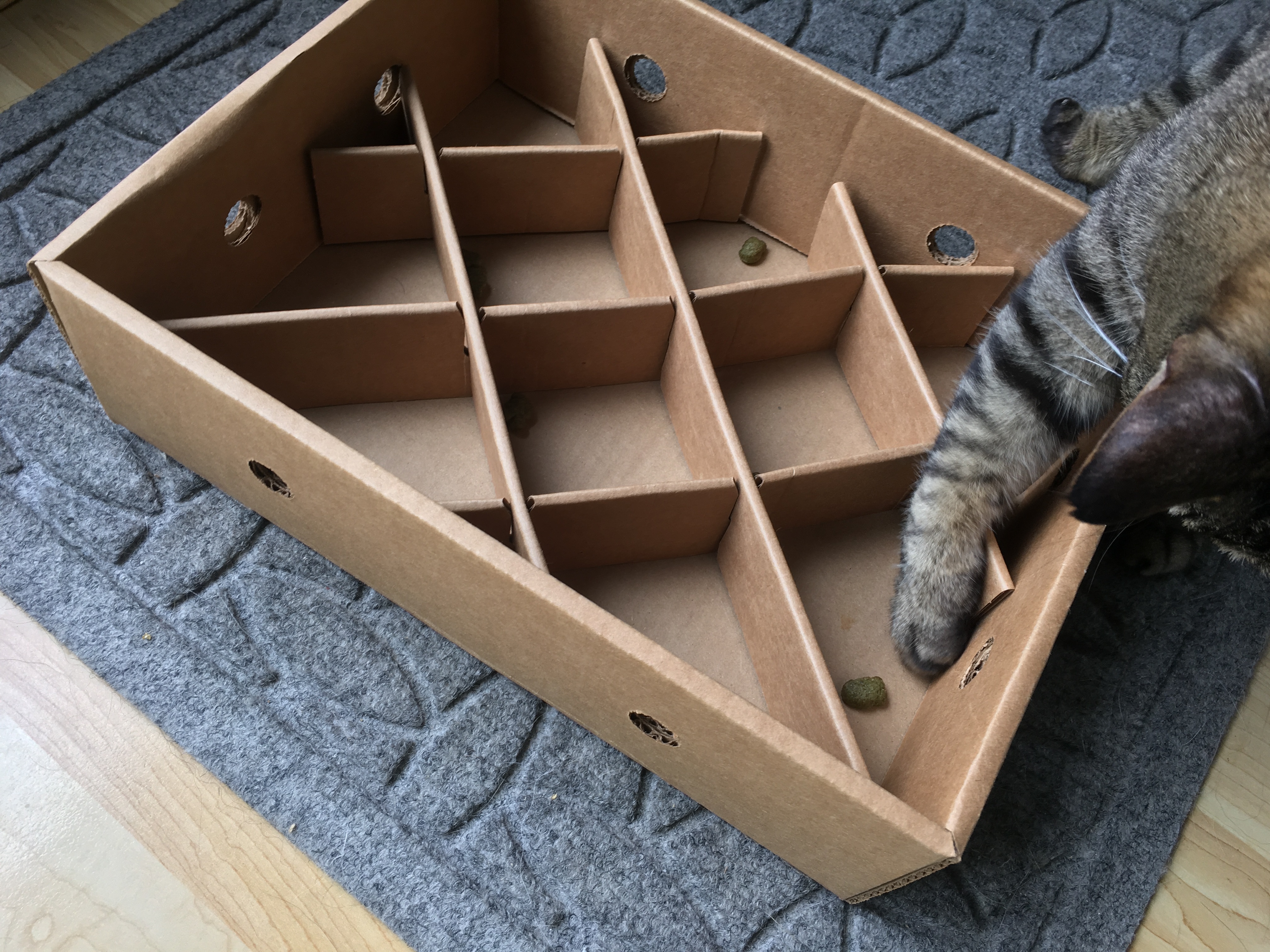
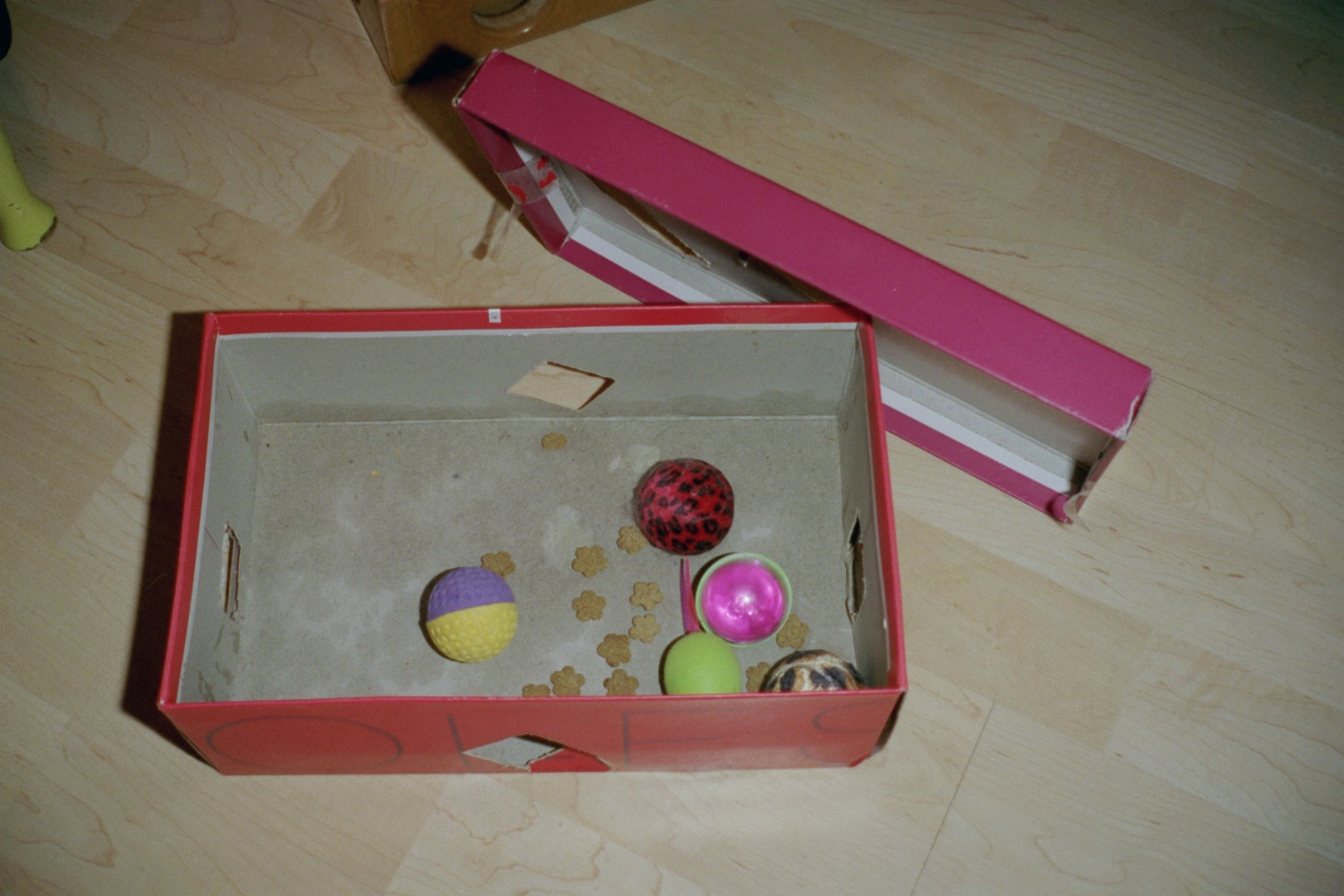
Boxes make great food puzzles!

Cut some holes in a shoe box, tape the lid on, stuff with balls and mice as obstacles, sprinkle in dry kibble or treats.

Small boxes can be a rolling puzzle. Simply cut however many holes in the box you would like, secure it closed and your cats can flip it around to obtain food.

Larger boxes can be food puzzles too.

An old shoe box makes a great food puzzle!

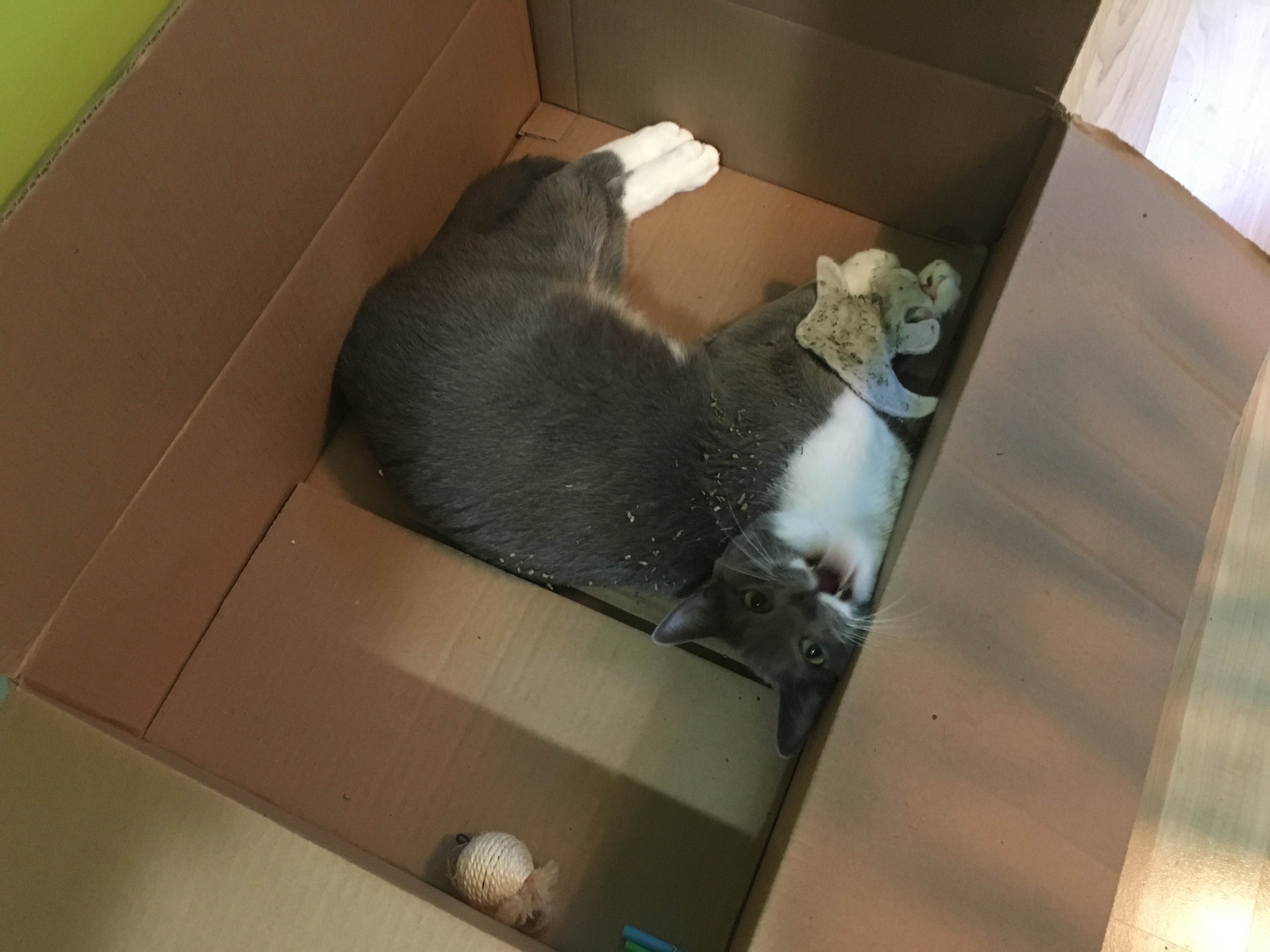
A neat and tidy way to provide catnip

img_0594

I hear a lot of complaints about how messy catnip is to provide. First of all, have a catnip party the day before you plan to vacuum or clean your floors. That just makes good sense!

A nice big cardboard box that can be easily rolled and flopped in is a wonderfully tidy way to bring the two worlds of catnip and cardboard together. Two of our kitties favorite things!

img_7771

As a tunnel

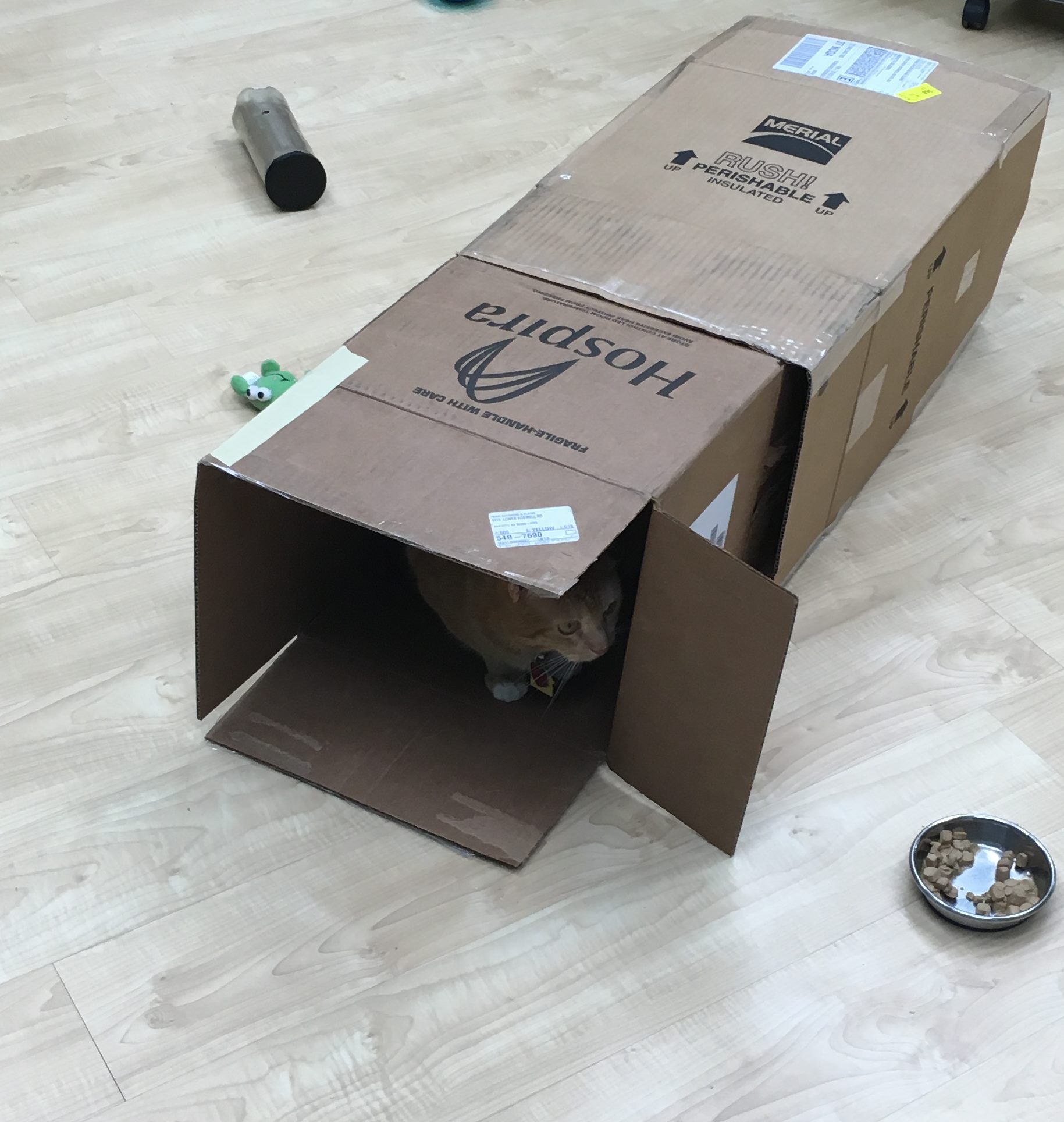
Tunnels are great for new cat safe rooms, shy cats, large open floor plans, and just for fun!

Some cats find the commercially available nylon tunnels too small or too noisy. These cardboard tunnels may be just the texture your cat is looking for! You can cut holes along the side to let in some light and for a great game of peek-a-boo.

Tunnels can be stuffed with paper and toys too!

img_6151

A perch or step for a senior

Need a window perch for your cat?

Have a senior who cannot get up on the bed or sofa anymore?

A box can help!

A large stable box can help give seniors a leg up!

img_3002

As a feline rooting box

Ooooo, I wonder what is in here!

Allow your cat to experience the scents and textures of the outdoors by creating a feline rooting box!

Fill a box with leaves, sticks, pine cones, hay, rocks, small branches, etc. The list is a long one! For added interest throw in a handful of dry food or treats and let them forage among the natural textures!

There is a surprise inside!

As a cardboard box race car

img_7961

Have you ever pushed your cat around the house in a box? Try it!

All three cats depicted here love "cardboard box race car fun." It's a blast.

Zoom Zoom!
Zoom Zoom!

img_7958

If your cat is fancy...

img_6412

For something slightly more upscale these Catty Stacks make a fantastic fort, play arena, hiding spot, window perch, cat condo, you name it! Both versatile and cute if you cannot stand the thought of traditional cardboard boxes all over your house; these are a more decorative alternative.

img_6427

Just for fun-if it fits it ships!

dsc00028

0502001224_0001

Cats love to squeeze into small spaces, so next time you get an awesome box, even if you think it is too small, give it to your cat. Let them be the judge!

img_1860

Fun, free and fantastic!

"Hell yeah boxes are awesome!"

You really cannot get much more fun for free than giving your cat boxes. My cats are never without one (or five) in the house. Rotate them out so there is always something new to explore. That being said, you may be hard-pressed to throw away an old favorite too. Both choices are good ones.

Enrichment does not need to cost much or be fancy. Give your cat the comfort and fun of a box today!

img_1858

Filed Under: Blog Tagged With: cardboard box fun, cardboard kitty crafts, creative cardboard crafts for cats, DIY for cats, environmental enrichment, feline games, fundamentally feline, indoor fun for cats

Litter boxes: get the scoop part 3! Special needs cats and handicapables!

Many senior and geriatric cats have a difficult time navigating the deep sinking, sandy material we know as cat litter. When little hips and knees do not work so well one can only imagine how challenging it can be to navigate quicksand every time you eliminate. Think about that for a minute. How many 80 year old humans go for strolls on the beach? It can be equally as tough for your 16 year old cat! This is why so many senior kitties start eliminating on carpet or hard flooring. They are seeking ground that does not move out from under their feet and is easier to navigate! Carpet is also nice and absorbent and often always clean.

It is easy to get frustrated, even mad at our cats who may be missing the litter box in their senior years but these cats simply need our help succeeding. We make accommodations for humans such as rails to grasp near toilets and we downsize to efficiency apartments or a ranch-style home with no stairs. I am suggesting that we use some creativity to better help meet the needs of our feline friends in their golden years.

Handicapped, or handicapable cats as I prefer to call them, those recovering from injury or surgery and special needs kitties also often require special accommodations. Cats that have been hit by a car and now do not have full use of their limbs can lead a full life, but they need some extra help.

In the info that follows I explain the challenges of a few special needs kitties in my life, how we accommodated them to allow them independence and dignity and I hope to illustrate to you how they thrived despite it all!
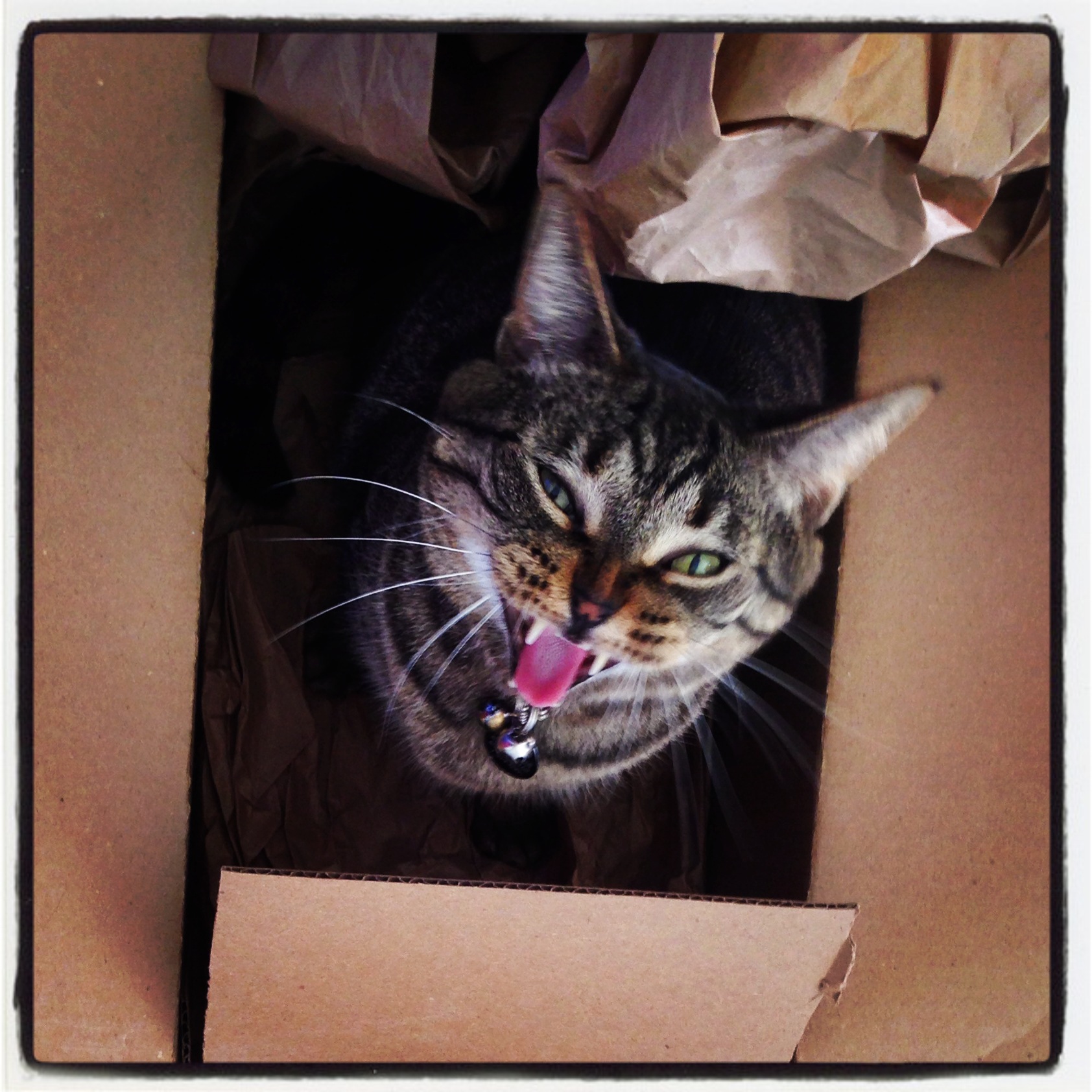
Meet Peaches!
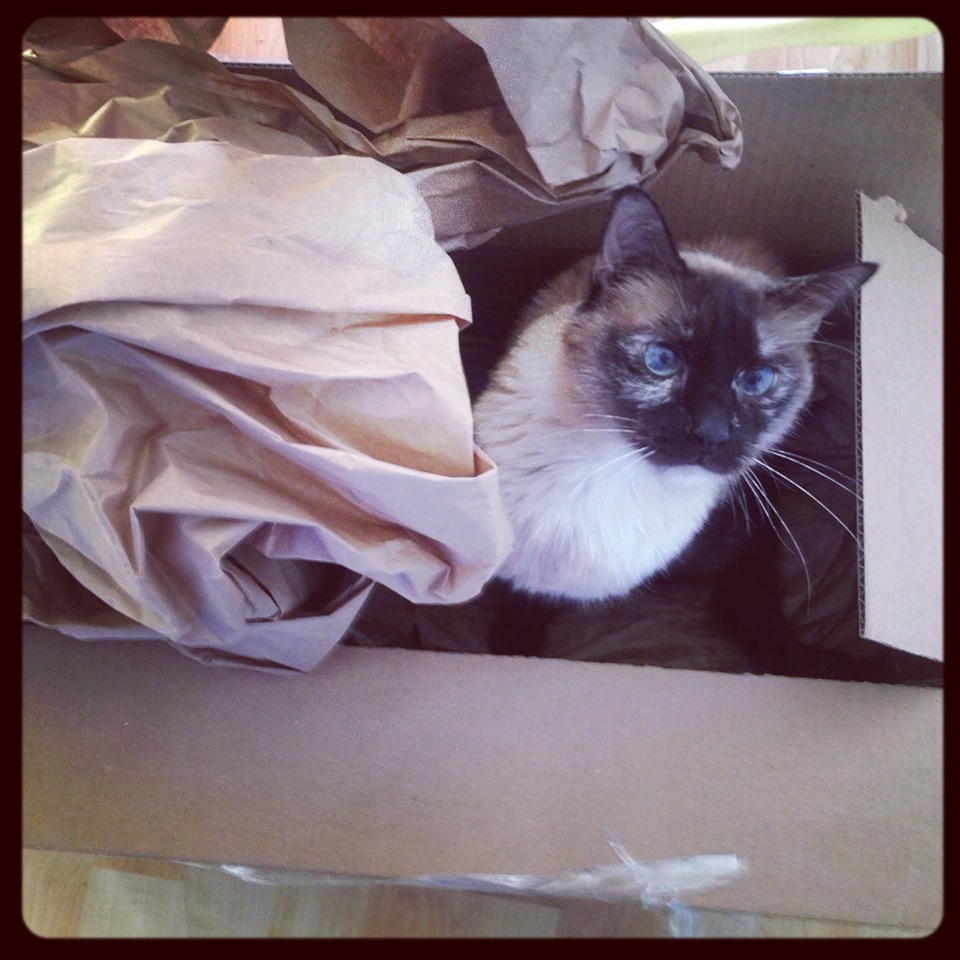
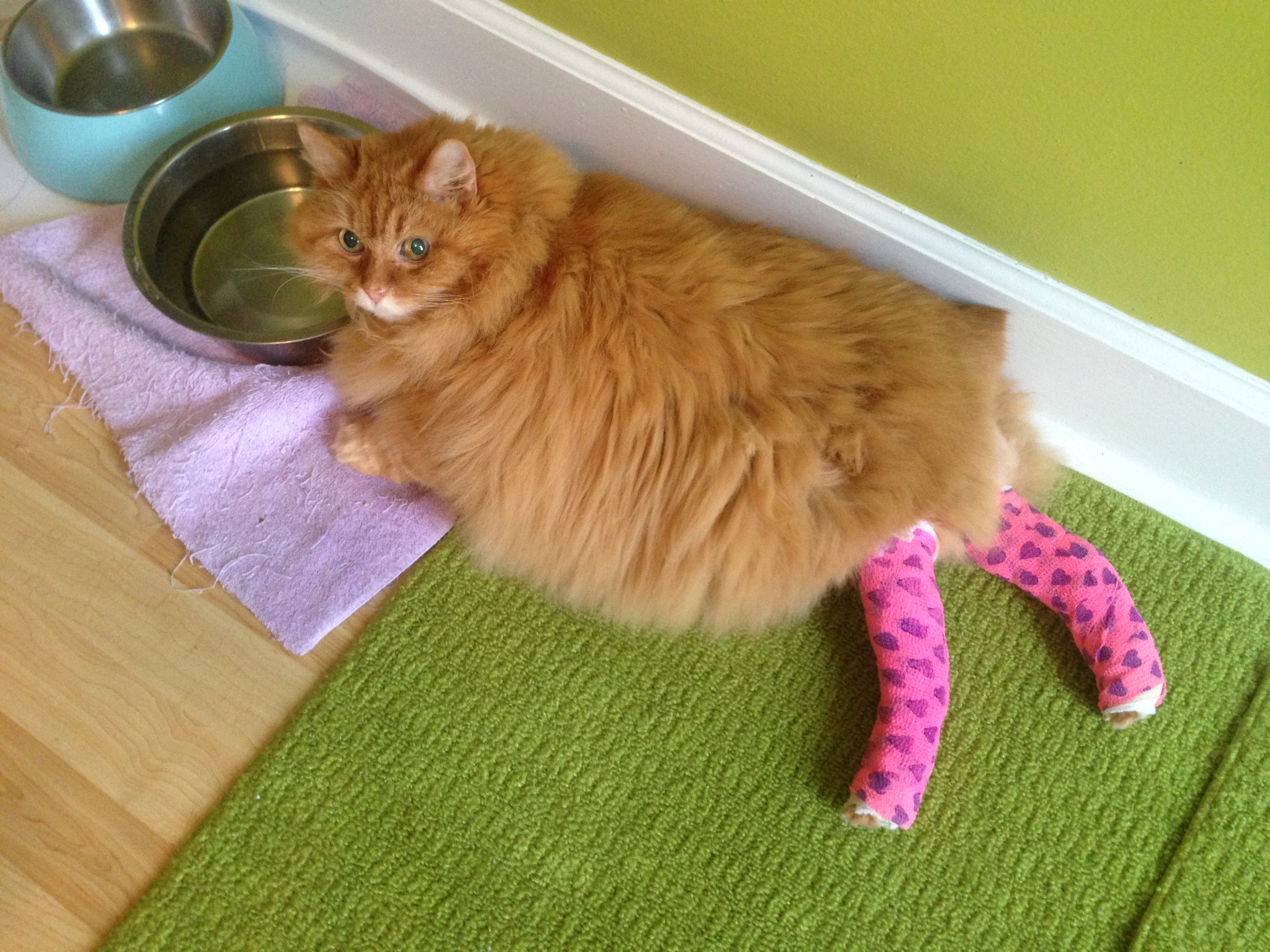
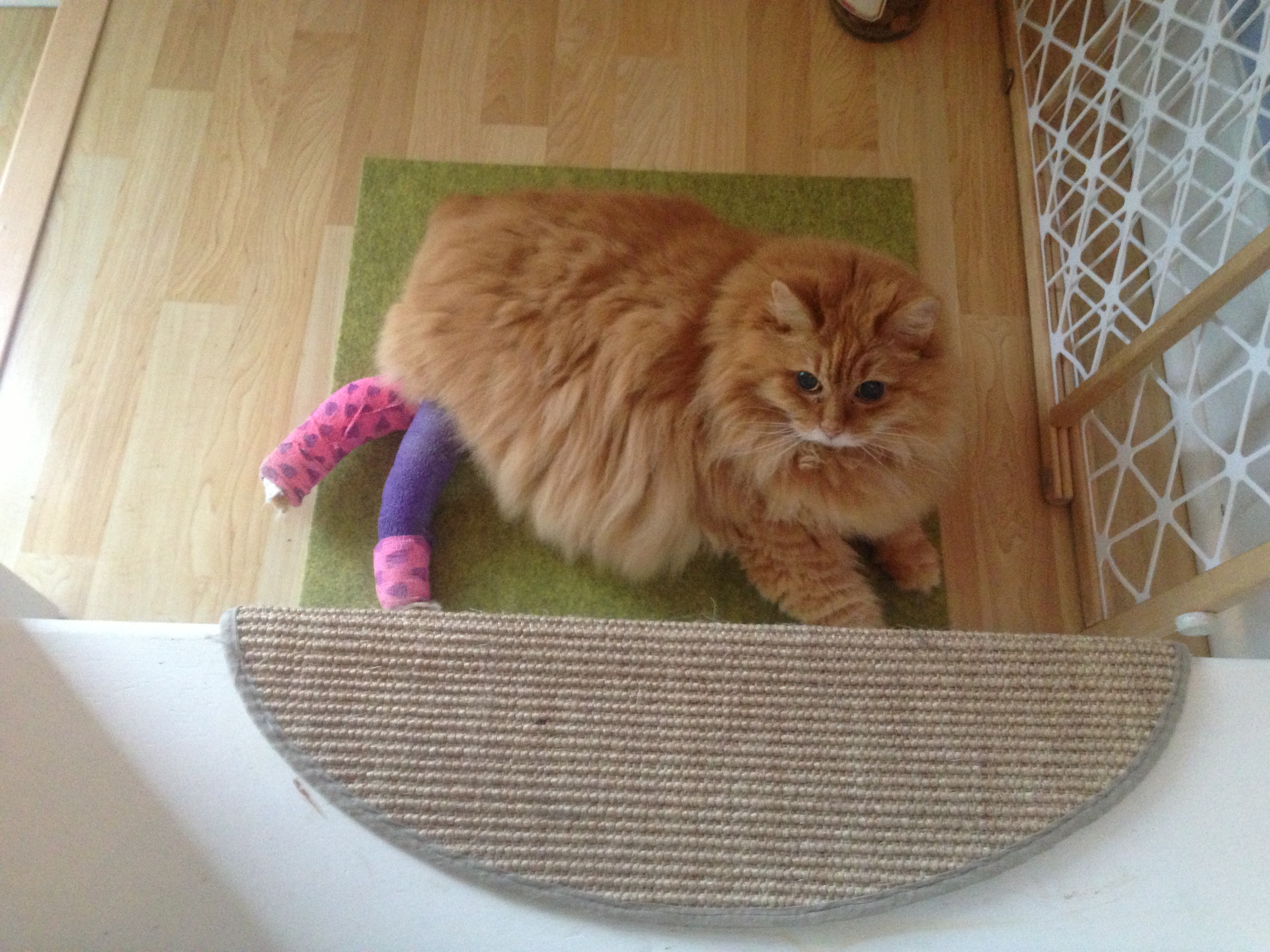
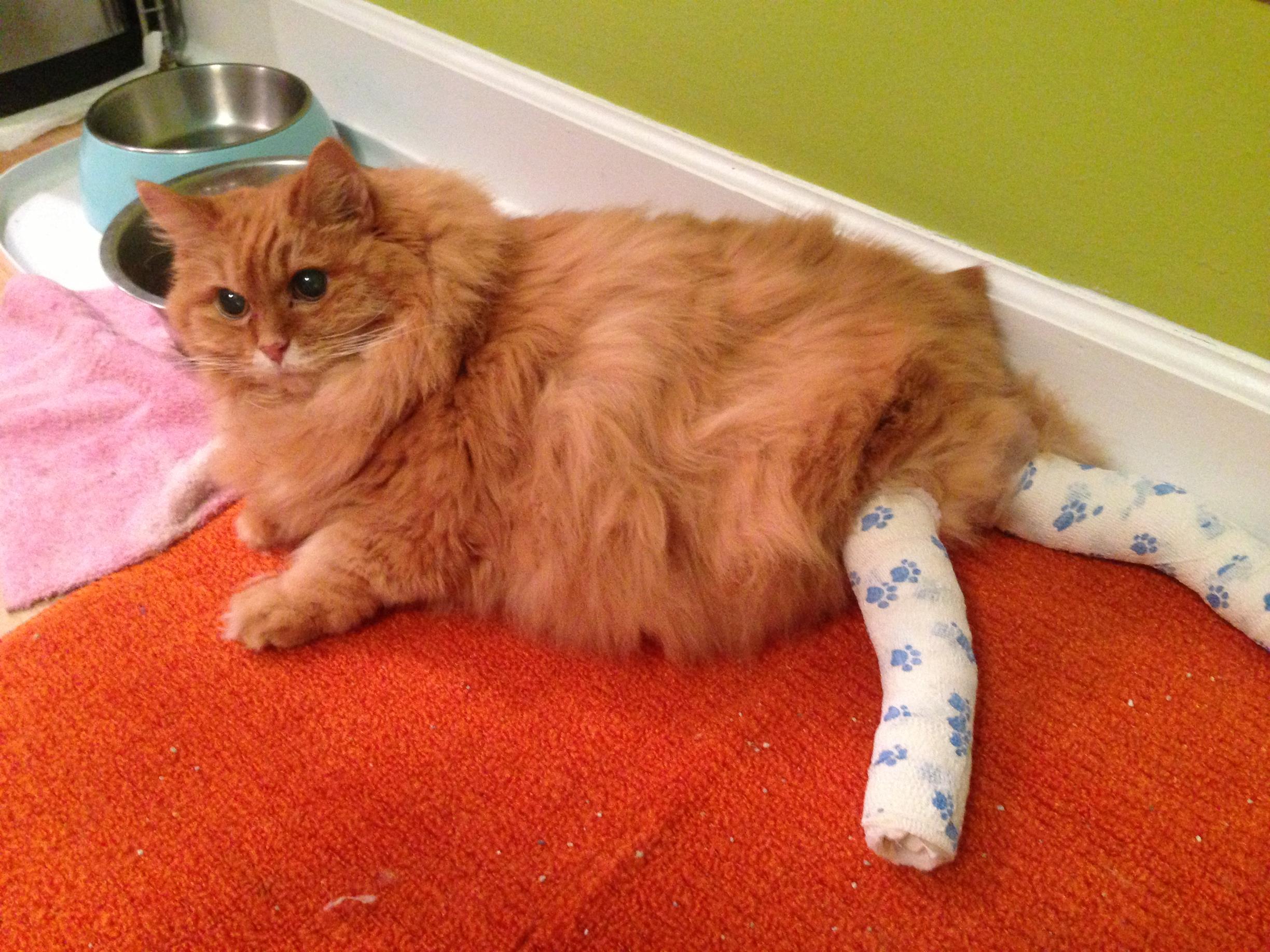
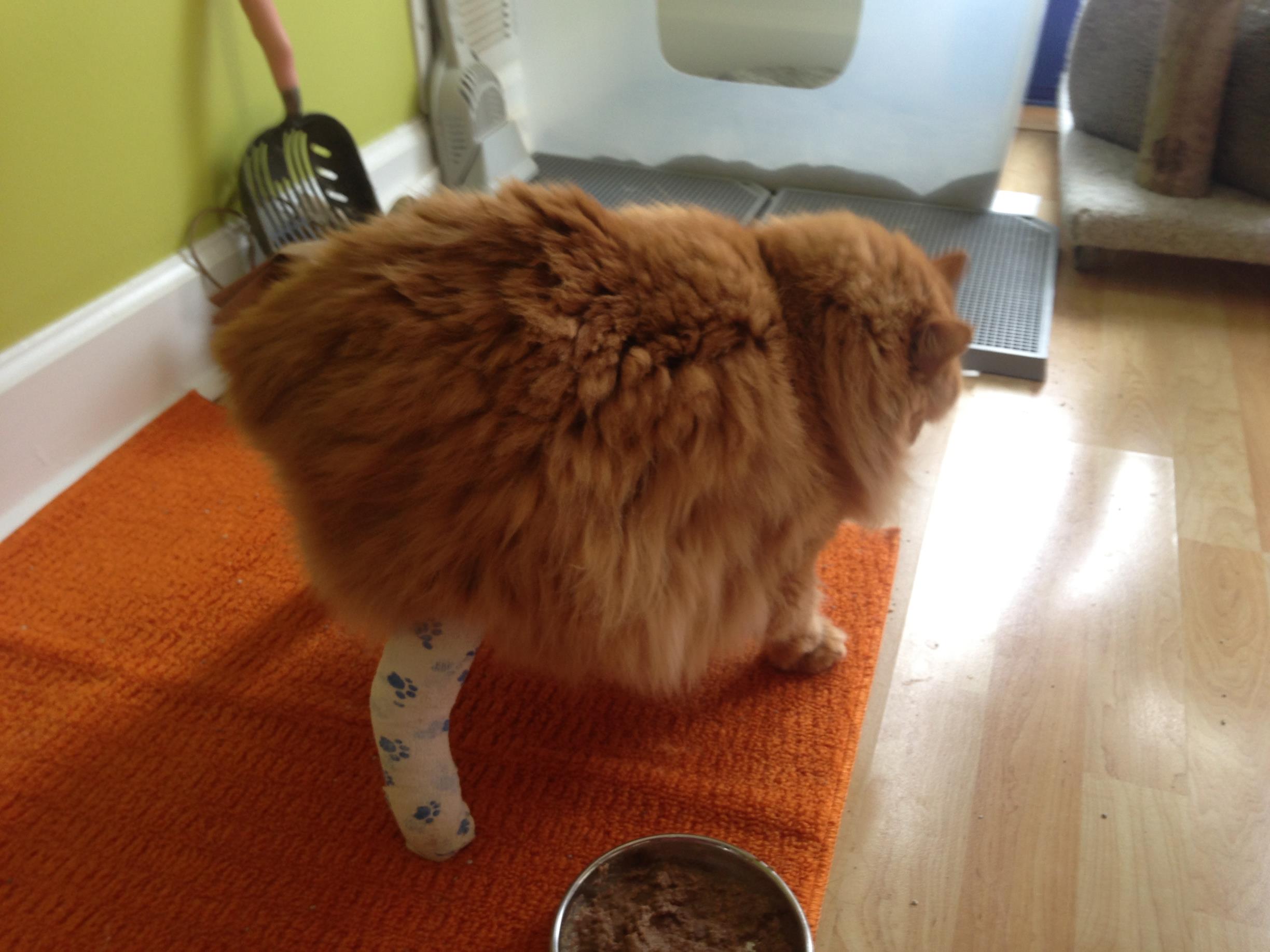
We call these her Barbie fashion splints!

Contemplating ascending stairs -quickly thwarted!

Non-slip mat beside  water bowl for easy access.
Non-slip mat beside water bowl for easy access.

Peaches is 15 years old in these photos. She had been having some soft stool and as you can imagine due to her roundness she could not easily reach to clean herself up. I gave her a bath as I had done about 2-4 times a year her entire life. This bath was different. She hopped and jumped quite a bit to exit the tub. When we were done  I set her down and realized she was unable to walk. The veterinary orthopedic surgeon said she had, "blown out her hocks" a.k.a. her ankles. She was unable to stand at all. It was awful.

So for the next 8 weeks this little lady wore double hind leg splints! Believe it or not as long as she was on texture she could walk. Towards the end as she improved she was even able to get in and out of the large storage tub litter boxes!

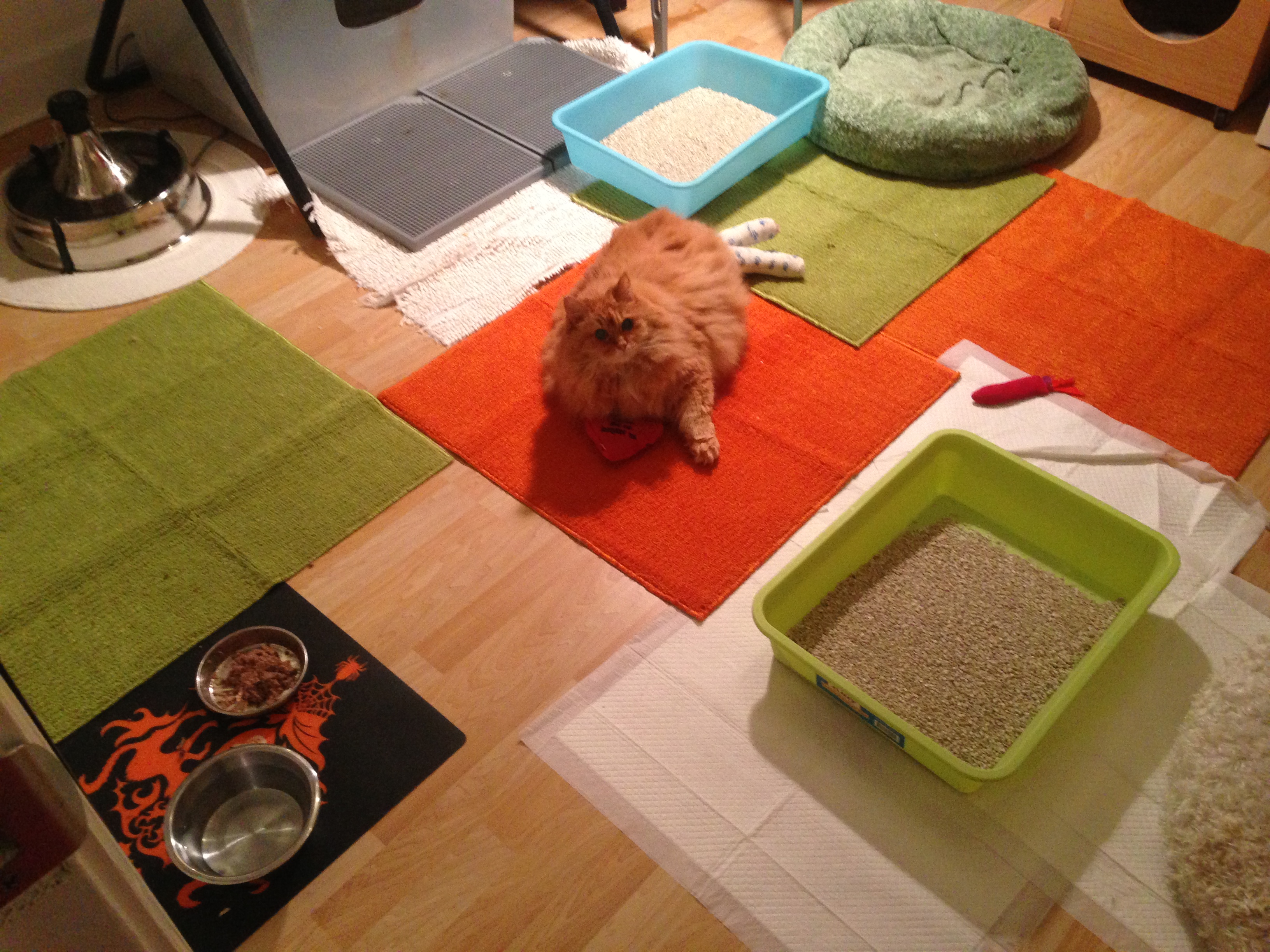
Right: Machine washable non slip mats for traction.

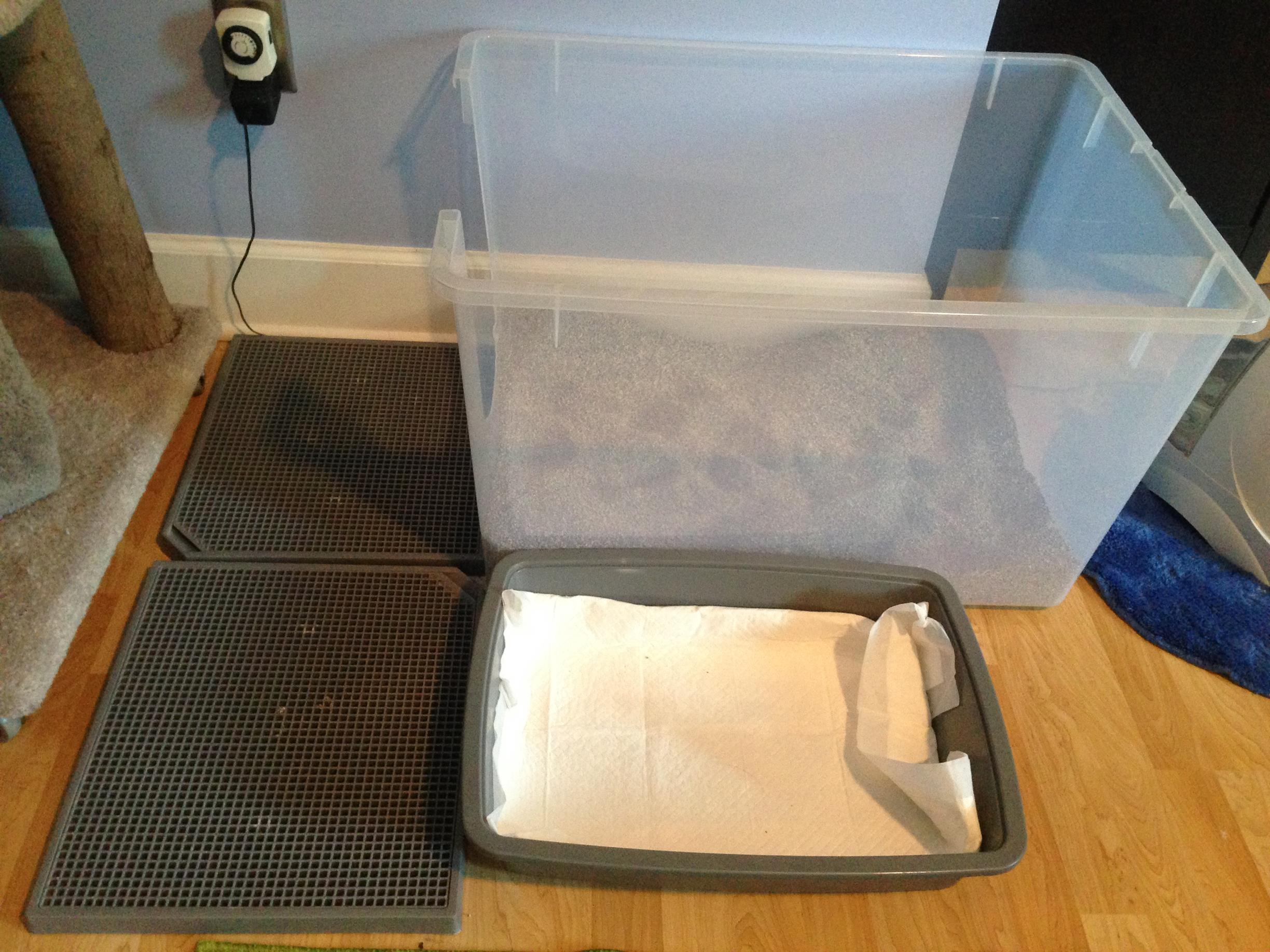
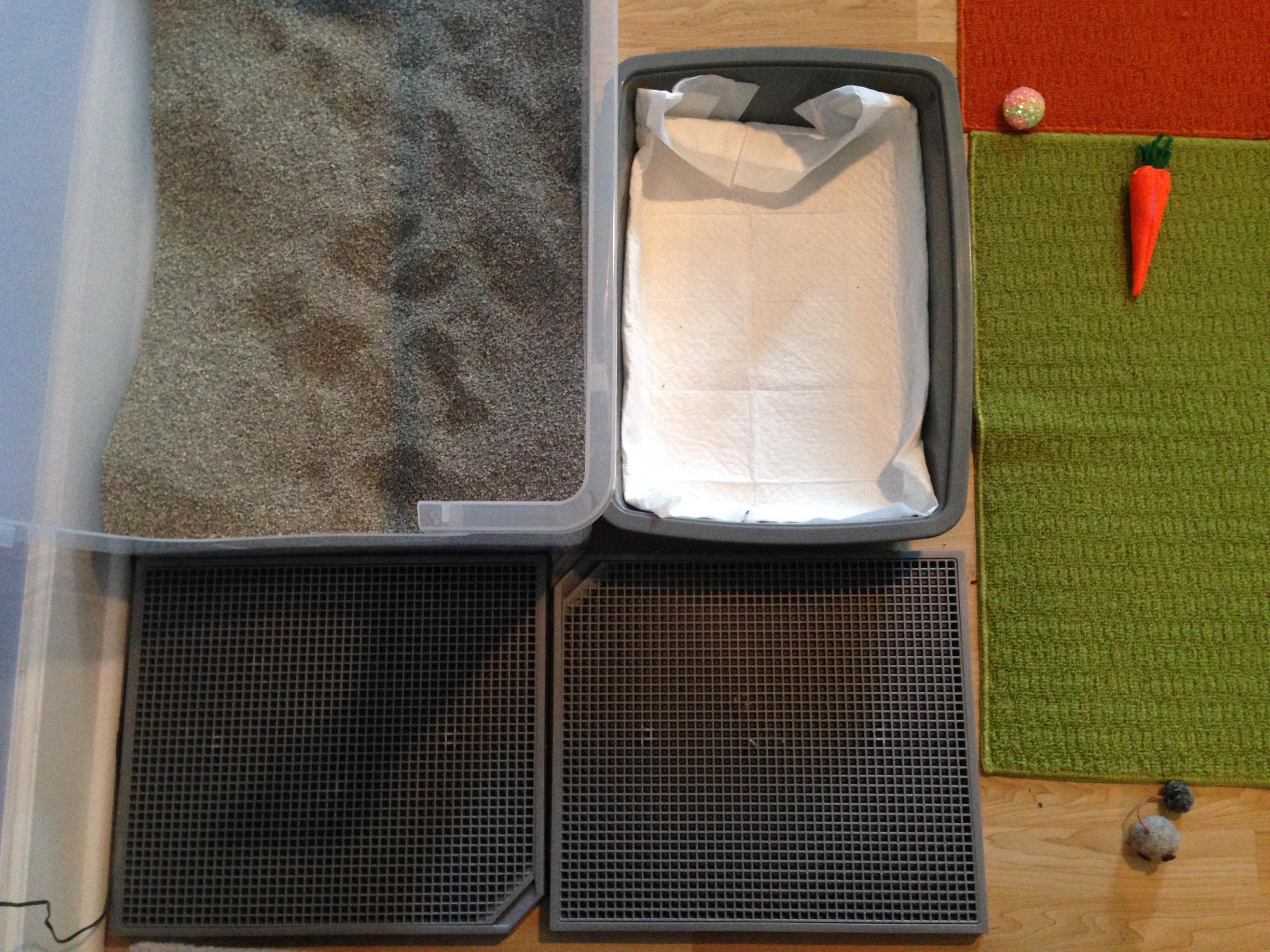
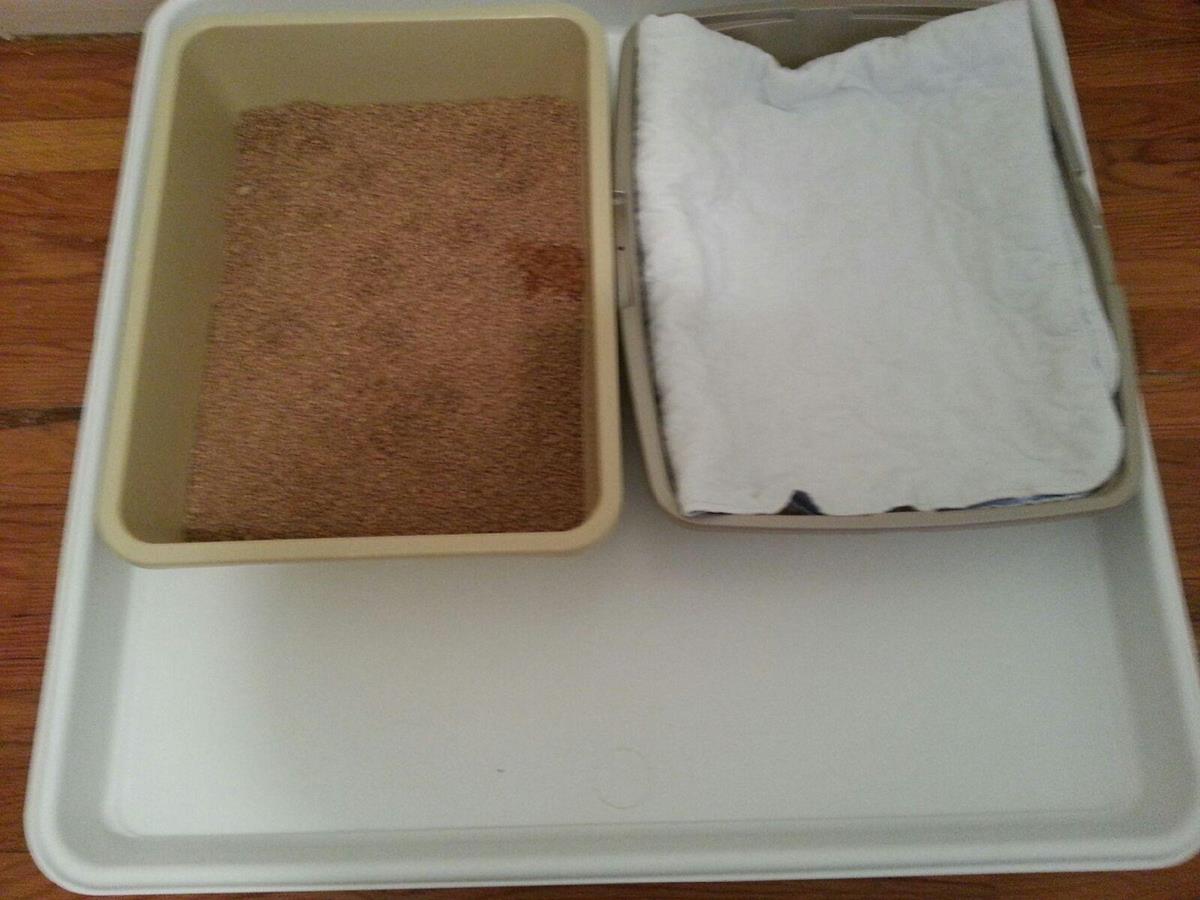
Two shallow litter pans to ease her ability to enter and exit: one with only a 1/2 inch of non-clumping clay litter and one with a puppy pad.

Puppy pads are also spread around to catch any overshoot of urine and feces (and boy was there!)

Regular litter box should she choose to use it and of course food, water and litter all close together to make it easier for her to access. These are the times where separating food and water and making them work for every bit they get goes out the window!

Plush bedding and catnip toys as well of course!

This second picture illustrates how we created a superhighway for Peaches so she could get to all of her favorite spots in the house all on her own. We made a sidewalk out of non-slip mats from Ikea!

A view of her many accommodations.

Turning hard floors into traction highways!

Up and cruisin' in her splints!

In-between splint changes - still foraging!

Peachy Cobblers made a full recovery.

IMG_0914 (Copy)

The goal is to be able to provide and meet your cats needs while containing mess to make things easier for you, the human. It is also imperative that the cats are able to maintain quality of life, have independence and go about their normal routines as best as they are able.

While sometimes confinement is necessary, especially during surgical recovery, it should be avoided for chronic conditions such as arthritic older kitties or what are they living for? Spending their last few months locked up alone in a bathroom is not quality of life for anyone. Which bring us to our next example of broken felines!


IMG_0960 (Copy)

Right: normal scratching behavior after splint removal. Remember that scratching is a "feel good" behavior, so when you see cats scratching that were sick, you know they are feeling better! This was a proud day!

The goal is always quality of life.

The special needs washing station

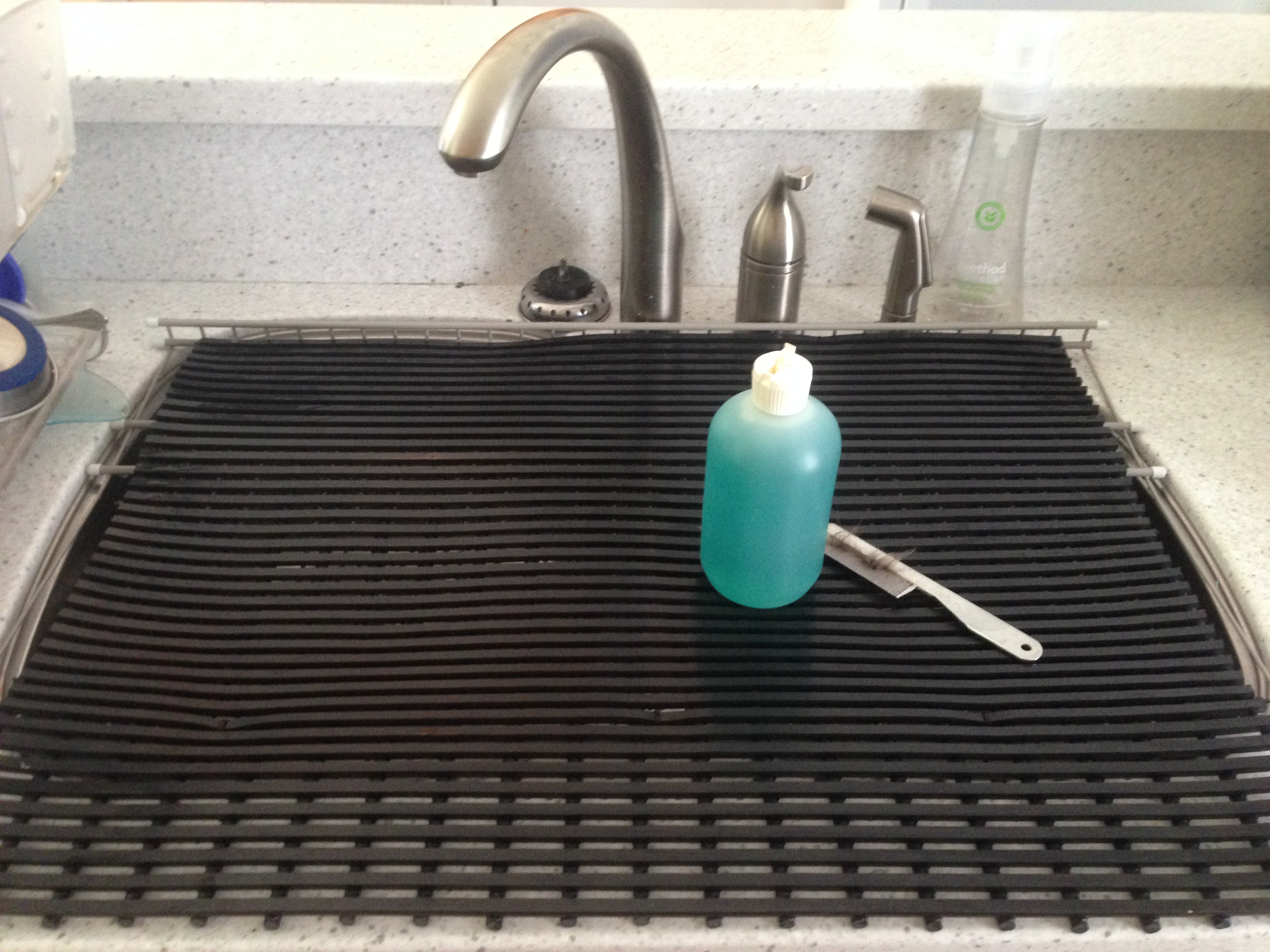
Here you can see we created a safe bathing station so that no one had to be submerged in the bathtub ever again!

Using vinyl coated closet shelving zip-tied to a rubber slatted mat we fashioned this to cover our kitchen sink. This way the cats can get cleaned up using the sprayer and the water and soap can easy drain through. They can choose to stand or lay down.

This made it so much easier to help keep the old guys clean after accidents.

IMG_2882

Meet Lefty and Vader!

Lefty in all of his hit by a car tripod awesomeness.

They were our matching set for 15 years.

Vader lost his right front leg to cancer at age six.

I have been known to say that 4 legs are "extra." Cats are amazing at going through life as tripods and their resilience and ability to overcome is second to none. However, when they become geriatric you realize just how much they do need all four legs, much more so than they did as youngsters.

My best advice, start joint support early and keep them thin so they do not have all of that extra weight to carry around.

Lefty and Vader were both front leg amputees. Cats bear more body weight on their front limbs so this is a more challenging amputation than if they were missing a back leg. These guys were no strangers to face-planting in the litter box, stumbling entering and exiting the box and from time to time needed some help getting cleaned up if they could not get out of the way of their own mess. (See above washing station)

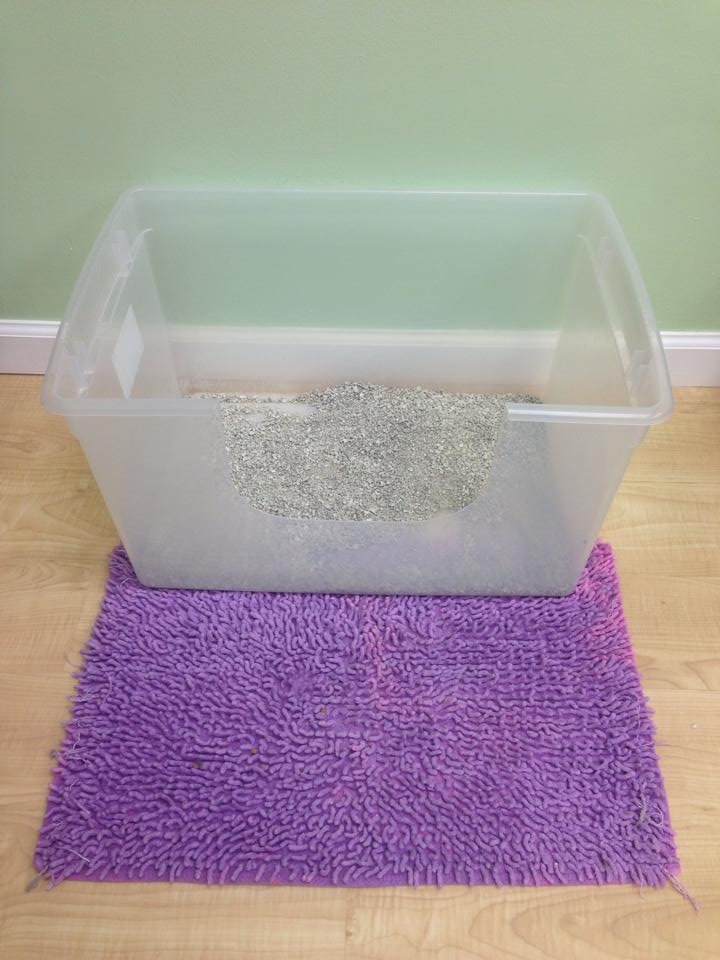
As the years progressed we had to modify more and more. Initially, simply cutting the large storage tote litter boxes down extra low was enough to ease their ability to access the litter. This of course meant more litter scatter and tracking mess but that was a small price to pay to allow them dignity and independence.

IMG_2187 (Copy)

IMG_2186 (Copy)

Explanation of the photos above:

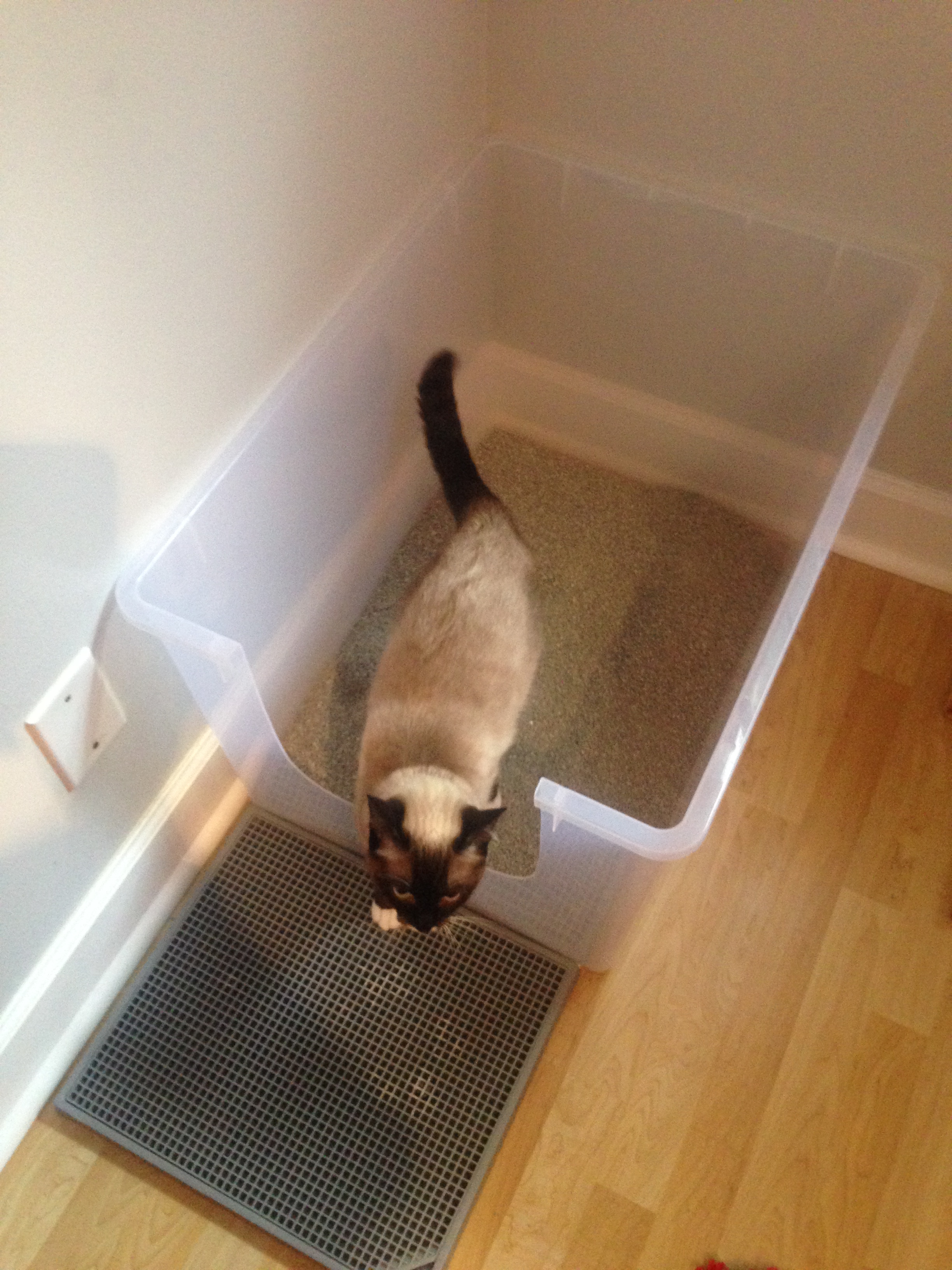
Large storage tote litter box cut extra low to ease entering and exiting the box.

Shallow amount (~ 1-1/2") of litter so the cats do not sink as low and do not have to work as hard to move around.

Step out mats with puppy pads underneath to catch any overshooting from the box. It is important to place the pad partially under the litter box and partially under the step out mats for maximum urine collection. Arthritic cats cannot squat as low so they often eliminate over the sides of the boxes by accident. These step out mats were also perfectly acceptable elimination locations in my opinion. If they chose to pee on the step out mats I saw this as compliance. You must have realistic expectations!

Shallow puppy pad box offered beside litter box as a soft and absorbent option. Puppy pad use, whether in a pan, on the floor, etc. is also compliance. Whatever is easier for the cat to use and still easy for the human to clean up can be an acceptable alternative.

A view of the whole set up & the washable mats for traction & easy clean up!

Still foraging at 15 with only 3 legs!

Vader had another special need. He had asthma. For those of you that have been following along regularly for years you may recall that Vader is the cat that saved our home from burning to the ground when it caught fire. You can read Vader's heroic tale here.

In his later years he would, quite sadly, cough so hard sometimes he would "pee his pants." He couldn't help it and he did have bladder control, he would just have coughing fits and urinate. And yes, of course he was on medicine for his asthma!

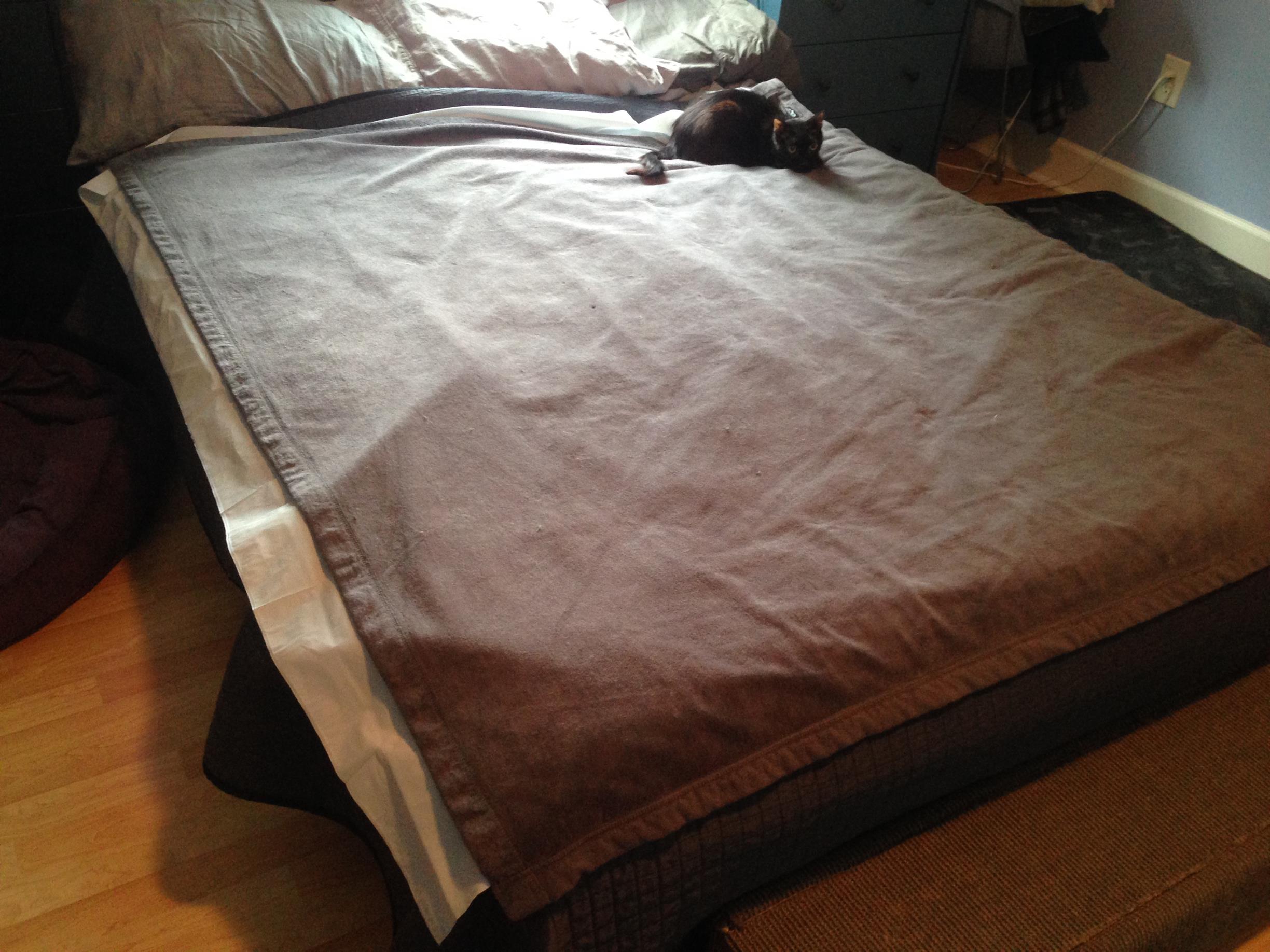
You can imagine the dilemma in that Vader's favorite place to be was on our master bed! The photos below show how we managed the problem. Each morning we would make the bed, cover it with an inexpensive shower curtain liner and then a washable, soft, fleece throw. Vader could still have his favorite spot, he was still comfortable, but our bed was protected. How could we possibly confine him away from the bedroom after all he had done for our family?

Similarly we would cover cat beds with a puppy pad and then lay machine washable towels, blanket etc. on top for maximized coziness. This did wonders for salvaging our pet beds. This is also a great trick for many old cats for a myriad of reasons. You can allow your seniors to enjoy their favorite napping spots by placing puppy pads on chairs or sofas with an attractive throw over top to protect furnishings from vomit and other accidents.

An appreciative boy still sleeping in his favorite spot.

The bed covered with shower curtain liner as described above.

Vader with littermate Simon on a puppy pad covered bed with towel over top.

Meet Wheels!

jake 263

Wheels was hit by a car when she was only a few months old. She was permanently paralyzed and we expressed her urine and feces multiple times a day. Some people might say, "why would you keep a cat like that alive?" Wheels didn't care that she couldn't use her legs, she didn't worry about what she looked like or if anyone was going to make fun of her. She had amazing quality of life, played with toys, loved catnip and was a master forager. That cat could get food out of anything. But she needed help with the litter box...

Wheels
Wheels

IMG_3695 (Copy)

One of my all time favorite litter pan alternatives is featured here, an under the washer/dryer drip pan available at your local Home Depot or Lowe's. These are shallow, huge and easy to navigate. They can be used on their own or combined to create options as shown here. They can be offered with litter, shredded newspaper, shredded paper towels or just plain. Great for arthritic old seniors too!

Cats like Wheels can often scoot themselves into a box to eliminate, but what they will prefer to eliminate on will be different for each individual. Also, some handicapable cats can get around better than others. Litter may be too messy for some so a puppy pad option as shown here can used instead. It is soft and absorbent and will help keep the kitties clean.

Able to get up and down off of sofa all by herself!

Euthanize? I think not! As you can see here Wheels could get around. She could climb stairs, get up on furniture, even jump out the window onto the screen porch.

If you are willing to give a special needs kitty a chance, just know that they will need some unique accommodations. With a little ingenuity and creativity you can give them a chance at an amazing life.

Napping in the sun with her fave mouse toy.

Filed Under: Blog Tagged With: arthritic seniors missing the litter box, elimination outside the box, handicapped cats, Inappropriate elimination, injured cats and litter boxes, litter box avoidance, Litter boxes, old cats and litter box issues

Litter boxes: get the scoop part 2! What should it be filled with and how often should it be cleaned?

This is part two in a series about litter boxes where my goal is to change the human perception that litter boxes have to be gross, smelly and unsightly. They do not have to be. 

In this post we will explore different types of litter to offer your cat, how often you should be cleaning their box, what you should be using to clean it, and how often the box itself should be replaced.

That is correct, your litter box should NOT be around for the entire life of your cat contrary to common practices!

Please join me in being the change cats so desperately need and let's make their litter box the cleanest and nicest boxes in town!

IMG_4579

To clump or not to clump, that is the question.

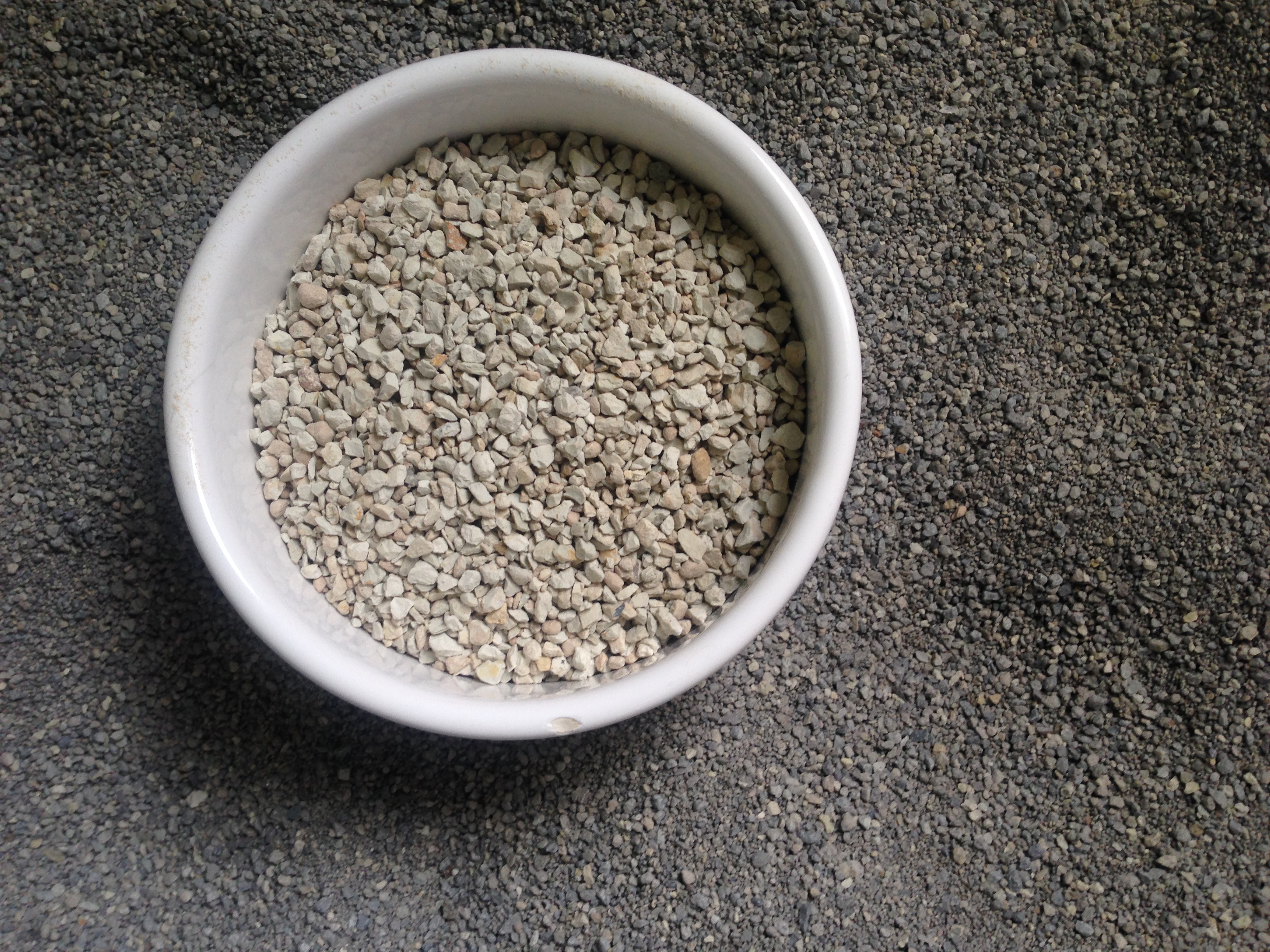
If clay, non clumping litter is selected about 1-1.5 inches of litter should be offered to cover the bottom of the pan thoroughly. It is difficult to scoop out urine, though a children's sandbox shovel can work nicely. Because it is non-scoopable it is recommended to dump the entire box daily. 

Unfortunately, most humans that use this type of litter only scoop out the fecal material and then stir in the soiled, urine soaked litter. This is NOT an acceptable way to maintain the litter box. 

To the cat, the entire box is now soiled and there is not a clean place to step. This is very much like us using a public toilet that is not flushed and has pee on the seat. You would go to the next stall wouldn't you? Well, your cat can't, so they choose the dining room carpet instead! After all, it is soft, absorbent and always clean.

IMG_2988

An example of a box with a shallow amount of clay litter to be dumped daily.

Clumping litter is preferred by the majority of cats and their humans. But cleanliness can still be a huge issue. Cats do not ever want to have to step on urine or feces to go to the bath room (See Part 1 of this series about size and number of boxes).

Clumping litter allows for easier removal of waste and you can provide the preferred litter depth (for most cats) of about 3-4 inches.

Let's talk litter depth for a minute. Too deep is well, too deep and cats don't like to feel as if they are navigating quicksand. This is especially important with seniors!

Too shallow leaves the box gummy and gross and can make it difficult for the cats to leave the box without soiling their paws.

Adjustments may need to be made based on individual preferences, handicaps, disease processes etc.


All litter should be scooped daily,
twice daily is better.

Alternative substrates: thinking outside the box

While some cats will use whatever you offer others have distinct substrate preferences. A cats paw pads are extremely sensitive and some textures may just not feel good to a particular individual. 

For the most part cats prefer the softest texture you can provide. Sadly, there are many products on the market made for humans and not cats and they are too hard on their delicate feet. Litters to avoid include: pine nuggets, newspaper pellets, hard plastic crystals. These litters are designed by and for humans and in most cases do not appeal to cats. 

IMG_4582

Alternative Substrate Ideas:

  • Puppy training pad
  • Empty pan (no litter at all!)
  • Shredded paper or paper towels
  • Sandbox sand
  • Sterile potting soil
  • Carpet scraps/washable bathmats

*This list is for cats that have already decided that traditional litter is not something they are interested in using. 


A word of caution...

Abruptly changing your cats' litter is very stressful. There is a scientific way of going about solving these problems which allows your cat to make a behavioral choice. If your cat is not using their litter box and you would like help, please complete the behavior questionnaire for a consultation and I will help you through this process in a way that will give you the best possible outcome. 

So how often should you dump and scrub the box and what should you use to clean it?

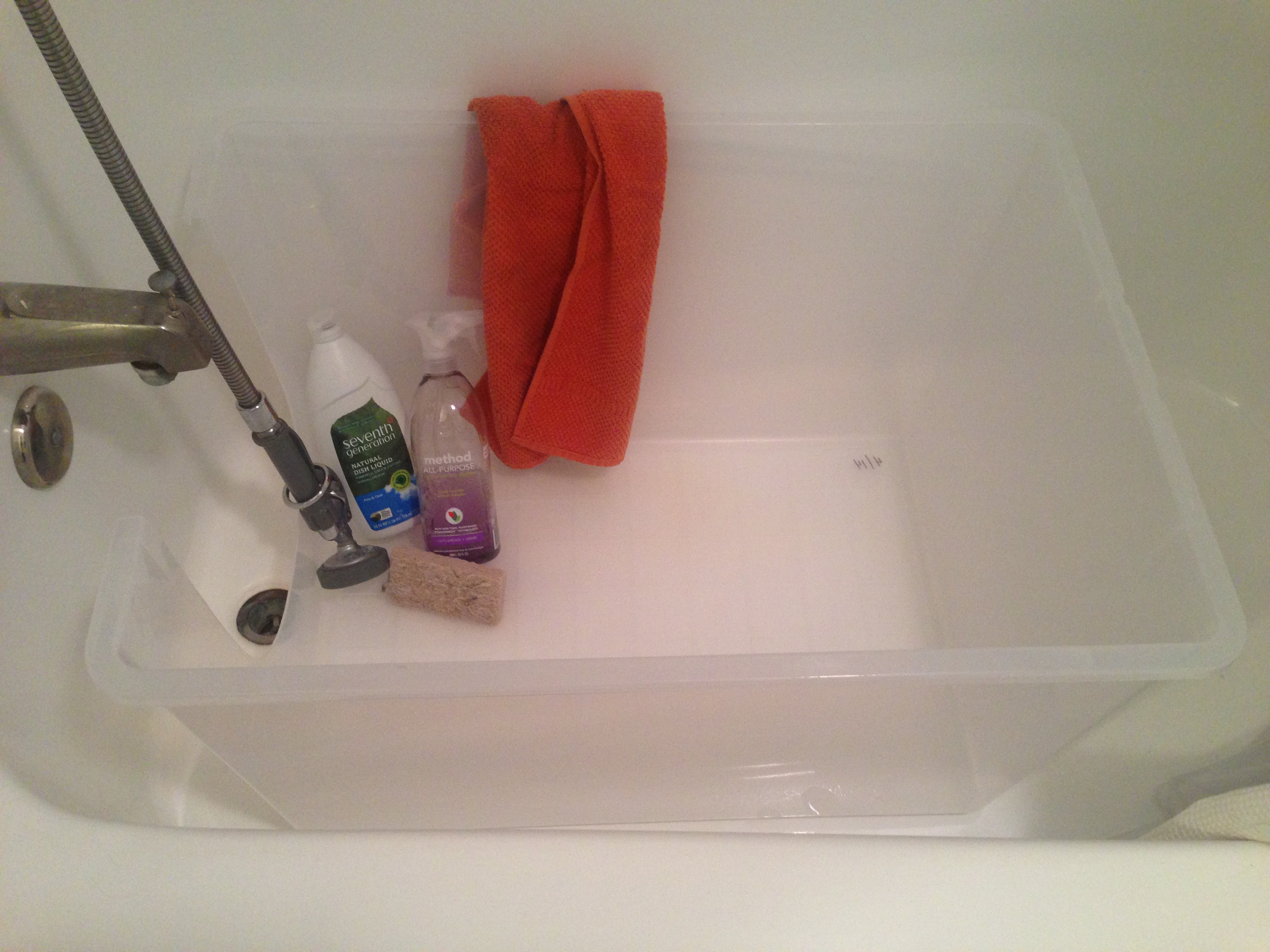
If using clumpable litter I recommend that you dump and scrub all boxes on average every 4-6 weeks. This will vary based on the number of cats, number of boxes and the frequency of use. (Hint: the more boxes you have the cleaner they remain for a longer period!) Use unscented dish soap or at least a scent cats like such as lavender or honeysuckle. Cats hate the smell of citrus so stop washing out their litter boxes with lemon scented dish soap if you would like your cats to continue to use their litter box! I like to scrub with hot water in the tub but allow the sun to dry them when weather permits.

If using clay litter and only providing a shallow amount since it needs to be entirely dumped daily, it should be scrubbed out at least once a week. 

If using a puppy pad, empty pan, or one of the alternative mentioned substrates that do not clump the box may also need to be entirely washed more often. 

This is what a dirty litter box looks like in my home. Note: not that dirty is it?

How often should I replace my litter box?

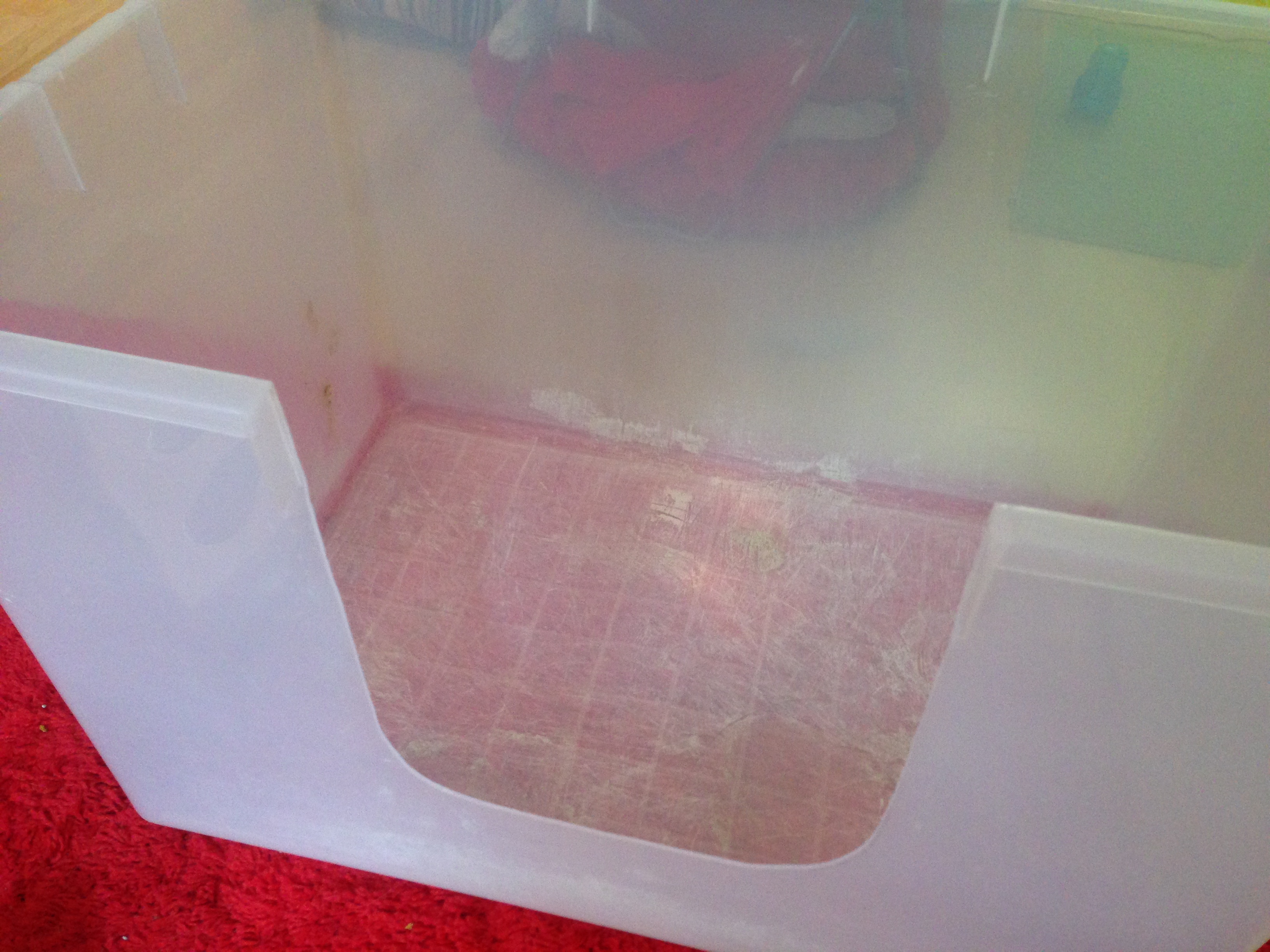
See all of those scratches on the bottom of the box in this photo?

Plastic is porous and harbors odor and bacteria which is why the litter box should be entirely replaced every two years!

Both the cats' nails and the litter granules scratch up the interior of the box and no matter how much you clean it, to your cat, it still smells yucky!

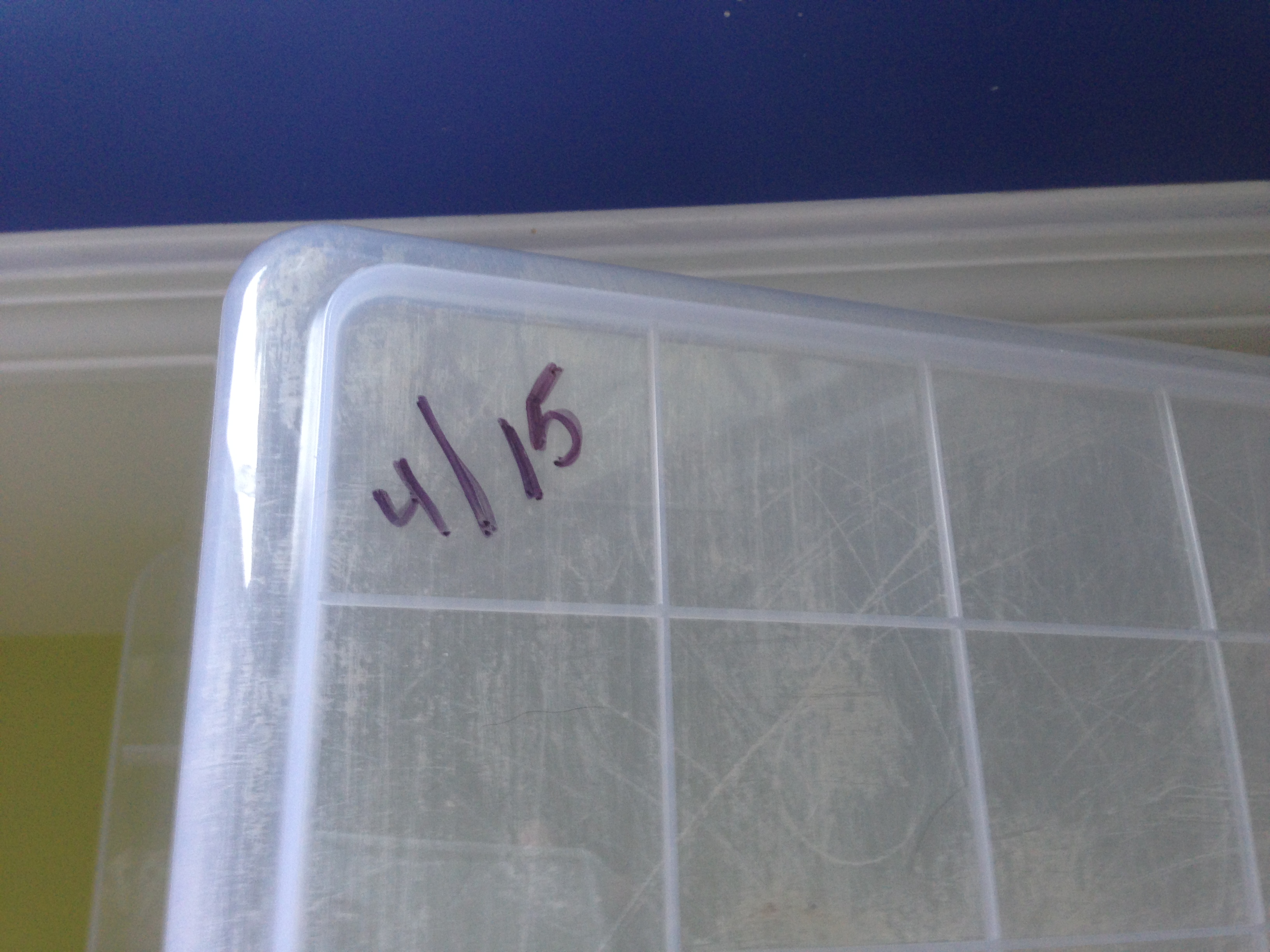
Using a Sharpie to date the bottom of the box is a helpful reminder that it is time to get new ones. 


Date the bottom of your box so you can remember when it is time to replace it!

A quick reference guide of basic do's and don'ts

Do NOT:

  • Deodorizers
  • Scented litter
  • Not cleaning the box with soap & water
  • Hooded boxes
  • Automatic boxes
  • Not scooping daily
  • Making box too hard to get to
  • Using old boxes/pans
  • Utilizing cat doors
  • Plastic liners
  • Changing brands of litter often
  • Placing food and water near litter
  • Using citrus scented cleaners
  • Use of strong smelling or ammonia based cleaners
  • Placing box in busy/loud areas

Please DO:

  • Offer large boxes
  • Scoop daily, twice a day is best
  • Use unscented litter
  • Offer soft, fine grain litter
  • Place boxes where you and your cat spend time
  • Use unscented cleaners or
  • Use cleaners with scents pleasant to cats (lavender, honeysuckle, basil)
  • Dump and scrub out box every 4-6 weeks
  • Entirely replace box every 2 years
  • Provide one more litter box location that the number of cats in the home
  • Do not place boxes in dead end areas with only one way in and out

In summary

Think about how your cat experiences the litter box. All you have to do it scoop it, they have to dig in it, posture to pee or poop, cover and then groom the scent of the flowery fragrances off of their coats. The fragrance that YOU like, not them. Cats don't eliminate in a pile of perfumed sand, they go in dirt, sand, pine straw or mulch. Plus, scented cat litter, combined with the ammonia of urine, well, that IS stinky!

Use a soft, unscented litter, scoop daily, dump and scrub out every few weeks, and change your box entirely every 2 years and litter boxes will not stink up your house.

Join my crusade to prove to the world that you can have litter boxes that are not ugly or stinky, but rather boxes you can be proud to show off. Get the scoop! Be the change!

Filed Under: Blog Tagged With: Inappropriate elimination, litter box avoidance, litter box maintenance

  • Page 1
  • Page 2
  • Page 3
  • Interim pages omitted …
  • Page 5
  • Go to Next Page »

Footer

Insured and Bonded via Business Insurers of the Carolinas

Copyright © 2026 Fundamentally Feline

0
Your Cart (0)
Your Cart is Empty!

It looks like you haven't added any items to your cart yet.

Browse Products
Apply a promo code
Subtotal
Shipping & taxes calculated at checkout.
$0.00
Checkout Now
Powered by Caddy